Burnet Media
Burnet Media is an independent publisher based in Cape Town, South Africa. We specialise in forging close author-publisher partnerships for trade and customised projects.
View Rights Portal
Burnet Media is an independent publisher based in Cape Town, South Africa. We specialise in forging close author-publisher partnerships for trade and customised projects.
View Rights Portal


 Trusted Partner

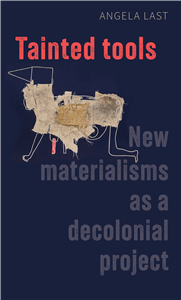
Tainted Tools makes a provocative intervention into the fraught intersection between new materialist and decolonial approaches. Despite a common project of challenging European philosophical and social categories and hierarchies, the discourses are considered incompatible. Most prominently, new materialisms have been accused of harbouring a White vision of the human while disregarding the racist resonances of the 'nonhuman'. The book traces this conflict to an earlier meeting point of new materialist and decolonial projects, which came about through the experimental combination of Marx and Nietzsche. Used to fight fascism, Stalinism and colonialism, this politically contentious fusion gradually became depoliticised, leading to unaddressed tensions today. While the book does not argue for a revival of these early 'new materialisms', it brings their strategies into dialogue with today's new materialisms and decolonial approaches to develop greater theoretical solidarity in times of crisis.
Trusted Partner
Trusted Partner
 Trusted Partner
Trusted Partner
Trusted Partner
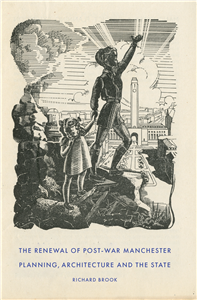
A compelling account of the project to transform post-war Manchester, revealing the clash between utopian vision and compromised reality. Urban renewal in Britain was thrilling in its vision, yet partial and incomplete in its implementation. For the first time, this deep study of a renewal city reveals the complex networks of actors behind physical change and stagnation in post-war Britain. Using the nested scales of region, city and case-study sites, the book explores the relationships between Whitehall legislation, its interpretation by local government planning officers and the on-the-ground impact through urban architectural projects. Each chapter highlights the connections between policy goals, global narratives and the design and construction of cities. The Cold War, decolonialisation, rising consumerism and the oil crisis all feature in a richly illustrated account of architecture and planning in post-war Manchester.
Trusted Partner
Trusted Partner
Trusted Partner

Devolution to Scotland and Wales represented the most fundamental reform of the British state for almost a century. Ten years on, how successful has the reform been? Drawing on the views of citizens, elected representatives and interest groups in Scotland and Wales, this book provides an answer. The book is based on a wide ranging programme of research, involving dedicated surveys and interviews across Scotland, Wales and England. The results provide important new evidence on how devolution has been seen to have performed. What are its perceived achievements? What are its shortcomings? Is the new devolution 'settlement' stable, or is there a demand for further reform? By bringing together perspectives from the public, members of the devolved legislatures and representatives of civil society, the book establishes a unique picture of where devolution in Britain stands today. The book is accessibly written, and contains a wide range of useful primary data. It is ideal for undergraduate and postgraduate students studying devolution in Britain, as well as for general readers with an interest in constitutional reform and territorial politics. ;
Trusted Partner
 Trusted Partner
Trusted Partner
Trusted Partner
Trusted Partner
Trusted Partner
Trusted Partner
Trusted Partner
Trusted Partner
Trusted Partner
Trusted Partner
Trusted Partner
Trusted Partner
Trusted Partner
Trusted Partner
Trusted Partner
Trusted Partner
Trusted Partner