Your Search Results

      • Book Time Co., Ltd.

        "BOOK TIME Co., Ltd. was founded on 10TH March 2003 as a distributor for all our products including those of our partners'. BOOK TIME Co., Ltd. creates and produces children and adult books that have been shaping the Thai publishing culture since 1981 as then Suk-kha-pab-jai Publishing Limited Partnership. We started our business from publishing Health books and Dharma books. We decided to step up to Limited Company in 1982 to extend the scope of our work and to create many more product categories."

        View Rights Portal
      • Time Publishing and Media Co

        Established in 2008, Time Publishing and Media Co., Ltd. has 23 wholly-owned or holding subsidiaries (including 9 publishing houses), mainly dealing with books, periodicals, printing reproduction, new media, media technology research and development, equity investment and other businesses. Since its establishment, Time Publishing and Media Co., Ltd. has been actively promoting the exchange and mutual development of Chinese culture and world culture. The book publishing category covers social science, education, natural science, literature, children, art, ancient books, culture, tourism, philosophy, economic management and other fields

        View Rights Portal
      • Trusted Partner
        Business, Economics & Law
        January 2026

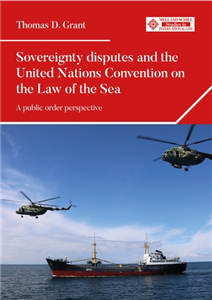
        Sovereignty disputes and the United Nations Convention on the Law of the Sea

        A public order perspective

        by Thomas D. Grant

        Because maritime questions are often admixed with territorial sovereignty questions, parties sometimes seek to settle them together. Jurisdiction under the United Nations Convention on the Law of the Sea-UNCLOS-according to the received view does not encompass disputes concerning territorial sovereignty. In this book, international law scholar and practitioner Thomas D. Grant argues that the received view overstates the exclusion of sovereignty disputes. In Coastal State Rights, UNCLOS Annex VII arbitrators overstated the scope of the term 'sovereignty dispute' as well, an error of definition compounded when they ignored evidence probative as to whether a sovereignty dispute exists. Examining UNCLOS, its drafting history, and decades of decided cases, Sovereignty Disputes and the United Nations Convention on the Law of the Sea relates an important problem of international dispute settlement to the public order of which UNCLOS forms part.

      • Trusted Partner
        Humanities & Social Sciences
        January 2025

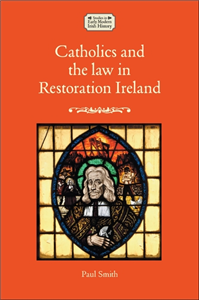
        Catholics and the law in Restoration Ireland

        by Paul Smith

        In 1660 Charles II was restored to the thrones of England, Scotland and Ireland, but his hold on power was precarious. In particular, Ireland was fundamentally unstable - Catholics formed the majority of the population in a country where Protestantism was the established religion, a state of affairs unique in Europe. It was through the law that the restored Stuart monarchy governed its subjects and its colonial dependencies, and this book examines how Catholics engaged with and experienced English common law primarily through the eyes of Catholic clerics and Gaelic poets. It also examines how Catholics engaged with the Courts and the particular challenges they faced as lawyers. The book draws on an extensive body of primary source materials, including Irish-language poetry and little-used archival material relating to elite Catholic families.

      • Trusted Partner
        Humanities & Social Sciences
        March 2017

        Law, history, colonialism

        The reach of empire

        by Diane Kirkby, Andrew Thompson, Catharine Coleborne, John M. MacKenzie

        Drawing on the latest contemporary research from an internationally acclaimed group of scholars, Law, history, colonialism bring together the disciplines of law, history and postcoloinial studies in a singular exploration of imperialism. In fresh, innovative essays from a range of disciplinary backgrounds, this collection offers exciting new perspectives on the length and breadth of empire. As issues of native title, truth and reconciliation commission, and access to land and natural resources are contested in courtrooms and legislation of former colonies, the disciplines of law and history afford new ways of seeing, hearing and creating knowledge. Issues explored include the judicial construction of racial categories, the gendered definitions of nation-states, the historical construction of citizenship, sovereignty and land rights, the limits to legality and the charting of empire, constructions of madness among colonised peoples, reforming property rights of married women, questions of legal and historical evidence, and the rule of law. This collection will be an indispensable reference work to scholars, students and teachers.

      • Trusted Partner
        Business, Economics & Law
        January 2026

        International organisations, non-State actors, and the formation of customary international law

        by Sufyan Droubi, Jean d'Aspremont

        This volume offers new practical and theoretical perspectives on one of the most complex questions regarding the formation of international law, namely that actors other than states contribute to the making of customary international law. Notwithstanding the International Law Commission's valuable contribution, the making of customary international law remains riddled with acute practical and theoretical controversies that continue to be intensively debated. Making extensive reference to the case-law of international law courts and tribunals, as well as the most recent scholarly work on customary international law, this volume provides a comprehensive study of the contribution of international organisations and non-state actors to the formation of customary international law. With innovative tools and guidance for law students, legal scholars, and researchers in law, as well as legal practitioners, advisers, judges, arbitrators, and counsels, this collection is essential reading for those wishing to understand and address contemporary questions of international law-making.

      • Trusted Partner
        Humanities & Social Sciences
        July 2025

        A grand strategy of peace

        Britain and the creation of the United Nations Organization, 1939-1945

        by Andrew Ehrhardt

        A grand strategy of peace is the first detailed account of Britain's role in the creation of the United Nations Organization during the Second World War. As a work of traditional diplomatic history that brings in elements of intellectual history, the book describes how British officials, diplomats, politicians, and writers - previously seen to be secondary actors to the United States in this period - thought about, planned for, and helped to establish a future international order. While in the present day, many scholars and analysts have returned to the origins of the post- 1945 international system, this book offers an exhaustive account of how the statesmen and more importantly, the officials working below the statesmen, actually conceived of and worked to establish a post-war world order.

      • Trusted Partner
        Humanities & Social Sciences
        September 2020

        Law in popular belief

        by Anthony Amatrudo, Regina Rauxloh

      • Trusted Partner
        Humanities & Social Sciences
        January 2013

        Crime, Law and Society in the Later Middle Ages

        by Anthony Musson, Edward Powell

        This book provides an accessible collection of translated legal sources through which the exploits of criminals and developments in the English criminal justice system (c.1215-1485) can be studied. Drawing on the wealth of archival material and an array of contemporary literary texts, it guides readers towards an understanding of prevailing notions of law and justice and expectations of the law and legal institutions. Tensions are shown emerging between theoretical ideals of justice and the practical realities of administering the law during an era profoundly affected by periodic bouts of war, political in-fighting, social dislocation and economic disaster. Introductions and notes provide both the specific and wider legal, social and political contexts in addition to offering an overview of the existing secondary literature and historiographical trends. This collection affords a valuable insight into the character of medieval governance as well as revealing the complex nexus of interests, attitudes and relationships prevailing in society during the later Middle Ages.

      • Trusted Partner
        Business, Economics & Law
        December 2020

        Women before the court

        Law and patriarchy in the Anglo-American world, 1600–1800

        by Lindsay R. Moore

        Women before the court offers an innovative, comparative approach to the study of women's legal rights during a formative period of Anglo-American history. It traces how colonists transplanted English legal institutions to America, examines the remarkable depth of women's legal knowledge and shows how the law increasingly undermined patriarchal relationships between parents and children, masters and servants, husbands and wives. The book will be of interest to scholars of Britain and colonial America, and to laypeople interested in how women in the past navigated and negotiated the structures of authority that governed them. It is packed with fascinating stories that women related to the courts in cases ranging from murder and abuse to debt and estate litigation. Ultimately, it makes a remarkable contribution to our understandings of law, power and gender in the early modern world.

      • Trusted Partner
        Business, Economics & Law
        January 2026

        Latin America and international investment law

        A mosaic of resistance

        by Sufyan Droubi, Cecilia Juliana Flores Elizondo

        Latin America has been a complex laboratory for the development of international investment law. While some governments and non-state actors have remained true to the Latin American tradition of resistance towards the international investment law regime, other governments and actors have sought to accommodate said regime in the region. Consequently, a profusion of theories and doctrines, too often embedded in clashing narratives, has emerged. In Latin America, the practice of international investment law is the vivid amalgamation of the practice of governments sometimes resisting and sometimes welcoming mainstream approaches; the practice of lawyers assisting foreign investors from outside and within the region; and the practice of civil society, indigenous peoples and other actors in their struggle for human rights and sustainable development. Latin America and international investment law describes the complex roles that governments have played vis-à-vis foreign investors and investments; the refreshing but clashing forces that international organizations, corporations, civil society, and indigenous peoples have brought to the field; and the contribution that Latin America has made to the development of the theory and practice of international investment law, notably in fields in which the Latin American experience has been traumatic: human rights and sustainable development. Latin American scholars have been contributing to the theory of international investment law for over a century; resting on the shoulders of true giants, this volume aims at pushing this contribution a little further.

      • Trusted Partner
      • Trusted Partner
        Humanities & Social Sciences
        April 2025

        The Jacobites and the Grand Tour

        Educational travel and small-states' diplomacy

        by Jérémy Filet

        In the first monograph to fully examine the intersecting networks of Jacobites and travellers to the continent, Filet considers how small states used official diplomacy and deployed soft power - embodied by educational academies - to achieve foreign policy goals. This work uses little-known archival materials to explain how and why certain small states secretly supported the Jacobite cause during the crucial years surrounding the 1715 rising, while others stayed out of Jacobite affairs.At the same time, the book demonstrates how early modern small states sought to cultivate good relations with Britain by attracting travellers as part of a wider trend of ensuring connections with future diplomats or politicians in case a Stuart restoration never came.This publication therefore brings together a study of Britain, small states, Jacobitism, and educational travel, in its nexus at continental academies.

      • Trusted Partner
        Humanities & Social Sciences
        January 2018

        Law and violence

        by Christoph Menke, David Owen

      • Trusted Partner
        Business, Economics & Law
        January 2026

        Cinematic perspectives on international law

        by Olivier Corten, Francois Dubuisson, Martyna Falkowska-Clarys

        Why are constitutionalist ideals so prominent in science fiction? Does Independence Day depict self-defence as a legal concept with absolute limits? Is international law lost in space? This innovative interdisciplinary volume represents the first exploration of the relationship between international law and cinema. From Star Wars to Werner Herzog, The Godfather to The West Wing, this book uncovers a diverse range of representations of international law and its norms in film and television. Examining the wider links between international law, cinema, and ideology, the contributions not only examine visual representations of international law, but they offer an essential insight into the functions fulfilled by these cinematic representations. Providing an extraordinary introduction to a variety of perspectives on core international legal questions, Cinematic perspectives on international law extends a valuable methodology by which international lawyers can critique the depiction of international law in film.

      • Trusted Partner
        Business, Economics & Law
        December 2022

        The basics of international law

        by Math Noortmann, Luke D Graham

      • Trusted Partner
        Business, Economics & Law
        January 2026

        Law and healing

        by Margaret Brazier

      • Trusted Partner
      • Trusted Partner
      • Trusted Partner
        Humanities & Social Sciences
        September 2023

        International law in Europe, 700–1200

        by Jenny Benham

        Was there international law in the Middle Ages? Using treaties as its main source, this book examines the extent to which such a system of rules was known and followed in the period 700 to 1200. It considers how consistently international legal rules were obeyed, whether there was a reliance on justification of action and whether the system had the capacity to resolve disputed questions of fact and law. The book further sheds light on issues such as compliance, enforcement, deterrence, authority and jurisdiction, challenging traditional ideas over their role and function in the history of international law. International law in Europe, 700-1200 will appeal to students and scholars of medieval Europe, international law and its history, as well as those with a more general interest in warfare, diplomacy and international relations.

      Subscribe to our

      newsletter