Your Search Results

      • Buddha's Light Publishing

        Buddha’s Light Publishing offers quality translations of classical Buddhist texts as well as works by contemporary Buddhist teachers and scholars. We embrace Humanistic Buddhism, and promote Buddhist writing which is accessible, community-oriented, and relevant to daily life. Founded in 1996 by Venerable Master Hsing Yun as the Fo Guang Shan International Translation Center, Buddha’s Light Publishing seeks to continue Master Hsing Yun’s goal of promoting the Buddha’s teachings by fostering writing, art, and culture.

        View Rights Portal
      • Manilla Press

        Manilla Press is a home for novelists, journalists, memoirists, thinkers, dreamers, influencers. Our reach is international, our range broad, we publish with focus, passion and conviction, and we seek to find and publish underrepresented voices.

        View Rights Portal
      • Trusted Partner
        Literature & Literary Studies
        January 2013

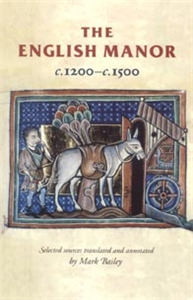
        The English manor c.1200–c.1500

        by Mark Bailey

        Provides a comprehensive introduction and essential guide to one of the most important institutions in medieval England and to its substantial archive. This is the first book to offer a detailed explanation of the form, structure and evolution of the manor and its records. Offers translations of, and commentaries upon, each category of document to illustrate their main features. Examples of each category of record are provided in translation, followed by shorter extracts selected to illustrate interesting, commonly occurring, or complex features. A valuable source of reference for undergraduates wishing to understand the sources which underpin the majority of research on the medieval economy and society.

      • Trusted Partner
        Humanities & Social Sciences
        August 1999

        British Politics in an Age of Reform

        by Michael J. Turner, Mark Greengrass

        This work is a detailed examination of principal themes in the political history of late 18th- and early 19th-century Britain. It evaluates much recent research, links the politics of the elite with the politics of the people and seeks to explain significant developments with reference to both their long- and short-term causes. Among the issues addressed are the relative powers of crown, cabinet and parliament between 1760 and 1832; the impact on domestic politics of revolution and war abroad; the growth of radicalism and popular political activity; agitation for reform and the responses of government; the rise of party; the connections between extra-parliamentary pressure and instability; at the centre of power. ;

      • Trusted Partner
        Literature & Literary Studies
        June 2002

        The English manor c.1200–c.1500

        by Rosemary Horrox, Simon Maclean, Mark Bailey

        Provides a comprehensive introduction and essential guide to one of the most important institutions in medieval England and to its substantial archive. This is the first book to offer a detailed explanation of the form, structure and evolution of the manor and its records. Offers translations of, and commentaries upon, each category of document to illustrate their main features. Examples of each category of record are provided in translation, followed by shorter extracts selected to illustrate interesting, commonly occurring, or complex features. A valuable source of reference for undergraduates wishing to understand the sources which underpin the majority of research on the medieval economy and society. ;

      • Trusted Partner
        Literature & Literary Studies
        January 2014

        Court and civic society in the Burgundian Low Countries c.1420–1530

        by Andrew Brown, Graeme Small

        This volume is the first ever attempt to unite and translate some of the key texts which informed Johan Huizinga's famous study of the Burgundian court, The Waning of the Middle Ages, a work which has never gone out of print. It combines these texts with sources that Huizinga did not consider, those that illuminate the wider civic world that the Burgundian court inhabited and the dynamic interaction between court and city. Through these sources, and an introduction offering new perspectives on recent historiography, the book tests whether Huizinga's controversial vision of the period still stands. Covering subjects including ceremonial events, such as the spectacles and gargantuan banquets that made the Burgundian dukes the talk of Europe, the workings of the court, and jousting, archery and rhetoric competitions, the book will appeal to students of late medieval and early modern Europe and to those with wider interests in court culture, ritual and ceremony.

      • Trusted Partner
        Medicine

        Manual Trigger Point Therapy and Dry Needling for Chronic Pain

        Myofascial medicine as an approach to an unresolved challenge

        by Beat Dejung

        Medicine for the relief of pain has made little progress in the last 50 years. 16% of our population claim to suffer from chronic pain, for which no lasting help can be found, despite years of treatment by different doctors. Trigger point therapy experts have integrated myofascial techniques into their everyday therapy in recent decades and through this they have achieved good results even with complex and chronic problems. In this book, instructors from the Interest Group for Myofascial Trigger Point Therapy (IMTT) in Switzerland present 33 complex cases of patients with chronic pain, whose pain they were able to relieve perma­nently with manual trigger point therapy and dry needling. Using these case studies, double­page spreads with an edu­cational, uniform layout clearly present the diagnosis, pathophysiology and chronifcation of myofascial pain syn­dromes and, in conclusion, describe encouraging and sur­prising successes despite previous therapy resistance.

      • Trusted Partner
        The Arts
        September 2024

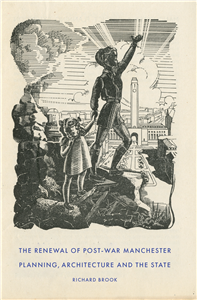
        The renewal of post-war Manchester

        Planning, architecture and the state

        by Richard Brook

        A compelling account of the project to transform post-war Manchester, revealing the clash between utopian vision and compromised reality. Urban renewal in Britain was thrilling in its vision, yet partial and incomplete in its implementation. For the first time, this deep study of a renewal city reveals the complex networks of actors behind physical change and stagnation in post-war Britain. Using the nested scales of region, city and case-study sites, the book explores the relationships between Whitehall legislation, its interpretation by local government planning officers and the on-the-ground impact through urban architectural projects. Each chapter highlights the connections between policy goals, global narratives and the design and construction of cities. The Cold War, decolonialisation, rising consumerism and the oil crisis all feature in a richly illustrated account of architecture and planning in post-war Manchester.

      • Trusted Partner
        April 2023

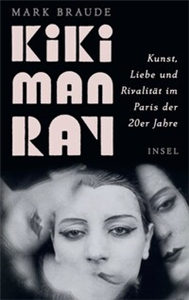
        Kiki Man Ray

        Kunst, Liebe und Rivalität im Paris der 20er Jahre

        by Mark Braude

        Man nannte ihn »Man Ray« und sie die »Königin von Montparnasse«: Emmanuel Radnitzky und Alice Ernestine Prin.Kiki de Montparnasse begeisterte als Sängerin in Nachtclubs, plauderte mit Jean Cocteau und Marcel Duchamp in den angesagten Cafés von Paris und saß Malern wie Modigliani, Calder und Soutine Modell. Ihre Autobiografie – mit einem Vorwort von Ernest Hemingway – kam in Frankreich ganz groß raus und in Amerika auf den Index. Und das alles noch vor ihrem dreißigsten Lebensjahr.Als Kiki und Man Ray sich kennenlernen, ist sie 20 und eine feste Größe in der Montparnasse-Bohème, er 31, ein namenloser Fotograf aus Amerika, gerade erst in Paris angekommen. Er fotografiert sie, sie werden ein Paar, es folgt eine acht Jahre währende stürmische Liebesbeziehung. Mit ikonischen Aufnahmen wie »Violon d’Ingres« und »African mask« – ihr Rücken, ihr makelloses Gesicht – begründet Man Ray seine Karriere, sie öffnet ihm die Türen zu Galeristen und Künstlern. Er ermuntert sie, selbst zu malen: Alltagsszenen, Erinnerungen an ihre Kindheit im Burgund. Aber als sie auch damit Erfolg hat, ist er eifersüchtig und macht sie klein. Wa war es, das diese junge Frau wie keine andere zur Verkörperung einer ganzen Ära machte? In seinem akribisch recherchierten, glänzend geschriebenen Buch versucht Mark Braude, dem Mythos Kiki auf die Spur zu kommen, das Rätsel ihrer Anziehungskraft zu entschlüsseln. Erstmals wird Kikis prägender Einfluss nicht nur auf Man Ray, sondern auf die gesamte Künstlerszene vom Montparnasse deutlich.

      • Trusted Partner
        Literature & Literary Studies
        December 2022

        The heat of Beowulf

        by Daniel C. Remein

      • Trusted Partner
      • Trusted Partner
        Business, Economics & Law
        October 2004

        Qualities of food

        by Mark Harvey, Andrew McMeekin, Alan Warde

        In this book, the complexity and the significance of the foods we eat are analysed from a variety of perspectives, by sociologists, economists, geographers and anthropologists. Chapters address a number of intriguing questions: how do people make judgments about taste? How do such judgments come to be shared by groups of people?; what social and organisational processes result in foods being certified as of decent or proper quality? How has dissatisfaction with the food system been expressed? What alternatives are thought to be possible? The multi-disciplinary analysis of this book explores many different answers to such questions. The first part of the book focuses on theoretical and conceptual issues, the second part considers processes of formal and informal regulation, while the third part examines social and political responses to industrialised food production and mass consumption. Qualities of food will be of interest to researchers and students in all the social science disciplines that are concerned with food, whether marketing, sociology, cultural studies, anthropology, human nutrition or economics.

      • Trusted Partner
        Humanities & Social Sciences
        March 2026

        Negotiating identity conflicts in a fragmenting world order

        by Paul Willem Meerts, Mark Anstey

        At every level of human interaction new levels of identity-based tension are in evidence. Contributors to this book explore facets of fragmentation processes within systems of state and interstate organisation, how they influence the use of negotiation, and how negotiation might be used to effect renewed coherence. Following Anstey's (Ch1) introductory chapter framing the nature and shape of fragmentation dynamics, Zartman (Ch 2) argues that the use of negotiation as a process of conflict resolution is deeply shaped by identity groups whose internal coherence is dependent on sustaining a negative identity of others. International relations are no longer solely the realm of experienced diplomats but are shaped as Meerts (Ch3) points out by politicians seeking to be responsive to voting publics rather than wider concerns. Anstey digs into problems of fragmentation (Ch. 4) and Troitskiy (Ch 5) points out how a reluctant acceptance of the power of 'the other' can lead to a form of strategic stability in relations. Anstey and Meerts (Ch 6) point out in their analysis of the Israeli-Palestinian case as an identity conflict turned very bad. Guggenbuhl (Ch 7 ) reveals how structures and processes have been designed within the EU to prevent, contain and regulate conflicts to limit risks of confrontation and fragmentation. Schuessler (Ch 8) to advocates a shift away from a template or roadmap approach to EU membership to a cohesion based on non-dominance. There is still a strong desire on the part of some states, like Northern Macedonia, to become EU members, as reflected in Manton's (Ch 9). Paula Garzon and Frans Schram explain the success of the Colombia Peace Negotiations (Ch 10), while Odigie and da Rocha (Ch 11) analyse the struggle faced by ECOWAS to influence coup leaders in Mali to return to constitutional government and changes of government by constitutional means. Liang (Ch12) discusses how the internet as the modern vehicle of inter-state, inter-group and interpersonal communication has become weaponised. In Ch 13 Anstey draws some lessons from contributions to the compilation.

      • Trusted Partner
        Humanities & Social Sciences
        November 2024

        Culture is bad for you

        by Orian Brook, Dave O'Brien, Mark Taylor

      • Trusted Partner
        Humanities & Social Sciences
        June 2020

        Debates on Stalinism

        by Mark Edele, Roger Richardson

      • Trusted Partner
        Business, Economics & Law
        June 2025

        Decolonisation in the age of globalisation

        by Chi-kwan Mark

      • Trusted Partner
      • Trusted Partner
        April 2023

        Kiki Man Ray

        Kunst, Liebe und Rivalität im Paris der 20er Jahre

        by Mark Braude, Barbara Steckhan, Thomas Wollermann

        Man nannte ihn »Man Ray« und sie die »Königin von Montparnasse«: Emmanuel Radnitzky und Alice Ernestine Prin.Kiki de Montparnasse begeisterte als Sängerin in Nachtclubs, plauderte mit Jean Cocteau und Marcel Duchamp in den angesagten Cafés von Paris und saß Malern wie Modigliani, Calder und Soutine Modell. Ihre Autobiografie – mit einem Vorwort von Ernest Hemingway – kam in Frankreich ganz groß raus und in Amerika auf den Index. Und das alles noch vor ihrem dreißigsten Lebensjahr.Als Kiki und Man Ray sich kennenlernen, ist sie 20 und eine feste Größe in der Montparnasse-Bohème, er 31, ein namenloser Fotograf aus Amerika, gerade erst in Paris angekommen. Er fotografiert sie, sie werden ein Paar, es folgt eine acht Jahre währende stürmische Liebesbeziehung. Mit ikonischen Aufnahmen wie »Violon d’Ingres« und »African mask« – ihr Rücken, ihr makelloses Gesicht – begründet Man Ray seine Karriere, sie öffnet ihm die Türen zu Galeristen und Künstlern. Er ermuntert sie, selbst zu malen: Alltagsszenen, Erinnerungen an ihre Kindheit im Burgund. Aber als sie auch damit Erfolg hat, ist er eifersüchtig und macht sie klein. Wa war es, das diese junge Frau wie keine andere zur Verkörperung einer ganzen Ära machte? In seinem akribisch recherchierten, glänzend geschriebenen Buch versucht Mark Braude, dem Mythos Kiki auf die Spur zu kommen, das Rätsel ihrer Anziehungskraft zu entschlüsseln. Erstmals wird Kikis prägender Einfluss nicht nur auf Man Ray, sondern auf die gesamte Künstlerszene vom Montparnasse deutlich.

      • Trusted Partner
        The Arts
        September 2025

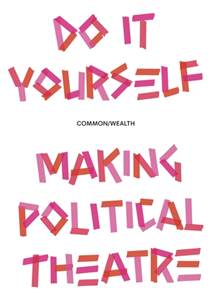
        Do It Yourself

        Making political theatre

        by Common Wealth

        A unique guide to creating political theatre, produced by one of the UK's most exciting companies. Do It Yourself is a vital resource for anyone interested in exploring theatre culture grounded in and produced by working-class, multi-racial communities. Designed for artists, activists and community organisers, the book offers a step-by-step guide to creating political theatre that is relevant, impactful and rooted in the lives of everyday people. Common Wealth have spent fifteen years working at the cutting edge of political theatre. In Do It Yourself, they share their experimental and activist approach to performance-making, based on DIY principles and the belief that ground-breaking theatre can be made with anyone, anywhere, in ways that truly resonate with the communities it serves. Do It Yourself introduces Common Wealth's artistic and political ethos, provides unique insights into their most significant performances and offers practical exercises for creating your own work. But this is not just a manual. It is a celebration of culture as a collective endeavour, one that can challenge the status quo and inspire change.

      • Trusted Partner
        Political parties
        November 2014

        The Conservative Party and the extreme right 1945–1975

        by Mark Pitchford

        This book, newly available in paperback, reveals the Conservative Party's relationship with the extreme right between 1945 and 1975. For the first time, this book shows how the Conservative Party, realising that its well known pre-Second World War connections with the extreme right were now embarrassing, used its bureaucracy to implement a policy of investigating extreme right groups and taking action to minimise their chances of success. The book focuses on the Conservative Party's investigation of right-wing groups, and shows how its perception of their nature determined the party bureaucracy's response. The book draws a comparison between the Conservative Party machine's negative attitude towards the extreme right and its support for progressive groups. It concludes that the Conservative Party acted as a persistent block to the external extreme right in a number of ways, and that the Party bureaucracy persistently denied the extreme right within the party assistance access to funds and representation within party organisations. It reaches a climax with the formulation of a 'plan' threatening its own candidate if he failed to remove the extreme right from the Conservative Monday Club.

      Subscribe to our

      newsletter