
Lindbak + Lindbak
Lindbak + Lindbak is a fresh new Nordic publishing house adding an innovative twist to popular genres like crime, romance & children's books.
View Rights Portal
Lindbak + Lindbak is a fresh new Nordic publishing house adding an innovative twist to popular genres like crime, romance & children's books.
View Rights Portal
Independent publisher founded in 1989 and releasing around 50 new titles each year both in fiction (literary; contemporary) and non-fiction (history; art; religion , biographies)
View Rights Portal

This volume on Norman Italy (southern Italy and Sicily, c. 1000-1200) honours and reflects the pioneering scholarship of Graham A. Loud. An international group of scholars reassesses and recasts the paradigm by which Norman Italy has been conventionally understood, addressing varied subjects across four key themes: historiographies, identities and communities, religion and Church, and conquest. The chapters revise and refine our understanding of Norman Italy in the eleventh and twelfth centuries, demonstrating that it was not just a parochial Norman or Mediterranean entity but also an integral player in the medieval mainstream.
 Trusted Partner
 Trusted Partner

This collection tells the story of Thomas Becket's turbulent life, violent death and extraordinary posthumous acclaim in the words of his contemporaries. The only modern collection from the twelfth-century Lives of Thomas Becket in English and features all his major biographers, including many previously untranslated extracts. Providing both a valuable glimpse of the late twelfth-century world, and an insight into the minds of those who witnessed the events. By using contemporary sources, this book is the most accessible way to study this central episode in medieval history. Thomas Becket features prominently in most medieval core courses. This book allows the subject to be taught as never before, and is highly suitable as a set text.
Trusted Partner
 Trusted Partner
Trusted Partner
Trusted Partner
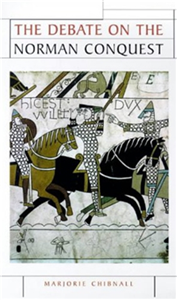
The debate on the Norman Conquest is still ongoing. Because of the great interest that has always been shown in the subject of conquest and its aftermath, interpretations have been numerous and conflicting; students bewildered by controversies may find this book a useful guide through the morass of literature. In the medieval period writers were still deeply involved in the legal and linguistic consequences of the Norman victory. Later the issues became direcly relevant to debates about constitutional rights; the theory of a "Norman yoke" provided first a call for revolution and, by the 19th century, a romantic vision of a lost Saxon paradise. When history became a subject for academic study controversies still raged round such subjects as Saxon versus Norman institutions. These have gradually been replaced in a broader social setting where there is more room for consensus. Interest has now moved to such subjects as peoples and races, frontier societies, women's studies and colonialism. Changing perspectives have shown the advantage of studying a period from the late 10th to the early 13th century rather than one beginning in 1066. ;
Trusted Partner

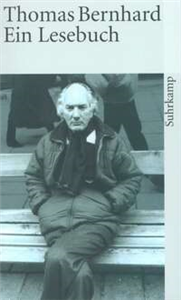
Das vorliegende Lesebuch versteht sich als Vorschlag und Einladung zu einer Erkundung des Bernhardschen Schreibens, dessen begriffs- und geschichtenzerstörende Irritationskraft den Leser in seinen Sog zieht und ihn jene Haltung einnehmen läßt, die Thomas Bernhard als die seinem Werk angemessene beschrieben hat: »Man soll sich vorstellen, man ist im Theater, man macht mit der ersten Seite einen Vorhang auf, der Titel erscheint, totale Finsternis – langsam kommen aus dem Hintergrund, aus der Finsternis heraus, Wörter, die langsam zu Vorgängen äußerer und innerer Natur, gerade wegen ihrer Künstlichkeit besonders deutlich zu einer solchen werden.«
Trusted Partner

Max Dax, seit 2006 Chefredakteur des Musikmagazins Spex, gab zuvor die Interviewzeitschrift Alert heraus. Dabei entstanden gesprochene (Selbst-)Porträts von (Techno-)Musikern, Künstlern, Regisseuren und Schriftstellern und ganz nebenbei eine Zwischenbilanz der Gegenwartskultur. Zu Wort kommen in dieser Auswahl: Aphex Twin, Blixa Bargeld, David Bowie, Vashti Bunyan, Diedrich Diederichsen, DJ Hell, Kim Gordon, Juliette Gréco, Charlie Haden, Herbie Hancock, Lee Hazelwood, Jenny Holzer, Dennis Hopper, Jörg Immendorff, Lemmy Kilmister, Martin Kippenberger, Alexander Kluge, Claude Lanzmann, Arto Lindsay, Marcel Marceau, Johnny Marr, Thomas Ruff, Helge Schneider, Mark E. Smith, Bernhard Sumner, Mayo Thompson, Caetano Veloso, Roger Waters und Townes van Zandt.
Trusted Partner
Trusted Partner

30 Jahre alt, ohne Resonanz auf seine bis dahin veröffentlichten drei Gedichtbände, vom eigenen überragenden schriftstellerischen Können allerdings überzeugt, schreibt Thomas Bernhard im Oktober 1961 an Siegfried Unseld: "Vor ein paar Tagen habe ich an Ihren Verlag ein Prosamanuskript geschickt. Ich kenne Sie nicht, nur ein paar Leute, die Sie kennen. Aber ich gehe den Alleingang." Obwohl der Suhrkamp Verlag das Manuskript ablehnte, gingen der Alleingänger und der Verleger seit dem Erscheinen von Bernhards erstem Roman "Frost" 1963 gemeinsam den Weg, der den Autor in die Weltliteratur führte. In den etwa 500 Briefen zwischen beiden entwickelt sich ein einzigartiges Zwei-Personen-Schauspiel: Mal ist es eine Tragödie, wenn etwa Bernhard die aus seinen Werken bekannten Schimpftiraden auf den Verleger losläßt, der seinerseits auf die Überzeugungskraft des Arguments setzt. Dann gibt Bernhard ein Kammerspiel mit Unseld als Held – 1973 schreibt er ihm: "mit grösster Aufmerksamkeit, mit allen Möglichkeiten, gehe ich gern mit Ihnen." 1984 agieren beide, bei der Beschlagnahme von "Holzfällen", als Kämpfer für die Literatur in einem von Dritten inszenierten Schurkenstück. Es dominiert das Beziehungsdrama: Der Autor stellt die für sein Werk und seine Person unabdingbaren Forderungen. Der Verleger seinerseits weiß, daß gerade bei Bernhard rücksichtslose Selbstbezogenheit notwendige Voraussetzung der Produktivität ist. Solch einen dramatischen Briefwechsel zwischen Autor und Verleger, in dem bei jeder Zeile alles auf dem Spiel steht, kennt das Publikum bislang nicht.
Trusted Partner
 Trusted Partner
Trusted Partner
Trusted Partner
Trusted Partner
Trusted Partner

The French empire at war draws on original research in France and Britain to investigate the history of the divided French empire - the Vichy and the Free French empires - during the Second World War. What emerges is a fascinating story. While it is clear that both the Vichy and Free French colonial authorities were only rarely masters of their own destiny during the war, preservation of limited imperial control served them both in different ways. The Vichy government exploited the empire in an effort to withstand German-Italian pressure for concessions in metropolitan France and it was key to its claim to be more than the mouthpiece of a defeated nation. For Free France too, the empire acquired a political and symbolic importance which far outweighed its material significance to the Gaullist war effort. As the war progressed, the Vichy empire lost ground to that of the Free French, something which has often been attributed to the attraction of the Gaullist mystique and the spirit of resistance in the colonies. In this radical new interpretation, Thomas argues that it was neither of these. The course of the war itself, and the initiatives of the major combatant powers, played the greatest part in the rise of the Gaullist empire and the demise of Vichy colonial control.
Trusted Partner
Trusted Partner
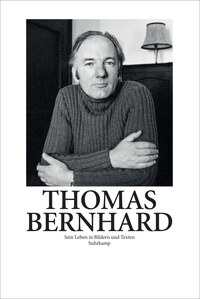
Thomas Bernhard zählt zu den meistkommentierten deutschsprachigen Schriftstellern: Ob in Zeitungen, wissenschaftlichen Periodika, als Dissertation oder als Gesamtdarstellung, als biografische Versuche oder fotografische Teilansichten – unter allen Aspekten wird er Gegenstand mehr oder weniger kompetenter Analysen, und das weltweit. Die Monografie bietet in Bildern und Texten zum ersten Mal gleichermaßen verlässliche wie überraschende Einsichten in das Werk und dessen Entstehungsbedingungen, vermittelt völlig unbekannte Aufschlüsse über sein Leben sowie fundierte Aussagen zur nationalen und internationalen Rezeption. Die Dokumente und Erklärungen sind für jedermann nachvollziehbar, kommen ohne germanistisches Gerede und Stereotypen aus. Dies ist möglich geworden, da den Herausgebern als bisher einzigen der gesamte Nachlass Thomas Bernhards zugänglich ist. Auf diese Weise sind spannende Einblicke in die Genese einzelner Werke möglich, der (nicht unbeträchtliche) Briefverkehr vermittelt Informationen über die Kontakte mit Kollegen, Kritikern und Freunden, wird die Mythisierung des Bernhard‘schen Lebens durch den Autor wie durch sogenannte Zeitgenossen und Biografen durchleuchtet. Die Bildmonografie löst sich von der strikten chronologischen Darstellung. Sie verfolgt vielmehr in zwölf Kapiteln bestimmte Komplexe des Oeuvres durch die drei Jahrzehnte des Bernhard‘schen Schaffens.
Trusted Partner

Johannes Jansen ist 1966 in Ost-Berlin geboren und lebte in Freiburg, Leipzig und Pankow. Nach der Lehre als Graveur und der Absolvierung des Armeedienstes bei der NVA studierte er Graphik. Er lebt als freier Autor in Berlin. Norman Lindner, geboren 1969 in Halle, schloss nach einer Lehre zum Forstfachwirt ein Studium der Bildenden Kunst und Philosophie in Kassel bei Dorothee von Windheim, Alf Schuler, Harry Kramer und Hannes Böhringer ab. Früher arbeitete er als Grafikdesigner und Kunstkritiker für u.a. die taz.die tageszeitung und die Berliner Zeitung. Heute ist er als Autor, Künstler und Heilerziehungspfleger beschäftigt und lebt in Berlin-Lichtenberg.
Trusted Partner
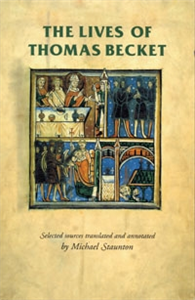
This collection tells the story of Thomas Becket's turbulent life, violent death and extraordinary posthumous acclaim in the words of his contemporaries. The only modern collection from the twelfth-century Lives of Thomas Becket in English and features all his major biographers, including many previously untranslated extracts. Providing both a valuable glimpse of the late twelfth-century world, and an insight into the minds of those who witnessed the events. By using contemporary sources, this book is the most accessible way to study this central episode in medieval history. Thomas Becket features prominently in most medieval core courses. This book allows the subject to be taught as never before, and is highly suitable as a set text. ;
Trusted Partner
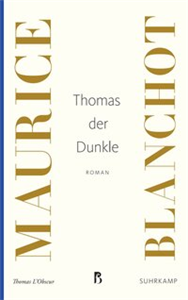
Seit der Aufklärung setzten wir das »Obskure« mit dem Dunklen und Verdächtigen gleich: Was mit den Mitteln der Vernunft nicht zu begreifen ist, soll beseitigt werden. Der Held in Thomas der Dunkle (1941) wendet sich gegen eine leichtfertige Ablehnung des Obskuren und bekennt: »Aber wer mich betrachtet hat, hat gefühlt, daß der Tod sich auch zur Existenz gesellen und den entscheidenden Satz prägen kann: Der Tod existiert.« Blanchots Schreiben umkreist Begriffe wie Stille, Abwesenheit und Vergessen, mit denen er unsere Erwartungshaltung immer wieder aufs Neue auf die Probe stellt. Unverrückbar steht hinter allem die Gewissheit, dass der Tod als nie zu erfassende existenzielle Not unser Leben bestimmt. Blanchots Werke, stilistisch erinnernd an Franz Kafka und den Marquis de Sade, entmachten die herkömmlichen Kategorien des Erzählens, sie proklamieren ein neues Verständnis von Raum, Zeit und Stimme und reißen Grenzen ein zwischen theoretischem und Prosawerk. Thomas der Dunkle zeigt alle Facetten von Blanchots Erzählkunst: Erinnerungen und innere Monologe beherrschen das Geschehen in surrealen Welten. Mit seinen Schriften nahm er maßgeblich Einfluss auf Poststrukturalismus, Diskurstheorie und den Nouveau Roman. Die Werke von Theoretikern wie Michel Foucault, Jacques Derrida, Jean-Luc Nancy, aber auch diejenigen zahlreicher Dichter und bildender Künstler sind ohne ihn nicht zu denken.



