
Your Search Results


-
Promoted Content

 Humanities & Social SciencesNovember 2024
Culture is bad for you
by Orian Brook, Dave O'Brien, Mark Taylor
-
Promoted Content
-
 Trusted Partner
 Literature & Literary StudiesJune 2026
The politics of Middle English parables
Fiction, theology, and social practice
by Mary Raschko
The politics of Middle English parables examines the dynamic intersection of fiction, theology and social practice in late-medieval England. Parables occupy a prominent place in Middle English literature, appearing in dream visions and story collections as well as in lives of Christ and devotional treatises. While most scholarship approaches the translated stories as stable vehicles of Christian teaching, this book highlights the many variations and points of conflict across Middle English renditions of the same story. In parables related to labour, social inequality, charity and penance, the book locates a creative theological discourse through which writers attempted to re-construct Christian belief and practice. Analysis of these diverse retellings reveals not what a given parable meant in a definitive sense but rather how Middle English parables inscribe the ideologies, power structures and cultural debates of late-medieval Christianity.
-
Trusted Partner
 Humanities & Social SciencesFebruary 2023
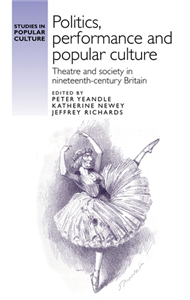
Politics, performance and popular culture
Theatre and society in nineteenth-century Britain
by Peter Yeandle, Katherine Newey, Jeffrey Richards
This collection brings together studies of popular performance and politics across the nineteenth century, offering a fresh perspective from an archivally grounded research base. It works with the concept that politics is performative and performance is political. The book is organised into three parts in dialogue regarding specific approaches to popular performance and politics. Part I offers a series of conceptual studies using popular culture as an analytical category for social and political history. Part II explores the ways that performance represents and constructs contemporary ideologies of race, nation and empire. Part III investigates the performance techniques of specific politicians - including Robert Peel, Keir Hardie and Henry Hyndman - and analyses the performative elements of collective movements.
-
Trusted Partner
 Lifestyle, Sport & LeisureAugust 2016
Culture in Manchester
Institutions and urban change since 1850
by Janet Wolff, Mike Savage
This book brings together studies of cultural institutions in Manchester from 1850 to the present day, giving an unprecedented account of the city's cultural evolution. These bring to light the remarkable range of Manchester's contribution to modern cultural life, including the role of art education, popular theatre, religion, pleasure gardens, clubs and societies. The chapters show the resilience and creativity of Manchester's cultural institutions since 1850, challenging any simple narrative of urban decline following the erosion of Lancashire's industrial base, at the same time illustrating the range of activities across the social classes. This book will appeal to everyone interested in the cultural life of the city of Manchester, including cultural historians, sociologists and urban geographers, as well as general readers with interests in the city. It is written by leading international authorities, including Viv Gardner, Stephen Milner, Mike Savage, Bill Williams and Janet Wolff.
-
Trusted Partner
 Humanities & Social SciencesMay 2020
Connecting centre and locality
by Chris R. Kyle, Jason Peacey, Alastair Bellany
-
Trusted Partner
 Humanities & Social SciencesJuly 2026
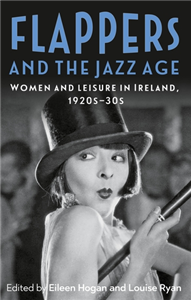
Flappers and the Jazz Age
Women and leisure in Ireland, 1920s–30s
by Eileen Hogan, Louise Ryan
People's ordinary, everyday lives - and more specifically, their leisure activities - are often obscured within existing academic research on 1920s-30s Ireland. This book seeks to redress that neglect by exploring the relationship between identity, recreation, and culture both North and South of the border, with particular attention to women's lived experiences. Leisurely pursuits during this period were commonly overshadowed by religious influence and the nation-building projects in post-partition Ireland. Nevertheless, there existed alternative spaces, where people enjoyed dancing, singing, listening to music, shopping, glamour, reading magazines, swimming, travelling, and going to the cinema. Such activities reflected international trends beyond national borders. This book documents those activities and spaces through a feminist lens and intersectional analysis of gender, class, religion and rural/urban identities. It brings together multi-disciplinary perspectives including cultural studies, architecture, geography, fashion, and musicology. In so doing, we present new insights and advance understanding of this under-researched aspect of Irish history.
-
Trusted Partner
 The ArtsMarch 2026
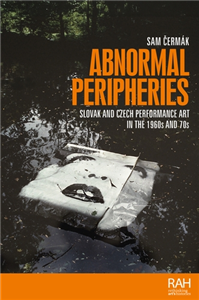
Abnormal peripheries
Slovak and Czech performance art in the 1960s and 70s
by Sam Cermak
This book traces an early history of performance art from the former Czechoslovakia, which emerged in the 1960s and 1970s in the context of the Prague Spring and the subsequent policy of Normalization that brought on cultural censorship, prosecution, and state violence against artists. The book draws on Czech and Slovak scholarship as well as primary research in archives, interviews, and fieldwork to dispel misreadings of visual and cultural idioms in pre-existing Anglophone scholarship about the region. Although the former Soviet Bloc is often equated with repression and lack of experimental art in public spaces, performance artists within the former Socialist Czechoslovakia often used public, semi-public and clandestine spheres to create their performances. By analysing both works of established artists such as Aktual, Alex Mlynárcik, Petr Stembera, Jan Mlcoch, as well as under-theorised practitioners including Luba Lauffová, Karel Miler, Temporary Society of Intense Living, and Crusaders School of Pure Humour with no Joke, this book analyses how performance can survive and sometimes even thrive on the background of a politically oppressive regime. Cermak tells a unique story of localised resistance to a monolithic public sphere through artistic intervention, a closely knit community, artistic exchange, and agonistic reframing of socialism as a philosophy rather than state ideology.
-
Trusted Partner
 Humanities & Social SciencesDecember 2022
Class, work and whiteness
Race and settler colonialism in Southern Rhodesia, 1919–79
by Nicola Ginsburgh
This book offers the first comprehensive history of white workers from the end of the First World War to Zimbabwean independence in 1980. It reveals how white worker identity was constituted, examines the white labouring class as an ethnically and nationally heterogeneous formation comprised of both men and women, and emphasises the active participation of white workers in the ongoing and contested production of race. White wage labourers' experiences, both as exploited workers and as part of the privileged white minority, offer insight into how race and class co-produced one another and how boundaries fundamental to settler colonialism were regulated and policed. Based on original research conducted in Zimbabwe, South Africa and the UK, this book offers a unique theoretical synthesis of work on gender, whiteness studies, labour histories, settler colonialism, Marxism, emotions and the New African Economic History.
-
Trusted Partner
Literature & Literary StudiesMarch 2023
Sleep and its spaces in Middle English literature
Emotions, ethics, dreams
by Megan Leitch
Middle English literature is intimately concerned with sleep and the spaces in which it takes place. In the medieval English imagination, sleep is an embodied and culturally determined act. It is both performed and interpreted by characters and contemporaries, subject to a particular habitus and understood through particular hermeneutic lenses. While illuminating the intersecting medical and moral discourses by which it is shaped, sleep also sheds light on subjects in favour of which it has hitherto been overlooked: what sleep can enable (dreams and dream poetry) or what it can stand in for or supersede (desire and sex). This book argues that sleep mediates thematic concerns and questions in ways that have ethical, affective and oneiric implications. At the same time, it offers important contributions to understanding different Middle English genres: romance, dream vision, drama and fabliau.
-
Trusted Partner
 Humanities & Social SciencesJune 2021
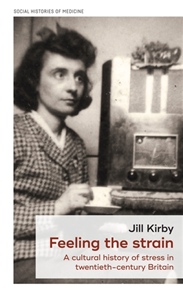
Feeling the strain
A cultural history of stress in twentieth-century Britain
by Jill Kirby
Examining the popular discourse of nerves and stress, this book provides a historical account of how ordinary Britons understood, explained and coped with the pressures and strains of daily life during the twentieth century. It traces the popular, vernacular discourse of stress, illuminating not just how stress was known, but the ways in which that knowledge was produced. Taking a cultural approach, the book focuses on contemporary popular understandings, revealing continuity of ideas about work, mental health, status, gender and individual weakness, as well as the changing socio-economic contexts that enabled stress to become a ubiquitous condition of everyday life by the end of the century. With accounts from sufferers, families and colleagues it also offers insight into self-help literature, the meanings of work and changing dynamics of domestic life, delivering a complementary perspective to medical histories of stress.
-
Trusted Partner
 Humanities & Social SciencesNovember 2021
Culture is bad for you
Inequality in the cultural and creative industries
by Orian Brook, Dave O'Brien, Mark Taylor, Nneka Okoye
-
Trusted Partner
Literature & Literary StudiesApril 2024
Riddles at work in the early medieval tradition
Words, ideas, interactions
by Megan Cavell, Jennifer Neville
Capitalising on developments in the field over the past decade, Riddles at work provides an up-to-date microcosm of research on the early medieval riddle tradition. The book presents a wide range of traditional and experimental methodologies. The contributors treat the riddles both as individual poems and as parts of a tradition, but, most importantly, they address Latin and Old English riddles side-by-side, bringing together texts that originally developed in conversation with each other but have often been separated by scholarship. Together, the chapters reveal that there is no single, right way to read these texts but rather a multitude of productive paths. This book will appeal to students and scholars of early medieval studies. It contains new as well as established voices, including Jonathan Wilcox, Mercedes Salvador-Bello and Jennifer Neville.
-
Trusted Partner
 The ArtsMarch 2025
We all die at the end
Storytelling in the climate apocalypse
by Sam Haddow
We all die at the end offers a survey of contemporary end-of-the-world fiction, spanning literature, children's fiction, video games, theatre and film. It draws on eco-critical philosophy and narrative theory to show ways in which the climate crisis is reorienting storytelling in the face of foreseeable human extinction. In the process, it argues that such stories have a role to play in helping us come to terms with the severity and scale of the crisis that we face.
-
Trusted Partner
 Humanities & Social SciencesMay 2026
The Carolingian South
by Sam Ottewill-Soulsby, Graeme Ward
The Carolingian South turns the Frankish world upside down by taking as its subject the lands of the Carolingian empire south of the Loire and the Alps. It assembles an international group of scholars from different disciplines to examine how the Carolingians defined and were defined by this region. This book asks how Carolingian power was created and negotiated in the south. It views the Frankish empire from the perspective of the Christian and Muslim polities of the Mediterranean, while also following the movement of people and ideas through the endlessly fascinating world that they made.
-
Trusted Partner
 Humanities & Social SciencesJanuary 2026
Rodrigo Ximenez de Rada’s Minor Histories
by Aymenn Al-Tamimi
This work provides the first complete English translation of works by Toledan archbishop Rodrigo Ximénez de Rada (1170-1247 CE), whose 'Minor Histories' are sequels to his larger 'Gothic History' and thus round off his grand history of Spain project that he began at the request of King Ferdinand III. The 'Minor Histories' include Rodrigo's 'History of the Arabs' that can be considered the first surviving Western monograph focused on Arab and Islamic history and thus occupies a unique position in the medieval Latin corpus of writings. In addition to the translation, this book provides a thorough and accessible introduction to the life and works of Rodrigo, making sense of the context in which he wrote and his historical method. The translations are thoroughly annotated including cross-references to other Latin and Arabic sources for comparison.
-
Trusted Partner
 Literature & Literary StudiesJuly 2023
In the company of wolves
Werewolves, wolves and wild children
by Sam George, Bill Hughes
In the company of wolves presents further research from the Open Graves, Open Minds Project. It connects together innovative research from a variety of perspectives on the cultural significance of wolves, wild children and werewolves as portrayed in different media and genres. We begin with the wolf itself as it has been interpreted as a cultural symbol and how it figures in contemporary debates about wilderness and nature. Alongside this, we consider eighteenth-century debates about wild children - often thought to have been raised by wolves and other animals - and their role in key questions about the origins of language and society. The collection continues with essays on werewolves and other shapeshifters as depicted in folk tales, literature, film and TV, concluding with the transition from animal to human in contemporary art, poetry and fashion.
-
Trusted Partner
 Literature & Literary StudiesJune 2026
Tainted tools
New materialisms as a decolonial project
by Angela Last
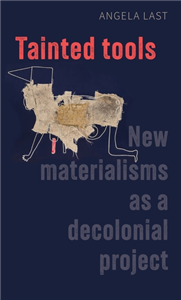
Tainted Tools makes a provocative intervention into the fraught intersection between new materialist and decolonial approaches. Despite a common project of challenging European philosophical and social categories and hierarchies, the discourses are considered incompatible. Most prominently, new materialisms have been accused of harbouring a White vision of the human while disregarding the racist resonances of the 'nonhuman'. The book traces this conflict to an earlier meeting point of new materialist and decolonial projects, which came about through the experimental combination of Marx and Nietzsche. Used to fight fascism, Stalinism and colonialism, this politically contentious fusion gradually became depoliticised, leading to unaddressed tensions today. While the book does not argue for a revival of these early 'new materialisms', it brings their strategies into dialogue with today's new materialisms and decolonial approaches to develop greater theoretical solidarity in times of crisis.
-
Trusted Partner
 The ArtsDecember 2024
The picture politics of Sir Francis Carruthers Gould
Britain's pioneering political cartoonist
by Mark Bryant
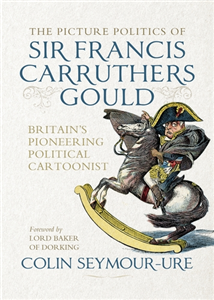
This is the first major study of Britain's pioneering graphic satirist, Sir Francis Carruthers Gould (1844-1925), the first staff political cartoonist on a daily newspaper in Britain, and the first of his kind to be knighted. Written by the distinguished media historian, Colin Seymour-Ure, it is essential reading for anyone interested in cartoons, caricature and illustration and will also be welcomed by students of history, politics and the media. It examines Gould's career in Fleet Street until his retirement after the First World War. It also discusses his illustrations for magazines and books and there is an analysis of his use of symbolism and literary allusion to lampoon such eminent politicians as Gladstone and Joseph Chamberlain. As Lord Baker says in his Foreword, this book is 'a major contribution to our knowledge of British cartooning.'
-
Trusted Partner
 Colonialism & imperialismMay 2017
Hong Kong and British culture, 1945–97
by Mark Hampton. Series edited by Andrew S. Thompson, John Mackenzie
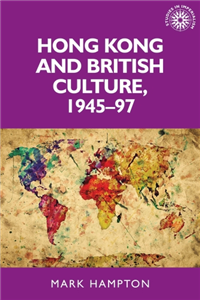
This book examines the British cultural engagement with Hong Kong in the second half of the twentieth century. It shows how the territory fit unusually within Britain's decolonisation narratives and served as an occasional foil for examining Britain's own culture during a period of perceived stagnation and decline. Drawing on a wide range of archival and published primary sources, Hong Kong and British culture, 1945-97 investigates such themes as Hong Kong as a site of unrestrained capitalism, modernisation, and good government, as well as an arena of male social and sexual opportunity. It also examines the ways in which Hong Kong Chinese embraced British culture, and the competing predictions that British observers made concerning the colony's return to Chinese sovereignty. An epilogue considers the enduring legacy of British colonialism.


