
Vanny Gani
The Awakening of the Stars, a novel in the mystical fiction category & Aerial Roots a drama and comedy about the author grandmother.
View Rights Portal
The Awakening of the Stars, a novel in the mystical fiction category & Aerial Roots a drama and comedy about the author grandmother.
View Rights Portal Trusted Partner

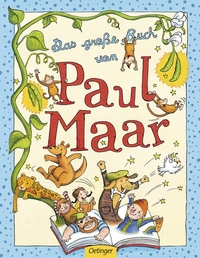
"Das große Buch von Paul Maar" ist eine liebevolle Zusammenstellung der beliebtesten Geschichten des renommierten Autors, die zu seinem 80. Geburtstag erschienen ist. Es vereint Klassiker wie die Abenteuer des frechen Sams, des tätowierten Hundes und Herrn Bello mit einer Vielzahl von bekannten und beliebten Reimen und Gedichten. Neben diesen Klassikern finden sich auch brandneue Texte und Illustrationen, die das Buch zu einem Schatz für jedes Familienbuchregal machen. Die Geschichten sind in verschiedene Themenbereiche gegliedert, die von magischen Erzählungen über skurrile Begebenheiten bis hin zu alltäglichen Herausforderungen reichen und laden zum gemeinsamen Lesen, Lachen und Staunen ein. "Das große Buch von Paul Maar" ist nicht nur ein Buch zum Vorlesen und Herumstöbern, sondern auch ein Werk, das zum Wiedererkennen und Entdecken einlädt und somit Generationen verbindet. "Das große Buch von Paul Maar" ist ein Muss für jede Familienbibliothek und ein Zeugnis der zeitlosen Kreativität eines der bedeutendsten Kinderbuchautoren. Es lädt zum gemeinsamen Erleben, Entdecken und Schmunzeln ein und beweist, dass gute Geschichten nie an Zauber verlieren. Umfangreiche Sammlung: Bietet eine breite Auswahl an Geschichten, Reimen und Gedichten von Paul Maar, inklusive neuer Texte und Illustrationen. Vielseitige Themen: Die Geschichten decken ein weites Spektrum an Themen ab, von magischen Abenteuern bis zu alltäglichen Herausforderungen, und bieten somit Unterhaltung für jede Stimmung und Gelegenheit. Für alle Altersgruppen: Eignet sich hervorragend als Familienbuch, das Kindern ab 6 Jahren, Eltern und Großeltern gleichermaßen Freude bereitet. Hochwertige Gestaltung: Mit liebevollen und detailreichen Illustrationen versehen, die die Texte perfekt ergänzen und zum Leben erwecken. Ideales Geschenk: Als Jubiläumsbuch zum 80. Geburtstag von Paul Maar ein wunderbares Geschenk für Fans und jene, die es werden wollen. Bildungsaspekt: Neben Unterhaltung bieten die Geschichten auch wertvolle Lehren und fördern die Kreativität sowie das Leseverständnis bei jungen Leserinnen und Lesern.
Trusted Partner

 Trusted Partner


This book, the world's first biography of Paul Watzlawick, written by his great-niece, describes the life of this philosopher, therapist, and best-selling author. Paul Watzlawick had a talent for languages and he led an adventurous life, from his childhood in Villach to studying in Venice after the war, to analyst training under C. G. Jung in Zurich, an attempt at establishing himself in India and then in El Salvador as a therapist, and finally to the Mental Research Institute (MRI) in the United States, headed by Don D. Jackson, a venerable scientist. This marked the beginning of the second half of his life, his amazing career as a communication researcher, a pioneer of systemic therapy, a radical constructivist, and a great thinker regarding the divisions between East and West. With many letters, lectures, interviews, and statements from contemporary witnesses and family members, this book makes Paul Watzlawick accessible as a human being and as a spiritually inspired, leading 20th century thinker. It includes a variety of unpublished material from Watzlawick, and introduces a comprehensive and exciting picture of the scientist and cosmopolitan person, Paul Watzlawick. Target Group: For people interest in Paul Watzlawick, communication sciences, systemic therapy, and constructivism.
Trusted Partner


This book is our principal source for the history of the Kingdom of Sicily in the troubled years between the death of its founder, King Roger, in February 1154 and the spring of 1169. It covers the reign of Roger's son, King William I, known to later centuries as 'the Bad', and the minority of the latter's son, William II 'the Good'. The book illustrates the revival of classical learning during the twelfth-century renaissance. It presents a vivid and compelling picture of royal tyranny, rebellion and factional dispute at court. Sicily had historically been ruled by tyrants, and that the rule of the new Norman kings could be seen, for a variety of reasons, as a revival of that classical tyranny. A more balanced view of Sicilian history of the period 1153-1169 has been provided as an appendix to the translation in the section of the contemporary world chronicle ascribed to Archbishop Romuald II of Salerno, who died in April 1181. In particular the chronicle of Romuald enables us to see how the papal schism of 1159 and the simultaneous dispute between the German Emperor Frederick Barbarossa and the north Italian cities affected the destiny of the kingdom of Sicily. In contrast to the shadowy figure of Hugo Falcandus, the putative author of the principal narrative of mid-twelfth-century Sicilian history, Romuald II, Archbishop of Salerno 1153-1181, is well-documented.
Trusted Partner
Trusted Partner

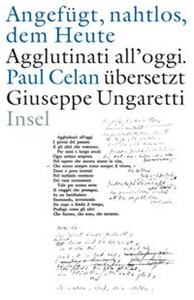
Die Fragilität der Dinge, die Bedrohtheit der Existenz und, als ihr Begrenzendes, das Unermeßliche, aus dem Alles aufsteigt, flüchtig aufglänzt, in dem es wieder versinkt – das ist die Erfahrung, aus der heraus Ungaretti nach dem Ersten Weltkrieg zu dichten begonnen hat. Sie ist der Grundriß seines Dichtens geblieben.« Mit dieser Ankündigung erschien 1968 Paul Celans übersetzung von Giuseppe Ungarettis La terra promessa (1950) und Il taccuino del vecchio (1960) in einer zweisprachigen Ausgabe im Insel Verlag. Nach Ingeborg Bachmanns nur wenige Jahre älterer übersetzung (1961) trug Paul Celans Engagement entscheidend zur besonderen Stellung Giuseppe Ungarettis in Deutschland bei. Celans Übertragung ist in Ungarettis Werk auf besondere Weise eingegangen. In die Originalausgaben der Zyklen hat er, mit Ausnahme weniger eigenständiger Seiten, seine übersetzung hineingeschrieben, den gedruckten Text mit seiner handschriftlichen Arbeit unmittelbar konfrontiert. Den Faksimiles folgen Celans Übertragung nach dem Text der Erstausgabe, sein Briefwechsel mit der Lektorin des Insel Verlages, Anneliese Botond, die ganz unterschiedlich akzentuierten Pressestimmen und ein Nachwort, in dem die Geschichte der Übertragung dokumentiert und Celans übersetzungskonzept analysiert und bewertet wird. Die Genese der Übertragung, die »tangentiale« Berührung von übersetzung und Original, wird in der neuen Ausgabe vollständig als Faksimile abgebildet. »Diese Dichtung hatte das Glück, von Ihnen meisterhaft gedeutet zu werden.« Giuseppe Ungaretti über Paul Celans Übertragungen seiner Lyrik
Trusted Partner
Trusted Partner
Trusted Partner

 Trusted Partner

 Trusted Partner
Trusted Partner
Trusted Partner
Trusted Partner
Trusted Partner
Trusted Partner
Trusted Partner
Trusted Partner
Trusted Partner
 Trusted Partner
 Trusted Partner
 Trusted Partner



