
Lorenza Estandia Literary Agency
The Catalogue has 114 titles, picture books, illustrated stories and novels poetry, plays, series, and non-fiction, and by readers age from 0 to 18+ years.
View Rights Portal
The Catalogue has 114 titles, picture books, illustrated stories and novels poetry, plays, series, and non-fiction, and by readers age from 0 to 18+ years.
View Rights Portal

Dieses Buch soll dazu beitragen, die philosophischen Wurzeln von Webers Methodologie freizulegen und insbesondere den Zusammenhang seiner Position mit der Wertlehre Rickerts aufzuklären. Dabei bildet die Frage nach dem Verhältnis zwischen der Begründung der kulturwissenschaftlichen Objektivität bei Weber auf der einen und Rickerts Lösung des Problems der Wertobjektivität auf der anderen Seite den Kernpunkt der Untersuchung. Anhand der Bestimmung dieses Verhältnisses soll nicht nur gezeigt werden, daß Webers Begriff der kulturwissenschaftlichen Objektivität von Voraussetzungen ausgeht, die in Rickerts Werttheorie angelegt sind, sondern auch, daß es eben diese Voraussetzungen sind, die eine plausible Lösung des Objektivitätsproblems unmöglich machen.
 Trusted Partner


Aus dem Englischen von Vanessa Kreitlow
Trusted Partner

 Trusted Partner

Zu Kant (aus dem Vorwort von Georg Simmel, S. 9): »Die Absicht dieses Buches ist keine philosophie-geschichtliche, sondern eine rein philosophische. Es gilt ausschließlich, diejenigen Kerngedanken, mit denen Kant ein neues Weltbild gegründet hat, in das zeitlose Inventar des philosophischen Besitzes – und wenigstens annäherungsweise wird ein solcher auch zeitlich bedingten Wesen erwerbbar sein – einzustellen, unabhängig von allen Anwendungen und Ergänzungen, die zwar innerhalb des Kantischen Gesamtsystems, nicht aber nach den für die Weltanschauung entscheidenden Gesichtspunkten mit jenen Hauptsachen verbunden sind; es gilt, die Kantischen Probleme und Lösungen an dem zu messen, was man wohl die Lebensfragen der Philosophie nennen kann.« Die Probleme der Geschichtsphilosophie (aus dem Vorwort von Georg Simmel, S. 229): »Den Gegenstand dieses Buches bildet das Problem: wie aus dem Stoffe der unmittelbaren gelebten Wirklichkeit das theoretische Gebilde werde, das wir Geschichte nennen. Es will zeigen, daß diese Umbildung eine radikalere ist, als das naive Bewußtsein anzunehmen pflegt.«
Trusted Partner
Trusted Partner
Trusted Partner
Trusted Partner

 Trusted Partner
 Trusted Partner


Eyebright, Asian holly oak, butcher‘s broom – pharmaceutical drugs play an important role in the studies and profession of pharmacists, and must be learned. The author duo has compiled profiles for 406 important medicinal drugs, including - coloured image of the physical appearance, - name, family, ingredients, effect, application, - synonyms and instructions for use. New in the 2nd edition: - update of all profiles, - over 80 new drugs, including TCM and homeopathy. Thanks to the photo and fact sheet, the drugs can be internalised in no time at all – optimal for exams and practice!
Trusted Partner


There are many things in life that we are (more or less) free to choose: our circle of friends, our workplace, our place of residence. However, we have to take some communities as they come: We cannot choose our family or our neighbours, for example. Why this does not only lead to the much-vaunted idyllic sense of belonging and what tensions forced social relationships can cause: This is the subject of this fascinating collection of essays by Bernd Imgrund. It sheds light on a piece of social history that we all know from our own experience: who hasn't had an argument with their immediate neighbour or made fun of the residents of the neighbouring district? But it is by no means only negative aspects that characterise neighbourly relations. Pride in one's neighbourhood, help within a village community: the many advantages of a social community, its importance and its representation in art and literature have also found their way into this book.
Trusted Partner

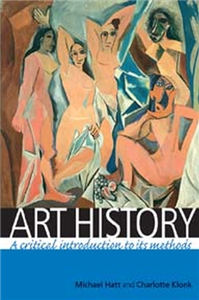
Art History: A critical introduction to its methods provides a lively and stimulating introduction to methodological debates within art history. Offering a lucid account of approaches from Hegel to post-colonialism, the book provides a sense of art history's own history as a discipline from its emergence in the late-eighteenth century to contemporary debates. By explaining the underlying philosophical and political assumptions behind each method, along with clear examples of how these are brought to bear on visual and historical analysis, the authors show that an adherence to a certain method is, in effect, a commitment to a set of beliefs and values. The book makes a strong case for the vitality of the discipline and its methodological centrality to new fields such as visual culture. This book will be of enormous value to undergraduate and graduate students, and also makes its own contributions to ongoing scholarly debates about theory and method. ;



