
Thornapple Press
Publisher of bestselling and award-winning books including Polysecure, More Than Two and Love’s Not Color Blind.
View Rights Portal
Publisher of bestselling and award-winning books including Polysecure, More Than Two and Love’s Not Color Blind.
View Rights Portal
Griots Lounge and its imprints offers traditional publishing and sundry services to creative talents across Africa, as well as children friendly literature.
View Rights Portal

For a brief moment in 2019 Britain's politics looked like it might be transformed. Just when it seemed that the divisions within and across British political parties over Brexit could not get any more intense, 7 Labour and 3 Conservative MPs broke away to form The Independent Group (TIG) - later Change UK. This is the first book to explore the meteoric lifespan of that party, within the wider context of the experiences of other small political groupings in the House of Commons. Ultimately, it shows why the party failed and disbanded after just a few months. Timely and thoroughly researched, Louise Thompson's book takes us deep inside the struggles facing MPs who leave behind the comforts of the large political parties. Drawing on interviews with current and former politicians, it explores the practicalities of being a small party MP in the Commons. What challenges face you? Who can you turn to? And just how can you make an impact? Crisply written for the non-specialist reader, this fascinating book opens a window onto the perilous world of parliamentary politics.
 Trusted Partner
Trusted Partner
Trusted Partner

In one of the first monographs of its kind to focus on the aesthetic and emotional impact of lighting in cinema, Lara Thompson looks at the way light informs the cinematic experience, from constructing star identities, sculpting natural light and creating imaginary worlds, to the seductive power of darkness, fading representations of the past and arresting twilight encounters. This groundbreaking and accessible introductory study offers a unique insight into the way illumination has transcended its diffuse functional boundaries and been elevated to a position of narrative and emotional importance, transforming it from an unobtrusive element of film style to an expressive and essential component. It includes analyses of over fifty renowned international films, discussed in inventive and illuminating combinations, from cinema's earliest moments to its most recent digital manifestations, and is essential reading for all those who want to understand what film light means and how it makes us feel. ;
Trusted Partner
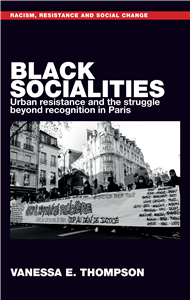
From author: This is a cutting-edge exploration of black urban politics in Parisian racialized working class and working poor districts, the formation of abolition geography, and the possibilities of new forms of political blackness. In Black Socialities. Urban resistance and the struggle beyond recognition in Paris, Vanessa E. Thompson argues that black urban politics in the French banlieues are multi-racial and spatially grounded towards abolition. Based on a close engagement with urban black activist practices against racial imagery in the city, policing and state racism, and housing insecurity, she shows how radical anti-racism goes beyond struggles for recognition and unfolds alongside new formations of political blackness that is based on urban conviviality. This form of black politics has much to teach us in this current conjuncture of liberal anti-racism and state recognition politics.
Trusted Partner
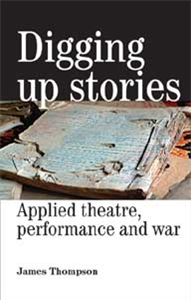
In 'Digging up stories', James Thompson explores the problems of theatre practice in communities affected by war and exclusion. Each chapter or 'story' is written in a lively and accessible style and draws on a range of contemporary performance theories. The chapters discuss: - participatory theatre in refugee camps - theatre workshop and stories of a massacre - traditional dance-dramas in an insurgent controlled village - 'Forum' theatre with the Mahabharata - ethical issues - the struggle to teach the author to dance 'Digging up stories' documents a range of theatre practice and includes project reports, ethnographic accounts, performance analysis and diary-style reflection. Taken from Thompson's research and practice in Sri Lanka, these diverse examples question the link between applied theatre, traditional performance and performances in everyday life. The book blurs lines between research and travel writing to create rich and provocative accounts of applying theatre in a troubled setting. ;
Trusted Partner


Zweifellos ist es ein verlegerisches Wagnis, DʼArcy Thompsons legendäres Buch im Zeitalter des Quasi-Ausschließlichkeitsanspruchs von Biochemie und Molekularbiologie in einer Neuauflage und dazu in deutscher Sprache herauszubringen. Wer von den jungen Biologen verbindet heute noch mit Thompsons Namen einen Begriff? Wer war dieser Mann? Was macht sein Werk noch heute druckenswert? Man könnte vielleicht aphoristisch sagen: DʼArcy Thompson war einer jener Polyhistores, von denen man meinte, sie seien mit dem Verklingen des Barock ausgestorben und in späterer Zeit nicht einmal mehr denkbar. Mithin ein verspäteter Barock-Gelehrter? Keineswegs, sondern einer der Pioniere der modernsten Biologie! Er vereinigte in sich das Denkvermögen des Mathematikers und Physikers mit dem des Linguisten und des Biologen, und er verfügt über das Handwerkliche aller drei dieser – ach doch so verschiedenen – Wissensgebiete. Dieses Buch hat eine widersprüchliche Geschichte: 1917 erschien die erste Auflage – damals vollendete Ketzerei – mit 793 Seiten Umfang, 1942 eine Erweiterung auf 1116 Seiten. Die posthume Neuauflage von Bonner – sie liegt der Übersetzung zugrunde – knüpft an die erste Auflage an, läßt vieles aus (weil es nicht mehr aktuell ist) und bringt zahlreiche Kommentare des Herausgebers. Es handelt sich also bei der vorliegenden Ausgabe um eine »Klassikeredition in Auswahl und mit Kommentar versehen«. Dies ist bei einem Buch mit einer erst 55jährigen Geschichte bemerkenswert. Um es vorwegzunehmen: von Thompsons Konzeption ist nichts Wesentliches verlorengegangen, und die Kommentare machen die Orientierung für denjenigen, der die Literatur nicht selbst kennt, leichter. (So. J.H. Scharf, Halle, 1974 in seiner Besprechung der deutschen Erstausgabe.)
Trusted Partner

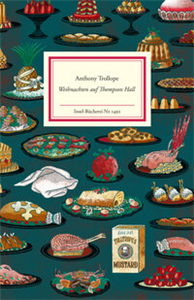
Brown am Abend vor Weihnachten in einem Pariser Hotel mit Husten krank im Bett liegt, kommt ihm das nicht ganz ungelegen: Seine Frau wollte dieses Jahr unbedingt im Kreise der Großfamilie auf dem englischen Familiensitz feiern, doch er hat ganz und gar keine Lust, am kommenden Tag früh dorthin aufzubrechen. Mrs. Brown will keine Ausflüchte gelten lassen, und damit ihr Mann rasch wieder zu Kräften kommt, verspricht sie ihm einen Senfwickel, der seinen Husten mildern soll. Doch woher mitten in der Nacht in einem fremden Hotel Senf nehmen? Mrs. Brown irrt durch die dunklen Gänge, doch als es ihr endlich gelingt, den Senfwickel anzulegen, erlebt sie eine Überraschung … Eine herrlich vergnügliche Weihnachtsgeschichte der etwas anderen Art mit bestem britischen Humor von Anthony Trollope.
Trusted Partner
 Trusted Partner
Louise Armstrong, als Kind selbst Opfer sexueller Mißhandlungen, hat Gespräche mit fast 200 Frauen geführt, die ebenfalls im Kindesalter sexuell mißbraucht worden waren. Im vorliegenden Buch sind die Erfahrungen von 16 dieser Frauen und der Autorin selbst dargestellt. Dabei wird deutlich, was es mit den vielen Mythen um das wohlbehütete Geheimnis des Inzests in Wahrheit auf sich hat. Mythos: Inzest ist »tabu«. – Verschiedenen Schätzungen zufolge sind in Amerika mehr als 120 Millionen Frauen im Kindesalter sexuell mißbraucht worden. Kein anderes Tabu ist mit soviel Gewalt verbunden wie dieses. Louise Armstrong kommt zu dem Schluß, daß in Wahrheit nicht der Inzest das Tabu ist, sondern das »Sprechen« über den Inzest. Mythos: Bei den Mädchen handelt es sich um »verführerische« Jugendliche. – Tatsächlich waren die meisten Frauen, mit denen Louise Armstrong gesprochen hat, gerade drei, vier, fünf oder sechs Jahre alt, als der Mißbrauch begann. Mythos: Die Mädchen »laden dazu ein« und genießen es. – Die Berichte der Frauen zeigen, daß sie schreckliche Angst hatten und in extreme Verwirrung gestürzt wurden. Mythos: Die Mütter wissen es immer; oder sie glauben den Mädchen niemals. – Tatsächlich wissen die Mütter es oft, verschweigen es aber aus Angst vor den sozialen Folgen.
Trusted Partner
Trusted Partner
The Arctic region has been the subject of much popular writing. This book considers nineteenth-century representations of the Arctic, and draws upon an extensive range of evidence that will allow the 'widest connections' to emerge from a 'cross-disciplinary analysis' using different methodologies and subject matter. It positions the Arctic alongside more thoroughly investigated theatres of Victorian enterprise. In the nineteenth century, most images were in the form of paintings, travel narratives, lectures given by the explorers themselves and photographs. The book explores key themes in Arctic images which impacted on subsequent representations through text, painting and photography. For much of the nineteenth century, national and regional geographical societies promoted exploration, and rewarded heroic endeavor. The book discusses images of the Arctic which originated in the activities of the geographical societies. The Times provided very low-key reporting of Arctic expeditions, as evidenced by its coverage of the missions of Sir John Franklin and James Clark Ross. However, the illustrated weekly became one of the main sources of popular representations of the Arctic. The book looks at the exhibitions of Arctic peoples, Arctic exploration and Arctic fauna in Britain. Late nineteenth-century exhibitions which featured the Arctic were essentially nostalgic in tone. The Golliwogg's Polar Adventures, published in 1900, drew on adult representations of the Arctic and will have confirmed and reinforced children's perceptions of the region. Text books, board games and novels helped to keep the subject alive among the young.
Trusted Partner
Trusted Partner

Max Dax, seit 2006 Chefredakteur des Musikmagazins Spex, gab zuvor die Interviewzeitschrift Alert heraus. Dabei entstanden gesprochene (Selbst-)Porträts von (Techno-)Musikern, Künstlern, Regisseuren und Schriftstellern und ganz nebenbei eine Zwischenbilanz der Gegenwartskultur. Zu Wort kommen in dieser Auswahl: Aphex Twin, Blixa Bargeld, David Bowie, Vashti Bunyan, Diedrich Diederichsen, DJ Hell, Kim Gordon, Juliette Gréco, Charlie Haden, Herbie Hancock, Lee Hazelwood, Jenny Holzer, Dennis Hopper, Jörg Immendorff, Lemmy Kilmister, Martin Kippenberger, Alexander Kluge, Claude Lanzmann, Arto Lindsay, Marcel Marceau, Johnny Marr, Thomas Ruff, Helge Schneider, Mark E. Smith, Bernhard Sumner, Mayo Thompson, Caetano Veloso, Roger Waters und Townes van Zandt.
Trusted Partner
Trusted Partner
 Trusted Partner
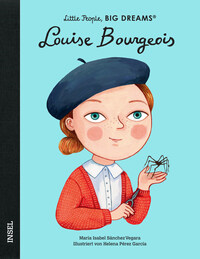
Als Louise klein war, wurde ihre Mutter sehr krank. Sie war sehr traurig und hatte Angst, aber zu malen tröstete sie und gab ihr Hoffnung. Später studierte Louise Kunst und ging in die USA. Dort stellte sie große Skulpturen aus ganz verschiedenen Materialien her. Mit ihren ungewöhnlichen Kunstwerken überraschte sie die Menschen immer wieder. Ihr Mut und ihr Talent inspirieren heute Künstler auf der ganzen Welt. Little People, Big Dreams erzählt von den beeindruckenden Lebensgeschichten großer Menschen: Jede dieser Persönlichkeiten, ob Künstlerin, Pilotin oder Wissenschaftler, hat Unvorstellbares erreicht. Dabei begann alles, als sie noch klein waren: mit großen Träumen.
Trusted Partner
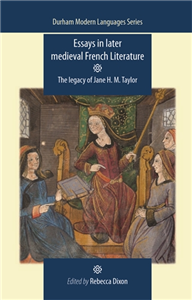
Over the course of a career spanning five decades, Jane Taylor has shown a commitment to the rehabilitation of the more neglected aspects of later medieval French literature. This volume brings together original contributions from scholars who have worked alongside Taylor and directly or indirectly benefitted from her example. The chapters demonstrate their authors' link to this legacy, and concomitantly underline the vibrancy and breadth of approach which is the hallmark of current later medieval studies. The essays in the collection centre on a number of key issues in the field: notions of literary self-consciousness and what it means to come after an avatar; issues of intertextuality and the appeal to past models in the creation of a new literary aesthetic (or a new literary criticism); and interdisciplinary questions of translation, reworking, and continuation. Essays in later medieval French literature seeks not only to illustrate the buoyant state of later medieval French literary studies but also, in so doing, to show how in broader terms responding to the legacy of an illustrious predecessor has not pejorative but positive consequences. ;
Trusted Partner
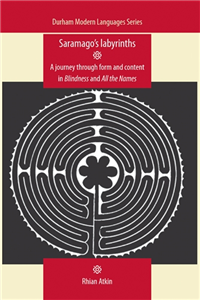
Saramago's labyrinths is the first book-length study to focus on the relationship between form and the content in Saramago's writing, paying particular attention to Ensaio sobre a Cegueira (Blindness) and Todos os Nomes (All the Names). Atkin provides a close textual analysis of Blindness and All the Names, and suggests that the labyrinth pervades Saramago's work, both in the form of the text, and as a literary and philosophical trope. She makes clear connections between these novels and Saramago's other literary works, and identifies ways in which Saramago causes the reader to return to and consider the philosophical, epistemological and ethical concerns and dilemmas that are recurrent in his literary output. Atkin's jargon-free approach to Saramago's complex ideas, and her thorough understanding of Portuguese history, culture and society, make this an accessible yet challenging guide to Saramago's fiction, for undergraduate and postgraduate students and scholars with or without prior knowledge of the Portuguese context. ;
Trusted Partner
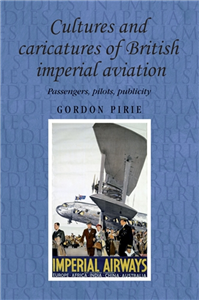
The new activity of trans-continental civil flying in the 1930s is a useful vantage point for viewing the extension of British imperial attitudes and practices. Cultures and caricatures of British imperial aviation examines the experiences of those (mostly men) who flew solo or with a companion (racing or for leisure), who were airline passengers (doing colonial administration, business or research), or who flew as civilian air and ground crews. For airborne elites, flying was a modern and often enviable way of managing, using and experiencing empire. On the ground, aviation was a device for asserting old empire: adventure and modernity were accompanied by supremacism. At the time, however, British civil imperial flying was presented romantically in books, magazines and exhibitions. Eighty years on, imperial flying is still remembered, reproduced and re-enacted in caricature. ;



