
GCE - Gabriele Capelli Editore
The Gabriele Capelli Editore (GCE) is a small Swiss publishing house, primarily focused on fiction but occasionally expanding into essays and poetry.
View Rights Portal
The Gabriele Capelli Editore (GCE) is a small Swiss publishing house, primarily focused on fiction but occasionally expanding into essays and poetry.
View Rights Portal


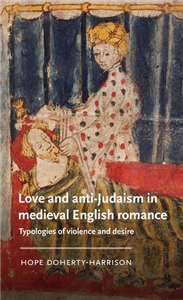
Love and anti-Judaism is a new examination of medieval romance for the questions it poses of the most significant events in Christian history. Providing new readings of Sir Gawain and the Green Knight, Sir Orfeo, Sir Gowther and Sir Amadace, the book argues that romance explores depictions of love-and the sacrifices it may necessitate-in the Hebrew Bible, especially where they do not easily fit into interpretations asserting that this history must prefigure Christ and the crucifixion. An examination of anti-Judaism as a discourse of violence and desire that could be turned inwardly to expose the irresolution in Christianity, this book will provoke new investigations into the religious crises of medieval romance.
 Trusted Partner
Trusted Partner
Trusted Partner
Trusted Partner
Trusted Partner
Trusted Partner
Trusted Partner
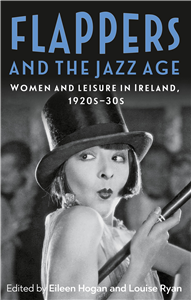
People's ordinary, everyday lives - and more specifically, their leisure activities - are often obscured within existing academic research on 1920s-30s Ireland. This book seeks to redress that neglect by exploring the relationship between identity, recreation, and culture both North and South of the border, with particular attention to women's lived experiences. Leisurely pursuits during this period were commonly overshadowed by religious influence and the nation-building projects in post-partition Ireland. Nevertheless, there existed alternative spaces, where people enjoyed dancing, singing, listening to music, shopping, glamour, reading magazines, swimming, travelling, and going to the cinema. Such activities reflected international trends beyond national borders. This book documents those activities and spaces through a feminist lens and intersectional analysis of gender, class, religion and rural/urban identities. It brings together multi-disciplinary perspectives including cultural studies, architecture, geography, fashion, and musicology. In so doing, we present new insights and advance understanding of this under-researched aspect of Irish history.
Trusted Partner
Trusted Partner
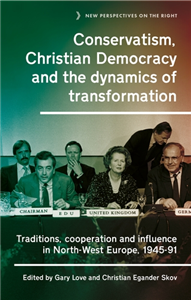
Conservatism, Christian Democracy, and the Dynamics of Transformation compares the centre-right political traditions of Britain, the Nordic countries, France, West Germany, and Austria and looks for evidence of political cooperation and influence across borders during the period 1945-90. The book explores howa variety of intellectuals, politicians, and political parties transformed their politics in response to major economic, social, and political challenges and seeks to explain why conservatives and Christian democrats came to feel that they belonged to a wider centre-right political family by the end of this period. It also examines why these political traditions found it difficult to cooperate with each other after the Second World War and why they decided to invest more political capital in inter-party relations and wider transnational projects from the 1960s. As the book shows, these developments resulted in two new centre-right internationals: the European Democrat Union and the International Democrat Union.
Trusted Partner
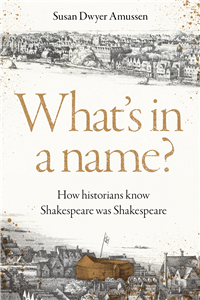
A compelling tour of Shakespeare's England that makes a powerful contribution to the 'authorship question'. How do we know Shakespeare was Shakespeare? Could a glover's son who left school at fifteen really be the author behind such masterpieces as Hamlet, King Lear and The Tempest? Yes! says historian Susan Amussen. She transports readers back to early modern England, to travel the path that carried William Shakespeare from humble origins in Stratford to literary greatness on the London stage. This was a society undergoing rapid change. Grammar schools made education in Latin and Greek available to commoners, while touring players brought the latest dramatic productions to the masses. And in London, a metropolis filled with European visitors, ordinary people had the opportunity to see courtly life up close. No serious historian doubts that Shakespeare was the author of the plays that bear his name. Susan Amussen shares what they know: that Shakespeare's England was a complex and cosmopolitan place, with everything a talented young playwright needed to develop his craft and furnish his imagination.
Trusted Partner
Trusted Partner

Drawing on a wide range of archival sources, Karen Garner documents international women's history through the lens of the long-established Western-led international organisations that defined and dominated women's involvement in global politics from the 1925 founding of the Joint Standing Committee of Women's International Organisations up through the UN Decade for Women (1976-85). Documenting specific global campaigns in episodes that span the twentieth century, Garner includes biographical information about lesser known international leaders as she discusses important historic debates regarding feminist goals and strategies among women from the East and West, North and South. This interdisciplinary study addresses questions of interest to historians, political scientists, international relations scholars, sociologists, and feminist scholars and activists whose work promotes women's and human rights. ;
Trusted Partner
Trusted Partner


Gabriele Munter zeichnet zu Beginn dieses Jahrhunderts für ihr Patenkind ein Bilderbuch, das hier zum ersten Mal veröffentlicht wird.
Trusted Partner
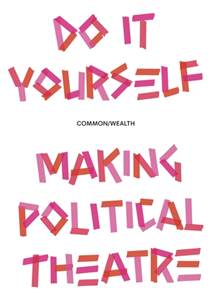
A unique guide to creating political theatre, produced by one of the UK's most exciting companies. Do It Yourself is a vital resource for anyone interested in exploring theatre culture grounded in and produced by working-class, multi-racial communities. Designed for artists, activists and community organisers, the book offers a step-by-step guide to creating political theatre that is relevant, impactful and rooted in the lives of everyday people. Common Wealth have spent fifteen years working at the cutting edge of political theatre. In Do It Yourself, they share their experimental and activist approach to performance-making, based on DIY principles and the belief that ground-breaking theatre can be made with anyone, anywhere, in ways that truly resonate with the communities it serves. Do It Yourself introduces Common Wealth's artistic and political ethos, provides unique insights into their most significant performances and offers practical exercises for creating your own work. But this is not just a manual. It is a celebration of culture as a collective endeavour, one that can challenge the status quo and inspire change.
Trusted Partner
Trusted Partner

'Es geht so ein nachdenklicher, welker Duft umher wie von Blumen, die die Sonne getrocknet und die der Wind gepreßt hat, und es ist Herbst.' Der Herbst war für Rilke eine ganz besondere Jahreszeit. In Gedichten, Briefen und Texten beschwört er den kraftvollen Sturm ebenso wie die schillernden Farben und verewigt so seine Eindrücke von der Jahreszeit, die er liebt und feiert wie keine andere. Wer den Herbst liebt, wird sich bei Rilke festlesen.
Trusted Partner
The Family of Love charts a successful love intrigue between the cash-strapped Gerardine, and Maria, the sequestered niece of the mercenary Doctor Glister. Their romance unfolds against the dissection of two citizen marriages, the Glisters' and the Purges'. Mistress Purge attends Familist meetings independently, arousing her husband's suspicions about her marital fidelity. Two libertines, Lipsalve and Gudgeon, go in search of sex and solubility (freedom from constipation), receiving more than they bargain for in respect of the latter. This scholarly edition of Family of Love marks the first occasion on which the comedy is attributed to Lording Barry in print. It brings together literary and historical discussion with a thorough analysis of the play's disputed authorship. Tomlinson highlights Barry's rich vein of burlesque humour in a comedy that combines magic, a trunk, and a mock-court session with vigorous colloquial language.
Trusted Partner
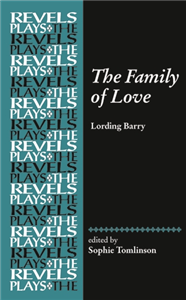
The Family of Love charts a successful love intrigue between the cash-strapped Gerardine, and Maria, the sequestered niece of the mercenary Doctor Glister. Their romance unfolds against the dissection of two citizen marriages, the Glisters' and the Purges'. Mistress Purge attends Familist meetings independently, arousing her husband's suspicions about her marital fidelity. Two libertines, Lipsalve and Gudgeon, go in search of sex and solubility (freedom from constipation), receiving more than they bargain for in respect of the latter. This scholarly edition of Family of Love marks the first occasion on which the comedy is attributed to Lording Barry in print. It brings together literary and historical discussion with a thorough analysis of the play's disputed authorship. Tomlinson highlights Barry's rich vein of burlesque humour in a comedy that combines magic, a trunk, and a mock-court session with vigorous colloquial language.
Trusted Partner
 Trusted Partner



