Peter Lang Group
Peter Lang Group specializes in the Humanities and Social Sciences, covering the complete publication spectrum from monographs to student coursebooks.
View Rights Portal
Peter Lang Group specializes in the Humanities and Social Sciences, covering the complete publication spectrum from monographs to student coursebooks.
View Rights Portal
Representing rights for Duke University Press, Syracuse University Press, University of Georgia Press,University of Nebraska Press,University of New Mexico Press, University of North Carolina Press, Vanderbilt University Press and University of West Indies Press
View Rights Portal

Clive Barker: Dark imaginer explores the diverse literary, film and visionary creations of the polymathic and influential British artist Clive Barker. In this necessary and timely collection, innovative essays by leading scholars in the fields of literature, film and popular culture explore Barker's contribution to gothic, fantasy and horror studies, interrogating his creative legacy. The volume consists of an extensive introduction and twelve groundbreaking essays that critically reevaluate Barker's oeuvre. These include in-depth analyses of his celebrated and lesser known novels, short stories, theme park designs, screen and comic book adaptations, film direction and production, sketches and book illustrations, as well as responses to his material from critics and fan communities. Clive Barker: Dark imaginer reveals the breadth and depth of Barker's distinctive dark vision, which continues to fascinate and flourish.
 Trusted Partner

The eleventh-century papal reform transformed western European Church and society and permanently altered the relations of Church and State in the west. The reform was inaugurated by Pope Leo IX (1048-54) and given a controversial change of direction by Pope Gregory VII (1073-85). This book contains the earliest biographies of both popes, presented here for the first time in English translation with detailed commentaries. The biographers of Leo IX were inspired by his universally acknowledged sanctity, whereas the biographers of Gregory VII wrote to defend his reputation against the hostility generated by his reforming methods and his conflict with King Henry IV. Also included is a translation of Book to a Friend, written by Bishop Bonizo of Sutri soon after the death of Gregory VII, as well as an extract from the violently anti-Gregorian polemic of Bishop Benzo of Alba (1085) and the short biography of Leo IX composed in the papal curia in the 1090s by Bishop Bruno of Segni. These fascinating narrative sources bear witness to the startling impact of the papal reform and of the 'Investiture Contest', the conflict of empire and papacy that was one of its consequences. An essential collection of translated texts for students of medieval history.
Trusted Partner

This is a translation of the eleventh-century Latin Annals of Lampert, monk of Hersfeld, with detailed commentary and introduction. No translation has hitherto been published in English, despite the fact that it is one of the best known of all the narrative sources of the Middle Ages, constantly mentioned in the English secondary literature. Lampert produced the most detailed account of the events of 1056-77 (the minority of Henry IV of Germany and the first decade of his personal rule), a period of crisis and rebellion culminating in the conflict between the king and Pope Gregory VII. He is widely regarded as 'the unrivalled master among medieval historians' and 'a superb story-teller', noted for his vivid characterisation and narrative. An English translation of this work is of the greatest value to teachers and students of medieval history and also of interest to the general reader of European literature.
Trusted Partner


Nach Geist und Natur. Eine notwendige Einheit hat Gregory Bateson an dem vorliegenden Buch gearbeitet, das er zu Lebzeiten aber nicht mehr zum Abschluß bringen konnte und das von seiner Tochter Mary Catherine fertiggestellt wurde.Ausgehend von dem, was wir über die biologische Welt wissen, sowie davon, was wir über das »Erkennen« zu begreifen vermögen, möchte Bateson erklären, was unter »dem Heiligen« zu verstehen sein könnte. Neben dem »Heiligen« spielen zwei weitere »integrative Erfahrungsdimensionen« eine wichtige Rolle: die des »ästhetischen« und die des »Bewußtseins«. Es ist diese Konstellation von Problemen, der man sich, so Bateson, widmen muß, wenn man zu einer Theorie des Handelns in der lebendigen Welt gelangen will – zu einer kybernetischen Ethik.
Trusted Partner
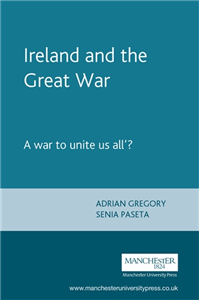
As the twentieth century drew to a close, people in all parts of Ireland began to recover the memory of the First World War as the last great common experience of the island as a whole. Brings together research whilst re-evaluating older assumptions about the immediate and continuing impact of the war on Ireland. Explores some lesser-known aspects of Ireland's war years as well as including studies of more traditional areas: military, social, cultural, political and economic aspects. Analyses how the experience and memory of the War have contributed to identity formation and the legitimisation of political violence. ;
Trusted Partner
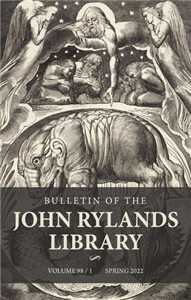
This special issue of the Bulletin of the John Rylands Library is devoted to William Blake. It explores the British and European reception of Blake's work from the late nineteenth century to the present day, with a particular focus on the counterculture. Opening with two articles by the late Michael Horovitz, an important figure in the 'Blake Renaissance' of the 1960s, the issue goes on to investigate the ideological struggle over Blake in the early part of the twentieth century, with particular reference to W. B. Yeats. This is followed by articles on the artistic avant-garde and underground of the 1960s and on Blake's significance for science fiction authors of the 1970s. The issue closes with an article on the contemporary Belgian art collective maelstrÖm reEvolution.
Trusted Partner
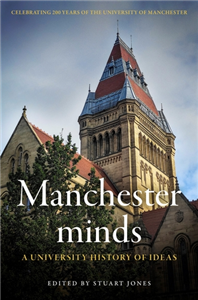
A bicentennial celebration of brilliant thinkers from The University of Manchester's history. The year 2024 marks two centuries since the establishment of The University of Manchester in its earliest form. The first of England's civic universities, Manchester has been home and host to a huge number of influential thinkers and generated world-changing ideas. This book presents a rich account of the remarkable contribution that people associated with The University of Manchester have made to human knowledge. A who's who of Manchester greats, it presents fascinating snapshots of pioneering artists, scholars and scientists, from the poet and activist Eva Gore-Booth to the economist Arthur Lewis, the computer scientist Alan Turing and the physicist Brian Cox.
Trusted Partner

 Trusted Partner

The John Rylands Library houses one of the finest collections of rare books, manuscripts and archives in the world. The collections span five millennia, have a global reach and cover a wide range of subjects, including art and archaeology; economic, social, political, religious and military history; literature, drama and music; science and medicine; theology and philosophy; travel and exploration. For over a century, the Bulletin of the John Rylands Library has published research that complements the Library's special collections. An electronic edition of this issue is freely available under a Creative Commons (CC BY-NC-ND) licence.
Trusted Partner
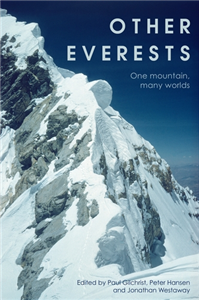
A hundred years after the tragic 1924 British Everest expedition, this collection explores the wider social and cultural history of the mountain. Mount Everest looms large in the popular imagination. Since the deaths of mountaineers George Mallory and Andrew Irvine in 1924, histories of the mountain have overwhelmingly focused on the mythologies of western male adventure and conquest. But there are many more stories waiting to be told. Other Everests brings together new voices and perspectives on the historical and cultural significance of Everest in the modern world. The book shines a light on the overlooked role of local people and high-altitude workers, while also revealing the significant contributions women have made to climbing the mountain and writing its history. It explores the depiction of Everest in a range of media and investigates how the forces of nationalism and commercialism have shaped many different 'Everests'. After years of exploitation, Indigenous people are now reclaiming Mount Everest in the twenty-first century. Other Everests re-examines the past and present of the world's highest peak, presenting an exciting vision of what Everest might become in the future.
Trusted Partner
Trusted Partner
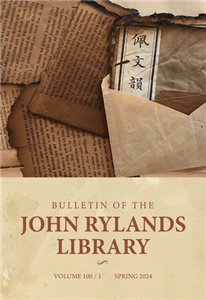
The John Rylands Library houses one of the finest collections of rare books, manuscripts and archives in the world. The collections span five millennia, have a global reach and cover a wide range of subjects, including art and archaeology; economic, social, political, religious and military history; literature, drama and music; science and medicine; theology and philosophy; travel and exploration. For over a century, the Bulletin of the John Rylands Library has published research that complements the Library's special collections.
Trusted Partner
Trusted Partner
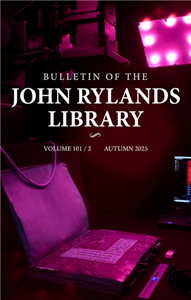
The John Rylands Library houses one of the finest collections of rare books, manuscripts and archives in the world. The collections span five millennia, have a global reach and cover a wide range of subjects, including art and archaeology; economic, social, political, religious and military history; literature, drama and music; science and medicine; theology and philosophy; travel and exploration. For over a century, the Bulletin of the John Rylands Library has published research that complements the Library's special collections. An electronic edition of this issue is freely available under a Creative Commons (CC BY-NC-ND) licence.
Trusted Partner
Trusted Partner

"Das »Bacon-Projekt« definiert einen Grundzug der Moderne; während in der Antike die Erkenntnis der Natur als Selbstzweck galt, betrachtet sie die Neuzeit als ein Mittel zur Mehrung des allgemeinen Menschenwohls. Die Naturforschung soll die Entwicklung einer Technik ins Werk setzen und damit dem Menschen Machtmittel zur Verfügung stellen, durch die er sich aus materieller Not und Naturabhängigkeit befreien kann. Francis Bacon (1551-1626) war der Propagandist der neuen Zielbestimmung der Naturforschung. Die in den modernen Industrieländern praktizierte technische Form der Naturnutzung ist infolge der jetzt offenkundig werdenden Schädigungen an der Natur zunehmend unter Kritik geraten. Mit den Befunden der »ökologischen Krise« wird nicht nur auf die Bedrohlichkeit der Technikfolgeschäden hingewiesen, sondern es wird zugleich die neuzeitliche Art der Naturforschung für die absehbare Katastrophe verantwortlich gemacht. Hans Jonas hat deshalb verlangt, daß wir das »Baconsche Ideal« aufgeben und uns dem Gedanken der Bewahrung der Natur verschreiben. Nicht länger sollten Ziele und Zwecke des Menschen die Grundlage unseres Handelns gegenüber der Natur sein; das »Prinzip Verantwortung« gebiete vielmehr, die in der westlichen Zivilisation dominant gewesene »Anthropozentrik« zu verabschieden und die Eigenrechte der Natur in unserem Handeln zu respektieren. Gegen diese pauschale Beschuldigung der Moderne ist die vorliegende Studie gerichtet. Schäfer sieht durch die ökologische Krise nicht die Aufkündigung des Baconschen Ideals geboten - wohl aber eine drastische Revision des »Baconschen Programms«, d.h. der Mittel und Methoden, mit denen das Ideal seither verfolgt wurde."
Trusted Partner
Trusted Partner
This volume on Norman Italy (southern Italy and Sicily, c. 1000-1200) honours and reflects the pioneering scholarship of Graham A. Loud. An international group of scholars reassesses and recasts the paradigm by which Norman Italy has been conventionally understood, addressing varied subjects across four key themes: historiographies, identities and communities, religion and Church, and conquest. The chapters revise and refine our understanding of Norman Italy in the eleventh and twelfth centuries, demonstrating that it was not just a parochial Norman or Mediterranean entity but also an integral player in the medieval mainstream.
Trusted Partner


New York in den 'Goldenen Zwanzigern': Man tanzt Charleston und Black Bottom und begeistert sich für Duke Ellington und Louis Armstrong. Der geheimnisumwitterte Jay Gatsby hat alles, was man mit Geld kaufen kann, und führt ein Leben im Überfluß. Die rauschenden Feste auf seinem märchenhaften Anwesen auf Long Island sind berühmt und ein beliebter Treffpunkt der New Yorker High-Society. Dennoch ist Gatsby ein Einzelgänger, der zurückgezogen lebt. Niemand weiß etwas über seine Herkunft oder welchen dubiosen Geschäften er seinen Reichtum verdankt. Die Geschichte von Jay Gatsby, dem einsamen Millionär, der seiner längst verlorenen Liebe nachjagt, ist einer der größten und meistgelesenen Klassiker der amerikanischen Literatur. F. Scott Fitzgerald, der Dichter der 'Roaring Twenties', erzählt von der Glamourwelt der Reichen und von der Oberflächlichkeit und Sinnlosigkeit des mondänen Lebens. In der glanzvollen Neuübersetzung von Reinhard Kaiser ist dieser Roman neu zu entdecken - in seiner Dramatik, seiner Tragik, seiner Eleganz und nicht zuletzt auch in seiner Komik.