Your Search Results


-
Promoted Content
-
Promoted Content

 April 1999
Die Argonautika des Apollonios von Rhodos
Untersuchungen zum Problem der einheitlichen Konzeption des Inhalts
by Pietsch, Christian
-
 Trusted Partner

 March 2005
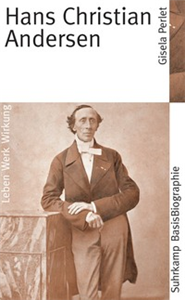
Hans Christian Andersen
by Gisela Perlet
Der Werdegang Hans Christian Andersens vom armen Schustersohn zum erfolgreichen Schriftsteller mutet wie ein Märchen an. Allerdings bemühte er sich auch nach Kräften, diesen Mythos zu pflegen. Andersens Figuren traten schon zu seinen Lebzeiten ihren Siegeszug durch die Welt an und sind bis heute unvergessen.
-
Trusted Partner

 2025
2025Why Be a Christian Today?
by Elisabeth Zoll / Thomas Seiterich (eds.)
The exciting texts and reports by professing Christians offer a fresh perspective for all those who have cultivated a Christian spirituality for many years. However, the book also provides easy access for those who are newly interested in the Christian faith. There are probably as many professions of Christian faith as there are believers in the world. But what do Christians think and how have they been moulded? Elisabeth Zoll and Thomas Seiterich have compiled very personal ideas about the Christian faith in this book. When selecting the contributors, the editors deliberately chose not to include people with church offices or specialised theologians. Irrespective of church policy issues and church scandals, the contributors have provided insights into their path to faith.
-
Trusted Partner
May 2013
Ethik des antiken Platonismus
Der platonische Weg zum Glück in Systematik, Entstehung und historischem Kontext. Akten der 12. Tagung der Karl und Gertrud Abel-Stiftung vom 15.–18. Oktober 2009 in Münster
by Herausgegeben von Pietsch, Christian
-
Trusted Partner

 November 2010
Lebenslust mit Christian Morgenstern
by Christian Morgenstern, Thomas Kluge
Christian Morgenstern wurde am 6. Mai 1871 in München geboren. 1892/93 begann er ein Studium der Rechtswissenschaften an der Universität Breslau, das er bald abbrach. Er zog nach Berlin und war dort als Journalist, Kultur- und Literaturkritiker und Redakteur tätig und veröffentlichte zahlreiche Beiträge und Glossen in Zeitschriften. Sein erster von seinen insgesamt vierzehn Lyrik-Bänden In Phantas Schloß erschien 1895. In der Folgezeit beschäftigte er sich mit der Übersetzung und Herausgabe der Werke von August Strindberg und Henrik Ibsen und schrieb für Max Reinhardts Berliner Kabarett »Schall und Rauch«. Von 1903 bis 1905 war er Redakteur der Zeitschrift »Das Theater« im Verlag von Bruno Cassirer, für den er auch als freier Lektor arbeitete. 1909 schloß sich Morgenstern dem Kreis der antroposophischen Gesellschaft um Rudolf Steiner an. Am 31. März 1914 starb er in Meran / Italien an den Folgen einer Tuberkulose-Erkrankung.
-
Trusted Partner

 Humanities & Social SciencesJuly 2025
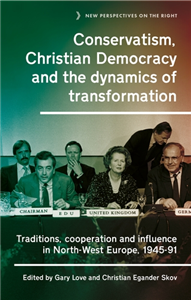
Conservatism, Christian Democracy and the dynamics of transformation
Traditions, cooperation and influence in North-West Europe, 1945-91
by Gary Love, Christian Egander Skov
Conservatism, Christian Democracy, and the Dynamics of Transformation compares the centre-right political traditions of Britain, the Nordic countries, France, West Germany, and Austria and looks for evidence of political cooperation and influence across borders during the period 1945-90. The book explores howa variety of intellectuals, politicians, and political parties transformed their politics in response to major economic, social, and political challenges and seeks to explain why conservatives and Christian democrats came to feel that they belonged to a wider centre-right political family by the end of this period. It also examines why these political traditions found it difficult to cooperate with each other after the Second World War and why they decided to invest more political capital in inter-party relations and wider transnational projects from the 1960s. As the book shows, these developments resulted in two new centre-right internationals: the European Democrat Union and the International Democrat Union.
-
Trusted Partner
 November 2016
Die unwiederbringliche Zeit
Roman
by Hans-Joachim Maass
Mit Joachim Maass und insbesondere mit diesem wenige Jahre vor seiner Emigration in die USA veröffentlichten Roman ist ein großer, unbegreiflicherweise in Vergessenheit geratener deutscher Autor wiederzuentdecken (1901 in Hamburg geboren, 1972 in New York gestorben). Seine seit 1925 veröffentlichten Bücher fanden schon früh den Beifall von Thomas Mann, Hermann Hesse, Stefan Zweig und vieler anderer Schriftstellerkollegen. In diesem seinem dritten, 1935 von Peter Suhrkamp bei S. Fischer veröffentlichten Roman schildert Joachim Maass seine Kindheit in Hamburg und die Verwirklichungen, in die einer gerät, der die Devise zu befolgen versucht, die dem Buch als Motto vorangestellt ist: »Denken, was wahr ist; Fühlen, was schön ist; Wollen, was gut ist.«
-
Trusted Partner

 September 2001
Experimentierklauseln für die Verwaltung und ihre verfassungsrechtlichen Grenzen.
Zugleich ein Beitrag zu § 7 a BerlHG.
by Maaß, Volker
-
Trusted Partner
-
Trusted Partner
-
Trusted Partner
January 1998
Der Wettbewerb im örtlichen Personenbeförderungswesen.
Möglichkeiten und Notwendigkeiten im Bereich straßengebundener Beförderung.
by Maaß, Roland
-
Trusted Partner
October 1980
Die Reagibilität von Prognosen mittels Input-Output-Modellen auf Fehler im Datenmaterial.
Gezeigt am Beispiel des statischen offenen Leontief-Modells.
by Maaß, Siegfried
-
Trusted Partner
-
Trusted Partner
-
Trusted Partner
-
Trusted Partner
-
Trusted Partner
 September 2006
Gleich nach dem Gotthard kommt der Mailänder Dom
Geschichten und andere Prosa
by Gertrud Leutenegger
Ein von Brandwunden entstelltes Mädchen namens Loredana stirbt in einer römischen Pension unweit der Stazione Termini; ein Kind erwacht mitten in der Nacht, und draußen wütet der Sturm; ein Gartentor und ein weißer Ball wecken Gedanken an den Schulweg von früher und an die Eltern, die nicht mehr leben; in Japan erfährt eine Frau das Glück des Reisens, 'Momente vollkommenen Unterwegsseins'; dem portugiesischen Wirt des 'Krokodil' fällt eine junge, eigenartig gekleidete Frau auf; ein erzählendes Ich erinnert sich an das bewegte Jahr 1967, an ein Leseerlebnis mit Robert Walser, an Jimi Hendrix, Moshe Dayan und Che Guevara. In elf Prosastücken erzählt Gertrud Leutenegger von elf einfachen und doch unerhörten Situationen, die sie sprachlich verdichtet – auf ein Ereignis hin, auf einen Augenblick, in dem plötzlich alles näherrückt und eine neue – bisher nicht gesehene – Bedeutung erhält.
-
Trusted Partner
-
Trusted Partner
 Humanities & Social SciencesJanuary 2013
Christian Dualist Heresies in the Byzantine World, c. 650-c. 1450
by Janet Hamilton, Bernard Hamilton
Christian dualism originated in the reign of Constans II (641-68). It was a popular religion, which shared with orthodoxy an acceptance of scriptual authority and apostolic tradition and held a sacramental doctrine of salvation, but understood all these in a radically different way to the Orthodox Church. One of the differences was the strong part demonology played in the belief system. This text traces, through original sources, the origins of dualist Christianity throughout the Byzantine Empire, focusing on the Paulician movement in Armenia and Bogomilism in Bulgaria. It presents not only the theological texts, but puts the movements into their social and political context.