
American Diabetes Association
The American Diabetes Association is the world’s largest publisher of titles on diabetes care and treatment, setting the standards of patient care based on the latest research.
View Rights Portal
The American Diabetes Association is the world’s largest publisher of titles on diabetes care and treatment, setting the standards of patient care based on the latest research.
View Rights Portal
Diametric Verlag is an independent publisher founded by Jutta A. Wilke providing high-quality specialized literature focused on women's issues like Women's Health, Gender Medicine and Feminism. All titles are published in German and available in print and digital editions.
View Rights Portal

As human and machine agency become increasingly intermingled and digital media is overlaid onto the urban landscape, The machinic city argues that performance art can help us to understand contemporary urban living. Dias analyses interventions from performance artists such as Blast Theory, Rafael Lozano-Hemmer and Rimini Protokoll, which draw from a rich history of avant-garde art movements to create spaces for deliberation and reflection on urban life, and speculation on its future. While cities are increasingly controlled by autonomous processes mediated by technical machines, Dias analyses the performative potential of the aesthetic machine, as it assembles with media, capitalist, human and urban machines. The aesthetic machine of performance art in urban space is examined through its different components - design, city and technology actants. This unveils the unpredictable nature and emerging potential of performance art as it unfolds in the machinic city.
 Trusted Partner

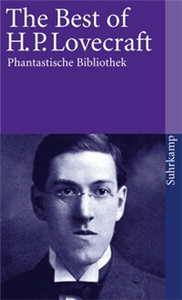
Mit seinem Cthulu-Mythos wollte H. P. Lovecraft eine Atmosphäre kosmischen Grauens schaffen, die Archaisches mit den modernen Erkenntnissen der Wissenschaft verbindet und unserer Zeit angemessen ist. Die Angst hielt er für das älteste und stärkste Gefühl, mit dem er in seinen Erzählungen gerne spielte. Die besten Erzählungen von H. P. Lovecraft sind in diesem Rand zusammengefaßt.
Trusted Partner
Trusted Partner


Wofür würdest du töten? Diese Frage muss die siebzehnjährige Dia beantworten, um einen begehrten Praktikumsplatz bei der Louisiana Veda Foundation in London zu gewinnen. Dia ist seit Jahren besessen von der legendären Veda, deren ebenso geniale wie furchteinflößende Darkly-Spiele Kultstatus erreicht haben. Die wenigen Werke, die nach Vedas mysteriösem Tod erhalten blieben, werden für mehrere Millionen Dollar gehandelt. Unter Tausenden Bewerbern aus aller Welt werden Dia und sechs andere Jugendliche als Praktikanten ausgewählt. Doch gleich nach der Ankunft in London werden sie auf eine abgelegene Insel gebracht – das Herzstück von Vedas Spiele-Imperium. Dort finden sie sich in einem Darkly-Spiel auf Leben und Tod wieder. Wer führt die Fäden in diesem Netz? Dia weiß nicht, wem sie noch trauen kann. Ein Labyrinth voller verborgener Hinweise, ein dunkles Vermächtnis und ein Geheimnis in Dias Vergangenheit – ein fesselnder Thriller voller überraschender Twists.
Trusted Partner
Trusted Partner
Trusted Partner
Trusted Partner
Trusted Partner

 Trusted Partner

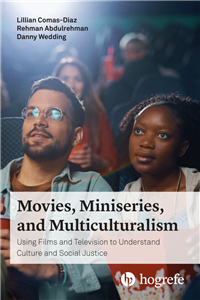
A powerful guide to understanding cultural identity and bias – through f lm and TV. This practical book uses com-pelling scenes to raise awareness for racism, patriarchy, and social justice while helping readers refl ect on their own perspectives. With relatable examples and thoughtful prompts, it offers accessible insights into multicultural living and the emotional impact of media narratives. • Uses movies and shows to teach cultural awareness • Practical tools for refl ection and growth • Tackles identity, bias, and belonging
Trusted Partner
Trusted Partner
Trusted Partner
Trusted Partner
Diaz del Castillo berichtet von den Intrigen zwischen den Spaniern, ihrem Vorgehen mit Schwert und Kreuz gegen die Eingeborenen, den weiteren Feldzügen in Honduras auf der Suche nach noch mehr Schätzen, der ungleichen Aufteilung der Kriegsbeute durch Hernan Cortes, dem Unwillen der Soldaten, die sich zu Recht betrogen fühlen und doch stets aufs neue Cortes’ Faszination erliegen.
Trusted Partner


What makes human beings human? Is it a life in society that makes us what we are? We often hear stories of persons who have survived in the wild without social contact or who were supposedly raised by wild animals. Kaspar Hauser is probably the most well-known example, but certainly not the only one. P. J. Blumenthal has taken up the hunt for the “wild man” Homo ferus on the boundary between man and animal.
Trusted Partner
Trusted Partner
Trusted Partner
Trusted Partner



