
Polperro Heritage Press
Polperro Heritage Press is an independent British publisher, established in 1995. Recent titles from Polperro Press have included biographies, guides and a growing list of Cornish local history titles.
View Rights Portal
Polperro Heritage Press is an independent British publisher, established in 1995. Recent titles from Polperro Press have included biographies, guides and a growing list of Cornish local history titles.
View Rights Portal
MMC EDIZIONI is a publishing house based in Rome.Born in 2001 as a generalist, along the time it has specialized almost exclusively in non-fiction, dedicated in particular (but not only) to the city of Rome.The main series, called "A walk with history" offers an alternative vision of the city through the historical reconnaissance and analysis of some of its urban furnishings that are not taken into consideration such as small fountains, clocks, inscriptions, sacred shrines, plaques. This series stands out for a particular graphic style and for the abundance of photographs, specially made for these books.Other series on Rome are instead dedicated to in-depth studies on specific historical and customs themes, or on the mysterious aspects of the city that also reveal its dark side.In the MMC catalogue are other non-fiction books on topics such as Music, Interculture, Anthropology and a series of stories for children encouraging solidarity, non-violence and respect for the environment
View Rights Portal

In 1994 the Arts Council of Great Britain brought together a number of theatre directors as part of the City of Drama celebrations. This is a collection of interviews and discussions with directors who have helped shape the development of theatre in the last 20 years. They include Peter Brook, Peter Stein, Augusto Boal, Jorge Lavelli, Lluis Pasqual, Lev Dodin, Maria Irene Fornes, Jonathan Miller, Jatinder Verma, Peter Sellars, Declan Donnellan, Ariane Mnouchkine, Ion Caramitru, Yukio Ninagawa and Robert Wilson. In addition to the art and craft of directing, there are discussions on multiculturalism; the "classical" repertoire; theatre companies and institutions; working in a foreign language; opera; Shakespeare; new technologies; the art of acting; design; international festivals; politics and aesthetics; the audience; and theatre and society. Finally, there is an epilogue by Peter Brook, Jonathan Miller and Oliver Sacks. ;

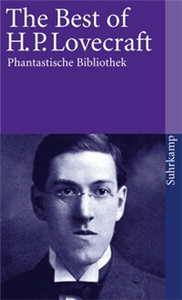
Mit seinem Cthulu-Mythos wollte H. P. Lovecraft eine Atmosphäre kosmischen Grauens schaffen, die Archaisches mit den modernen Erkenntnissen der Wissenschaft verbindet und unserer Zeit angemessen ist. Die Angst hielt er für das älteste und stärkste Gefühl, mit dem er in seinen Erzählungen gerne spielte. Die besten Erzählungen von H. P. Lovecraft sind in diesem Rand zusammengefaßt.
 Trusted Partner

'Other' Spanish theatres challenges established opinions on modern Iberian theatre by considering the roles of contrasting figures and companies who have impacted upon both the practice and the perception of Spanish and European stages. In questioning the primacy of the dramatist, this pioneering study offers a new interpretation of a nation's theatrical culture that has been viewed primarily through the prisms of a select number of playwrights. Accordingly many of the conclusions reached are new ones, and the case, for acknowledging the wide influence of Spanish practitioners on theatre in Europe and the Americas is made in persuasive terms. Through a bold documentation and interrogation of key productions and their reception both at home and abroad, 'Other' Spanish theatres focuses on the doing of performance, asking provocative questions around how performances are tested against the texts that remain. In a broad and detailed study Delgado selects six case studies which map out alternative readings of a nation's theatrical innovation through the twentieth century: muse and mentor to Federico Garcia Lorca, Margarita Xirgu; theatrical innovator and influence on Orson Welles, Enrique Rambal; tragedienne Maria Casares feted by George Craig Camus, Genet and Cocteau; actress, producer and director Nuria Espert; international director Lluis Pasqual and Catalan performance company La Cubana. ;
Trusted Partner


Schmetterlinge im Bauch und die rosarote Brille auf der Nase: Natalie ist verliebt, sie kann nur noch an Derek denken. Um Zeit mit ihm zu verbringen, besucht Natalie den Mathe-Club. Um ihm ähnlich zu sein, bestellt sie ebenfalls Pizza mit Ananas und isst geschälte Trauben. Für Natalie ist klar: Derek und sie gehören zusammen. Ihre Freundinnen Zoe und Flo freuen sich mit ihr, doch sie sind auch enttäuscht: Natalie hat kaum noch Zeit für sie. Als Natalie erfährt, dass Derek nur mit ihr befreundet sein möchte, bricht eine Welt für sie zusammen. Sie zweifelt an sich: Was hat sie nur falsch gemacht? Maria Scrivan erzählt von den ersten großen Gefühlen, von der Leichtigkeit des Verliebtseins und dem Schmerz der Ablehnung – von dem Wert der Freundschaft und davon, dass man sich selbst immer treu bleiben sollte.
Trusted Partner
A wide-ranging look at the state of contemporary theatre practice, economics, and issues related to identity, politics, and technology. Contains a snapshot dissection of where theatre is, where it has been and where it might be going through the voices of established and emerging theatre artists and scholars from the UK, US and elsewhere. Offers an examination of how to make theatre in a time of crisis and why it is a vital form of communication are at the heart of the book's mission. Asks questions such as: where is theatre now taking place?; what is the relationship between play and performance?; how does funding work?; what states does theatre flourish under?; and if there is a current 'crisis of theatre' should it not be seen as a welcome opportunity to develop a vigorous 'theatre of crisis'?. The international list of contributors includes Jim Carmody, Phyllis Nagy, Michael Billington, Max Stafford-Clark, Peter Sellars, Dragan Klaic, Goat Island, Erik Ehn and many others, making up a vast array of practising artists, thinkers, and scholars. ;
Trusted Partner
Trusted Partner
Trusted Partner

 Trusted Partner
 Trusted Partner
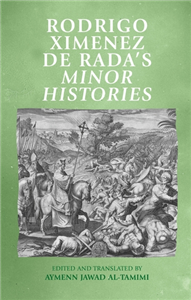
This work provides the first complete English translation of works by Toledan archbishop Rodrigo Ximénez de Rada (1170-1247 CE), whose 'Minor Histories' are sequels to his larger 'Gothic History' and thus round off his grand history of Spain project that he began at the request of King Ferdinand III. The 'Minor Histories' include Rodrigo's 'History of the Arabs' that can be considered the first surviving Western monograph focused on Arab and Islamic history and thus occupies a unique position in the medieval Latin corpus of writings. In addition to the translation, this book provides a thorough and accessible introduction to the life and works of Rodrigo, making sense of the context in which he wrote and his historical method. The translations are thoroughly annotated including cross-references to other Latin and Arabic sources for comparison.
Trusted Partner
Trusted Partner
 Trusted Partner
Trusted Partner
Trusted Partner
Trusted Partner
Trusted Partner
Trusted Partner
Trusted Partner
Trusted Partner
Trusted Partner
Trusted Partner
Trusted Partner
Trusted Partner
Trusted Partner
Trusted Partner
Trusted Partner




