
Wiley
John Wiley & Sons, Inc. (Wiley)is a renowned, global publishing company focusing on academic publishing for professionals and researchers within the field of science and medicine.
View Rights Portal
John Wiley & Sons, Inc. (Wiley)is a renowned, global publishing company focusing on academic publishing for professionals and researchers within the field of science and medicine.
View Rights Portal
Wilkinson Publishing is an independent Australian Publisher with over 40 years of experience. We are passionate about books and sharing great stories that entertain and inspire, and information that helps bring about change and creates opportunities to learn and belong.
View Rights Portal
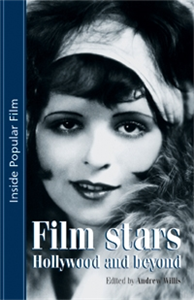
Stars are central to the cinema experience, and this collection offers a variety of fresh and informed perspectives on this important but sometimes neglected area of film studies.This book takes as its focus film stars from the past and present, from Hollywood, its margins and beyond and analyses them through a close consideration of their films and the variety of contexts in which they worked. The book spreads the net wide, looking at past stars from Rosalind Russell and Charlton Heston to present day stars including Sandra Bullock, Jackie Chan and Jim Carrey, as well as those figures who have earnt themselves a certain film star cachet such as Prince, and the martial artist Cynthia Rothrock. The collection will be essential reading for students and lecturers of film studies, as well as to those with a general interest in the cinema. ;

This volume proposes new insights into the uses of classical mythology by Shakespeare and his contemporaries, focusing on interweaving processes in early modern appropriations of myth. Its 11 essays show how early modern writing intertwines diverse myths and plays with variant versions of individual myths that derive from multiple classical sources, as well as medieval, Tudor and early modern retellings and translations. Works discussed include poems and plays by William Shakespeare, Christopher Marlowe and others. Essays concentrate on specific plays including The Merchant of Venice and Dido Queen of Carthage, tracing interactions between myths, chronicles, the Bible and contemporary genres. Mythological figures are considered to demonstrate how the weaving together of sources deconstructs gendered representations. New meanings emerge from these readings, which open up methodological perspectives on multi-textuality, artistic appropriation and cultural hybridity.
 Trusted Partner

Are Jim Carrey, Robin Williams, and Eddie Murphy the celluloid compatriots of Ronald Reagan, Margaret Thatcher and Tony Blair? This book argues that the rubber faces of '80s and '90s comedy films, helped to transform us into the flexible, self-managing citizens beloved of the new right—and its successors. Through its sustained look at the box-office comedies of the last two decades, Comic Politics provides a critical introduction to key approaches to comedy. It tests the usefulness and limits of psychoanalytics, Bakhtinian and postmodernist theory against comedians and comedies from Woody Allen to Wayne's World. The book includes a look at animation and computer enhanced comedies.
Trusted Partner

Postmodern, postcolonial and post-truth are broadly used terms. But where do they come from? When and why did the habit of interpreting the world in post-terms emerge? And who exactly were the 'post boys' responsible for this? Post-everything examines why post-Christian, post-industrial and post-bourgeois were terms that resonated, not only among academics, but also in the popular press. It delves into the historical roots of postmodern and poststructuralist, while also subjecting more recent post-constructions (posthumanist, postfeminist) to critical scrutiny. This study is the first to offer a comprehensive history of post-concepts. In tracing how these concepts found their way into a broad range of genres and disciplines, Post-everything contributes to a rapprochement between the history of the humanities and the history of the social sciences.
Trusted Partner
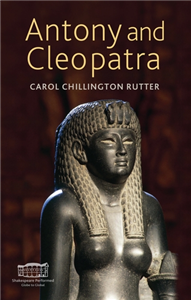
This book writes a performance history of Antony and Cleopatra, Shakespeare's most ambiguous play, from 1606 to the present. It observes the choices that actors, directors, designers, musicians and adapters have made each time they have brought the play's thoughts on power, race, masculinity, regime change, exoticism, love, dotage and delinquency into alignment with a new present. Informed by close attention to theatre records - promptbooks, stage managers' reports, reviews - it offers in-depth analyses of fifteen international productions by (among others) the Royal Shakespeare Company, Citizens Theatre Glasgow, Northern Broadsides, Berliner Ensemble and Toneelgroep Amsterdam. It ends seeing Shakespeare's black Egyptian Queen Cleopatra - whited-out in performance for centuries - restored to the contemporary stage. Written in a lively and accessible style, this book will be of interest to students, academics, actors, directors and general readers alike.
Trusted Partner

This book offers an accessible critical introduction to the work of Graham Swift, one of Britain's most significant contemporary authors. Through detailed readings of his novels and short stories from 'The Sweet Shop Owner' (1980) to 'The Light of Day' (2003), Daniel Lea lucidly addresses the key themes of history, loss, masculinity and ethical redemption, to present a fresh approach to Swift. This study proposes that one of the side-effects of modernity has been the destruction of traditional pathways of self and collective belief, leading to a loss of understanding between individuals about their duties to each other and to society. Swift's writing returns repeatedly to the question of what we can believe in when all the established markers of identity - family, community, gender, profession, history - have become destabilised. Lea suggests that Swift increasingly moves towards a notion of redemption through a lived ethical practice as the only means of finding solace in a world lacking a central symbolic authority. ;
Trusted Partner
A compelling tour of Shakespeare's England that makes a powerful contribution to the 'authorship question'. How do we know Shakespeare was Shakespeare? Could a glover's son who left school at fifteen really be the author behind such masterpieces as Hamlet, King Lear and The Tempest? Yes! says historian Susan Amussen. She transports readers back to early modern England, to travel the path that carried William Shakespeare from humble origins in Stratford to literary greatness on the London stage. This was a society undergoing rapid change. Grammar schools made education in Latin and Greek available to commoners, while touring players brought the latest dramatic productions to the masses. And in London, a metropolis filled with European visitors, ordinary people had the opportunity to see courtly life up close. No serious historian doubts that Shakespeare was the author of the plays that bear his name. Susan Amussen shares what they know: that Shakespeare's England was a complex and cosmopolitan place, with everything a talented young playwright needed to develop his craft and furnish his imagination.
Trusted Partner
 Trusted Partner
Trusted Partner
Trusted Partner

This book provides a careful and systematic analysis of Anthony Ascham's career and writings for the first time in English. During the crucial period between the Second Civil War and the establishment of the English Republic, when he served as official pamphleteer of the Parliament and the republican government, Ascham put forward a complex argument in support of Parliament's claims for obedience which drew on the political thought of Grotius, Hobbes, Selden, Filmer and Machiavelli. He combined ideas taken from these authors and turned them into a powerful instrument of propaganda to be deployed in the service of the political agenda of his Independent patrons in Parliament. This investigation of Ascham's works brings together an intellectual analysis of his political thought and an exploration of the interaction between politics, propaganda and political ideas.
Trusted Partner
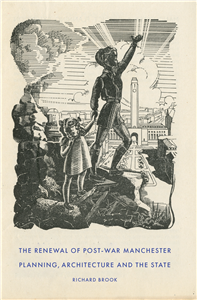
A compelling account of the project to transform post-war Manchester, revealing the clash between utopian vision and compromised reality. Urban renewal in Britain was thrilling in its vision, yet partial and incomplete in its implementation. For the first time, this deep study of a renewal city reveals the complex networks of actors behind physical change and stagnation in post-war Britain. Using the nested scales of region, city and case-study sites, the book explores the relationships between Whitehall legislation, its interpretation by local government planning officers and the on-the-ground impact through urban architectural projects. Each chapter highlights the connections between policy goals, global narratives and the design and construction of cities. The Cold War, decolonialisation, rising consumerism and the oil crisis all feature in a richly illustrated account of architecture and planning in post-war Manchester.
Trusted Partner
This book offers the first extended study of Queen Henrietta's Men, one of Caroline London's most important professional playing companies. The drama that the company performed at the Cockpit between 1626 and 1636 includes many underexplored and neglected plays from the period alongside more celebrated works by dramatists including James Shirley and John Ford, and a number of Elizabethan and Jacobean revivals. Queen Henrietta's Men and the Cockpit Repertory explores the material and cultural conditions under which the company operated, and offers an account of the dynamics that held between new drama written for the company and the revivals staged alongside that fare. In doing so, this account illuminates the ways in which an appreciation of the work of Queen Henrietta's Men can offer new perspectives on theatre history and the categories of company and repertory that have shaped it.
Trusted Partner
 Trusted Partner
Trusted Partner
Trusted Partner
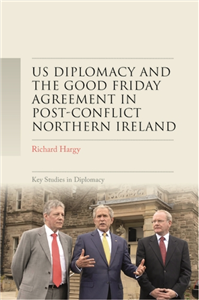
Richard Haass and Mitchell Reiss, as autonomous diplomats in the George W. Bush State Department, were able to alter US intervention in Northern Ireland and play critical roles in the post-1998 peace process. Their contributions have not been fully appreciated or understood. The restoration of Northern Ireland's power-sharing government in 2007 was made possible by State Department-led intervention in the peace process. There are few references to Northern Ireland in work examining the foreign policy legacy of the George W. Bush presidency. Moreover, the ability to control US foreign policy towards the region brought one of George W. Bush's Northern Ireland special envoys into direct diplomatic conflict with the most senior actors inside the British government. This book will uncover the extent of this fall-out and provide original accounts on how diplomatic relations between these old allies became so fraught.
Trusted Partner
The project researches the difference between a revision vs. a rewriting. The book explores the English poems and plays of the Early New English period, from the sixteenth to the beginning of seventeenth century, with over 50 entries examined. The main material is the poem A Lover's Complaint; the play Double Falsehood by Lewis Theobald; the revised and rewritten post-Restoration plays such as Richard II (revised by Lewis Theobald), and The Fatal Secret (rewritten Webster's The Duchess of Malfi) by Lewis Theobald. An example of authorial revision is Sonnets 2 and 138.
Trusted Partner
Trusted Partner
 Trusted Partner
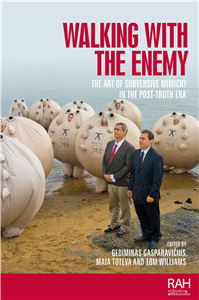
This book is about artists and activists who have embraced mimicry as a subversive tactic. Bringing together the contributions of seventeen writers, it addresses the ways in which artists have responded to power and ideology by imitating its outward forms. These contributors address in particular the current age of fantasy and political deception, and they consider the work of artists who have reacted by using dissimulation and make-believe themselves. Chapters include discussions of mimicry in reference to a number developments and debates: the post-truth era, the neoliberal consensus, the politics of race and gender, online subcultures, and the rise of the new right.
Trusted Partner

Charles Dickens called his sister-in-law Georgina Hogarth his 'best and truest friend'. Georgina saw Dickens as much more than a friend. They lived together for twenty-eight years, during which time their relationship constantly changed. The sister of his wife Catherine, the sharp and witty Georgina moved into the Dickens home aged fifteen. What began as a father-daughter relationship blossomed into a genuine rapport, but their easy relations were fractured when Dickens had a mid-life crisis and determined to rid himself of Catherine. Georgina's refusal to leave Dickens and his desire for her to remain in his household led to rumours of an affair and even illegitimate children. He left her the equivalent of almost £1 million and all his personal papers in his will. Georgina's commitment to Dickens was unwavering but it is far from clear what he did to deserve such loyalty. There were several occasions when he misused her in order to protect his public reputation. Why did Georgina betray her once much-loved sister? Why did she fall out with her family and risk her reputation in order to stay with Dickens? And why did the Dickenses' daughter Katey say it was 'the greatest mistake ever' to invite a sister-in-law to live with a family?


