Vanny Gani
The Awakening of the Stars, a novel in the mystical fiction category & Aerial Roots a drama and comedy about the author grandmother.
View Rights Portal
The Awakening of the Stars, a novel in the mystical fiction category & Aerial Roots a drama and comedy about the author grandmother.
View Rights Portal
Angelo Pontecorboli Editore - Florence – ItalyAcademic Contents, Professional Editing, Premium Design, Online Distribution and Marketing. Editore indipendente con sede a Firenze. Le riviste e gli articoli pubblicati riguardano principalmente l’Antropologia, l’Architettura, il Giardino e le Scienze Umane. Independent publisher based in Florence (Italy). The Journals and Articles it publishes are concentrated mainly in the areas of Anthropology, Architecture, Gardens, and Human Sciences.
View Rights Portal Trusted Partner
Trusted Partner
Trusted Partner
Trusted Partner
Trusted Partner
Trusted Partner
Trusted Partner
Trusted Partner
Trusted Partner
Trusted Partner
Trusted Partner
Trusted Partner
Trusted Partner
Trusted Partner
Trusted Partner


Schon als Kind gab es für Isabelle Van Groeningen nichts Schöneres, als mit den Händen in der Erde zu wühlen und sich am Grün und an wunderbaren Blüten zu erfreuen. Später machte sie ihre Leidenschaft zum Beruf und hat seither unzählige Gärten gestaltet und bepflanzt. In Die sieben Jahreszeiten – denn für Gärtner*innen gibt es mehr als vier – schreibt sie über das Glück und die Herausforderungen des Gärtnerns, über Fragen der Gestaltung ebenso wie die des richtigen Standorts, gibt wertvolle Hinweise zu Pflanzung und Pflege und stellt die wichtigsten Pflanzen vor, von Schattenstauden über Kletterrosen, Dahlien und Zwiebelblumen. Und sie erinnert uns daran, was das Wichtigste am Gärtnern ist: Ein Garten tut der Seele gut. Die sachkundige und passionierte Pflanzengestalterin Isabelle Van Groeningen führt uns durchs Jahr und durch ihre Gärten – ein Rundgang mit vielen Tipps und Lieblingspflanzen!
Trusted Partner

Dass ein international berühmter und preisgekrönter Sachbuchautor und Romancier wie David Van Reybrouck sich der jahrtausendealten Form der Ode zuwendet, mag auf den ersten Blick erstaunen. Van Reybrouck verwandelt sich diese seit jeher für die rühmende Hinwendung zu Menschen und Dingen bestimmte Form auf seine eigene, sehr persönliche Weise an: Seit 2015 schreibt er in dem unabhängigen niederländischen online-Magazin The Correspondent regelmäßig emphatische Würdigungen von Menschen, Dingen, aber auch ganz alltäglichen Vorgängen: der Ex, der nächtlichen Autofahrt, dem Offline-Sein, David Bowie, Kunstwerken, Menschen, denen er auf seinen Reisen begegnet ist oder die ihn geprägt haben. Hier werden sie erstmals in Buchform veröffentlicht. Offen und neugierig auf das Leben in all seinen Erscheinungsformen zeigt David Van Reybrouck hier mehr noch als in seinen anderen Büchern seine sinnliche, verletzliche, dichterische Seite. Er tritt auf als Abenteurer, Liebhaber, Freund, als engagierter Europäer und Streiter für Demokratie, Solidarität und Menschlichkeit. Und als leidenschaftlicher Bewunderer und genauer Beobachter. Nicht nur in der Van-Reybrouck-Gemeinde sind diese Oden Kult. »Oden schreiben – ich kann es nur empfehlen: Es macht einen aufmerksamer, begeisterungsfähiger, neugieriger, dankbarer.«
Trusted Partner

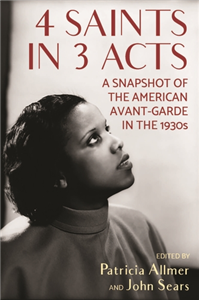
Four Saints in Three Acts by Gertrude Stein and Virgil Thomson was a major avant-garde phenomenon of the 1930s, an experimental opera that nonetheless achieved remarkable popular success. Photography was a key element of that success, but its complex roles in the construction, representation and dissemination of the opera have hitherto received little critical attention. The photographic recording of the all-African American cast in particular affords a unique insight into the complexities of Four Saints in relation to the Harlem Renaissance and the New York avant-gardes of the time. This book, published in collaboration with The Photographers' Gallery, London, presents a wide selection of photographs of the cast, performances, and other material - many images reproduced for the first time - alongside essays by an international range of scholars exploring different aspects of the opera, including dance, fashion, music, and avant-garde writing, as well as photography.
Trusted Partner

The Toronto New Wave (TNW) comprises a group of avant-garde filmmakers working in Canada from the 1980s and into the new millennium whose innovative film works share significant affinities with anarchist themes and aesthetics. Several of the TNW filmmakers openly identify as anarchists and/or acknowledge a debt to anarchism in their production of highly apocalyptic narratives as part of their cinematic political projects. However, recognition of anarchism's progressive apocalyptic theoretical relevance has yet to be substantially taken up by scholarship in cinema analysis. This analysis introduces an anarchist-inflected analytical methodology to understand the apocalyptic-revelatory political work these films attempt to accomplish in the perceptual space between the filmic texts and both their auteurs and potential viewers, and to re-locate the TNW within cinema history as an ongoing phenomenon with new significance in an apocalyptic era of digital distribution.
Trusted Partner

The forgotten legacy of religious Jewish anarchism, and the adventures and ideas of its key figures, finally comes to light in this book. Set in the decades surrounding both world wars, No masters but God identifies a loosely connected group of rabbis and traditionalist thinkers who explicitly appealed to anarchist ideas in articulating the meaning of the Torah, traditional practice, Jewish life and the mission of modern Jewry. Full of archival discoveries and first translations from Yiddish and Hebrew, it explores anarcho-Judaism in its variety through the works of Yaakov Meir Zalkind, Yitshak Nahman Steinberg, Yehudah Leyb Don-Yahiya, Avraham Yehudah Heyn, Natan Hofshi, Shmuel Alexandrov, Yehudah Ashlag and Aaron Shmuel Tamaret. With this ground-breaking account, Hayyim Rothman traces a complicated story about the modern entanglement of religion and anarchism, pacifism and Zionism, prophetic anti-authoritarianism and mystical antinomianism.
Trusted Partner

Eine kleine Bäckerei in Paris, mitten in den Wirren des Zweiten Weltkriegs. Ein unbekannter Soldat übergibt einer jungen Frau ein Neugeborenes ohne Namen und verschwindet. Mit sieben Jahren erfährt Martin von seinen Zieheltern, dass er ihnen in den Unruhen des Krieges von einem Fremden anvertraut wurde. Von nun an lässt ihn die Frage nach seiner Herkunft nicht mehr los. Er braucht Jahre, um sein Schicksal zu begreifen – und er braucht sein ganzes Leben, um dem Mann zu begegnen, der ihn einst gerettet hat. In einer wunderbar zarten, eleganten Prosa erzählt Simon Van Booy davon, wie unsere Leben untrennbar miteinander verbunden sind. Davon, dass die Welt nur scheinbar ein fremder Ort ist und die Menschen darin uns näher sind, als wir ahnen.
Trusted Partner
Trusted Partner
Trusted Partner
Trusted Partner
Trusted Partner