
Wiley
John Wiley & Sons, Inc. (Wiley)is a renowned, global publishing company focusing on academic publishing for professionals and researchers within the field of science and medicine.
View Rights Portal
John Wiley & Sons, Inc. (Wiley)is a renowned, global publishing company focusing on academic publishing for professionals and researchers within the field of science and medicine.
View Rights Portal
Wilkinson Publishing is an independent Australian Publisher with over 40 years of experience. We are passionate about books and sharing great stories that entertain and inspire, and information that helps bring about change and creates opportunities to learn and belong.
View Rights Portal Trusted Partner


A shocking glimpse into the mind of a medieval witch hunter. In 1487, the zealous Dominican inquisitor Heinrich Kramer wrote a treatise that would have a remarkable influence on European history. Blaming women for his own lust, and frustrated by official complacency before what he saw as a monstrous spiritual menace, Kramer penned a practical guide to aid law officers in the identification and prosecution of witches. Fusing theology, lurid anecdotes and advice for those engaged in combating sorcery, The Malleus Maleficarum transports the reader into the dark heart of medieval belief - where fear of the supernatural provokes a gripping struggle for understanding and control. Kramer's book led to the burning of numerous innocents and had a lasting impact on the popular image of witchcraft. It remains a sinister symbol of fanaticism and cruelty to this day.
Trusted Partner

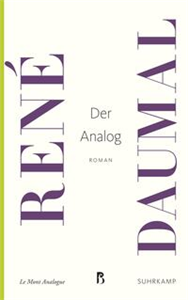
Der »Analog« ist ein Berg, der »Himmel und Erde verbindet«, höher als der Mount Everest – doch bisher unentdeckt. Theodor, der bei einer Zeitschrift für Paläontologie arbeitet, ist von der Existenz jedoch überzeugt. Ebenso wie Dr. Sogol, der sich mit ihm in Verbindung setzt, Alpinismus lehrt und die eigene Wohnung in einen Gebirgsweg verwandelt hat. Es findet sich schließlich eine ganze Gruppe von Abenteuerlustigen zusammen, die die Sinnsuche zum Berg treibt. Sie rüsten ein Schiff aus, die »Impossible«, und begeben sich zu jener von niemandem je gesehenen Landmasse. Tatsächlich gelangt die Reisegruppe zum Berg, doch der Aufstieg konfrontiert sie mit unerwarteten Mühen. Der Weg zum Gipfel ist gleichsam ein innerer und die Annäherung an eine höhere Weisheit. Der erste Roman René Daumals, eines Autors, der in Rausch und Nahtoderfahrung Erkenntnis suchte, hieß Das Große Besäufnis. Seinen zweiten Roman, Der Analog, beschrieb er selbst als das Gegenstück, als »Ausblick in eine Welt, in der es das Wahre, Gute, Schöne gibt.« Daumal verlässt 1940 mit seiner jüdischen Ehefrau Vera Milanova das von der deutschen Wehrmacht besetzte Paris. Nach Stationen in den Pyrenäen und Marseille, lässt sich das Paar 1943 in den Alpen nieder, wo Daumal die Arbeit am Analog fortsetzt. Der Analog muss jedoch unvollendet bleiben und erscheint posthum. Der Autor stirbt mit 36 Jahren in Folge einer Tuberkulose Erkrankung und sein Roman schließt mit einem Komma. Der Leser also muss die letzten Schritte zum hoffnungsfrohen Ausblick eigenständig erklimmen.
Trusted Partner
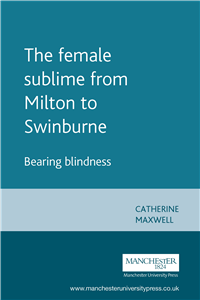
This innovative study of vision, gender and poetry traces Milton's mark on Shelley, Tennyson, Browning and Swinburne to show how the lyric male poet achieves vision at the cost of symbolic blindness and feminisation. Drawing together a wide range of concerns including the use of myth, the gender of the sublime, the lyric fragment, and the relation of pain to creativity, this book is a major re-evaluation of the male poet and the making of the English poetic tradition. The female sublime from Milton to Swinburne examines the feminisation of the post-Miltonic male poet, not through cultural history, but through a series of mythic or classical figures which include Philomela, Orpheus and Sappho. It recovers a disfiguring sublime imagined as an aggressive female force which feminises the male poet in an act that simultaneously deprives and energises him. This book will be required reading for anyone with a serious interest in the English poetic tradition and Victorian poetry. ;
Trusted Partner


Aus dem amerikanischen Englisch von Kristina Lake-Zapp
Trusted Partner
Trusted Partner
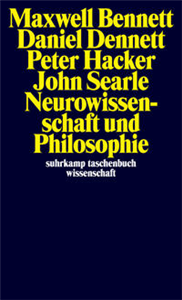
Als der Neurowissenschaftler Maxwell Bennett und der Philosoph Peter Hacker den Klassiker Philosophical Foundations of Neuroscience veröffentlichten, war dies die erste systematische Untersuchung der begrifflichen Grundlagen der Neurowissenschaften und der Startschuss für den bis heute intensiv geführten Kampf um die Deutungsmacht über den menschlichen Geist. Besonders kritisch fiel seinerzeit die Auseinandersetzung mit den einflussreichen Arbeiten von Daniel Dennett und John Searle aus – also mit jenen beiden Denkern, die von der neurowissenschaftlichen Seite gerne als philosophische Gewährsmänner herangezogen werden. In Neurowissenschaft und Philosophie diskutieren die vier kongenialen »Streithähne« miteinander.
Trusted Partner
Trusted Partner
Trusted Partner
 Trusted Partner
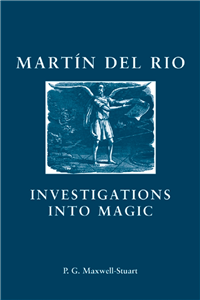
This is the first English translation of one of the most important, interesting and comprehensive discussions of the occult sciences ever published. Investigations into magic deals not only with magic in all its forms, from the manipulation of angelic and demonic powers to straightforward conjuring and illusion, but also with witchcraft, alchemy, astrology, divination, prophecy, and possession by evil spirits. In addition, Del Rio gives judges and confessors practical advice on the most effective ways of dealing with people who are accused of practising magic, and enlivens his whole discussion with anecdotes drawn from a remarkable range of sources, including his own experience. Nothing so panoramic had ever appeared before, and for the next one hundred and fifty years Investigations into magic was the indispensable reference work on the subject. ;
Trusted Partner

The Malleus Maleficarum is one of the best-known treatises dealing with the problem of what to do with witches. It was written in 1487 by a Dominican inquisitor, Heinrich Institoris, following his failure to prosecute a number of women for witchcraft, it is in many ways a highly personal document, full of frustration at official complacency in the face of a spiritual threat, as well as being a practical guide for law-officers who have to deal with a cunning, dangerous enemy. Combining theological discussion, illustrative anecdotes, and useful advice for those involved in suppressing witchcraft, its influence on witchcraft studies has been extensive. The only previous translation into English, that by Montague Summers produced in 1928, is full of inaccuracies. It is written in a style almost unreadable nowadays, and is unfortunately coloured by his personal agenda. This new edited translation, with an introductory essay setting witchcraft, Institoris, and the Malleus into clear, readable English, corrects Summers' mistakes and offers a lean, unvarnished version of what Institoris actually wrote. It will undoubtedly become the standard translation of this important and controversial late-medieval text.
Trusted Partner
Trusted Partner
Trusted Partner
Trusted Partner
Trusted Partner

»So ist also die Frage beantwortet, ob man das aktuelle Chaos in der arabischen Welt in einem einzigen journalistischen Stück erfassen kann. Man kann. Scott Anderson kann es sogar grandios.« Die Zeit »Die hellsichtigste, kraftvollste und menschlichste Erklärung dessen, was in der Region passiert ist, die Sie jemals lesen werden.« The New York Times Magazine »Manchmal fließt die Geschichte der Menschheit bedächtig vor sich hin, manchmal bewegt sie sich sehr schnell.« Diesen Satz formulierte Muammar al-Gaddafi 2002 gegenüber Scott Anderson. Tatsächlich hat sich die Geschichte im Nahen Osten überschlagen, seit die USA 2003 im Irak einmarschiert sind: 2011 weckte der Arabische Frühling Hoffnungen, doch bald versanken Länder wie Syrien und der Irak im Chaos, von dem wiederum der Islamische Staat profitierte. Millionen Menschen flohen aus Syrien in Nachbarstaaten und nach Europa. Anhand der Erlebnisse von sechs Menschen schildert Anderson die Geschichte einer zerbrechenden Region. Er begleitet den jungen Iraker Wakaz, der sich vorübergehend dem IS anschließt, Laila, die Witwe eines prominenten ägyptischen Menschenrechtsanwalts, deren Sohn innerhalb kurzer Zeit von drei Regimes inhaftiert wird, und Majd, den seine Flucht von Homs über das Mittelmeer bis nach Dresden führt. Illustriert wird Andersons Großreportage mit Aufnahmen des renommierten Fotografen Paolo Pellegrin. Ein einmaliges zeitgeschichtliches Dokument.
Trusted Partner

This major new literary study offers a fresh view of the significance of the famous group of fourteenth-century poems, 'Pearl', 'Cleanness', 'Patience' and 'Sir Gawain and the Green Knight'. It is a comprehensive study which puts the poems themselves firmly at its centre, though it is always alert to relevant aspects of their literary and cultural context. John Anderson builds his discussions of the poems' ideas on an examination of the anonymous poet's superb Shakespeare-like language. He finds that the great fourteenth-century struggle, between religious and secular forces for control of men's minds, underlies all the poems. This title is the first in the new Manchester Medieval Literature series, which makes readability a priority. Accordingly, despite its wide range of reference and the radicalism of some of its leading ideas, this book is written in a jargon-free style designed to appeal to specialist, non-specialist and student readers alike.
Trusted Partner
This major new literary study offers a fresh view of the significance of the famous group of fourteenth-century poems, 'Pearl', 'Cleanness', 'Patience' and 'Sir Gawain and the Green Knight'. It is a comprehensive study which puts the poems themselves firmly at its centre, though it is always alert to relevant aspects of their literary and cultural context. John Anderson builds his discussions of the poems' ideas on an examination of the anonymous poet's superb Shakespeare-like language. He finds that the great fourteenth-century struggle, between religious and secular forces for control of men's minds, underlies all the poems. This title is the first in the new Manchester Medieval Literature series, which makes readability a priority. Accordingly, despite its wide range of reference and the radicalism of some of its leading ideas, this book is written in a jargon-free style designed to appeal to specialist, non-specialist and student readers alike.






