Your Search Results

      • Johnson & Alcock Ltd.

        **Download our catalogue** https://app.box.com/s/wxf7sfuxp8uz5c5sj0cel08plfc9z1v3    ** Watch our short video pitches for your key books of the fair https://www.youtube.com/playlist?list=PLRuP9O31bj5-sKE3iByYmYu1PuzFvK8_4 **   We are proud to represent prizewinning and bestselling authors across all genres, from literary fiction (Kate Tempest) to Top5 thrillers (Cara Hunter), from pop science (Sue Black) to narrative nonfiction (Helen Russell) and narrative history (Sinclair McKay).   Join our monthly newsletter:  https://lb.benchmarkemail.com/listbuilder/signupnew?UDxLzrt9hi4UoU%252BY0hWxQf5pwVnAjsSIhoQhofH0GHztO5iNRn8gS049TyW7spdJ

        View Rights Portal
      • mikrotext / Nikola Richter

        mikrotext is a publisher for texts with attitude and for new narratives, founded in 2013 in Berlin by Nikola Richter The independent publishing house focusses on new literary texts that comment on contemporary questions and allow insights into tomorrow. The texts are inspired by discussions on social media platformes and reflect today’s global debates. All titles are published digital first. A selection is available in English. In 2020 and 2019, mikrotext was awarded the German Publisher Award by the Federal Ministry of Culture and Media.

        View Rights Portal
      • Trusted Partner
        The Arts
        January 2019

        J. Lee Thompson

        by Steve Chibnall

      • Trusted Partner
        Humanities & Social Sciences
        March 2017

        The Arctic in the British imagination 1818–1914

        by Andrew Thompson, John M. MacKenzie, Rob David

        The Arctic region has been the subject of much popular writing. This book considers nineteenth-century representations of the Arctic, and draws upon an extensive range of evidence that will allow the 'widest connections' to emerge from a 'cross-disciplinary analysis' using different methodologies and subject matter. It positions the Arctic alongside more thoroughly investigated theatres of Victorian enterprise. In the nineteenth century, most images were in the form of paintings, travel narratives, lectures given by the explorers themselves and photographs. The book explores key themes in Arctic images which impacted on subsequent representations through text, painting and photography. For much of the nineteenth century, national and regional geographical societies promoted exploration, and rewarded heroic endeavor. The book discusses images of the Arctic which originated in the activities of the geographical societies. The Times provided very low-key reporting of Arctic expeditions, as evidenced by its coverage of the missions of Sir John Franklin and James Clark Ross. However, the illustrated weekly became one of the main sources of popular representations of the Arctic. The book looks at the exhibitions of Arctic peoples, Arctic exploration and Arctic fauna in Britain. Late nineteenth-century exhibitions which featured the Arctic were essentially nostalgic in tone. The Golliwogg's Polar Adventures, published in 1900, drew on adult representations of the Arctic and will have confirmed and reinforced children's perceptions of the region. Text books, board games and novels helped to keep the subject alive among the young.

      • Trusted Partner
        Humanities & Social Sciences
        December 2025

        Bulletin of the John Rylands Library 101/2

        Imaging Heritage Science Initiatives at The John Rylands Research Institute and Library

        by Stefan Hanß, James Robinson

        The John Rylands Library houses one of the finest collections of rare books, manuscripts and archives in the world. The collections span five millennia, have a global reach and cover a wide range of subjects, including art and archaeology; economic, social, political, religious and military history; literature, drama and music; science and medicine; theology and philosophy; travel and exploration. For over a century, the Bulletin of the John Rylands Library has published research that complements the Library's special collections. An electronic edition of this issue is freely available under a Creative Commons (CC BY-NC-ND) licence.

      • Trusted Partner
        Humanities & Social Sciences
        June 2025

        Bulletin of the John Rylands Library 101/1

        by Fred Schurink, Rachel Winchcombe, Huw Twiston Davies

        The John Rylands Library houses one of the finest collections of rare books, manuscripts and archives in the world. The collections span five millennia, have a global reach and cover a wide range of subjects, including art and archaeology; economic, social, political, religious and military history; literature, drama and music; science and medicine; theology and philosophy; travel and exploration. For over a century, the Bulletin of the John Rylands Library has published research that complements the Library's special collections. An electronic edition of this issue is freely available under a Creative Commons (CC BY-NC-ND) licence.

      • Trusted Partner
        Literature & Literary Studies
        December 2023

        Bulletin of the John Rylands Library 99/2

        by Stephen Mossman, Cordelia Warr

        The John Rylands Library houses one of the finest collections of rare books, manuscripts and archives in the world. The collections span five millennia and cover a wide range of subjects, including art and archaeology; economic, social, political, religious and military history; literature, drama and music; science and medicine; theology and philosophy; travel and exploration. For over a century, the Bulletin of the John Rylands Library has published research that complements the Library's special collections. The editors invite the submission of articles in these fields and welcome discussion of in-progress projects.

      • Trusted Partner
        Humanities & Social Sciences
        December 2024

        Bulletin of the John Rylands Library 100/2

        Higher Learning and Civic Cultures of Knowledge: Manchester 1824–2024

        by Stuart Jones

        The John Rylands Library houses one of the finest collections of rare books, manuscripts and archives in the world. The collections span five millennia, have a global reach and cover a wide range of subjects, including art and archaeology; economic, social, political, religious and military history; literature, drama and music; science and medicine; theology and philosophy; travel and exploration. For over a century, the Bulletin of the John Rylands Library has published research that complements the Library's special collections.

      • Trusted Partner
        The Arts
        February 2006

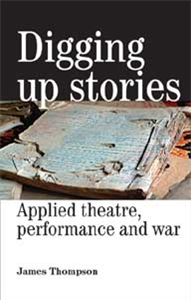
        Digging up stories

        Applied theatre, performance and war

        by James Thompson, Martin Hargreaves

        In 'Digging up stories', James Thompson explores the problems of theatre practice in communities affected by war and exclusion. Each chapter or 'story' is written in a lively and accessible style and draws on a range of contemporary performance theories. The chapters discuss: - participatory theatre in refugee camps - theatre workshop and stories of a massacre - traditional dance-dramas in an insurgent controlled village - 'Forum' theatre with the Mahabharata - ethical issues - the struggle to teach the author to dance 'Digging up stories' documents a range of theatre practice and includes project reports, ethnographic accounts, performance analysis and diary-style reflection. Taken from Thompson's research and practice in Sri Lanka, these diverse examples question the link between applied theatre, traditional performance and performances in everyday life. The book blurs lines between research and travel writing to create rich and provocative accounts of applying theatre in a troubled setting. ;

      • Trusted Partner
        The Arts
        January 2026

        John Ford's America

        by Jeffrey Richards

      • Trusted Partner
      • Trusted Partner
        Literature & Literary Studies
        June 2026

        The legacy of John Polidori

        by Sam George, Bill Hughes

      • Trusted Partner
        January 1983

        Über Wachstum und Form

        In gekürzter Fassung neu herausgegeben von John Tyler Bonner. Übersetzt von Ella M. Fountain und Magdalena Neff. Mit einem Geleitwort von Adolf Portmann

        by D'Arcy Wentworth Thompson, John Tyler Bonner, Ella M. Fountain, Adolf Portmann

        Zweifellos ist es ein verlegerisches Wagnis, DʼArcy Thompsons legendäres Buch im Zeitalter des Quasi-Ausschließlichkeitsanspruchs von Biochemie und Molekularbiologie in einer Neuauflage und dazu in deutscher Sprache herauszubringen. Wer von den jungen Biologen verbindet heute noch mit Thompsons Namen einen Begriff? Wer war dieser Mann? Was macht sein Werk noch heute druckenswert? Man könnte vielleicht aphoristisch sagen: DʼArcy Thompson war einer jener Polyhistores, von denen man meinte, sie seien mit dem Verklingen des Barock ausgestorben und in späterer Zeit nicht einmal mehr denkbar. Mithin ein verspäteter Barock-Gelehrter? Keineswegs, sondern einer der Pioniere der modernsten Biologie! Er vereinigte in sich das Denkvermögen des Mathematikers und Physikers mit dem des Linguisten und des Biologen, und er verfügt über das Handwerkliche aller drei dieser – ach doch so verschiedenen – Wissensgebiete. Dieses Buch hat eine widersprüchliche Geschichte: 1917 erschien die erste Auflage – damals vollendete Ketzerei – mit 793 Seiten Umfang, 1942 eine Erweiterung auf 1116 Seiten. Die posthume Neuauflage von Bonner – sie liegt der Übersetzung zugrunde – knüpft an die erste Auflage an, läßt vieles aus (weil es nicht mehr aktuell ist) und bringt zahlreiche Kommentare des Herausgebers. Es handelt sich also bei der vorliegenden Ausgabe um eine »Klassikeredition in Auswahl und mit Kommentar versehen«. Dies ist bei einem Buch mit einer erst 55jährigen Geschichte bemerkenswert. Um es vorwegzunehmen: von Thompsons Konzeption ist nichts Wesentliches verlorengegangen, und die Kommentare machen die Orientierung für denjenigen, der die Literatur nicht selbst kennt, leichter. (So. J.H. Scharf, Halle, 1974 in seiner Besprechung der deutschen Erstausgabe.)

      • Trusted Partner
        Literature & Literary Studies
        May 2022

        The correspondence of John Dryden

        by Stephen Bernard, John McTague

      • Trusted Partner
        Humanities & Social Sciences
        December 2001

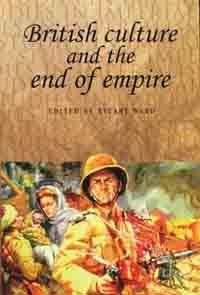
        British culture and the end of empire

        by Andrew Thompson, Stuart Ward, John Mackenzie

        This book is the first major attempt to examine the cultural manifestations of the demise of imperialism as a social and political ideology in post-war Britain. Far from being a matter of indifference or resigned acceptance as is often suggested, the fall of the British Empire came as a profound shock to the British national imagination, and resonated widely in British popular culture. The sheer range of subjects discussed, from the satire boom of the 1960s to the worlds of sport and the arts, demonstrates how profoundly decolonisation was absorbed into the popular consciousness. Offers an extremely novel and provocative interpretation of post-war British cultural history, and opens up a whole new field of enquiry in the history of decolonisation. ;

      • Trusted Partner
        May 1991

        Intentionalität

        Eine Abhandlung zur Philosophie des Geistes

        by Harvey P. Gavagai, John R. Searle

        Nach seinen sprachphilosophischen Arbeiten ('Sprechakte', stw 458; 'Ausdruck und Bedeutung', stw 349) hat John R. Searle mit 'Intentionalität' eine Untersuchung zu einem Kernstück der Philosophie des Geistes vorgelegt, die in einem engen thematischen Zusammenhang mit den früheren Arbeiten steht. Intentionalität ist nach Searles Auffassung die Basis sprachlicher Bedeutung. In seiner Theorie der Intentionalität geht es um die begrifflichen Eigenschaften intentionaler Zustände (auf die Frage nach ihrem ontologischen Status geht er ausführlicher ein in 'Geist, Hirn und Wissenschaft', stw 591). Zwei Aspekte stehen dabei im Vordergrund der Untersuchung: die Logik der Repräsentation und der Kausalität intentionaler Zustände. Doch Searle entwickelt in dieser Arbeit nicht nur eine Theorie der Intentionalität und des Zusammenhangs zwischen sprachlichem und geistigem Inhalt. In einem vornehmlich kritischen Teil setzt er sich ausführlich mit konkurrierenden Auffassungen aus dem Bereich der analytischen Philosophie auseinander, insbesondere mit derzeit sehr einflußreichen 'nicht-deskriptivistischen' Theorien des Bezugs, wie sie von S. Kripke, H. Putnam, K. Donnellan, T. Burge und D. Kaplan vertreten und angeregt wurden.

      • Trusted Partner
        Humanities & Social Sciences
        March 2020

        Knowledge, mediation and empire

        James Tod's journeys among the Rajputs

        by Florence D'Souza, Andrew Thompson, John M. MacKenzie

        This study of the British colonial administrator James Tod (1782-1835), who spent five years in north-western India (1818-22) collecting every conceivable type of material of historical or cultural interest on the Rajputs and the Gujaratis, gives special attention to his role as a mediator of knowledge about this little-known region of the British Empire in the early nineteenth century to British and European audiences. The book aims to illustrate that British officers did not spend all their time oppressing and inferiorising the indigenous peoples under their colonial authority, but also contributed to propagating cultural and scientific information about them, and that they did not react only negatively to the various types of human difference they encountered in the field.

      • Trusted Partner
        The Arts
        October 2015

        Film light

        Meaning and emotion

        by Lara Thompson

        In one of the first monographs of its kind to focus on the aesthetic and emotional impact of lighting in cinema, Lara Thompson looks at the way light informs the cinematic experience, from constructing star identities, sculpting natural light and creating imaginary worlds, to the seductive power of darkness, fading representations of the past and arresting twilight encounters. This groundbreaking and accessible introductory study offers a unique insight into the way illumination has transcended its diffuse functional boundaries and been elevated to a position of narrative and emotional importance, transforming it from an unobtrusive element of film style to an expressive and essential component. It includes analyses of over fifty renowned international films, discussed in inventive and illuminating combinations, from cinema's earliest moments to its most recent digital manifestations, and is essential reading for all those who want to understand what film light means and how it makes us feel. ;

      • Trusted Partner
        Humanities & Social Sciences
        October 2024

        Bulletin of the John Rylands Library 100/1

        by Fred Schurink, Rachel Winchcombe

        The John Rylands Library houses one of the finest collections of rare books, manuscripts and archives in the world. The collections span five millennia, have a global reach and cover a wide range of subjects, including art and archaeology; economic, social, political, religious and military history; literature, drama and music; science and medicine; theology and philosophy; travel and exploration. For over a century, the Bulletin of the John Rylands Library has published research that complements the Library's special collections.

      • Trusted Partner
        Humanities & Social Sciences
        March 2026

        Black socialities

        Urban resistance and the struggle beyond recognition in Paris

        by Vanessa Eileen Thompson

        From author: This is a cutting-edge exploration of black urban politics in Parisian racialized working class and working poor districts, the formation of abolition geography, and the possibilities of new forms of political blackness. In Black Socialities. Urban resistance and the struggle beyond recognition in Paris, Vanessa E. Thompson argues that black urban politics in the French banlieues are multi-racial and spatially grounded towards abolition. Based on a close engagement with urban black activist practices against racial imagery in the city, policing and state racism, and housing insecurity, she shows how radical anti-racism goes beyond struggles for recognition and unfolds alongside new formations of political blackness that is based on urban conviviality. This form of black politics has much to teach us in this current conjuncture of liberal anti-racism and state recognition politics.

      Subscribe to our

      newsletter