
ZNN Network Literary and Illustrator Agency
- International Copyright, Licensing, and Literary Agency - International Illustrator Agency and Management Services - Creative Content Development Services
View Rights Portal
- International Copyright, Licensing, and Literary Agency - International Illustrator Agency and Management Services - Creative Content Development Services
View Rights Portal
Gelobtes Land, die dystopische Climate Fiction Trilogie: Mit CO2 verbindet man den Klimawandel, schmelzende Gletscher und Überflutungen. Mittlerweile ist der Klimawandel auch in der Literatur angekommen. „Climate Fiction“ oder „Cli-fi“ lautet das Stichwort, das zuletzt verstärkt in den Feuilletons auftauchte. Die deutsche Autorin Christine Heimannsberg präsentiert mit ihrer Debüt-Trilogie „Gelobtes Land“ eine ungewöhnliche, spannende Dystopie, die ökologische wie humanistische Themen geschickt im neuen Genre zusammenführt.
View Rights Portal


 Trusted Partner
 Trusted Partner
 Trusted Partner
Trusted Partner
Trusted Partner
 Trusted Partner
 Trusted Partner
 Trusted Partner


Works of travel have been the subject of increasingly sophisticated studies in recent years. This book undermines the conviction with which nineteenth-century British writers talked about darkest Africa. It places the works of travel within the rapidly developing dynamic of Victorian imperialism. Images of Abyssinia and the means of communicating those images changed in response to social developments in Britain. As bourgeois values became increasingly important in the nineteenth century and technology advanced, the distance between the consumer and the product were justified by the scorn of African ways of eating. The book argues that the ambiguities and ambivalence of the travellers are revealed in their relation to a range of objects and commodities mentioned in narratives. For instance, beads occupy the dual role of currency and commodity. The book deals with Henry Morton Stanley's expedition to relieve Emin Pasha, and attempts to prove that racial representations are in large part determined by the cultural conditions of the traveller's society. By looking at Joseph Conrad's Heart of Darkness, it argues that the text is best read as what it purports to be: a kind of travel narrative. Only when it is seen as such and is regarded in the context of the fin de siecle can one begin to appreciate both the extent and the limitations of Conrad's innovativeness.
Trusted Partner
Trusted Partner
Trusted Partner
 Trusted Partner
 Trusted Partner
 Trusted Partner
Trusted Partner
Trusted Partner
Trusted Partner
Trusted Partner
 Trusted Partner
Trusted Partner
Trusted Partner
Trusted Partner
Trusted Partner

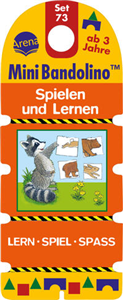
Trendthema Natur im MiniBandolino! Der stabile Lernspielfächer mit der Lösungsschnur fördert selbstständiges Lernen. Wenn Kinder ab 3 Jahren MiniBandolino spielen, brauchen sie noch die Unterstützung eines Erwachsenen. Welches Tier lebt hier? Auf welchem Baum wächst das? Welche Herbstblätter gehören zusammen? Das Aufgabenlösen geht ganz leicht: Karte aus dem Fächer ziehen, mit der Schnur verbinden, was zusammen gehört, Karte umdrehen. Liegt die Schnur genau auf dem Muster? Gut gemacht! Bandolo - der Lernspielklassiker seit 1995! Von Pädagogen entwickelt und empfohlen Bandolo ist ein ideales Lern- und Beschäftigungsspiel, bei dem Kinder systematisch zuordnen, vergleichen, zählen und Gegensätze suchen lernen Das Spielprinzip mit der Lösungskontrolle ist einfach: Was gehört zusammen? Dreh um - schau nach! Alle Lernspielfächer sind altersgerecht konzipiert: - MiniBandolino - Ab 3 Jahren - Bandolino - Kindergarten - Bandolo - Vorschule/Schulanfänger Achtung! Nicht für Kinder unter drei Jahren geeignet. Bei unsachgemäßer Verwendung der Schnur besteht Strangulierungsgefahr.



