Your Search Results

      • Naxos Deutschland Musik & Video Vertriebs GmbH

        About Naxos licensing service As the world's leading classical music label, we can offer you an unparalleled range of repertoire for licensing. Our continuously-expanding catalogue now contains over 750,000 tracks, all of the highest artistic standard, all in state-of-the-art digital sound and many critically-acclaimed. From Early music to Opera, from Medieval to Post-Modern, from Bach to Wagner, Naxos has it. And because we own our recordings outright we can clear the right overnight without involving third parties. Are you looking for unique music for your project? We are offering a complete service from your initial concept to the finished product.   Julia Brunzlow eMail: jb@naxos.de Tel.: 0171-3312975   Julia Gärtner eMail: jg@naxos.de Tel.: 08121-2500747   Web: www.naxoslicensing.com

        View Rights Portal
      • Trusted Partner
        The Arts
        February 2026

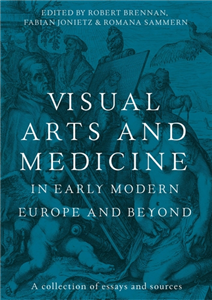
        Visual arts and medicine in early modern Europe and beyond

        A collection of essays and sources

        by Robert Brennan, Fabian Jonietz, Romana Sammern

        This book opens up new perspectives on the relationship between art, medicine, and science in late-medieval and early modern Europe. Looking beyond the traditional nexus of art, anatomy, and optics, the volume sheds light on a broader array of connections between artists and physicians: collaborations between painters and doctors on colour charts, handwork skills common to sculptors and surgeons, the transmission of art theory through medical texts long before the emergence of art writing itself as an independent genre, and the kinship of medical diagnosis with early modes of connoisseurship. Reconfiguring the histories of art, medicine, and science, the book also traverses conventional boundaries between physical and mental health, religious and medical modes of healing, menial and exalted forms of knowledge and labour, as well as vernacular and scientific understandings of human difference, including gender, race, and neurodiversity.

      • The Arts
        March 1905

        Concerning the Spiritual in Art

        by Wassily Kandinsky

        A pioneering work in the movement to free art from its traditional bonds to material reality, this book is one of the most important documents in the history of modern art. Written by the famous nonobjective painter Wassily Kandinsky (1866–1944), it explains Kandinsky's own theory of painting and crystallizes the ideas that were influencing many other modern artists of the period. Along with his own groundbreaking paintings, this book had a tremendous impact on the development of modern art. Kandinsky's ideas are presented in two parts. The first part, called "About General Aesthetic," issues a call for a spiritual revolution in painting that will let artists express their own inner lives in abstract, non-material terms. Just as musicians do not depend upon the material world for their music, so artists should not have to depend upon the material world for their art. In the second part, "About Painting," Kandinsky discusses the psychology of colors, the language of form and color, and the responsibilities of the artist. An Introduction by the translator, Michael T. H. Sadler, offers additional explanation of Kandinsky's art and theories, while a new Preface by Richard Stratton discusses Kandinsky's career as a whole and the impact of the book. Making the book even more valuable are nine woodcuts by Kandinsky himself that appear at the chapter headings. This English translation of Über das Geistige in der Kunst was a significant contribution to the understanding of nonobjectivism in art. It continues to be a stimulating and necessary reading experience for every artist, art student, and art patron concerned with the direction of 20th-century painting.

      • Trusted Partner
        The Arts
        June 2026

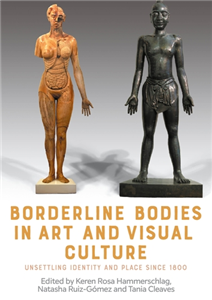
        Borderline bodies in art and visual culture

        Unsettling identity and place since 1800

        by Keren Hammerschlag, Natasha Ruiz-Gómez, Tania Anne Cleaves

        Borderline bodies offers original interpretations of visual representations of human bodies as bounded and unbounded, fortified and permeable, mobile and static-subject to borders and able to traverse and challenge them. It also takes as its focus images and objects that might be considered 'borderline' because they sit at the intersection of disciplines or sit outside accepted notions of what constitutes serious 'art.' By mapping the ways human bodies traverse borders and straddle-even dismantle-categories, this volume's essays approach afresh the relationship of bodies to traditional modes of representation, especially in art and medicine, and encourage us to think anew about how we understand the relationship between human corporeality, identity and place. Critical transdisciplinary and transnational analyses of objects and images from a range of geographies shed new light on the themes of: bodies and identity; typologies of the body; racialised bodies; 'normal' and 'abnormal' bodies; encounters between bodies; bodies in transition; bodies and mobility; and the bounded and unbounded human body. The outcome is a fresh approach to depictions of the human body produced for the purposes of artistic and medical education, aesthetic edification, and scientific and professional advancement, which disrupts assumptions about the normative human body perpetuated through Western image-making traditions.

      • Trusted Partner
        Humanities & Social Sciences
        July 2025

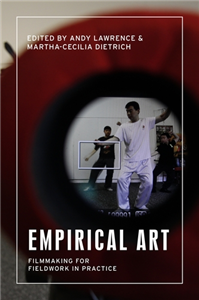
        Empirical art

        Filmmaking for fieldwork in practice

        by Andy Lawrence, Martha-Cecilia Dietrich

        Empirical art: Filmmaking for fieldwork in practice is an insightful exploration of what the craft of filmmaking brings to social science research. Providing creative avenues on how to narrate encounters, relationships, and experiences during fieldwork, this comprehensive volume offers a rich tapestry of theoretical explorations and explorative methodologies. Skilfully connecting the worlds of ethnography, art and cinema, the contributors in this book act as a compass for filmmakers and researchers venturing to use a camera and microphone to relate and narrate their research collaborations and fieldsites. Drawing from the authors' extensive experience in disciplines like social anthropology, environmental humanities, and political science, "Empirical Art" breaks down the intricate process of crafting ethnographic films that departs from the researcher's subjectivity. Covering aspects of filmmaking from conceptualisation to production and distribution, readers are equipped with a treasure trove of collaborative techniques, innovative approaches, and ethical considerations necessary to generate and examine storytelling practices in contemporary fields of study. The authors discuss the significance of the multiple roles that technologies of filmmaking play in reflecting on cultural practices, social dynamics, and (beyond) human storytelling and their transformative potentials. Whether a seasoned filmmaker, an aspiring ethnographer, or an academic seeking new dimensions for their research, Empirical Art serves as a guide to integrating visual storytelling, cinema craft and empirical research.

      • Trusted Partner
      • Trusted Partner
        The Arts
        March 2026

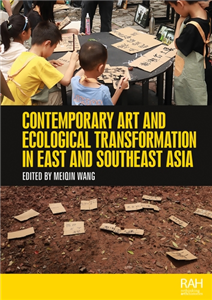
        Contemporary art and ecological transformation in East and Southeast Asia

        by Meiqin Wang

        This anthology, presenting new research from fourteen scholars, delves into the interplay between contemporary art and ecological concerns in East and Southeast Asia. Focused on the concept of artistic remediation, the book unravels the diverse capacities of art to combat systemic anthropogenic destruction to the environment and ecology. At its core, the book articulates the ongoing ecological transformation in art and art history that embraces a paradigm shift in human-nature relationships, emphasizing interconnectedness of all life forms of the Earth. Bridging art studies, activism, and environmental studies, the book examines how artistic practices in the region have engaged with ecocritical reflection, biodiversity advocacy, sustainable practices, and environmental justice, among others. Providing a platform for critical and timely analysis of artistic interventions in the face of existential crises, the book acknowledges diverse voices of scholars who have situated their scholarship in the cultural and artistic specificities of various societies, locales, and communities in the region.

      • Trusted Partner
        March 2025

        Arts and Medicine

        How music, painting, theatre, dance, literature and architecture heal

        by Stefan N. Willich

        Art, medicine and health have many points of contact and a long tradition. Even in Greek mythology, Apollo was the god of the arts. Artistic approaches to therapy (including visual and performing arts, music, dance and literature) have been used for many centuries and are still offered in some medical institutions today. Despite this long practical experience, there is little scientific evidence of its effectiveness. Basic research provides an important basis for art therapy with interesting new approaches for investigating possible mechanisms of action. In addition, the overall social signifi- cance of art for health is an important topic, especially with regard to preventive effects for the population. The book provides a comprehensive overview of how art can be used as a health-promoting resource and highlights various research approaches. In addition, a brief review of the historical development of art in medicine is given. For the first time, the influence of music, painting, dance, literature and architecture on people’s state of health and the healing effect they can have is shown. Target group: Art therapists, artists, psychotherapists, child and adolescent psychologists, psychoanalysts and psychologists, health professionals, music and dance therapists, art and music educators, community musicians

      • Trusted Partner
        The Arts
        February 2022

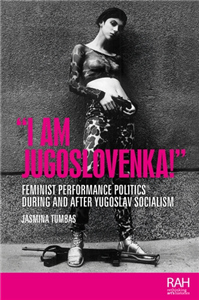
        "I am Jugoslovenka!"

        Feminist performance politics during and after Yugoslav Socialism

        by Jasmina Tumbas, Amelia Jones, Marsha Meskimmon

        "I am Jugoslovenka" argues that queer-feminist artistic and political resistance were paradoxically enabled by socialist Yugoslavia's unique history of patriarchy and women's emancipation. Spanning performance and conceptual art, video works, film and pop music, lesbian activism and press photos of female snipers in the Yugoslav wars, the book analyses feminist resistance in a range of performative actions that manifest the radical embodiment of Yugoslavia's anti-fascist, transnational and feminist legacies. It covers celebrated and lesser-known artists from the 1970s to today, including Marina Abramovic, Sanja Ivekovic, Vlasta Delimar, Tanja Ostojic, Selma Selman and Helena Janecic, along with music legends Lepa Brena and Esma Redzepova. "I am Jugoslovenka" tells a unique story of women's resistance through the intersection of feminism, socialism and nationalism in East European visual culture.

      • Trusted Partner
      • Trusted Partner
        Biography & True Stories
        September 2024

        Bedsit land

        The strange worlds of Soft Cell

        by Patrick Clarke

        A rich and revealing examination of the legendary pop duo Soft Cell. Soft Cell are not your average pop band. Marc Almond and Dave Ball may be best known for the string of hits they released in 1981, but the powerful first phase of their collaboration embraced a staggering array of sounds, influences and innovations that would change the face of music to come. In Bedsit land, Patrick Clarke plunges into the archives and interviews more than sixty contributors, including the band members themselves, to follow Soft Cell through the many strange and sprawling worlds that shaped their extraordinary career. They lead him from the faded camp glamour of the British seaside to the dizzying thrills of the New York club scene. From transgressive student performance art to the sleaze and squalor of pre-gentrified Soho. From the glitz of British showbiz to the drug-addled chaos of post-Franco Spain. He emerges on the other side with the most in-depth, innovative and entertaining account of the duo ever written.

      • Trusted Partner
        Fiction
        June 2019

        This Man and Music

        By Anthony Burgess

        by Christine Lee Gengaro, Andrew Biswell

        This man and music asks two central questions: what can literature contribute to the art of composition, and how can music influence the writer? Anthony Burgess, famed novelist, journalist, and composer, answers these questions and many more. As a person uniquely qualified to look at the interconnectivity of music and literature from both sides, Burgess provides fascinating insights, drawing on his deep knowledge of both disciplines. The book contains eleven interconnected essays that touch on philosophical conundrums of art and adaptation, questions of meaning, and the author's own personal experience. It is a must-read for fans of Burgess who want to understand how music influenced the author's craft of writing. Part autobiography and part literary and musical analysis, This man and music is a unique artefact in the stunning output of a prolific artist.

      • Trusted Partner
        The Arts
        January 2018

        Art after empire

        by Warren Carter

      • Trusted Partner
        The Arts
        May 2026

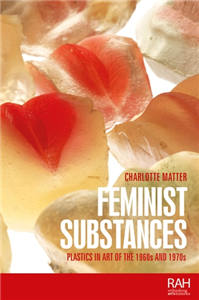
        Feminist substances

        Plastics in art of the 1960s and 1970s

        by Charlotte Matter

        Numerous women artists engaged with industrial materials such as plastics in the 1960s and 1970s, contrary to what the discourse of the time would have us believe. As Feminist substances shows, their works offered unique approaches to plastics in art, introducing new material meanings through a feminist lens. With a focus on Europe and Latin America, the book discusses the practices of Carla Accardi, Lea Lublin and Alina Szapocznikow, combining close readings of selected artworks with broader considerations of their social contexts. It explores their use of Sicofoil, plexiglass, plastic inflatables, polyester resin and polyurethane foam to address key concerns of feminist thought in relation to social reproduction, motherhood, memory, desire and illness. Beyond commonplaces of plastics as generic bad materials, Feminist substances considers more complex ways of engaging with synthetic matter, taking into account our messy relationships with these controversial materials.

      • Trusted Partner
      • Trusted Partner
      • Trusted Partner
      • Trusted Partner
      • Trusted Partner
        The Arts
        January 2026

        Useful Art

        by John Byrne

      Subscribe to our

      newsletter