
Mutaboo
We have the rights of some books. Very important is for us the book of Gideon Gammana.
View Rights Portal
We have the rights of some books. Very important is for us the book of Gideon Gammana.
View Rights Portal

Kaum ein Schriftsteller hat in den letzten Jahren die intellektuelle Auseinandersetzung in Afrika so beeinflußt wie dier Kenianer Ngũgĩ wa Thiang’o. Von den Machthabern seines Landes gefürchtet und von breiten Schichten seines Volkes verehrt und geachtet, wird alles, was er schreibt, in ganz Afrika mit großer Spannung erwartet, jedes seiner Werke erlebt ohne Ausnahme höchste Auflagen. Die vorliegenden Kurzgeschichten wurden in der Zeit von 1963 bis 1975 geschrieben und behandeln Themen wie den erfolgreichen Freiheitskampf Kenias (Mau-Mau-Aufstand), den Konflikt zwischen Gĩkũyũ-Tradition und Christentum sowie den Zusammenprall ländlicher und städtischer Wertsysteme. Die Erzählweise ist direkt und ohne stilistische Umwege. Diese Geschichten können »als autobiographische Seite meiner schöpferischen Tätigkeit angesehen werden. Sie alle berühren Probleme, die mich im Laufe dieser Jahre beschäftigt haben, und geben meine Stimmungen in dieser Zeit wieder.«


 Trusted Partner
Trusted Partner
Trusted Partner
 Trusted Partner
Trusted Partner
Trusted Partner
Trusted Partner
Trusted Partner
Trusted Partner
Trusted Partner

 Trusted Partner


Speculative endeavours contributes to an emerging field of scholarship that focuses on alternative forms of knowledge production and speculation in nineteenth century US-American society. It sheds light on unofficial knowledges such as insider information, rumour, gossip, slander, emphasising how knowledges excluded by institutional discourses and authorities form a core part of the developing market economy. Ranging from the Early Republic to the Gilded Age, contributions analyse entanglements of financial, cultural, and social capital. They focus on social actors who differ from the newly minted ideal of the (free, white, male) entrepreneurial individual. The speculative endeavours discussed include illicit communications located in slave quarters and domestic spaces, communal interventions into a commercialised print market, debates on immigrant fiduciary and legal competency, and disciplinary techniques of pecuniary pedagogy. Taken together they offer unprecedented interdisciplinary insights into an emerging age of capital.
Trusted Partner
Trusted Partner
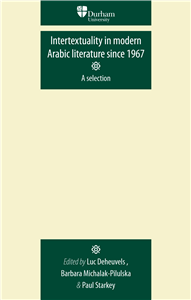
This volume of essays is the first to be dedicated to the subject of intertextuality in modern Arabic literature. Beginning with a general overview of the topic by Roger Allen, it brings together essays on a range of writers from all parts of the Arab world, including, among others, Edwar al-Kharrat, Sa'd Allah Wannus, Najib Mahfuz, Rabi' Jabir, Salim Matar and the recently deceased Sudanese writer al-Tayyib Salih, whose seminal work Season of Migration to the North heralded a new phase in the modern Arabic literary tradition. The volume, which also includes two essays on aspects of intertextuality in Gulf literature, also discusses transformations of popular medieval literature such as the Alf Layla wa-Layla (the Thousand and One Nights) in modern Arabic literature. ;
Trusted Partner
Trusted Partner
Trusted Partner
Trusted Partner

Digital technologies promise efficiency and comfort, but the smoothness of platform services relies on the hidden social labour of those who keep the gig economy running. This book presents a comparative ethnography of young men making a living through digital technologies: selling mobile airtime in Abidjan, Côte d'Ivoire, and app-based delivery riders in Berlin, Germany. These case studies explore the significance of symbolic capital in urban youth's social existence and organisation of livelihood in the digital economy, and the technological mechanisms producing a new form of urban precarity. Globalized urban precarity in Berlin and Abidjan puts forward an original comparative approach to develop a global urban sociology for the digital era. It provides an innovative analytical toolbox that decentres discussions of precarity from the standard of a normal employment contract. With its focus on symbolic capital, the ethnography shows the consequences of the proliferating gig economy for status struggles among urban youth, and carefully embeds the densification of software and services into the socio-material relations on which these new urban infrastructures are built.
Trusted Partner
Trusted Partner
 Trusted Partner
Trusted Partner
Trusted Partner
Trusted Partner
Trusted Partner



