
Éditions David
Livres Canada Books
View Rights Portal

David and Charles is an independent publisher of non-fiction books, predominantly in art, craft and creative categories. Our titles feature industry-leading authors and award-winning editorial and design, commissioned for commercial success in all markets. Category focus on practical how-to books in art, crochet, knitting, general crafts, patchwork & quilting, sewing and wellbeing. Cornerstone titles which are highly illustrated, project, technique and trend orientated.
View Rights Portal


David and Bathsheba presents a modernised edition of George Peele's explosive biblical drama about the tangled lives, deadly liaisons, and twisted histories of Ancient Israel's royal family. Martin's critical edition is the first modern single-volume edition of the play since 1912 and opens up this unduly neglected gem of English Renaissance drama to student and scholar alike. The introduction examines such topics as the play's treatment of its biblical and poetic sources, its engagement with Elizabethan politics, and its forceful representations of religious fanaticism, genocide, and sexual violence. Its commentary notes clarify the text's meaning and staging, guide the reader through the play's dramatisation of the turbulent Davidic period of Ancient Israel's history, and place the play in its broader cultural and artistic milieu. Martin's edition aims to encourage new contemporary critical study of Peele's powerful and disturbing drama.
 Trusted Partner

David and Bathsheba presents a modernised edition of George Peele's explosive biblical drama about the tangled lives, deadly liaisons, and twisted histories of Ancient Israel's royal family. Martin's critical edition is the first modern single-volume edition of the play since 1912 and opens up this unduly neglected gem of English Renaissance drama to student and scholar alike. The introduction examines such topics as the play's treatment of its biblical and poetic sources, its engagement with Elizabethan politics, and its forceful representations of religious fanaticism, genocide, and sexual violence. Its commentary notes clarify the text's meaning and staging, guide the reader through the play's dramatisation of the turbulent Davidic period of Ancient Israel's history, and place the play in its broader cultural and artistic milieu. Martin's edition aims to encourage new contemporary critical study of Peele's powerful and disturbing drama.
Trusted Partner

This book examines the television serials created by influential showrunner David Simon. The book argues that Simon's main theme is the state of the contemporary American city and that all of his serials (barring one about the Iraq War) explore different facets of the metropolis. Each series offers distinctly different visions of the American city, but taken together they represent a sustained and intricate exploration of urban problems in modern America. From deindustrialisation in The Wire and residential segregation in Show Me a Hero to post-Katrina New Orleans in Treme and the transformation of the urban core in The Deuce, David Simon's American city traces the urban through-line in Simon's body of work. Based on sustained analysis of these serials and their engagement with contemporary politics and culture, David Simon's American city offers a compelling examination of one of television's most arresting voices.
Trusted Partner
 Trusted Partner
 Trusted Partner
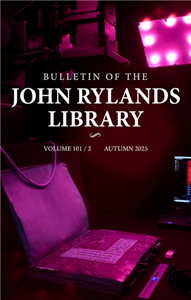
The John Rylands Library houses one of the finest collections of rare books, manuscripts and archives in the world. The collections span five millennia, have a global reach and cover a wide range of subjects, including art and archaeology; economic, social, political, religious and military history; literature, drama and music; science and medicine; theology and philosophy; travel and exploration. For over a century, the Bulletin of the John Rylands Library has published research that complements the Library's special collections. An electronic edition of this issue is freely available under a Creative Commons (CC BY-NC-ND) licence.
Trusted Partner
For nearly half a century Anne Lake Prescott has been a force and an inspiration in Renaissance studies. A force, because of her unique blend of learning and wit and an inspiration through her tireless encouragement of younger scholars and students. Her passion has always been the invisible bridge across the Channel: the complex of relations, literary and political, between Britain and France. The essays in this long-awaited collection range from Edmund Spenser to John Donne, from Clément Marot to Pierre de Ronsard. Prescott has a particular fondness for King David, who appears several times; and the reader will encounter chessmen, bishops, male lesbian voices and Roman whores. Always Prescott's immense erudition is accompanied by a sly and gentle wit that invites readers to share her amusement. Reading her is a joyful education.
Trusted Partner
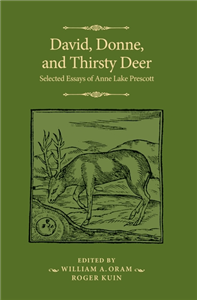
For nearly half a century Anne Lake Prescott has been a force and an inspiration in Renaissance studies. A force, because of her unique blend of learning and wit and an inspiration through her tireless encouragement of younger scholars and students. Her passion has always been the invisible bridge across the Channel: the complex of relations, literary and political, between Britain and France. The essays in this long-awaited collection range from Edmund Spenser to John Donne, from Clément Marot to Pierre de Ronsard. Prescott has a particular fondness for King David, who appears several times; and the reader will encounter chessmen, bishops, male lesbian voices and Roman whores. Always Prescott's immense erudition is accompanied by a sly and gentle wit that invites readers to share her amusement. Reading her is a joyful education.
Trusted Partner

In François Truffaut's opinion The Innocents was 'the best English film after Hitchcock goes to America'. Tennessee Williams said of The Great Gatsby: 'a film whose artistry even surpassed the original novel'. The maker of both films was Jack Clayton, one of the finest English directors of the post-war era and perhaps best remembered for the trail-blazing Room at the Top which brought a new sexual frankness and social realism to the British screen. This is the first full-length critical study of Clayton's work. The author has been able to consult and quote from the director's own private papers which illuminate Clayton's creative practices and artistic intentions. In addition to fresh analyses of the individual films, the book contains new material on Clayton's many unrealised projects and valuably includes his previously unpublished short story 'The Enchantment' - as poignant and revealing as the films themselves. This is a personal and fascinating account of the career and achievement of an important, much-loved director that should appeal to students and film enthusiasts.
Trusted Partner
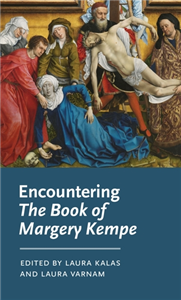
This innovative critical volume brings the study of Margery Kempe into the twenty-first century. Structured around four categories of 'encounter' - textual, internal, external and performative - the volume offers a capacious exploration of The Book of Margery Kempe, characterised by multiple complementary and dissonant approaches. It employs a multiplicity of scholarly and critical lenses, including the intertextual history of medieval women's literary culture, medical humanities, history of science, digital humanities, literary criticism, oral history, the global Middle Ages, archival research and creative re-imagining. Revealing several new discoveries about Margery Kempe and her Book in its global contexts, and offering multiple ways of reading the Book in the modern world, it will be an essential companion for years to come.
Trusted Partner
 Trusted Partner
 Trusted Partner
 Trusted Partner
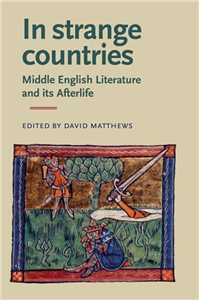
These essays by senior scholars in medieval studies celebrate the career of J.J. Anderson, editor, critic, and co-founder of the Manchester Medieval Literature and Culture series, who taught in medieval studies at the University of Manchester for forty years. The essays are rooted in medieval literature but frequently range beyond the confines of the Middle Ages. They reflect the breadth of Anderson's own scholarly interests, especially in drama and Arthurian literature. There is a particular focus on Sir Gawain and the Green Knight and Pearl, poems which preoccupied him throughout his scholarly life. There are also new reconsiderations of La?amon's Brut, Mirk's Festial, the Passion plays, and the manuscripts of the Pore Caitif. Moving beyond the traditional purview of medieval literature, several contributors trace the afterlives of medieval themes in later literature. These essays include a consideration of the twinned trajectories of the medieval heroes Robin Hood and King Arthur from medieval literature to modern television, a comparison of La?amon's Brut and Tennyson's Idylls of the King, and a recreation of the Bishop Blase procession which took place in industrial Bradford. Contributors are Rosamund Allen, Ralph Elliott, Alexandra Johnston, Stephen Knight, Peter Meredith, Susan Powell, Gillian Rudd, Alan Shelston, and Kalpen Trivedi. ;
Trusted Partner
 Trusted Partner
The John Rylands Library houses one of the finest collections of rare books, manuscripts and archives in the world. The collections span five millennia, have a global reach and cover a wide range of subjects, including art and archaeology; economic, social, political, religious and military history; literature, drama and music; science and medicine; theology and philosophy; travel and exploration. For over a century, the Bulletin of the John Rylands Library has published research that complements the Library's special collections. An electronic edition of this issue is freely available under a Creative Commons (CC BY-NC-ND) licence.
Trusted Partner
 Trusted Partner
 Trusted Partner
Cases of citation presents a history of artists who incorporated literary references into their work from the 1960s onwards. Through a series of object-focused chapters that each take up a singular 'case of citation', the collection considers how literary citation emerged as a viable and urgent strategy for artists during this period. It surveys nine artworks by a diverse group of artists - including David Wojnarowicz, Lis Rhodes, Romare Bearden and Silvia Kolbowski - whose citations draw on literary works with authors ranging from Gertrude Stein to Jean Genet. The book also features an interview with pioneering feminist artist Elaine Reichek that discusses her career-long commitment to working with text. Together, the artworks and cited texts are approached from various critical angles, with each author questioning and complicating the ways in which we can 'read' textual citations in art.

