Your Search Results

      • Poplar Publishing Co., Ltd

        POPLAR Publishing Co., Ltd., a leading independent publisher of children's books in Japan, has been in business for more than 70 years. As it started as a children's books publisher, it has always tried to provide children with enjoyable and exciting books. Today, the company's goals remain unchanged: everything it publishes should be enjoyable and enrich people's lives.

        View Rights Portal
      • Art Nation Publishing

        We combine gadgets and books together and created a new fairy tale world, involving children in an extraordinary adventure

        View Rights Portal
      • Trusted Partner
        Humanities & Social Sciences
        May 2022

        Birth controlled

        by Amrita Pande, Srila Roy, Nicky Falkof

      • Trusted Partner
        Teaching, Language & Reference
        April 2025

        Anti-colonial research praxis

        Methods for knowledge justice

        by Caroline Lenette

        How can anti-colonial research methodologies be transformative and achieve knowledge justice? This book brings together an eclectic group of leading scholars from around the world to share methodological knowledge grounded in First Nations and majority-world expertise and wisdom. The authors challenge western-centric and colonial approaches to knowledge production and redefine the possibilities of what we can achieve through social research. First Nations and majority-world perspectives are contextual and unique. They share a common aim of disrupting established beliefs on research methodologies and the unquestioned norms that dictate whose knowledge the academy values. The ten chapters in this edited collection describe how the authors draw on Indigenous knowledge systems, feminist frameworks, and creative methodologies as anti-colonial research praxis. The examples span several disciplines such as development studies, geography, education, sexual and reproductive health, humanitarian studies, and social work. Authors use a reflexive approach to discuss specific factors that shape how they engage in research ethically, to lead readers through a reflection on their own practices and values. The book reimagines social research using an anti-colonial lens and concludes with a collaboratively developed and co-written set of provocations for anti-colonial research praxis that situate this important work in the context of ongoing colonial violence and institutional constraints. This book is an essential guide for researchers and scholars within and beyond the academy on how anti-colonial research praxis can produce meaningful outcomes, especially in violent and troubled times. Cover art courtesy of Tawny Chatmon

      • Trusted Partner
        Humanities & Social Sciences
        March 2017

        Imperial medicine and indigenous societies

        by David Arnold

      • Trusted Partner
      • Trusted Partner
        Humanities & Social Sciences
        November 2018

        Governing natives

        by Ben Silverstein, Andrew Thompson

      • Trusted Partner
        Humanities & Social Sciences
        July 2018

        Savage worlds

        German encounters abroad, 1798–1914

        by Matthew Fitzpatrick, Peter Monteath

        With an eye to recovering the experiences of those in frontier zones of contact, Savage Worlds maps a wide range of different encounters between Germans and non-European indigenous peoples in the age of high imperialism. Examining outbreaks of radical violence as well as instances of mutual co-operation, it examines the differing goals and experiences of German explorers, settlers, travellers, merchants, and academics, and how the variety of projects they undertook shaped their relationship with the indigenous peoples they encountered. Examining the multifaceted nature of German interactions with indigenous populations, this volume offers historians and anthropologists clear evidence of the complexity of the colonial frontier and frontier zone encounters. It poses the question of how far Germans were able to overcome their initial belief that, in leaving Europe, they were entering 'savage worlds'.

      • Trusted Partner
        The Arts
        December 2000

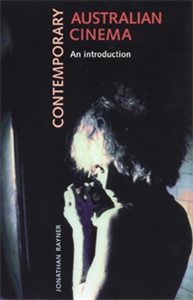
        Contemporary Australian cinema

        An introduction

        by Jonathan Rayner

        Provides an introduction to the products and context of the new Australian film industry which arose toward the end of the 1960s. Traces the development of Australian film, in terms of prominent directors and stars, consistent themes, styles and evolving genres. The evolution of the film genres peculiar to Australia, and the adaptation of conventional Hollywood forms (such as the musical and the road movie) are examined in detail through textual readings of landmark films. Films and trends discussed include: the period film and Picnic at Hanging Rock; the Gothic film and the Mad Max trilogy; camp and kitsch comedy and the Adventures of Pricilla, Queen of the Desert. The key issue of the revival (the definition, representation and propagation of a national image) is woven through analysis of the new Australian cinema. ;

      • Trusted Partner
        Humanities & Social Sciences
        March 2017

        Rethinking settler colonialism

        History and memory in Australia, Canada, Aotearoa New Zealand and South Africa

        by Annie Coombes

        Rethinking settler colonialism focuses on the long history of contact between indigenous peoples and the white colonial communities who settled in Australia, Aotearoa New Zealand, Canada and South Africa. It interrogates how histories of colonial settlement have been mythologised, narrated and embodied in public culture in the twentieth century (through monuments, exhibitions and images) and charts some of the vociferous challenges to such histories that have emerged over recent years. Despite a shared familiarity with cultural and political institutions, practices and policies amongst the white settler communities, the distinctiveness which marked these constituencies as variously, 'Australian', 'South African', 'Canadian' or 'New Zealander', was fundamentally contingent upon their relationship to and with the various indigenous communities they encountered. In each of these countries these communities were displaced, marginalised and sometimes subjected to attempted genocide through the colonial process. Recently these groups have renewed their claims for greater political representation and autonomy. The essays and artwork in this book insist that an understanding of the political and cultural institutions and practices which shaped settler-colonial societies in the past can provide important insights into how this legacy of unequal rights can be contested in the present. It will be of interest to those studying the effects of colonial powers on indigenous populations, and the legacies of imperial rule in postcolonial societies.

      • Trusted Partner
        Humanities & Social Sciences
        December 2022

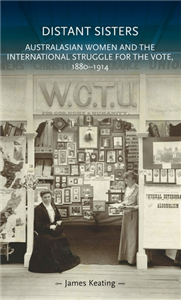
        Distant sisters

        Australasian women and the international struggle for the vote, 1880–1914

        by James Keating

        In the 1890s Australian and New Zealand women became the first in the world to win the vote. Buoyed by their victories, they promised to lead a global struggle for the expansion of women's electoral rights. Charting the common trajectory of the colonial suffrage campaigns, Distant Sisters uncovers the personal and material networks that transformed feminist organising. Considering intimate and institutional connections, well-connected elites and ordinary women, this book argues developments in Auckland, Sydney, and Adelaide-long considered the peripheries of the feminist world-cannot be separated from its glamourous metropoles. Focusing on Antipodean women, simultaneously insiders and outsiders in the emerging international women's movement, and documenting the failures of their expansive vision alongside its successes, this book reveals a more contingent history of international organising and challenges celebratory accounts of fin-de-siècle global connection.

      • Trusted Partner
        Humanities & Social Sciences
        January 2025

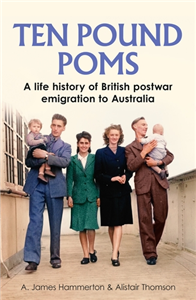
        ‘Ten Pound Poms’

        A life history of British postwar emigration to Australia

        by A. James Hammerton, Alistair Thomson, Becca Parkinson

        A riveting history of the 'Ten Pound Poms', a wave of British citizens who migrated to Australia and New Zealand after the Second World War. Between the 1940s and 1970s, more than a million Britons migrated to Australia. They were the famous 'Ten Pound Poms' and this is their story. The authors draw on a vast trove of letters, diaries and personal photographs, as well as hundreds of interviews with former migrants, to offer original insights into key historical themes. They explore people's motivations for emigrating, gender relations and family dynamics, the clashing experience of the 'very familiar and awfully strange', homesickness and the personal and national identities of both settlers and returnees. Filled with fascinating testimonies that shed light on migrant life histories, 'Ten Pound Poms' will engage readers interested in British and Australian migration history and intrigued about the power of migrant memories for individuals, families and nations.

      • Trusted Partner
        Humanities & Social Sciences
        February 2017

        Servants of the empire

        The Irish in Punjab 1881–1921

        by Patrick O'Leary, Andrew Thompson, John M. MacKenzie

        Punjab, 'the pride of British India', attracted the cream of the Indian Civil Service, many of the most influential of whom were Irish. Some of these men, along with Irish viceroys, were inspired by their Irish backgrounds to ensure security of tenure for the Punjabi peasant, besides developing vast irrigation schemes which resulted in the province becoming India's most affluent. But similar inspiration contributed to the severity of measures taken against Indian nationalist dissent, culminating in the Amritsar massacre which so catastrophically transformed politics on the sub-continent. Setting the experiences of Irish public servants in Punjab in the context of the Irish diaspora and of linked agrarian problems in Ireland and India, this book descrides the beneficial effects the Irish had on the prosperity of India's most volatile province. Alongside the baleful contribution of some towards a growing Indian antipathy towards British rule. Links are established between policies pursued by Irishmen of the Victorian era and current happenings on the Pakistan-Afghan border and in Punjab.

      • Trusted Partner
        Humanities & Social Sciences
        July 2023

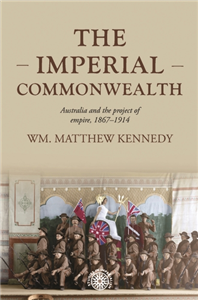
        The imperial Commonwealth

        Australia and the project of empire, 1867-1914

        by Wm. Matthew Kennedy

        From the late 1800s to the early 1900s, Australian settler colonists mobilised their unique settler experiences to develop their own vision of what 'empire' was and could be. Reinterpreting their histories and attempting to divine their futures with a much heavier concentration on racialized visions of humanity, white Australian settlers came to believe that their whiteness as well as their Britishness qualified them for an equal voice in the running of Britain's imperial project. Through asserting their case, many soon claimed that, as newly minted citizens of a progressive and exemplary Australian Commonwealth, white settlers such as themselves were actually better suited to the modern task of empire. Such a settler political cosmology with empire at its center ultimately led Australians to claim an empire of their own in the Pacific Islands, complete with its own, unique imperial governmentality.

      • Trusted Partner
        Biography & True Stories
        November 2024

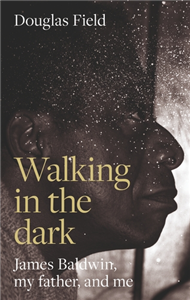
        Walking in the dark

        James Baldwin, my father and I

        by Douglas Field

        A moving exploration of the life and work of the celebrated American writer, blending biography and memoir with literary criticism. Since James Baldwin's death in 1987, his writing - including The Fire Next Time, one of the manifestoes of the Civil Rights Movement, and Giovanni's Room, a pioneering work of gay fiction - has only grown in relevance. Douglas Field was introduced to Baldwin's essays and novels by his father, who witnessed the writer's debate with William F. Buckley at Cambridge University in 1965. In Walking in the dark, he embarks on a journey to unravel his life-long fascination and to understand why Baldwin continues to enthral us decades after his death. Tracing Baldwin's footsteps in France, the US and Switzerland, and digging into archives, Field paints an intimate portrait of the writer's life and influence. At the same time, he offers a poignant account of coming to terms with his father's Alzheimer's disease. Interweaving Baldwin's writings on family, illness, memory and place, Walking in the dark is an eloquent testament to the enduring power of great literature to illuminate our paths.

      • Trusted Partner
        Humanities & Social Sciences
        March 2017

        'The better class' of Indians

        Social rank, Imperial identity, and South Asians in Britain 1858–1914

        by A. Wainwright

        This is the first book-length study to focus primarily on the role of class in the encounter between South Asians and British institutions in the United Kingdom at the height of British imperialism. In a departure from previous scholarship on the South Asian presence in Britain, 'The better class' of Indians emphasizes the importance of class as the register through which British polite society interpreted other social distinctions such as race, gender, and religion. Drawing mainly on unpublished material from the India Office Records, the National Archives, and private collections of charitable organizations, this book examines not only the attitudes of British officials towards South Asians in their midst, but also the actual application of these attitudes in decisions pertaining to them. This fascinating book will be of particular interest to scholars and general readers of imperialism, immigration as well as British and Indian social history.

      • Trusted Partner
        Teaching, Language & Reference
        May 2020

        Curatopia

        by Philipp Schorch, Conal McCarthy

      • Trusted Partner
        Humanities & Social Sciences
        July 2025

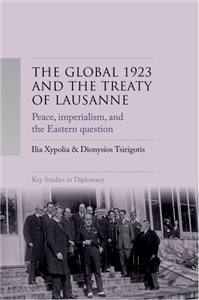
        The Global 1923 and the Treaty of Lausanne

        Peace, imperialism, and the Eastern question

        by Ilia Xypolia, Dionysis Tsirigotis

        This book is a cutting-edge analysis of how the peace treaty was achieved in Lausanne by placing it in the global context. The Treaty of Lausanne reconsidered explores events from the long great war to the conclusion of the Treaty of Lausanne, examining imperialism and divergent - among and within states - motives, actions and constraints that shaped the peace settlement. It shows that peace can only last if it is a product of negotiation and not imposition. In doing so, the book addresses the silences and the absences that eventually formed controversial aspects of the settlement. It highlights the degree to which the Eastern Question discourse and the western powers' concerns in light of the emerging Turco-Soviet alliance, shaped the proceedings in Lausanne. The Treaty of Lausanne reconsidered reveals how the entanglement and the contestation at Lausanne continues to inform our contemporary politics today.

      • Trusted Partner
        Humanities & Social Sciences
        February 2013

        Catholic police officers in Northern Ireland

        Voices out of silence

        by Mary Gethins

        This exciting book, newly available in paperback, aims to establish the historical and cultural reasons why there was only a participation rate of 7-8% by the Catholic population in policing Northern Ireland when the Police Service of Northern Ireland (PSNI) came into being in 2001, even though Catholics constituted 46% of the total population. It also aims to ascertain whether or not implementation of the Patten Commission's recommendation to recruit to the PSNI on a 50: 50 basis between Catholics and non-Catholics has resulted in greater representation and what the political and cultural obstacles might be in transforming policing from meeting colonial model criteria to those of the liberal model advocated by Patten. In doing this, author Mary Gethins uses a wealth of historical data to show that there has for a long time been a problematic relationship between the native Irish Catholic population and the police, and the reasons for Catholic under-representation in the police force can be largely put down to this legacy. A survey of Catholic police officers focusing on family history, reasons for joining the police and sacrifices perceived to have been made in joining a largely Protestant organisation provide a strong empirical evidence base from which Gethins draws illuminating lessons. The work is informed by sociological theory to show that Catholic police officers are atypical of the Catholic population at large in Northern Ireland, and best explained by the concept of fragmented identity. ;

      • Trusted Partner
        Humanities & Social Sciences
        January 2025

        Worlds of the ring

        Nation and empire in the British and German circus

        by Sabine Hanke

        Worlds of the Ring is a groundbreaking exploration of the interwar European circus scene, focusing on the German Sarrasani and British Bertram W. Mills' circuses. This study illuminates the correlation between the circus's evolution and imperialism/nationalism, revealing how these enterprises shaped national identities for popular audiences. Examining the years 1918-45, the book takes a transnational perspective, uncovering the interplay of international and national forces that influenced the modern circus. Through case studies, it delves into the lives of individuals in the industry, using diverse sources like newspapers, legal documents, and performer archives. The book introduces the concept of Orientalism to analyse how circuses depicted foreign worlds, and provides a fresh perspective on interwar popular culture, globalising forces, and the circus's ties to European imperialism in the early 20th century.

      Subscribe to our

      newsletter