Your Search Results

      • Presses de Sciences Po

        Sciences Po University Press has a triple vocation: to publish research, to edit reference work for students, and to stimulate public and political debate. Founded in the 1950s by Sciences Po (Political Studies Institute of Paris), it has established itself as a leading university publisher. With more than 1,000 titles in its catalogue, Sciences Po University Press publishes the most advanced research in its areas of expertise: geopolitics, globalization and governance, trends in political life, societal change, gender theory and development and 20th century history.

        View Rights Portal
      • Springer Nature

        For over 175 years Springer Nature has been advancing discovery by providingthe best possible service to the whole research community.We help researchers uncover new ideas, makesure all the research we publish is significant, robust and stands up to objectivescrutiny, that it reaches all relevant audiences in the best possible format, and can be discovered, accessed, used, re-used and shared.Wesupport librarians and institutions with innovations in technology and data; and providequality publishing support to societies. As a research publisher, Springer Nature is home to trusted brands including Springer, Nature Research, BMC, Palgrave Macmillan and Scientific American. https://group.springernature.com/gp/group

        View Rights Portal
      • Trusted Partner
        November 2021

        The Forest of the Future – A New Reality

        Understanding the ecosystem

        by Hans Jürgen Böhmer

        What happened with forest dieback? The predictions of the 1980s that forests would be in decline across Europe have not come true. Currently, attention again focuses on the doom scenarios of the loss of entire forests and cultural landscapes in an emotional and sometimes hysterical debate. Biogeographer Hans Jürgen Böhmer refers to updated case studies and his 30 years of research experience on global ecosystems to demonstrate extremely complex interrelations of the natural world that various actors monitor in contrasting ways and characterized by different times and ideologies. Böhmer advocates to embed the sustainability debate more strongly in the living environment, rather than relying exclusively on model calculations.

      • Trusted Partner
        The Arts
        May 2026

        Ecology and feminism in performance

        Composting histories 1962–2020

        by Cara Berger

        This book provides a vital new history of feminist performance through an ecological lens. It argues that from the 1960s to the present, artists have used performance to challenge the linked oppression of women and nature. Proposing 'composting' as a new method for writing feminist history, the study moves beyond linear narratives to trace regenerative connections between generations of practitioners. It provides sustained analysis of genres from land art to postdramatic theatre, re-evaluating the work of canonical figures while examining how contemporary artists continue to address these urgent themes. By placing ecofeminism in dialogue with feminist new materialism, queer ecology, and transecological thought, this study demonstrates how performance has been a crucial site for imagining more just and sustainable futures in an age of environmental crisis.

      • Trusted Partner
        April 2023

        Purveyors to the Court

        How politics makes use of science and breaks down because of it

        by Klaus Ferdinand Gärditz

        — Astute analysis of the relationship between politics and the natural sciences — Danger of undermining democratic processes Today, political decision-making processes are closely intertwined with processes of scientific knowledge generation. The natural sciences play a central role in politics. This became particularly clear during the corona pandemic and in the regular press conferences in which politicians largely narrowed their course to scientific findings. The consequence of this maxim is that the rationalisation of politics is accompanied by a politicisation of science. Science is exploited, and sometimes allows itself to be exploited. In his equally brilliant and sharp analysis, Klaus Ferdinand Gärditz explains the consequences of this development for the democratic process in particular.

      • Trusted Partner
        Business, Economics & Law
        January 2026

        Latin America and international investment law

        A mosaic of resistance

        by Sufyan Droubi, Cecilia Juliana Flores Elizondo

        Latin America has been a complex laboratory for the development of international investment law. While some governments and non-state actors have remained true to the Latin American tradition of resistance towards the international investment law regime, other governments and actors have sought to accommodate said regime in the region. Consequently, a profusion of theories and doctrines, too often embedded in clashing narratives, has emerged. In Latin America, the practice of international investment law is the vivid amalgamation of the practice of governments sometimes resisting and sometimes welcoming mainstream approaches; the practice of lawyers assisting foreign investors from outside and within the region; and the practice of civil society, indigenous peoples and other actors in their struggle for human rights and sustainable development. Latin America and international investment law describes the complex roles that governments have played vis-à-vis foreign investors and investments; the refreshing but clashing forces that international organizations, corporations, civil society, and indigenous peoples have brought to the field; and the contribution that Latin America has made to the development of the theory and practice of international investment law, notably in fields in which the Latin American experience has been traumatic: human rights and sustainable development. Latin American scholars have been contributing to the theory of international investment law for over a century; resting on the shoulders of true giants, this volume aims at pushing this contribution a little further.

      • Trusted Partner
      • Trusted Partner
        November 2023

        Natural Flow

        Wie du die Psychologie deines Zyklus für dich nutzt

        by Miriam Stark

      • Trusted Partner
        Humanities & Social Sciences
        February 2017

        Conquering nature in Spain and its empire, 1750–1850

        by Helen Cowie, Andrew Thompson, John M. MacKenzie

        This book examines the study of natural history in the Spanish empire in the years 1750-1850. During this period, Spain made strenuous efforts to survey, inventory and exploit the natural productions of her overseas possessions, orchestrating a serries of scientific expeditions and cultivating and displaying American fauna and flora in metropolitan gardens and museums. This book assesses the cultural significance of natural history, emphasising the figurative and utilitarian value with which eighteenth-century Spaniards invested natural objects, from globetrotting elephants to three-legged chickens. It considers how the creation, legitimisation and dissemination of scientific knowledge reflected broader questions of imperial power and national identity. This book will be of particular interest to scholars and students of Spanish and Latin American History, the History of Science and Imperial Culture

      • Trusted Partner
      • Trusted Partner
        August 2016

        Natural- und Geldunterstützung.

        (Schriften des deutschen Vereins für Armenpflege und Wohlthätigkeit 42).

        by Kayser, Karl; Martius, Georg

      • Trusted Partner
        Humanities & Social Sciences
        November 2023

        The new politics of Poland

        by Jaroslaw Kuisz

      • Trusted Partner
        July 1996

        DELETE

        by DELETE

      • Trusted Partner
        2020

        Audio Engineering

        for special events techniciansin training and on the job

        by Christoph Grzesinski. Founded by Dr. Volker Smyrek

        We all know that audio engineering is more than just acronyms. But what do they all mean? This practical textbook is designed to meet the special needs of events technicians. The textbook stands out from the crowd because it is designed specifically with the university curriculum and professional needs in mind, making it not only an excellent companion in the classroom, but a useful reference for on the job as well. The author, himself an instructor for special events technicians, covers the ground from physical fundamentals of acoustics and electronics to setting up mixing consoles and sound systems, providing a multitude of useful tips without confusing the reader with extraneous details. A chapter on video technology rounds off the book. Sample calculations put the material in a practical context, and sample problems at the end of each chapter (with solutions in the appendix) help review what has been learned and inspire further thought. Entertaining guest essays provide a broader perspective.

      • Trusted Partner
        2022

        A Workbook of Chemistry for Students of Medicine and Biology

        Introduction to the material covered in standard examinations

        by Dirk Röbke and Udo Wolfgramm

        Rote learning is one way to pass examinations, but really understanding the subject is even better. Most textbooks are limited to presenting facts without helping the reader review and practice. This workbook fills the gap with more than 1,000 sample examination questions from general, inorganic and organic chemistry. With it, students can practice and deepen what they have learned from textbooks. The problems can be solved without aids, and solutions are provided with detailed explanations. The workbook enjoys great popularity after helping countless students study successfully. From the contents: atomic structure and chemical bonds: noble gas configuration, electronegativity, hybridization, intermolecular interactions | nomenclature and structural formulas of inorganic and organic compounds | chemical equations: double transformations, acid-base reactions, complexes | quantities and concentrations of substance: gravimetry, titrations, percent by mass and by volume | law of mass action | acids, bases and salts: calculating pH value, titration curves, buffers, solubility product | redox reactions and oxidation numbers, Nernst equation | complex compounds | configurational and conformational isomerism | inductive and mesomeric effects | substitution, addition, elimination | aromatic compounds: reactions and second substitution | natural products: carbohydrates, lipids, amino acids, peptides | carbonyl reactions: carboxylic acids, aldehydes, ketones

      • Business, Economics & Law
        March 1905

        The Path of the Law

        by Oliver Wendell Holmes Jr.

        In The Path of the Law, Holmes discusses his personal philosophy on legal practice. The Common Law is a series of lectures that established Holmes's reputation as a witty and articulate writer.

      • Trusted Partner
      • Trusted Partner
        Medicine
        November 2024

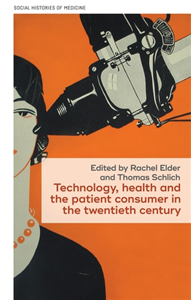
        Technology, health and the patient consumer in the twentieth century

        by Rachel Elder, Thomas Schlich

        Technology and consumerism are two characteristic phenomena in the history medicine and healthcare, yet the connections between them are rarely explored by scholars. In this edited volume, the authors address this disconnect, noting the ways in which a variety of technologies have shaped patients' roles as consumers since the early twentieth century. Chapters examine key issues, such as the changing nature of patient information and choice, patients' assessment of risk and reward, and matters of patient role and of patient demand as they relate to new and changing technologies. They simultaneously investigate how differences in access to care and in outcomes across various patient groups have been influenced by the advent of new technologies and consumer-based approaches to health. The volume spans the twentieth and twenty-first centuries, spotlights an array of medical technologies and health products, and draws on examples from across the United States and United Kingdom.

      • Trusted Partner
        2021

        Biochemistry and Clinical Chemistry

        by Dr. Bernd Sorg and Prof. Dr. Diana Imhof

        Biochemistry and clinical chemistry have long been an established part of pharmaceutical education. A comprehensive knowledge of the molecular processes in the human body is needed for a detailed understanding of disease pictures and of drug action at the molecular level. These subjects are of supreme relevance for pharmaceutical practice – without the methods of biochemistry and molecular biology, the development of new active substances is inconceivable. However, to date the established reference works have covered a much too broad range of topics, go into excessive detail and are not geared to the study of pharmacy. This textbook finally fills this gap in a hitherto unique way. Thanks to the concise learning content, it is tailored to the needs of pharmacy students. The authors therefore concentrate on the material required for the registration examination and focus on topics of relevance to drugs and treatment. They summarise the biochemical principles and use selected examples to explain the connections between them. Numerous diagrams, pictures and info boxes provide structure to the subject matter, facilitate learning and make reading enjoyable.

      • Trusted Partner
        The Arts
        December 2024

        Beyond the Happening

        Performance art and the politics of communication

        by Catherine Spencer

        Beyond the Happening uncovers the heterogeneous, uniquely interdisciplinary performance-based works that emerged in the aftermath of the early Happenings. By the mid-1960s Happenings were widely declared outmoded or even 'dead', but this book reveals how many practitioners continued to work with the form during the late 1960s and 1970s, developing it into a vehicle for studying interpersonal communication that simultaneously deployed and questioned contemporary sociology and psychology. Focussing on the artists Allan Kaprow, Marta Minujín, Carolee Schneemann and Lea Lublin, it charts how they revised and retooled the premises of the Happening within a wider network of dynamic international activity. The resulting performances directly intervened in the wider discourse of communication studies, as it manifested in the politics of countercultural dropout, soft power and cultural diplomacy, alternative pedagogies, sociological art and feminist consciousness-raising.

      Subscribe to our

      newsletter