Claret Press
Claret Press is an independent press based in London. Our books are now read and enjoyed all over the world. We specialise in mysteries and thrills and chronicles and memoirs.
View Rights Portal
Claret Press is an independent press based in London. Our books are now read and enjoyed all over the world. We specialise in mysteries and thrills and chronicles and memoirs.
View Rights Portal
Licensing digital rights can be complicated and time-consuming. For 15 years our digital licensing agency, founded by pioneering digital publisher David Attwooll (as Attwooll Associates), has guided publishers through rapid and complex digital change. Clare and her small team of digital rights experts take a personal approach to each publisher, recommending specific licences and digital business models. We attend the book fairs in London and Frankfurt each year, and deal regularly with over 50 e-vendors across all sectors of the market: professional, academic, educational, and consumer.
View Rights Portal

Umklappen und Verwandeln Im Meer tummeln sich viele Tiere. Welcher Fisch versteckt sich da im Dunkeln und was macht der kleine Kraken? Blätter schnell die Seite um und finde es heraus! In diesem fröhlich-bunten Pappbilderbuch verändern Kinder selbst die Bilder und lernen ganz nebenbei den Zusammenhang zwischen Ursache und Wirkung. Ein toller Spiel- und Lesespaß für die Kleinen! Pappbilderbuch ab 18 Monaten Mit tollen Spielelementen : faszinierende Verwandelbilder zum Spielen und Staunen Tolle Wow-Effekte beim Umblättern durch Schiebeelemente Kinder sind aktiv Teil der Geschichte, was die Freude am Vorlesen stärkt Interaktiver Spieleffekt : Die Kinder verändern die Szenen selbst Fördert die Feinmotorik Gereimte Texte trainieren die Sprachfähigkeit und erweitern den Wortschatz Ideal zum gemeinsamen Vorlesen oder Alleinbeschäftigung Praktisches und robustes Format auch für unterwegs Sicherheit und Qualität : stabile Seiten mit abgerundeten Ecken Verbindet Unterhaltung und Wissensvermittlung : Kinder lernen ganz nebenbei spannende Meerestiere kennen


The Arctic region has been the subject of much popular writing. This book considers nineteenth-century representations of the Arctic, and draws upon an extensive range of evidence that will allow the 'widest connections' to emerge from a 'cross-disciplinary analysis' using different methodologies and subject matter. It positions the Arctic alongside more thoroughly investigated theatres of Victorian enterprise. In the nineteenth century, most images were in the form of paintings, travel narratives, lectures given by the explorers themselves and photographs. The book explores key themes in Arctic images which impacted on subsequent representations through text, painting and photography. For much of the nineteenth century, national and regional geographical societies promoted exploration, and rewarded heroic endeavor. The book discusses images of the Arctic which originated in the activities of the geographical societies. The Times provided very low-key reporting of Arctic expeditions, as evidenced by its coverage of the missions of Sir John Franklin and James Clark Ross. However, the illustrated weekly became one of the main sources of popular representations of the Arctic. The book looks at the exhibitions of Arctic peoples, Arctic exploration and Arctic fauna in Britain. Late nineteenth-century exhibitions which featured the Arctic were essentially nostalgic in tone. The Golliwogg's Polar Adventures, published in 1900, drew on adult representations of the Arctic and will have confirmed and reinforced children's perceptions of the region. Text books, board games and novels helped to keep the subject alive among the young.
 Trusted Partner
Trusted Partner
Trusted Partner
Trusted Partner
Trusted Partner
Trusted Partner
Trusted Partner
Trusted Partner
Trusted Partner

n 1715 Leibniz wrote to his friend the Princess of Wales to warn her of the dangers Newton's philosophy posed for natural religion. Seizing this chance of initiating an exchange between the two greatest minds in Europe, the princess showed his letter to the eminent Newtonian scientist and natural theologian, Samuel Clarke. From his reply developed an exchange of papers which was published in 1717. The correspondence was immediately seen as a crucial discussion of the significance of the new science, and it became one of the most widely read philosophical works of its time.In this edition, an introduction outlines the historical background, and there is a valuable survey of the subsequent discussions of the problem of space and time in the philosophy of science. Significant references to the controversy in Leibniz's other correspondence have also been collected, and the relevant passages from Newton's Principia and Opticks are appended. In 1715 Leibniz wrote to his friend the Princess of Wales to warn her of the dangers Newton's philosophy posed for natural religion. Seizing this chance of initiating an exchange between two of the greatest minds in Europe, the princess showed his letter to the eminent Newtonian scientist and natural theologian, Samuel Clarke. From his reply developed an exchange of papers which was published in 1717. The correspondence was immediately seen as a crucial discussion of the significance of the new science, and it became one of the most widely read philosophical works of its time. Kant developed his theory of space and time from the problems at issue, and the post-Newtonian physics of the twentieth century has brought a revival of interest in Leibniz's objections: some of the problems are still not finally resolved. In this edition an introduction outlines the historical background, and there is a valuable survey of the subsequent discussions of the problem of space and time in the philosophy of science. Significant references to the controversy in Leibniz's other correspondence have also been collected, and the relevant passages from Newton's "Principia" and "Opticks" are appended. ;
Trusted Partner
Trusted Partner
Trusted Partner
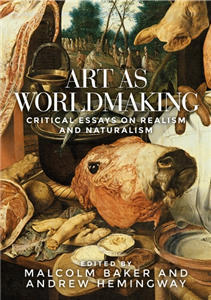
Art as worldmaking is a response to Alex Potts's provocative 2013 book Experiments in modern realism. Twenty essays by leading scholars test Potts's recasting of realism through examinations of art produced in different media and periods, ranging from eighth-century Chinese garden aesthetics to video work by the contemporary Russian collective Radek Community. While the book does not neglect avatars of pictorial realism such as Menzel and Eakins, or the question of nineteenth-century realism's historical antecedents, it is contemporary in orientation in that many contributors are particularly concerned with the questions that sculpture, photography and non-traditional media pose for realism as an aesthetic norm. It will be essential reading for students of art history concerned with art's truth value or more broadly with conceptual problems of representation and the intersections of art and politics.
Trusted Partner
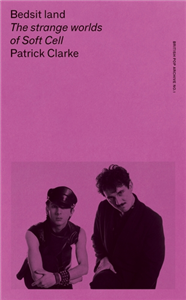
A rich and revealing examination of the legendary pop duo Soft Cell. Soft Cell are not your average pop band. Marc Almond and Dave Ball may be best known for the string of hits they released in 1981, but the powerful first phase of their collaboration embraced a staggering array of sounds, influences and innovations that would change the face of music to come. In Bedsit land, Patrick Clarke plunges into the archives and interviews more than sixty contributors, including the band members themselves, to follow Soft Cell through the many strange and sprawling worlds that shaped their extraordinary career. They lead him from the faded camp glamour of the British seaside to the dizzying thrills of the New York club scene. From transgressive student performance art to the sleaze and squalor of pre-gentrified Soho. From the glitz of British showbiz to the drug-addled chaos of post-Franco Spain. He emerges on the other side with the most in-depth, innovative and entertaining account of the duo ever written.
Trusted Partner


Zu Beginn des dritten Jahrtausends ist die Situation der Demokratie paradox: Einerseits sind mehr Staaten denn jemals zuvor demokratisch verfaßt, andererseits nehmen die Krisensymptome in den Staaten, die einstmals so etwas wie eine demokratische Avantgarde bildeten, zu: Die Wahlbeteiligung sinkt, schillernde Persönlichkeiten wie Silvio Berlusconi oder Nicolas Sarkozy gewinnen an Bedeutung, Wahlkämpfe geraten zu schalen Marketingkampagnen. Colin Crouch hat all diese Trends in dem Band "Postdemokratie" präzise auf den Punkt gebracht. In diesem Band setzen sich nun acht herausragende politische Denkerinnen und Denker mit dem Zustand und den Perspektiven der am wenigsten schlechten aller Regierungsformen (Winston Churchill) auseinander, die tageszeitung sprach von einem 'Who's who der internationalen linken Theorie'. Der Diskussionsband enthält Beiträge von Giorgio Agamben, Alain Badiou, Daniel Bensaïd, Wendy Brown, Jean-Luc Nancy, Jacques Rancière, Kristin Ross und Slavoj iek.
Trusted Partner

Zu Beginn des dritten Jahrtausends ist die Situation der Demokratie paradox: Einerseits sind mehr Staaten denn jemals zuvor demokratisch verfaßt, andererseits nehmen die Krisensymptome in den Staaten, die einstmals so etwas wie eine demokratische Avantgarde bildeten, zu: Die Wahlbeteiligung sinkt, schillernde Persönlichkeiten wie Silvio Berlusconi oder Nicolas Sarkozy gewinnen an Bedeutung, Wahlkämpfe geraten zu schalen Marketingkampagnen. Colin Crouch hat all diese Trends in dem Band "Postdemokratie" präzise auf den Punkt gebracht. In diesem Band setzen sich nun acht herausragende politische Denkerinnen und Denker mit dem Zustand und den Perspektiven der am wenigsten schlechten aller Regierungsformen (Winston Churchill) auseinander, die tageszeitung sprach von einem »Who's who der internationalen linken Theorie«. Der Diskussionsband enthält Beiträge von Giorgio Agamben, Alain Badiou, Daniel Bensaïd, Wendy Brown, Jean-Luc Nancy, Jacques Rancière, Kristin Ross und Slavoj Žižek.
Trusted Partner
Trusted Partner

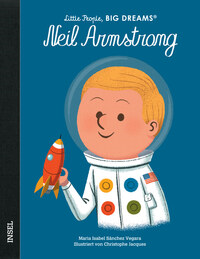
Neil ist zwei Jahre alt, als er mit seinem Vater eine Flugshow besucht. Von dem Spektakel ist er so begeistert, dass er anschließend nur noch einen Wunsch hat: Er will selbst fliegen. Zunächst schickt er Modellflugzeuge in die Luft, aber schon mit sechzehn erwirbt er seine Fluglizenz. Er studiert Flugzeugbau, wird Pilot bei der US-Marine und fliegt Einsätze im Koreakrieg. Als die NASA nach Testpiloten sucht, bewirbt er sich. Und schreibt als Astronaut und Kommandant der Apollo 11 Geschichte. Am 24. Juli 1969 setzt er als erster Mensch der Welt einen Fuß auf die Oberfläche des Mondes. Little People, Big Dreams erzählt von den beeindruckenden Lebensgeschichten großer Menschen: Jede dieser Persönlichkeiten, ob Philosophin, Forscherin oder Sportler, hat Unvorstellbares erreicht. Dabei begann alles, als sie noch klein waren: mit großen Träumen.
Trusted Partner
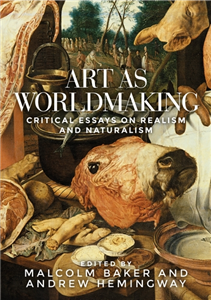
Introduction : Realism and its others in the 21st century: Why Realism won't go away - Andrew Hemingway Part I: Theory 1. The figure as double agent: realism and abstraction in European post-war art - Briony Fer 2. Realism's Credibility Problem - Joshua Shannon 3. If only; only if ... - Adrian Rifkin Part II: Sculpture 4. Confronting the Veristic Sculptural Portrait - Malcolm Baker 5. Sculpture, Realism and the Neo-classical Ideal - Martina Droth 6. Elasticity and Victorian Sculptural Form - Caroline Arscott 7. Image of the People: Charles Ray's Recent Work - Anne M. Wagner Part III: Garden Design 8. Of Gardens and Persons: the English Engagement with China's Garden Design - Martin Powers 9. Traditional Views. Conservative Anti-Naturalism and Landscape Aesthetics in France around 1900 - Neil McWilliam Part IV: Painting and Photography 10. Willem Kalf on Reflexykonst and the Aesthetics of Transformation in Still Life - Celeste Brusati 11. Democratic light: phenomenology and the worldliness of painting - Brendan Prendeville 12. The Visibility of Labor - T.J. Clark 13. Body and Soul in the work of Thomas Eakins and F. Holland Day - Rebecca Zurier Part V: Photography and Conema 14. Photography as counter forensics - Steve Edwards 15. Woman, War and Social Documentary Photography in South Africa - Tamar Garb 16. Antonioni's Blow-Up (1966): photography and film - Lisa Tickner Part VI: Post-Media / Contemporary Practice 17. Peter Dreher's Everyday Realism - Alistair Rider 18. From grey and rainy Vermont - Thomas Crow 19. 'Every day, something happens to us': Realism at the crossroads - Gail Day Index
Trusted Partner
Trusted Partner
Trusted Partner
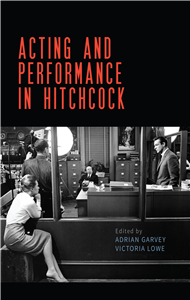
Hitchcock's professed disdain for actors is belied by the extraordinary range and depth of performances featured in his films. It might even be argued that many stars gave their richest and most complex performances in his work. Hitchcock's films are also imbued with the theme of performance, as when his fugitive men and errant women assume fragile new identities and move between roles. Actors and other performers also often feature as characters. However, the exhaustive academic literature on Hitchcock has to date produced surprisingly little work about acting and performance in his films. The collection includes contributions from a range of leading scholars on Hitchcock, performance, stardom, and British Cinema, including Charles Barr, David Greven, Mark Glancy, Lucy Bolton, Lawrence Napper and Michael Williams, and an interview with leading composers/accompanists Neil Brand and Stephen Horne on scoring performance in Silent Hitchcock.
Trusted Partner

Der kleine Charles war eine Leseratte, Bücher verschlang er wie andere ein Stück Brot. Aber seine Familie war bettelarm, und so musste er mit zwölf die Schule verlassen und in der Fabrik arbeiten. Nun erfand er selbst Geschichten, sie handelten von Menschen, die das Beste aus ihrem Leben machten. So wie er, der – inzwischen Angestellter in einer Kanzlei – Fortsetzungsgeschichten für Zeitungen schrieb, die man ihm aus den Händen riss. Noch heute werden seine Geschichten landauf, landab gelesen. Allen voran die Weihnachtsgeschichte, aber auch die Geschichte von Oliver Twist, einem Waisenjungen, der auf der Straße lebte. War es ein bisschen auch seine eigene Geschichte? Little People, Big Dreams erzählt von den beeindruckenden Lebensgeschichten großer Menschen: Jede dieser Persönlichkeiten, ob Philosophin, Forscherin oder Sportler, hat Unvorstellbares erreicht. Dabei begann alles, als sie noch klein waren: mit großen Träumen.