
Your Search Results


-
Promoted Content

 September 2016
Werke
by Nescio, Christiane Kuby, Herbert Post
Sie haben große Pläne, sie wollen raus, wollen es ganz anders machen als die etablierten Bürger, sie schwadronieren, trinken, rauchen und lesen Bücher. Irgendwann werden sie klüger. Nur Bavink nicht. Bavink dreht durch. Die Helden in diesem Band sind junge Bohemiens im Amsterdam des beginnenden 20. Jahrhunderts, unbezähmbare Idealisten, die die Welt des Geldes und der Ordnung verachten und ihren eigenen Weg suchen. Der führt nicht immer zum Erfolg – »doch bevor wir ein Leichentuch des Pessimismus über diesen verfehlten Elan werfen, sollten wir bedenken, dass aus ihm großartige Erzählungen entstanden sind, in denen sowohl der Enthusiasmus als auch das Scheitern ... auf wundersame Weise lebendig geblieben sind.« (Cees Nooteboom) Keiner hat lakonischer und schöner über Draufgängertum und Sehnsüchte junger Menschen, über ihre wilden Träume und ihre Verletzlichkeit geschrieben als Nescio. Von ihm, dem seriösen Geschäftsmann, dem genauen Gegenteil seiner Figuren, wurden zu seinen Lebzeiten nur eine Handvoll Erzählungen veröffentlicht, die bis heute von ihrer Kraft nichts verloren haben.
-
Promoted Content

 Humanities & Social SciencesJuly 2021
Post-everything
An intellectual history of post-concepts
by Herman Paul, Adriaan van Veldhuizen
Postmodern, postcolonial and post-truth are broadly used terms. But where do they come from? When and why did the habit of interpreting the world in post-terms emerge? And who exactly were the 'post boys' responsible for this? Post-everything examines why post-Christian, post-industrial and post-bourgeois were terms that resonated, not only among academics, but also in the popular press. It delves into the historical roots of postmodern and poststructuralist, while also subjecting more recent post-constructions (posthumanist, postfeminist) to critical scrutiny. This study is the first to offer a comprehensive history of post-concepts. In tracing how these concepts found their way into a broad range of genres and disciplines, Post-everything contributes to a rapprochement between the history of the humanities and the history of the social sciences.
-
 Trusted Partner
-
Trusted Partner
-
Trusted Partner
-
Trusted Partner

 February 2018
Der Graben
Roman
by Koch, Herman / Übersetzer Kuby, Christiane; Übersetzer Post, Herbert
-
Trusted Partner
-
Trusted Partner
 The ArtsSeptember 2024
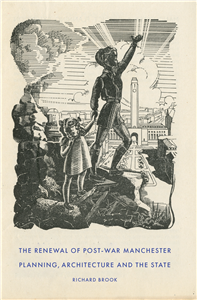
The renewal of post-war Manchester
Planning, architecture and the state
by Richard Brook
A compelling account of the project to transform post-war Manchester, revealing the clash between utopian vision and compromised reality. Urban renewal in Britain was thrilling in its vision, yet partial and incomplete in its implementation. For the first time, this deep study of a renewal city reveals the complex networks of actors behind physical change and stagnation in post-war Britain. Using the nested scales of region, city and case-study sites, the book explores the relationships between Whitehall legislation, its interpretation by local government planning officers and the on-the-ground impact through urban architectural projects. Each chapter highlights the connections between policy goals, global narratives and the design and construction of cities. The Cold War, decolonialisation, rising consumerism and the oil crisis all feature in a richly illustrated account of architecture and planning in post-war Manchester.
-
Trusted Partner
 February 1981
Gespräche mit Herbert Marcuse
Gesprächsteilnehmer: Herbert Marcuse, Jürgen Habermas, Tilman Spengler, Silvia Bovenschen, Marianne Schuller, Berthold Rothschild, Theo Pinkus, Erica Sherover, Heinz Lubasz, Alfred Schmidt, Ralph Dahrendorf, Karl Popper, Rudi Dutschke, Hans Christoph Buch
by Herbert Marcuse, Hans-Martin Lohmann
Keinem Philosophen der Gegenwart ist es gelungen, so ins öffentliche Bewußtsein einzudringen wie Herbert Marcuse. Seit den späten sechziger Jahren haben seine Schriften weltweit die Neuansätze gesellschaftstheoretischer Diskussion, nicht nur in der studentischen Protestbewegung, erheblich beeinflußt. Die tagespolitisch motivierte Rezeption seines Werkes führte jedoch dazu, daß der bedeutende Philosoph zeitweise hinter dem Moralisten und engagierten Politiker verschwand. Dabei ist dieser ohne jenen nicht wirklich zu verstehen. Es scheint daher heute geboten, an den philosophischen wie lebensgeschichtlichen Zusammenhang zu erinnern, in dem seine Arbeiten stehen, die seinen Ruhm begründet haben. Mit Freunden, Gegnern und Weggenossen hat Herbert Marcuse immer wieder über Möglichkeiten einer radikalen Veränderung der Gesellschaft nachgedacht und gestritten. Der vorliegende Band versammelt einige dieser Gespräche über Fragen der politischen Philosophie und der Ästhetik, über das Verhältnis von Psychoanalyse und Kritischer Theorie, über die Entwicklungsgeschichte der Linken in Europa und ihre Organisationsprobleme, über die Emanzipation der Frau und die Rolle der Protestbewegung – Gegenstände also, die Marcuses Denken nachdrücklich beschäftigt haben und die in ihrer Diskussionsgeschichte ihrerseits von Marcuses Denken geprägt worden sind.
-
Trusted Partner
 Humanities & Social SciencesSeptember 2021
Nostalgia and the post-war Labour Party
by Richard Jobson
-
Trusted Partner

 October 2023
Post-Mortem
Autopsy stories: the unusual experiences of a pathologist
by Roland Sedivy
— True crime stories from the morgue — Famous deaths and autopsy stories resolved, such as Antarctic explorer Sir Ernest Shackleton and the case of Anne Greene, who survived her execution by hanging The post-mortem examination. A glimpse inside the interior of the human being. Many find the idea fascinating; for others it is creepy or even repugnant. There are still numerous myths and horror stories surrounding the autopsy, many of them associated with primal human fears such as that of being buried alive, which have existed since Antiquity. It is precisely for this reason that it is important to carry out the post-mortem examination with the utmost conscientiousness. Pathologist Roland Sedivy provides an exciting insight into his profession. Profound and with tremendous humour, he tells us about the early days of the autopsy, and shares with us some macabre and some mysterious cases.
-
Trusted Partner
 April 1987
Das Land, nach dem ich mich sehne. Polnische Bibliothek
Lyrik und Prosa. Auswahl und Vorwort von Michael Krüger. Nachwort von Jan Bl'on'ski. Aus dem Polnischen von Guido von Birkenfeld, Karl Dedecius, Oskar Jan Tauschinski, Walter Tiel
by Zbigniew Herbert, Karl Dedecius, Guido Birkenfeld, Jan Błoński, Michael Krüger
Zbigniew Herbert, geboren 1924 in Lemberg, erlebte als Schüler die sowjetische, dann die deutsche Okkupation und schloss sich 1943 dem polnischen Widerstand an. Seit 1956 veröffentlichte er Gedichte und Essays. Jahrelang bereiste er Italien, Frankreich und Griechenland. Herbert, der 1998 in Warschau starb, zählt zu den großen europäischen Dichtern des 20. Jahrhunderts. Karl Dedecius, 1921 in Lodz geboren, galt als bedeutendster Mittler polnischer Literatur und Kultur in Deutschland. Als Übersetzer hunderter Bücher, Autor zahlloser Reden und Aufsätze, Herausgeber der Polnischen Bibliothek, Gründer des Deutschen Polen-Instituts in Darmstadt wurde er vielfach gewürdigt und ausgezeichnet, u.a. mit dem Friedenspreis des Deutschen Buchhandels (1990), dem Orden des Weißen Adlers (1999) in Polen und dem Deutschen Nationalpreis (2010). Karl Dedecius starb am 26. Februar 2016 im Alter von 94 Jahren in Frankfurt am Main. Michael Krüger wurde am 9. Dezember 1943 in Wittgendorf/Kreis Zeitz geboren. Nach dem Abitur an einem Berliner Gymnasium absolvierte er eine Verlagsbuchhändler- und Buchdruckerlehre. Daneben besuchte er Veranstaltungen der Philosophischen Fakultät als Gasthörer an der Freien Universität Berlin. In den Jahren von 1962-1965 lebte Michael Krüger als Buchhändler in London. 1966 begann seine Tätigkeit als Literaturkritiker. Zwei Jahre später, 1968, übernahm er die Aufgabe des Verlagslektors im Carl Hanser Verlag, dessen Leitung er im Jahre 1986 übernommen hat. Seit 1981 ist er Herausgeber der Literaturzeitschrift Akzente. Im Jahr 1972 veröffentlichte Michael Krüger erstmals seine Gedichte, und 1984 debütierte er als Erzähler mit dem Band Was tun? Eine altmodische Geschichte. Es folgten weitere zahlreiche Erzählbände, Romane, Editionen und Übersetzungen. Die Cellospielerin ist sein erster Roman im Suhrkamp Verlag. Michael Krüger lebt in München.
-
Trusted Partner
-
Trusted Partner
-
Trusted Partner
 Humanities & Social SciencesFebruary 2018
How to save politics in a post-truth era
by Ilan Zvi Baron
-
Trusted Partner

 March 2020
Im Alten Land
by Birgit Haustedt
Apfelbäume, so weit das Auge reicht, idyllische Fachwerkdörfer hinter dem Deich und am Horizont die Elbe: Das Alte Land ist eine uralte Kulturlandschaft am Wasser, die ihren eigenen Charakter bewahrt hat. Prächtige Bauernhöfe und Backsteinkirchen mit kostbaren Barockorgeln zeugen noch heute vom frühen Wohlstand der Altländer. Birgit Haustedt erzählt von den Anfängen im Mittelalter, von Deichbau und Sturmfluten, vom Alltag der kleinen Leute und von großer Handwerkskunst, von stolzen Bauern und mutigen Schiffern. Dazu ein Exkurs, welche Rolle das Alte Land in Lessings Leben und Goethes Faust spielte.
-
Trusted Partner
 Biography & True StoriesSeptember 2024
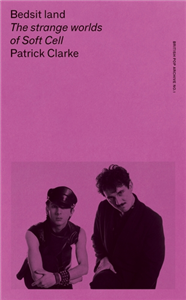
Bedsit land
The strange worlds of Soft Cell
by Patrick Clarke
A rich and revealing examination of the legendary pop duo Soft Cell. Soft Cell are not your average pop band. Marc Almond and Dave Ball may be best known for the string of hits they released in 1981, but the powerful first phase of their collaboration embraced a staggering array of sounds, influences and innovations that would change the face of music to come. In Bedsit land, Patrick Clarke plunges into the archives and interviews more than sixty contributors, including the band members themselves, to follow Soft Cell through the many strange and sprawling worlds that shaped their extraordinary career. They lead him from the faded camp glamour of the British seaside to the dizzying thrills of the New York club scene. From transgressive student performance art to the sleaze and squalor of pre-gentrified Soho. From the glitz of British showbiz to the drug-addled chaos of post-Franco Spain. He emerges on the other side with the most in-depth, innovative and entertaining account of the duo ever written.
-
Trusted Partner
 Literature & Literary StudiesJanuary 2008
Lorca's Romancero gitano
Eighteen commentaries
by Herbert Ramsden
This poem-by-poem guide to Lorca's Romancero gitano was prompted by the need for some form of guidance to the overwhelming amount of critical material published on the book, the relative neglect or misunderstanding of certain poems and a concern to counter a recent tendency to eccentric interpretation. Herbert Ramsden's comprehensive collection of commentaries will be useful both for students and teachers and for the Lorca specialist. With each poem the author offers a brief introduction to relevant background material, a comprehensive commentary, a brief indication of interpretations notably different from his own and a select critical bibliography. In a more general bibliography, the author lists a number of translations of Romancero gitano into English and a selection of commentary-based studies. The great diversity and allusive richness of Lorca's poetic masterpiece demands more space than a compact student edition allows, and all serious students of Romancero gitano will want to use Herbert Ramsden's Eighteen commentaries alongside his simultaneously-published edition of the text. ;
-
Trusted Partner
 March 2025
Post-
Nachruf auf eine Vorsilbe | Ein Plädoyer für Geistesgegenwart
by Dieter Thomä
Bei der Vorsilbe Post- handelt es sich um die erfolgreichste Erfindung der Geistes- und Sozialwissenschaften seit 1945. Zum weltweiten Einsatz kommt sie in Großwörtern wie Posthistoire, Postmoderne oder Postkolonialismus sowie in zahllosen weiteren Kombinationen. Offensichtlich ist es Trend geworden, sich in die Nachzeit einer Vorzeit zu versetzen. Doch nicht hinter jedem Erfolg steckt eine gute Idee. Das ist auch hier der Fall, wie Dieter Thomä in seiner aufregenden Kritik jener Geistes- und Lebenshaltung zeigt, die auf den Post - Weg geraten ist. Nicht nur zeugt es laut Thomä von epochaler Einfallslosigkeit, ein altes Wort mit Post- zu schmücken und als letzten Schrei auszugeben. Darüber hinaus haben die Post - Theoretiker ein grundsätzliches Problem: Sie lassen etwas hinter sich und schleppen es doch weiter mit. Sie fahren in die Zukunft, schauen dabei aber dauernd in den Rückspiegel. Sie bleiben in der Ambivalenz zwischen Anhänglichkeit und Aufbruch stecken. Höchste Zeit also für die Verabschiedung der Postismen unserer Zeit. Dieses Buch ist ihr Nachruf und zugleich ein Plädoyer für etwas von ihnen Verschiedenes: Geistesgegenwart.
-
Trusted Partner
 Literature & Literary StudiesOctober 2025
Early modern drama and the theatre of war
Militarism, conflict and disruption in the plays of Shakespeare and his contemporaries
by Bronwen Price, Hilary Hinds
This volume explores the disruptive effects of militarism, war and social unrest in early modern drama. Engaging with Simon Barker's seminal work on dramatic representations of war and militarism, contributors highlight what often lies hidden beneath the surface of martial narratives, treating them as formative interventions in contemporary discourses, whether in justifying war, excluding dissident voices or shaping cultural identities. Discussions include new examinations of militarism, the figure of the soldier and early modern theories of war in Shakespearean tragedy, history and comedy, alongside antimasque and dramatic satire by lesser-known playwrights. The essays investigate how ideas of war underpin emerging concepts of gender, leadership, marriage and the family, as well as the continuing mobilisation of Shakespearean drama in the context of modern armed conflict. Together, they offer rich new contributions to the current lively critical debates on this topic.



