Your Search Results

      • Little Newton Science Education Company

        Little Newton Science Education Company Ltd. Little Newton is one of the leading children and science publishing company in Taiwan. Began with publication of “Newton Magazine”in 1983, “Little Newton Magazine” in 1984, and “Little Newton for Kids and Toddlers” in 1990. Till now, we have created over 1,000 best seller publications. In 2003, we released our titles in China Mainaland via copyright licensing. They have been loved by many children, parents and teachers . Little Newton is taken as an important brand for children publication in China. Now, we will extend from paper books and eBooks to on-line courses,and from Chinese-speaking world to worldwide.

        View Rights Portal
      • Trusted Partner
      • Trusted Partner
        October 2446

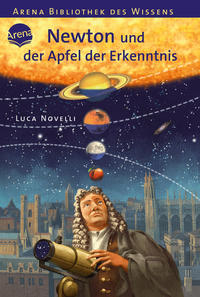
        Was Newton nicht wusste

        Chaos im Sonnensystem

        by Ivars Peterson, Anita Ehlers

      • Trusted Partner
        Humanities & Social Sciences
        October 2024

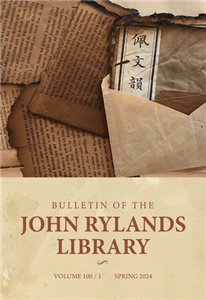
        Bulletin of the John Rylands Library 100/1

        by Fred Schurink, Rachel Winchcombe

        The John Rylands Library houses one of the finest collections of rare books, manuscripts and archives in the world. The collections span five millennia, have a global reach and cover a wide range of subjects, including art and archaeology; economic, social, political, religious and military history; literature, drama and music; science and medicine; theology and philosophy; travel and exploration. For over a century, the Bulletin of the John Rylands Library has published research that complements the Library's special collections.

      • Trusted Partner
      • Trusted Partner
      • Trusted Partner
      • Trusted Partner
      • Trusted Partner
      • Trusted Partner
        Literature & Literary Studies
        March 1999

        Bussy D'Ambois

        By George Chapman

        by N. S. Brooke

        Revels stuff. . . .|This Edition of George Chapman's tragedy differs from all other modern editions in being primarily based on the Quarto of 1607 in preference to the much revised Quarto of 1641. N. S. Brooke believes that the earlier text gives a more certain indication of Chapman's intentions and he has supported this view in an introduction and by a bibliographical and critical study of the play. The divergence between the texts of 1607 and 1641 are set out clearly in this volume, which includes the usual textual and critical apparatus found in the Revels series. ;

      • Trusted Partner
      • Trusted Partner
      • Trusted Partner
        Biography & True Stories
        October 2019

        Ellen N. La Motte

        by Lea Williams, Christine Hallett

      • Trusted Partner
        Humanities & Social Sciences
        October 2019

        Paving the Empire Road

        BBC television and black Britons

        by Darrell M. Newton

        Beginning in the 1930s and moving into the post millennium, this book provides a historical analysis of the policies and practices established by the BBC as it attempted to assist white Britons in adjusting to the presence of African-Caribbeans. Among the themes the book explores are current representations of race, the future of British television and its impact on multi-ethnic audiences. The chapters include an extensive analysis of television programming, along with personal interviews that reveal the efforts of black Britons working for the BBC, whether as writers, producers or actors.

      • Trusted Partner
      • Trusted Partner
      • Trusted Partner
        Humanities & Social Sciences
        March 1977

        The Leibniz-Clarke Correspondence

        With extracts from Newton's 'Principia' and 'Optiks'

        by Robert Gavin Alexander

        n 1715 Leibniz wrote to his friend the Princess of Wales to warn her of the dangers Newton's philosophy posed for natural religion. Seizing this chance of initiating an exchange between the two greatest minds in Europe, the princess showed his letter to the eminent Newtonian scientist and natural theologian, Samuel Clarke. From his reply developed an exchange of papers which was published in 1717. The correspondence was immediately seen as a crucial discussion of the significance of the new science, and it became one of the most widely read philosophical works of its time.In this edition, an introduction outlines the historical background, and there is a valuable survey of the subsequent discussions of the problem of space and time in the philosophy of science. Significant references to the controversy in Leibniz's other correspondence have also been collected, and the relevant passages from Newton's Principia and Opticks are appended. In 1715 Leibniz wrote to his friend the Princess of Wales to warn her of the dangers Newton's philosophy posed for natural religion. Seizing this chance of initiating an exchange between two of the greatest minds in Europe, the princess showed his letter to the eminent Newtonian scientist and natural theologian, Samuel Clarke. From his reply developed an exchange of papers which was published in 1717. The correspondence was immediately seen as a crucial discussion of the significance of the new science, and it became one of the most widely read philosophical works of its time. Kant developed his theory of space and time from the problems at issue, and the post-Newtonian physics of the twentieth century has brought a revival of interest in Leibniz's objections: some of the problems are still not finally resolved. In this edition an introduction outlines the historical background, and there is a valuable survey of the subsequent discussions of the problem of space and time in the philosophy of science. Significant references to the controversy in Leibniz's other correspondence have also been collected, and the relevant passages from Newton's "Principia" and "Opticks" are appended. ;

      • Trusted Partner
        The Arts
        June 2021

        Genre and performance: film and television

        by Christine Cornea

        Looking at contemporary film and television, this book explores how popular genres frame our understanding of on-screen performance. Previous studies of screen performance have tended to fix upon star actors, directors, or programme makers, or they have concentrated upon particular training and acting styles. Moving outside of these confines, this book provides a truly interdisciplinary account of performance in film and television and examines a much neglected area in our understanding of how popular genres and performance intersect on screen. Each chapter concentrates upon a particular genre or draws upon generic case studies in examining the significance of screen performance. Individual chapters examine contemporary film noir, horror, the biopic, drama-documentary, the western, science fiction, comedy performance in 'spoof news' programmes and the television 'sit com' and popular Bollywood films.

      • Trusted Partner

      Subscribe to our

      newsletter