
Daniel Goleman - Foreign Audio
Please contact anaban@gmail.com for information
View Rights Portal


Aus dem amerikanischen Englisch

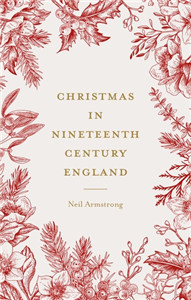
Whether for reasons of family, food, shopping or religion, it's hard to imagine a British winter without Christmas, or to think of a more traditional national festival. But how and when did Christmas cards, pantomimes and advertising become part of that tradition? This book looks at how people in the nineteenth and early twentieth centuries experienced Christmas and how today's priorities and rituals began and endured. It explores the origins of our deeply held notions around Christmas traditions and demonstrates how those ideas were in fact shaped by the fast-paced modernisation of English life. A fascinating account of the development of many things we now take for granted, the book touches on the history of childhood and the family, philanthropy and work, and the beginnings of consumerism that shaped the Christmas we know today.
 Trusted Partner

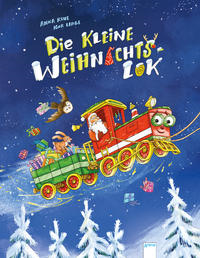
It’s winter in the pleasure park. The Little Engine is dreaming of Christmas, as he does every year. It would be so nice to see a real Christmas for himself. Suddenly something terrible happens up in the sky: Father Christmas comes crashing down to earth with his overloaded sleigh. Fortunately, no one is hurt, but the sleigh is broken. This is the Little Engine’s chance. He makes Father Christmas a great offer – and so he saves this year’s Christmas.
Trusted Partner

Advent calendar book with detachable pages. Plonkety plonk! Daisy Dormouse is rudely awakened from her winter sleep. Outside her den is a present. It says on the wrapping: “To Sunny Bunny for Christmas”. What on earth is Christmas? And who is Sunny Bunny? Daisy quickly packs a few things and sets off to deliver the present. During her journey she makes many new friends and learns all about Advent garlands, Christmas carols, biscuits, sledging, and of course Christmas itself. By the end of her journey, Daisy is sure of one thing: she must never again miss this wonderful time, with all these beautiful customs and traditions! A story in 24 chapters.
Trusted Partner
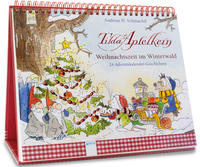
There are 24 days to go until Christmas. In the mouse house there is a delicious smell of punch, and Tilda busily hunts through her pantry: she wants to do some baking. The best of all flavours is still Aunt Emily’s frost-hip jelly. Christmas can’t come without that. But what a shock! There are no frost hips left! And it’s so difficult to get fresh ones, because they only grow in the north. Without further ado, Tilda sets off on an exciting journey through the winter forest, and she has the most weird and wonderful Christmas adventures on the way…
Trusted Partner
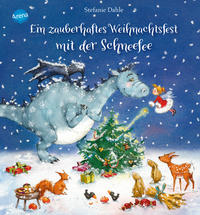
Emmo would also like to celebrate Christmas for a change. He’s lucky that his best friend Gwendoline, the Snow Fairy, is there to help him with his preparations. A Christmas tree, presents, delicious biscuits, sweet-smelling baked apples, and of course glittering white snow - all in readiness for the most wonderful Christmas party the Silver Forest has ever seen. With Stefanie Dahle’s enchanting illustrations, this solid, read-aloud picture book will accompany big and little picture-book lovers through a wonderfully harmonious Advent and Christmas.
Trusted Partner

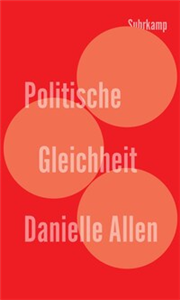
Wer hat Macht und aufgrund welcher institutionellen Strukturen, Ressourcen und Möglichkeiten? Kann es sein, dass wir in den letzten Jahrzehnten im Schatten eines abstrakten liberalen Gleichheitsideals verlernt haben, die konkreten Machtverhältnisse und Ungleichheiten unserer Gesellschaften zu sehen – und uns die neuen ökonomischen Verwerfungen und rechtspopulistischen Mobilisierungen deshalb relativ unvorbereitet trafen? Ja, sagt Danielle Allen, und entwickelt in ihrem Buch ein neues Verständnis politischer Gleichheit für Gesellschaften großer sozialer und kultureller Vielfalt. Ausgangspunkt ihrer Analyse ist das Verhältnis zwischen negativen und positiven Rechten. Im Gegensatz zur einflussreichen liberalen Theorie à la Rawls plädiert Allen dafür, beiden die gleiche Wichtigkeit einzuräumen – und gelangt so zu einer Theorie der Gerechtigkeit, die auf dem Prinzip »Differenz ohne Herrschaft« basiert. Im Lichte dieses Prinzips lassen sich beispielsweise Probleme des gesellschaftlichen Zusammenhalts produktiv bearbeiten. Echte politische Gleichheit, so Allen, lässt sich nur in demokratischen Gesellschaften mit starken sozialen Bindungen realisieren. Dazu gilt es, Differenzen auszuhalten und neue Kulturen der Interaktion aufzubauen. Und es braucht eine Politik, die genau dies etwa durch entsprechende sozial- und wirtschaftspolitische Maßnahmen fördert. Eine Theorie für das 21. Jahrhundert.
Trusted Partner

Contemporary French cinema is an essential introduction to popular French film of the last 35 years. It charts recent developments in all genres of French cinema with analyses of over 120 movies, from Les Valseuses to Caché. Reflecting the diversity of French film production since the New Wave, this clear and perceptive study includes chapters on the heritage film, the thriller and the war movie, alongside the 'cinéma du look', representations of sexuality, comedies, the work of women film makers and le jeune cinéma. Each chapter introduces the public reception and critical debates surrounding a given genre, interwoven with detailed accounts of relevant films. Confirmed as a major contribution to both Film Studies and French Studies, this book is a fascinating volume for students and fans of French film alike.
Trusted Partner

Contemporary French cinema is an essential introduction to popular French film of the last 35 years. It charts recent developments in all genres of French cinema with analyses of over 120 movies, from Les Valseuses to Caché. Reflecting the diversity of French film production since the New Wave, this clear and perceptive study includes chapters on the heritage film, the thriller and the war movie, alongside the 'cinéma du look', representations of sexuality, comedies, the work of women film makers and le jeune cinéma. Each chapter introduces the public reception and critical debates surrounding a given genre, interwoven with detailed accounts of relevant films. Confirmed as a major contribution to both Film Studies and French Studies, this book is a fascinating volume for students and fans of French film alike.
Trusted Partner

Carol Reed is one of the truly outstanding directors of British cinema, and one whose work is long overdue for reconsideration. This major study ranges over Reed's entire career, combining observation of general trends and patterns with detailed analysis of twenty films, both acknowledged masterpieces and lesser-known works. Evans avoids a simplistic auteurist approach, placing the films in their autobiographical, socio-political and cultural contexts and relating these to the analysis of Reed's art. The critical approach combines psychoanalysis, gender theory, and the analysis of form. Archival research is also relied on to clarify Reed's relations with his creative team, financial backers and others. Films examined include Bank Holiday, A Girl Must Live, Odd Man Out, The Fallen Idol, The Third Man, Night Train to Munich, The Way Ahead, Outcast of the Islands, Trapeze and Oliver!.
Trusted Partner
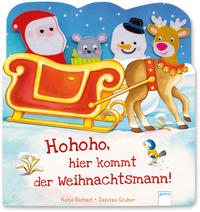
Soon it’ll be Christmas! It’s time to load the sleigh with presents, thinks the reindeer. But Father Christmas wants to decorate his house first, and build a snowman, and have a nice cup of tea. Then suddenly it’s almost too late! All his friends must help, so that children can get their presents on time.
Trusted Partner
Trusted Partner

The French empire at war draws on original research in France and Britain to investigate the history of the divided French empire - the Vichy and the Free French empires - during the Second World War. What emerges is a fascinating story. While it is clear that both the Vichy and Free French colonial authorities were only rarely masters of their own destiny during the war, preservation of limited imperial control served them both in different ways. The Vichy government exploited the empire in an effort to withstand German-Italian pressure for concessions in metropolitan France and it was key to its claim to be more than the mouthpiece of a defeated nation. For Free France too, the empire acquired a political and symbolic importance which far outweighed its material significance to the Gaullist war effort. As the war progressed, the Vichy empire lost ground to that of the Free French, something which has often been attributed to the attraction of the Gaullist mystique and the spirit of resistance in the colonies. In this radical new interpretation, Thomas argues that it was neither of these. The course of the war itself, and the initiatives of the major combatant powers, played the greatest part in the rise of the Gaullist empire and the demise of Vichy colonial control.
Trusted Partner
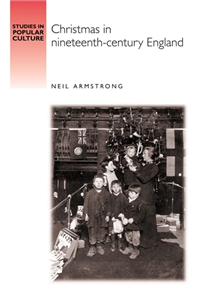
Despite its enduring popularity as a national festival, Christmas has been largely neglected by English historians. Neil Armstrong offers the first study to examine both the experience and representation of Christmas during the formative period of the nineteenth and early twentieth centuries. This book explores the origins of our deeply held notions of the traditional nature of Christmas and demonstrates how they were shaped by English modernity. A study of both continuity and change, Christmas in nineteenth-Ccntury England makes an important contribution to cultural and social history, and is essential reading for anyone interested in the history of childhood, the family, philanthropy, work and consumerism. Scholarly yet accessible, it will be enjoyed by academics, students and the general public alike. ;
Trusted Partner


Mit winterlichem Farbschnitt in der Erstauflage – Lieferung nach Verfügbarkeit! Big Love im Big Apple Elle kann ihr Pech kaum fassen: Trotz tadelloser Planung verspätet sie sich im verschneiten New York zum Vorstellungsgespräch. Damit kann sie ihren Traumjob bei einer Top-Eventagentur vergessen. Doch ausgerechnet Keane, Elles geplatztes Abschlussball-Date, ist mittlerweile CEO der Agentur. Er unterbreitet ihr ein Angebot: Sie hat einen Monat Zeit, um als Eventplanerin die Christmas-Party für einen besonderen Kunden zu organisieren. Wenn ihr das gelingt, bekommt sie die Leitung einer Abteilung in Keanes Agentur. Was Elle nicht ahnt: Bei dem Kunden handelt es sich um niemand anderen als den smarten CEO selbst. Was steckt hinter seinem Auftrag? Und weshalb bringt nicht nur die heiße Schokolade während der Partyvorbereitungen, sondern auch seine Nähe Elles Herz zum Schmelzen? Christmas, Love and other Disasters: Eine Christmas Romance mit cozy vibes Weihnachten in New York: Knisternde RomCom über eine Eventplanerin und ihren smarten Auftraggeber im verschneiten New York. Spice, Spannung und Schneegestöber: Die aufstrebende Eventplanerin Elle soll für den erfolgreichen CEO Keane Waters eine spektakuläre Weihnachtsparty organisieren. Herzklopfen pur: Bei der Zusammenarbeit zwischen Elle und Keane fliegen nicht nur die Fetzen, sondern auch die Funken. Voll im Trend: Ein New Adult-Buch mit den beliebten Tropes „Haters to Lovers“, „Second Chance“ und „Stuck together“. Toll ausgestattet: Softcover mit trendig gestalteten Klappen und weihnachtlichem Lesezeichen zum Abtrennen. Für Fans von Lena Kiefer und Lilly Lucas: Die spicy Romance im atemberaubenden New York-Setting lässt die Herzen von New Adult-Leser*innen wie heiße Schokolade dahinschmelzen.
Trusted Partner


Merry Christmas! Charles Dickens, Elizabeth Gaskell, G.K. Chesterton, Dylan Thomas, Angus Wilson, Muriel Spark u.v.a. erzählen Weihnachtsgeschichten aus zwei Jahrhunderten. Da geht es um folgenreiche Geständnisse, geheimnisvolle Verwandlungen, mißglückte Einbrüche und heimliche Liebschaften. Mit angelsächsischem Humor und Feingefühl zeigen diese fünfzehn, zum Großteil erstmals ins Deutsche übersetzten Geschichten, wie selbst kleinere Widrigkeiten die Festtagsstimmung nicht zu trüben vermögen.
Trusted Partner

By considering the distinctiveness of the inter-war years as a discrete period of colonial change, this book addresses several larger issues, such as tracing the origins of decolonization in the rise of colonial nationalism, and a re-assessment of the impact of inter-war colonial rebellions in Africa, Syria and Indochina. The book also connects French theories of colonial governance to the lived experience of colonial rule in a period scarred by war and economic dislocation.
Trusted Partner
Trusted Partner
Trusted Partner

This book re-examines French cinema of the 1970s. It focuses on the debates which shook French cinema, and the calls for film-makers to rethink their manner of filming, subject matter and ideals in the immediate aftermath of the student revolution of May 1968. Alison Smith examines the effect of this re-thinking across the spectrum of French production, the rise of new genres and re-formulation of older ones. Chapters investigate political thrillers, historical films, new naturalism and Utopian fantasies, dealing with a wide variety of films. A particular concern is the extent to which film-makers' ideas and intentions are contained in or contradicted by their finished work, and the gradual change in these ideas over the decade. The final chapter is a detailed study of two directors who were deeply involved in the debates and events of the 70s, William Klein and Alain Tanner, here taken as exemplary spokesmen for those changing debates as their echoes reached the cinema.



