
Andrew Nurnberg Associates Ltd.
International literary agency with a distinguished list of fiction, non-fiction and children's authors, specializing in foreign rights.
View Rights Portal
International literary agency with a distinguished list of fiction, non-fiction and children's authors, specializing in foreign rights.
View Rights Portal
Smart English Company Limited is committed to developing a line of fun and educational products, which currently includes Inspirational English and Robin Education, to help young learners acquire the four skills in the English language. With 'Baby Animals', 'Dinosaurs in my Garden', and 'Mirabelle and Milo', Robin Education aims to develop young learners’ ability to use authentic English language in line with the Cambridge English Qualifications syllabus, as they explore the fascinating stories in each series.
View Rights Portal
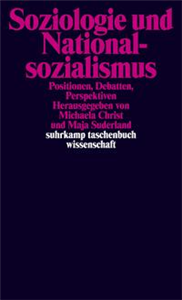
Das Verhältnis der deutschen Soziologie zum Nationalsozialismus ist merkwürdig: Trotz der gesellschaftlichen Bedeutung des Themas gibt es nur vereinzelte soziologische Analysen. Warum ist das so? In welchen Bereichen des Fachs fand überhaupt eine Auseinandersetzung mit dem »Dritten Reich« statt? Was könnte die Soziologie zur Erforschung des Nationalsozialismus und des Holocaust beitragen? Und was wäre der Gewinn für das Fach selbst, wenn es sich mit diesen Themen beschäftigte? Der Band versucht erstmalig, Antworten auf diese Fragen zu finden. Mit Beiträgen von Michael Becker, Henning Borggräfe, Michaela Christ, Helmut Dahmer, Christian Gudehus, Peter Imbusch, Kobi Kabalek, Carsten Klingemann, Beate Krais, Nina Leonhard, Elissa Mailänder, Ludger Pries, Karl-Siegbert Rehberg, Christoph Reinprecht, Gerhard Schäfer, Sonja Schnitzler, Hans-Georg Soeffner, Erhard Stölting und Maja Suderland.
 Trusted Partner

One of Britain's foremost TV practitioners, Andrew Davies is the creator of programmes such as 'A Very Peculiar Practice', 'To Serve Them All My Days', 'Pride and Prejudice', 'Othello' and 'The Way We Live Now'. Although best known for his adaptations of the work of writers such as Jane Austen and George Eliot, he has written numerous original drama series, single plays, films, stage plays and books. This volume offers a critical appraisal of Davies's work, and assesses his contribution to British television. Cardwell also explores the conventional notions of authorship and auteurism which are challenged by Davies's work. Can we identify Davies as the author of the varied texts attributed to him? If so, does an awareness of his authorial role aid our interpretation and evaluation of those texts? How does the phenomenon of adaptation affect the issue of authorship? How important is 'the author' to television? This book will appeal to both an academic readership, and to the many people who have taken pleasure in Davies's work. ;
Trusted Partner
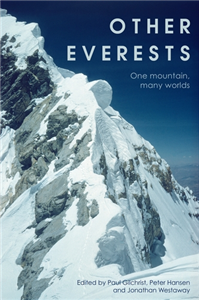
A hundred years after the tragic 1924 British Everest expedition, this collection explores the wider social and cultural history of the mountain. Mount Everest looms large in the popular imagination. Since the deaths of mountaineers George Mallory and Andrew Irvine in 1924, histories of the mountain have overwhelmingly focused on the mythologies of western male adventure and conquest. But there are many more stories waiting to be told. Other Everests brings together new voices and perspectives on the historical and cultural significance of Everest in the modern world. The book shines a light on the overlooked role of local people and high-altitude workers, while also revealing the significant contributions women have made to climbing the mountain and writing its history. It explores the depiction of Everest in a range of media and investigates how the forces of nationalism and commercialism have shaped many different 'Everests'. After years of exploitation, Indigenous people are now reclaiming Mount Everest in the twenty-first century. Other Everests re-examines the past and present of the world's highest peak, presenting an exciting vision of what Everest might become in the future.
Trusted Partner
Trusted Partner
Trusted Partner

 Trusted Partner

Testamentarisch hat Uwe Johnson die Peter Suhrkamp-Stiftung und seinen Verleger Siegfried Unseld zum Nachlaßverwalter eingesetzt. Siegfried Unseld beschreibt, wie es dazu kam, beschreibt aus seiner Sicht noch einmal die Begleitumstände, die das große Werk »Jahrestage« zu vollenden ermöglichten. »Für wenn ich tot bin«: es war Uwe Johnsons Wunsch, daß sein Nachlaß gesammelt und nach Frankfurt gebracht wurde. Siegfried Unseld konnte in Verbindung mit der Johann Wolfgang Goethe-Universität ein Uwe Johnson-Archiv einrichten, das dem Gedenken des großen Schriftstellers dient. Eberhard Fahlke, Leiter des Uwe Johnson-Archivs und ausgewiesener Johnson-Forscher, beschreibt in seinem Beitrag die Einrichtung und Anlage des Archivs, welches in seiner Art einzigartig ist.
Trusted Partner
Noah Haidle erzählt in Menschliches Repertoire die Geschichte, und das Ende, unserer Spezies. Mit viel Zuneigung und scharfem Humor blickt er auf Vergangenes und Gegenwärtiges – und entwirft dabei mit klugem Blick und großer Leichtigkeit ein Welttheater der Menschheit. So tragisch, dramatisch, aber eben auch liebevoll und lustig, dass Noah Haidle vor allem davon erzählt, was uns am Leben hält: Hoffen und Lieben. Die Welt, sie ist erschüttert und sehr wahrscheinlich nicht mehr zu retten. Doch Haidle führt uns weg von diesem Ort und ins Zwischenreich von Leben und Tod, zur Hinterbühne. Dort empfangen Hollis und Bellamy die gerade Gestorbenen auf ihrem Transit in das Land der Toten und leiten sie weiter zu süßen Teilchen und Gurkensandwiches. Doch eine Gruppe möchte sich keinesfalls von diesem Zwischenraum lösen und ignoriert die Anweisungen: Samantha, eine Lehrerin, will unbedingt die Direktorin sprechen, Lloyd, ein liebender Vater, muss weiter seinen kleinen Sohn aus der Ferne beobachten und Roxanne hofft darauf, dass ihr Liebster endlich seinen Teil des Doppelsuizids erfüllt und bei ihr eintrifft. Doch auch im Zwischenreich bröckelt es, die Wände beben, brechen langsam in sich zusammen und dann tönt es schließlich von der Direktorin: Die Show, sie wird abgesetzt. Die Lage der Menschen und der Welt ist aussichtslos. Die Schicksalsgemeinschaft beschließt also, eine letzte große Party zu feiern und lässt 400.000 Jahre Menschheitsgeschichte Revue passieren. Die Offenbarung: Die größten Erfolge der Menschheit liegen nah bei ihren schlimmsten Gräueltaten.
Trusted Partner
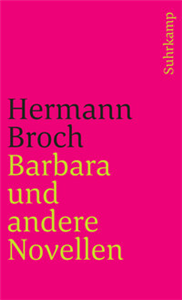
»Aldous Huxley«: Broch … ist völlig zu Haus auf der Spiegeloberfläche und agiert manchmal dort mit unfehlbarer Virtuosität. Es liegt an der doppelten Fähigkeit dieses Autors, seinem Vermögen, gleichzeitig zwei unvereinbare Welten zu zeichnen. Dieser Band legt eine Sammlung von 13 Novellen vor, die besten aus Brochs Gesamtwerk. Die früheste »Eine methodologische Novelle«, wurde 1917 geschrieben, die späteste, »Die Erzählung der Magd Zerline«, 1949. Die Besonderheit dieser Sammlung besteht in der erstmaligen Präsentation aller vorhandenen Tierkreisnovellen in ihrer Ursprungsfassung. Bisher unveröffentlicht ist die Novelle »Esperance«. Das Nachwort ist eine Einführung in das novellistische Werk Hermann Brochs. Der Kommentar referiert die textkritische Situation sämtlicher Novellen, die an einen Philosophen erinnern, »der gleichzeitig ein Künstler von außergewöhnlicher Bildung und Reinheit ist«.
Trusted Partner
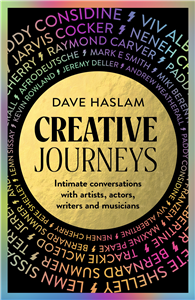
Dave Haslam presents conversations with creative trailblazers. Over forty years, DJ, writer and broadcaster Dave Haslam has interviewed some of the most fascinating figures in music, literature, film and art. Creative journeys gathers revelatory conversations with creative characters including Neneh Cherry, Maxine Peake, Lemn Sissay, Andrew Weatherall, Raymond Carver and Jeremy Deller. From politics and performance to art, fame and addiction, Haslam's interviewees speak with honesty about their creative journeys. Viv Albertine discusses 'Typical Girls' and Paddy Considine recalls Dead Man's Shoes. Jarvis Cocker goes deep into 'This is Hardcore'. Terry Hall and Miki Berenyi speak about childhood trauma. Bernard Sumner recalls the loss of Ian Curtis. Jonathan Franzen talks about torturing his characters. There's darkness but much humour too. The interviews provide fascinating stories of unorthodox, creative artists navigating negativity and personal setbacks to become celebrated cultural icons.
Trusted Partner
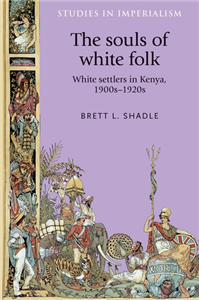
Kenya's white settlers have been alternately celebrated and condemned, painted as romantic pioneers or hedonistic bed-hoppers or crude racists. The souls of white folk examines settlers not as caricatures, but as people inhabiting a unique historical moment. It takes seriously - though not uncritically - what settlers said, how they viewed themselves and their world. It argues that the settler soul was composed of a series of interlaced ideas: settlers equated civilisation with a (hard to define) whiteness; they were emotionally enriched through claims to paternalism and trusteeship over Africans; they felt themselves constantly threatened by Africans, by the state, and by the moral failures of other settlers; and they daily enacted their claims to supremacy through rituals of prestige, deference, humiliation and violence. The souls of white folk will appeal to those interested in the histories of Africa, colonialism, and race, and can be appreciated by scholars and students alike.
Trusted Partner
Trusted Partner
Trusted Partner
Trusted Partner
Trusted Partner
 Trusted Partner


This book, the world's first biography of Paul Watzlawick, written by his great-niece, describes the life of this philosopher, therapist, and best-selling author. Paul Watzlawick had a talent for languages and he led an adventurous life, from his childhood in Villach to studying in Venice after the war, to analyst training under C. G. Jung in Zurich, an attempt at establishing himself in India and then in El Salvador as a therapist, and finally to the Mental Research Institute (MRI) in the United States, headed by Don D. Jackson, a venerable scientist. This marked the beginning of the second half of his life, his amazing career as a communication researcher, a pioneer of systemic therapy, a radical constructivist, and a great thinker regarding the divisions between East and West. With many letters, lectures, interviews, and statements from contemporary witnesses and family members, this book makes Paul Watzlawick accessible as a human being and as a spiritually inspired, leading 20th century thinker. It includes a variety of unpublished material from Watzlawick, and introduces a comprehensive and exciting picture of the scientist and cosmopolitan person, Paul Watzlawick. Target Group: For people interest in Paul Watzlawick, communication sciences, systemic therapy, and constructivism.
Trusted Partner

 Trusted Partner



