
Tashkeell
A creative literary platform that includes several cultural projects #We _ believe _ in _ the _ word
View Rights Portal
A creative literary platform that includes several cultural projects #We _ believe _ in _ the _ word
View Rights Portal

The Operationalized Psychodynamic Diagnosis (OPD) is a form of multiaxial diagnostic and classification system based on psychodynamic principles, analogous to those based on other principles such as DSM and ICD. It is based on five axes: I = experience of illness and prerequisites for treatment, II = interpersonal relations, III = conflict, IV = structure, and V = mental and psychosomatic disorders (in line with Chapter V (F) of the ICD-10). After an initial interview lasting 1–2 hours, the clinician (or researcher) can evaluate the patient’s psychodynamics according to these axes and enter them in the checklists and evaluation forms provided. The new version, OPD-2, has been developed from a purely diagnostic system to include a set of tools and procedures for treatment planning and for measuring change, as well as for determining the appropriate main focuses of treatment and developing appropriate treatment strategies. Target Group: For psychodynamic psychotherapists, clinical psychologists, psychoanalysts, specialists in psychosomatic medicine, and psychiatrists.

The Operationalized Psychodynamic Diagnostic (OPD) is a multiaxial psychodynamic diagnostic system that has become a widely accepted standard in psychodynamic diagnosis for clinical and research use. Numerous empirical studies demonstrate the validity of OPD findings. The clear operationalization, supplemented by case examples and working materials, makes essential components of psychodynamic models - illness experience, relational patterns, intrapsychic conflicts, availability about structural functions - reliably ascertainable.
 Trusted Partner


The labour movement in Lebanon: Power on hold narrates the history of the Lebanese labour movement from the early twentieth century to today. Bou Khater demonstrates that trade unionism in the country has largely been a failure, for reasons including state interference, tactical co-optation, and the strategic use of sectarianism by an oligarchic elite, together with the structural weakness of a service-based laissez-faire economy. Drawing on a vast body of Arabic-language primary sources and difficult-to-access archives, the book's conclusions are significant not only for trade unionism, but also for new forms of workers' organisations and social movements in Lebanon and beyond. The Lebanese case study presented here holds significant implications for the wider Arab world and for comparative studies of labour. This authoritative history of the labour movement in Lebanon is vital reading for scholars of trade unionism, Lebanese politics, and political economy.
Trusted Partner
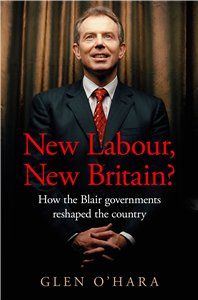
A bold and balanced re-appraisal of New Labour in power. Rewriting the story of New Labour, Glen O'Hara challenges the prevailing narrative to present a more balanced and positive assessment. New Labour, new Britain is the first book to examine both the intentions behind New Labour's domestic policies and their real-world effects, moving beyond the entrenched left-right debates that have dominated the party's legacy. The period from 1997 to 2007 marked a pivotal moment in modern British history, as New Labour sought to reshape Britain into a more cohesive and forward-thinking society. It saw the rise of socially liberal attitudes and flourishing public services under a government committed to rebuilding and investing in them. Yet New Labour's track record was far from flawless and its legacy remains complicated and contested. Through interviews with key players and rigorous archival research, O'Hara offers a new perspective on Tony Blair's years in power. Painting a fuller picture of New Labour's successes and challenges, he highlights its lasting impact on Britain and offers a thoughtful reassessment of its place in history.
Trusted Partner
 Trusted Partner
 Trusted Partner
Trusted Partner
Trusted Partner
 Trusted Partner

What is it like to live next door to a British Army base? England's military heartland provides an eye-opening account of the sprawling military presence on Salisbury Plain, drawing on a wide range of voices from both sides of the divide. Targeted for expansion under government plans to reorganise the UK's global defence estate, the Salisbury 'super garrison' offers a unique opportunity to explore the impact of the military footprint in a particular place. But this is no ordinary environment: as well as being the world-famous site of Stonehenge, the grasslands of Salisbury Plain are home to rare plants and wildlife. How does the army take responsibility for conserving this unique landscape as it trains young men and women to use lethal weapons? Are its claims that its presence is a positive for the environment anything more than propaganda? This book investigates these questions against the backdrop of a historic landscape inscribed with the legacy of perpetual war.
Trusted Partner

Charting a collaborative art-based project using carpet-making skills and the industrial heritage of the region, the book investigates how a cleaved ex-industrial community used arts methodologies as a cohesion strategy. Drawing on images from the company's archives, the book mines the history of Firths Carpets Limited, a firm that carpeted interiors across the globe from the mid-1800s. Women's labour and tastes were business critical to the production and sale of Firths carpets. Drawing on the author's personal connection to the village, an ethnographic sensibility and novel research techniques, ex-worker responses to a village radically altered by ruination are explored. Ex-workers felt nostalgia for the dignity of work and a sense of homesickness in a village ghosted by industrial spectres of the past. Threads of Labour argues that left-behind deindustrialised places require acts of social re-making if their communities are to survive.
Trusted Partner

In this accessible and sophisticated exploration of the nature and workings of social and political power, Haugaard examines the interrelation between domination and empowerment. Building upon the perspectives of Steven Lukes, Michel Foucault, Amy Allen, Hannah Arendt, Anthony Giddens, Pierre Bourdieu and others, he offers a clear theoretical framework, delineating power in four interrelated dimensions. The first and second dimensions of power entail two different types of social conflict. The third dimension concerns tacit knowledge, uses of truth and reification. Drawing upon genealogical theory and accounts of slavery as social death, the fourth dimension of power concerns the power to create social subjects. The book concludes with an original normative pragmatist power-based account of democracy. Offering lucid and entertaining illustrations of complex theoretical perspectives, this book is essential reading for scholars and activists.
Trusted Partner
Trusted Partner
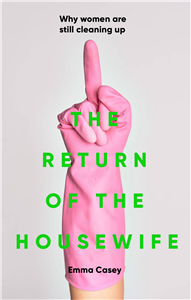
An illuminating look at the world of cleanfluencers that asks why the burden of housework still falls on women. Housework is good for you. Housework sparks joy. Housework is beautiful. Housework is glamorous. Housework is key to a happy family. Housework shows that you care. Housework is women's work. Social media is flooded with images of the perfect home. TikTok and Instagram 'cleanfluencers' produce endless photos and videos of women cleaning, tidying and putting things right. Figures such as Marie Kondo and Mrs Hinch have placed housework, with its promise of a life of love and contentment, at the centre of self-care and positive thinking. And yet housework remains one of the world's most unequal institutions. Women, especially poorer women and women of colour, do most low-paid and unpaid domestic labour. In The return of the housewife, Emma Casey asks why these inequalities matter and why they persist after a century of dramatic advances in women's rights. She offers a powerful call to challenge the prevailing myths around housework and the 'naturally competent' woman homemaker.
Trusted Partner
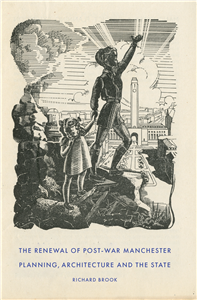
A compelling account of the project to transform post-war Manchester, revealing the clash between utopian vision and compromised reality. Urban renewal in Britain was thrilling in its vision, yet partial and incomplete in its implementation. For the first time, this deep study of a renewal city reveals the complex networks of actors behind physical change and stagnation in post-war Britain. Using the nested scales of region, city and case-study sites, the book explores the relationships between Whitehall legislation, its interpretation by local government planning officers and the on-the-ground impact through urban architectural projects. Each chapter highlights the connections between policy goals, global narratives and the design and construction of cities. The Cold War, decolonialisation, rising consumerism and the oil crisis all feature in a richly illustrated account of architecture and planning in post-war Manchester.
Trusted Partner
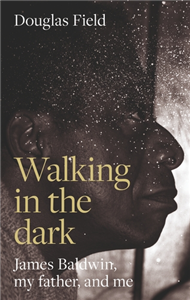
A moving exploration of the life and work of the celebrated American writer, blending biography and memoir with literary criticism. Since James Baldwin's death in 1987, his writing - including The Fire Next Time, one of the manifestoes of the Civil Rights Movement, and Giovanni's Room, a pioneering work of gay fiction - has only grown in relevance. Douglas Field was introduced to Baldwin's essays and novels by his father, who witnessed the writer's debate with William F. Buckley at Cambridge University in 1965. In Walking in the dark, he embarks on a journey to unravel his life-long fascination and to understand why Baldwin continues to enthral us decades after his death. Tracing Baldwin's footsteps in France, the US and Switzerland, and digging into archives, Field paints an intimate portrait of the writer's life and influence. At the same time, he offers a poignant account of coming to terms with his father's Alzheimer's disease. Interweaving Baldwin's writings on family, illness, memory and place, Walking in the dark is an eloquent testament to the enduring power of great literature to illuminate our paths.
Trusted Partner
Trusted Partner
Trusted Partner
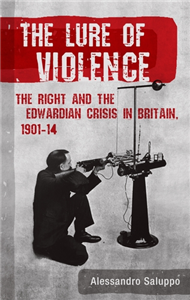
This book provides a comprehensive examination of conservative and right-wing responses to the Edwardian crisis in Britain (1901-1914). It stresses how the upsurge of right-wing extremism within and outside the Conservative party was accompanied by the crystallization of a culture of violence. The preparation, instigation or threatening of violent acts against all those who appeared to threaten the organic nature and vigour of the national community found expression in a myriad of ultra-nationalist organisations, citizen policing groups, private military associations, and paramilitary formations. The book innovatively reconstructs the belief system and the practices of those right-wing actors, which pursued the goals of military preparedness, "racial regeneration" and imperial unity, while defending the amorphous goals of authority, order and 'national efficiency' against the forces of radicalism and socialism. The book helps to cast light on the bellicose and authoritarian reflexes that traversed British conservatism in the turbulent prewar years.
Trusted Partner
 Trusted Partner



