Your Search Results

      • Odonata Publishing

        Odonata Publishing Sdn Bhd, based in Kuala Lumpur, was established on 5th October 1999 by Mr. Khor Ewe Pin with the aim of cultivating children's reading habit by publishing series of books that suit local children's reading needs. The reason for choosing "Odonata" as the company's name, is that dragonfly flies very fast and sees things from far away.   After many years of painstaking hard work, more than 480 books of various titles are released into the market, including Theme Story Series, Pre-School Series, Government textbooks, Illustrated handbook, Primary School Chinese Reading Series, Young Adult Novel Series, Illustration Novel Series, The 15+ Series, The Theatre Series, Love Project Series, Black Ants Series, Comic Series etc.   The Young Adult Novel Series, Illustrated Novel Series, Comic Series, The 15+ Series, The Theatre Series, Love Project Series were in the International Chinese Newsweekly Malaysian Bestsellers (Book) List for 687 weeks (2006-2020) and hit No.1 for 260 weeks.   Odonata Publishing is a well renowned publisher to Malaysian readers for publishing books with quality content. Growing from an early pioneer to a well-known publishing company within a decade, Odonata Publishing has proven itself to be one of the best publishers in the industry.   odonatabooks.com

        View Rights Portal

      • Trusted Partner
        Humanities & Social Sciences
        March 2026

        Negotiating identity conflicts in a fragmenting world order

        by Paul Willem Meerts, Mark Anstey

        At every level of human interaction new levels of identity-based tension are in evidence. Contributors to this book explore facets of fragmentation processes within systems of state and interstate organisation, how they influence the use of negotiation, and how negotiation might be used to effect renewed coherence. Following Anstey's (Ch1) introductory chapter framing the nature and shape of fragmentation dynamics, Zartman (Ch 2) argues that the use of negotiation as a process of conflict resolution is deeply shaped by identity groups whose internal coherence is dependent on sustaining a negative identity of others. International relations are no longer solely the realm of experienced diplomats but are shaped as Meerts (Ch3) points out by politicians seeking to be responsive to voting publics rather than wider concerns. Anstey digs into problems of fragmentation (Ch. 4) and Troitskiy (Ch 5) points out how a reluctant acceptance of the power of 'the other' can lead to a form of strategic stability in relations. Anstey and Meerts (Ch 6) point out in their analysis of the Israeli-Palestinian case as an identity conflict turned very bad. Guggenbuhl (Ch 7 ) reveals how structures and processes have been designed within the EU to prevent, contain and regulate conflicts to limit risks of confrontation and fragmentation. Schuessler (Ch 8) to advocates a shift away from a template or roadmap approach to EU membership to a cohesion based on non-dominance. There is still a strong desire on the part of some states, like Northern Macedonia, to become EU members, as reflected in Manton's (Ch 9). Paula Garzon and Frans Schram explain the success of the Colombia Peace Negotiations (Ch 10), while Odigie and da Rocha (Ch 11) analyse the struggle faced by ECOWAS to influence coup leaders in Mali to return to constitutional government and changes of government by constitutional means. Liang (Ch12) discusses how the internet as the modern vehicle of inter-state, inter-group and interpersonal communication has become weaponised. In Ch 13 Anstey draws some lessons from contributions to the compilation.

      • Trusted Partner
        Humanities & Social Sciences
        June 1999

        The rise and fall of world orders

        by Torbjorn Knutsen

        Drawing in lessons from 400 years of Great-Power politics, this volume challenges both the "declinist" arguments and the overstretched hypothesis of Paul Kennedy to develop an alternative approach to the debate on the rise and fall of the Great Powers. The first half of the book compares the Spanish, Dutch and the First and Second British world orders. It identifies their common features in order to find the most salient causes for their rise as world powers, and the most probable reasons for their decline. The second half of the book addresses the American world order in the 20th century, from Pax Americana to the End of US Hegemony. The author sees the dissolution of the Soviet Union and the resurgence of the US as evidence of the role played by normative dimensions, commonly underestimated in International Relations analysis. Theoretically challenging, Knutsen's volume provides a fresh approach to debates in international relations aimed at both students and scholars.

      • Trusted Partner
        Political ideologies
        May 2017

        Neoliberal power and public management reforms

        by Professor Peter Triantafillou. Series edited by Mark Haugaard

        This book examines the links between major contemporary public sector reforms and neoliberal thinking. The key contribution of the book is to enhance our understanding of contemporary neoliberalism as it plays out in the public administration and to provide a critical analysis of generally overlooked aspects of administrative power. The book examines the quest for accountability, credibility and evidence in the public sector. It asks whether this quest may be understood in terms of neoliberal thinking and, if so, how? The book makes the argument that while current administrative reforms are informed by several distinct political rationalities, they evolve above all around a particular form of neoliberalism: constructivist neoliberalism. The book analyses the dangers of the kinds of administrative power seeking to invoke the self-steering capacities of society and administration itself.

      • Trusted Partner
        Humanities & Social Sciences
        March 2017

        Science and society in southern Africa

        by Saul Dubow

        This collection, dealing with case studies drawn from South Africa, Zimbabwe, Mozambique and Mauritius, examines the relationship between scientific claims and practices, and the exercise of colonial power. It challenges conventional views that portray science as a detached mode of reasoning with the capacity to confer benefits in a more or less even-handed manner. That science has the potential to further the collective good is not fundamentally at issue, but science can also be seen as complicit in processes of colonial domination. Not only did science assist in bolstering aspects of colonial power and exploitation, it also possessed a significant ideological component: it offered a means of legitimating colonial authority by counter-poising Western rationality to native superstition and it served to enhance the self-image of colonial or settler elites in important respects. This innovative volume ranges broadly through topics such as statistics, medicine, eugenics, agriculture, entomology and botany.

      • Trusted Partner
        Humanities & Social Sciences
        January 2026

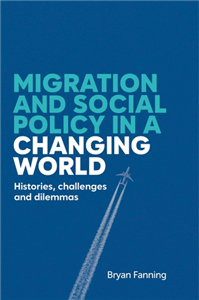
        Migration and social policy in a changing world

        Histories, challenges and dilemmas

        by Bryan Fanning

        Migration and social policy in a changing world bridges the generally separate fields of social policy and migration studies. This book traces social policy responses to migration from the Industrial Revolution to today's era of globalisation and large-scale migration. Through case studies from across the globe, the book explores key themes including rural-urban migration, social citizenship, welfare internationalism and diasporic care systems. It examines how migrants are included in or excluded from social citizenship in host societies, and how they become providers of welfare services such as health and social care. Moving beyond a methodological nationalist focus, the book investigates migrant incorporation into welfare states through family networks, faith communities, and other informal welfare structures. It combines migrants' experiences with host societies' immigration politics, institutional perspectives and policies to present a comprehensive analysis of the migration-welfare relationship. This volume fills a gap in academic literature and offers policymakers, practitioners and scholars a framework for understanding the interplay between migration and social policy in our changing world.

      • Trusted Partner
        The Arts
        September 2020

        Science in performance

        Theatre and the politics of engagement

        by Simon Parry

        This electronic version has been made available under a Creative Commons (BY-NC-ND) open access license. This book is about science in theatre and performance. It explores how theatre and performance engage with emerging scientific themes from artificial intelligence to genetics and climate change. The book covers a wide range of performance forms from Broadway musicals to educational theatre, from Somali drama to grime videos. It features work by pioneering companies including Gob Squad, Headlong Theatre and Theatre of Debate as well as offering fresh analysis of global blockbusters such as Wicked and Urinetown. The book offers detailed description and analysis of theatre and performance practices as well as broader commentary on the politics of theatre as public engagement with science. Science in performance is essential reading for researchers, students and practitioners working between science and the arts within fields such as theatre and performance studies, science communication, interdisciplinary arts and health humanities.

      • Trusted Partner
        Humanities & Social Sciences
        January 2026

        National perspectives on a multipolar order

        by Benjamin Zala

      • Trusted Partner
        Business, Economics & Law
        January 2024

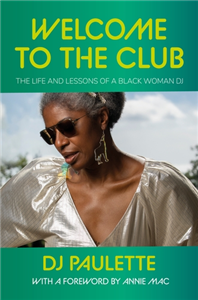
        Welcome to the club

        The life and lessons of a Black woman DJ

        by DJ Paulette

        In Welcome to the club, Manchester legend DJ Paulette shares the highs, lows and lessons of a thirty-year music career, with help from some famous friends. One of the Haçienda's first female DJs, Paulette has scaled the heights of the music industry, playing to crowds of thousands all around the world, and descended to the lows of being unceremoniously benched by COVID-19, with no chance of furlough and little support from the government. Here she tells her story, offering a remarkable view of the music industry from a Black woman's perspective. Behind the core values of peace, love, unity and respect, dance music is a world of exclusion, misogyny, racism and classism. But, as Paulette reveals, it is also a space bursting at the seams with powerful women. Part personal account, part call to arms, Welcome to the club exposes the exclusivity of the music industry while seeking to do justice to the often invisible women who keep the beat going.

      • Trusted Partner
        The Arts
        March 2026

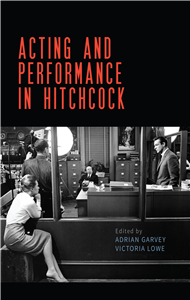
        Acting and performance in Hitchcock

        by Adrian Garvey, Victoria Lowe

        Hitchcock's professed disdain for actors is belied by the extraordinary range and depth of performances featured in his films. It might even be argued that many stars gave their richest and most complex performances in his work. Hitchcock's films are also imbued with the theme of performance, as when his fugitive men and errant women assume fragile new identities and move between roles. Actors and other performers also often feature as characters. However, the exhaustive academic literature on Hitchcock has to date produced surprisingly little work about acting and performance in his films. The collection includes contributions from a range of leading scholars on Hitchcock, performance, stardom, and British Cinema, including Charles Barr, David Greven, Mark Glancy, Lucy Bolton, Lawrence Napper and Michael Williams, and an interview with leading composers/accompanists Neil Brand and Stephen Horne on scoring performance in Silent Hitchcock.

      • Trusted Partner
        Humanities & Social Sciences
        January 2018

        Noble society

        Five lives from twelfth-century Germany

        by Jonathan R. Lyon

        This book provides scholars and students alike with a set of texts that can deepen their understanding of the culture and society of the twelfth-century German kingdom. The sources translated here bring to life the activities of five noblemen and noblewomen from Rome to the Baltic coast and from the Rhine River to the Alpine valleys of Austria. To read these five sources together is to appreciate how interconnected political, military, economic, religious and spiritual interests could be for some of the leading members of medieval German society-and for the authors who wrote about them. Whether fighting for the emperor in Italy, bringing Christianity to pagans in what is today northern Poland, or founding, reforming and governing monastic communities in the heartland of the German kingdom, the subjects of these texts call attention to some of the many ways that noble life shaped the world of central medieval Europe.

      • Trusted Partner
      • Trusted Partner
        Humanities & Social Sciences
        June 2026

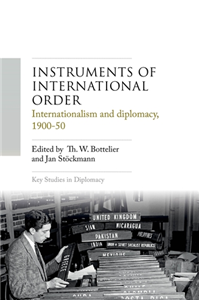
        Instruments of international order

        Internationalism and diplomacy, 1900-50

        by Th. W. Bottelier, Jan Stöckmann

        During the first half of the twentieth century, world politics was reshaped in pursuit of a new international order. The ideological foundations of the 'new diplomacy' (and its fate during the interwar period) are well known. This book instead examines the practices of internationalism and diplomacy from the First Hague Conference of 1899 to the aftermath of the Second World War. By focusing on these practices, such as disarmament regimes or public diplomacy, and their use as instruments to build international order(s), it emphasises the constructed, contested, and experimental character of what subsequently became a standard repertoire of international politics. Essays from a range of interdisciplinary scholars address well-established principles such as self-determination, and also less prominent practices such as small arms control or parliamentary inquiry. The book makes a major contribution to the growing historiography on twentieth-century internationalism.

      • Trusted Partner
        Humanities & Social Sciences
        November 2024

        Instruments of international order

        Internationalism and diplomacy, 1900-50

        by Thomas W. Bottelier, Jan Stöckmann

        During the first half of the twentieth century, world politics was reshaped in pursuit of a new international order. The ideological foundations of the 'new diplomacy' (and its fate during the interwar period) are well known. This book instead examines the practices of internationalism and diplomacy from the First Hague Conference of 1899 to the aftermath of the Second World War. By focusing on these practices, such as disarmament regimes or public diplomacy, and their use as instruments to build international order(s), it emphasises the constructed, contested, and experimental character of what subsequently became a standard repertoire of international politics. Essays from a range of interdisciplinary scholars address well-established principles such as self-determination, and also less prominent practices such as small arms control or parliamentary inquiry. The book makes a major contribution to the growing historiography on twentieth-century internationalism.

      • Trusted Partner
        Humanities & Social Sciences
        February 2013

        Comedy, caricature and the social order, 1820–50

        by Brian Maidment

        Offering an overview of the marketplace for comic images between 1820 and 1850, this book makes a case for the interest and importance of a largely neglected area of visual culture. It considers the impact on the development of print culture of the emergent, but soon widespread, use of lithography and wood engraving, both capable of integrating texts and images cheaply and imaginatively on the printed page. Drawing on a wide range of commercially produced print genres, including song books, play-texts, comic annuals and magazines as well as single plate and series of caricatures, this book traces the ways in which Regency and early Victorian visual humour both sustains some of the characteristics of an earlier caricature tradition while also beginning to develop new ways of analyzing and coping with social change through comic forms and genres. ;

      • Trusted Partner
        Humanities & Social Sciences
        April 2026

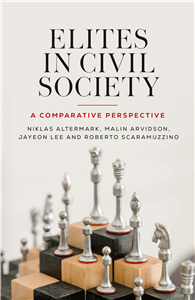
        Elites in civil society

        A comparative perspective

        by Niklas Altermark, Malin Arvidson, Jayeon Lee, Roberto Scaramuzzino

        Where civil society is often seen as a driving force for equality, this book addresses a challenging topic: civil society elites. Drawing on a comprehensive study of Italy, Poland, Sweden, and the UK, this ground-breaking research investigates the often-overlooked power structures within civil society. By combining elite studies with civil society research, the book uncovers how a distinct civil society elite emerges and how it interacts with leaders in politics and business. The findings reveal a fascinating paradox. While this elite may be a powerful engine for social change, its integration into wider power circles risks reproducing the very inequalities it seeks to dismantle. By exploring how this elite can become disconnected from its grassroots, the book provides essential insights into the future of civil society and its democratic promise.

      • Trusted Partner
      • Trusted Partner
        Humanities & Social Sciences
        February 2023

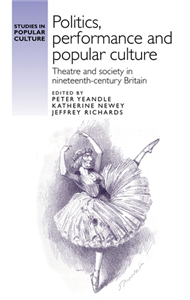
        Politics, performance and popular culture

        Theatre and society in nineteenth-century Britain

        by Peter Yeandle, Katherine Newey, Jeffrey Richards

        This collection brings together studies of popular performance and politics across the nineteenth century, offering a fresh perspective from an archivally grounded research base. It works with the concept that politics is performative and performance is political. The book is organised into three parts in dialogue regarding specific approaches to popular performance and politics. Part I offers a series of conceptual studies using popular culture as an analytical category for social and political history. Part II explores the ways that performance represents and constructs contemporary ideologies of race, nation and empire. Part III investigates the performance techniques of specific politicians - including Robert Peel, Keir Hardie and Henry Hyndman - and analyses the performative elements of collective movements.

      • Trusted Partner
        Humanities & Social Sciences
        June 2024

        Peace and the politics of memory

        by Annika Björkdahl, Susanne Buckley-Zistel, Stefanie Kappler, Johanna Mannergren Selimovic, Timothy Williams

        This important book provides new understandings of how the politics of memory impacts peace in societies transitioning from a violent past. It does so by developing a theoretical approach focusing on the intersection of sites, agency, narratives, and events in memory-making. Drawing on rich empirical studies of mnemonic formations in Cyprus, Bosnia and Herzegovina, Rwanda, South Africa and Cambodia, the book speaks to a broad audience. The in-depth, cross-case analysis shows that inclusivity, pluralism, and dignity in memory politics are key to the construction of a just peace. The book contributes crucial and timely knowledge about societies that grapple with the painful legacies of the past and advances the study of memory and peace.

      Subscribe to our

      newsletter