
Your Search Results


-
Promoted Content

 July 2020
Nein, ich bin nicht müde! / Ja, ich will ins Bett!
by Oksana Bula, Oksana Bula, Thomas Weiler
Oksana Bulas "Nein, ich bin nicht müde! / Ja, ich will ins Bett!" ist ein innovatives Wende-Bilderbuch, das Kindern ab 3 Jahren auf unterhaltsame Weise das Thema Einschlafen näherbringt. Das Buch erzählt zwei charmante Geschichten aus dem Wald: Auf der einen Seite erfahren wir vom Bären, der den Winter erleben möchte und sich gegen den Winterschlaf wehrt, bis ihn die Müdigkeit doch einholt. Auf der anderen Seite begleiten wir den Wisent, der sich nichts sehnlicher wünscht, als die kalte Jahreszeit verschlafen zu können, obwohl seine Art keinen Winterschlaf hält. Durch die entgegengesetzten Perspektiven auf das Thema Schlaf und Ruhe regt das Buch zum Nachdenken und Diskutieren an. Illustriert mit traumhaft gezeichneten Szenen aus Wald und Natur, bietet dieses Werk der ukrainischen Illustratorin Oksana Bula nicht nur eine visuelle Bereicherung, sondern auch eine spielerische Herangehensweise an die Schlafenszeit, die Kinder und Eltern gleichermaßen anspricht. Innovatives Wende-Bilderbuch: Zwei Geschichten in einem Buch bieten doppelten Lesespaß und Abwechslung zur Schlafenszeit. Erziehungsthema Schlafen: Behandelt auf spielerische Weise Herausforderungen und Freuden rund um das Thema Einschlafen und bietet so einen idealen Anknüpfungspunkt für Eltern, um mit ihren Kindern über die Bedeutung von Ruhe und Schlaf zu sprechen. Faszinierende Tiercharaktere: Die Geschichten von Bär und Wisent laden mit ihren gegensätzlichen Wünschen und Erlebnissen zum Vergleich und zur Diskussion ein, wodurch Empathie und Verständnis bei jungen Zuhörern gefördert werden. Traumhafte Illustrationen: Die detailreichen und warmen Illustrationen laden zum Entdecken ein und machen das Buch zu einem visuellen Erlebnis. Vielfältige Einsatzmöglichkeiten: Eignet sich hervorragend zum Vorlesen, als Gute-Nacht-Geschichte und für Leseanfänger zur Förderung der Lesekompetenz. Diskussions- und Lernpotential: Bietet zahlreiche Gesprächsanlässe über Themen wie Zufriedenheit, das Streben nach Unmöglichem und gegenseitige Unterstützung.
-
Promoted Content
-
 Trusted Partner
-
Trusted Partner

 The ArtsJune 2025
Counterpractice
Psychoanalysis, politics and the art of French feminism
by Rakhee Balaram
Counterpractice highlights a generation of women who used art to define a culture of experimental thought and practice during the period of the French women's movement or Mouvement de Libération des Femmes (1970-81). It considers women's art in relation to some of the most exciting thinkers to have emerged from the French literature and philosophy of the 1970s - Hélène Cixous, Luce Irigaray and Julia Kristeva - forcing a timely reconsideration of the full spectrum of revolutionary practices by women in the years following the events of May '68. Lavishly illustrated with over 200 images, the book also features an illuminating foreword by art historian Griselda Pollock.
-
Trusted Partner

 Medicine
The Psychologist’s Role in Disaster Risk Reduction
Theory and Practice
by Olavo Sant’Anna Filho / Daniela da Cunha Lopes (Eds.)
The book introduces the psychology of disaster scenarios, taking into account national and international research. The title outlines different concepts, like anguish, stress, and resilience, and highlights the importance of psychosocial attention to minimize the consequences of disastrous situations and maintaining good mental health. The book consists of a foreword and four chapters, which include a technical note from the Federal Counsel of Psychology, the main concepts of risk and disaster management, and information on the official agencies and nonprofit organizations that work with disaster risks reduction. Target Group: clinical psychologists, mental health professionals, psychiatrists, students, and teachers
-
Trusted Partner
 The ArtsJanuary 2019
Jean-Jacques Beineix
by Philip Powrie
This volume is the first to examine, in either French or English, the films of Jean-Jacques Beineix, often seen as the best example of the 1980s cinéma du look, with cult films, such as Diva and Betty Blue (37º 2 le matin) .. After an introduction which places Beineix in the context of the 1980s and the arguments centering on a postmodern cinema, the volume devotes a chapter to each of Beineix's feature films, including the film which marked his return to feature film making after a break of a decade, Mortel Transfert (2001). Prefaced by an excellent foreword by the director himself, which includes a broad condemnation of French critics. Includes many illustrations direct from the director's own collection, complementing the interviews Powrie made with him and his collaborators.
-
Trusted Partner
 Theory of ArtSeptember 2016
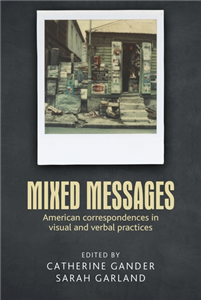
Mixed messages
American correspondences in visual and verbal practices
by Edited by Catherine Gander, Sarah Garland
Offering a major contribution to the field of American culture and aesthetics in an interdisciplinary frame, this collection assembles the cutting-edge research of renowned and emerging scholars in literature and the visual arts, with a foreword by Miles Orvell. The volume represents the first of its kind: an intervention in current interdisciplinary approaches to the intersections of the written word and the visual image that moves beyond standard theoretical approaches to consider the written and visual artwork in embodied, cognitive and experiential terms. Tracing a strong lineage of pragmatism, romanticism, surrealism and dada in American intermedial works through the nineteenth century to the present day, the editors and authors of this volume chart a new and vital methodology for the study and appreciation of the correspondences between visual and verbal practices.
-
Trusted Partner

Character Strengths Intervention Cards
50 cards with instruction booklet
by Matthijs Steeneveld, Anouk van den Berg
Would you like to teach your clients what their character strengths are and how they can use them more? This set of cards helps you do just that. Endorsed with a foreword by Ryan M. Niemiec, VIA Institute 50 full color cards Individual cards for the VIA 24 character strengths and 6 virtues 16 intervention cards 16-page booklet provides practice tips The VIA character strengths look at what positive character traits help us lead fulfilling and happy lives, rather than looking at what is wrong with us. Research has shown that knowing your strengths and using them more often leads to greater well-being, better performance, and more resilience. With these cards, you can help clients learn about their character strengths. For: • psychotherapists• clinical psychologists• counselors
-
Trusted Partner
 The ArtsNovember 2013
Popular television in authoritarian Europe
by Peter Goddard
This lively and ground-breaking collection brings together work on forms of popular television within the authoritarian regimes of Europe after World War Two. Ten chapters based on new and original research examine approaches to programming and individual programmes in Spain, Greece, Czechoslovakia, Romania, the USSR and the GDR at a time when they were governed as dictatorships or one-party states. Drawing on surviving archives, scripts and production records, contemporary publications, YouTube clips and interviews with producers and performers, its chapters recover examples of television programming history unknown beyond national borders and often preserved largely in the memories of the audiences who lived with them. The introduction examines how television can be considered 'popular' in circumstances where audience appeal is often secondary to the need for state control. Published in English, Popular television in authoritarian Europe represents a significant intervention in transnational television studies, making these histories available to scholars for the first time, encouraging comparative enquiry and extending the reach - intellectually and geographically - of European television history. There is a foreword by John Corner and an informative timeline of events in the history of television in the countries covered. ;
-
Trusted Partner
 The ArtsFebruary 2006
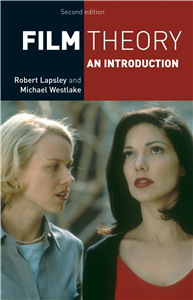
Film theory
An introduction
by Robert Lapsley
Film theory: an introduction offers a highly readable account of film theory and is an indispensable resource for students. The discussion ranges from the late 1960s to the present, a period in which a number of conceptual strands, notably politics, semiotics and psychoanalysis were woven together in an ambitious synthesis. In this book, the authors chart the construction of this synthesis and its subsequent fragmentation, and clearly explain the various intellectual currents which have contributed to it. Divided into two parts, the first covers the conceptual background of film theory, dealing with historical materialism, semiotics and psychoanalysis, whilst in the second the authors concentrate on particular topics such as authorship, narrative, realism, the avant-garde and postmodernism. For this new edition, the authors have added a new foreword, a fully updated and expanded bibliography, and a 60-page Retrospect outlining developments within film theory since the book's original publication in 1988. This Retrospect identifies a number of broad readings of Theory, each with a different perspective on the main content of the book. As such, it provides a new and original mapping of the 'post-theory' moment in this complex and often fractured terrain. Accessible and authoritative, this book is essential reading for students of film theory, or indeed anyone seeking a deeper understanding of modern cinema. ;
-
Trusted Partner
Humanities & Social SciencesJune 2025
Transnational solidarity
Anticolonialism in the global sixties
by Zeina Maasri, Cathy Bergin, Francesca Burke
Transnational solidarity excavates the forgotten histories of solidarity that were vital to radical political imaginaries during the 'long' 1960s. It decentres the conventional Western focus of this critical historical moment by foregrounding transnational solidarity with, and across, anticolonial and anti-imperialist liberation struggles. The book traces the ways in which solidarity was conceived, imagined and enacted in the border crossings - of nation, race and class - made by grassroots activists. This diverse collection draws links between exiled revolutionaries in Uruguay, post-colonial immigrants in Britain, and Greek communist refugees in East Germany who campaigned for their respective causes from afar while identifying and linking up with wider liberation struggles. Meanwhile, Arab immigrants in France, Pakistani volunteers and Iraqi artists found myriad ways to express solidarity with the Palestinian cause. Neglected archives also reveal Tricontinental Cuban-based genealogies of artistic militancy, as well as transnational activist networks against Portuguese colonial rule in Africa. Bringing together original research with contributions from veteran activists and artists, this interdisciplinary volume explores how transnational solidarity was expressed in and carried through the itineraries of migrants and revolutionaries, film and print cultures, art and sport, political campaigns and armed struggle. It presents a novel perspective on radical politics of the global sixties which remains crucial to understanding anti-racist solidarity today. With a foreword by Vijay Prashad.
-
Trusted Partner
The ArtsJune 2026
The picture politics of Sir Francis Carruthers Gould
Britain's pioneering political cartoonist
by Colin Seymour-Ure, Mark Bryant
This is the first major study of Britain's pioneering graphic satirist, Sir Francis Carruthers Gould (1844-1925), the first staff political cartoonist on a daily newspaper in Britain, and the first of his kind to be knighted. Written by the distinguished media historian, Colin Seymour-Ure, it is essential reading for anyone interested in cartoons, caricature and illustration and will also be welcomed by students of history, politics and the media. It examines Gould's career in Fleet Street until his retirement after the First World War. It also discusses his illustrations for magazines and books and there is an analysis of his use of symbolism and literary allusion to lampoon such eminent politicians as Gladstone and Joseph Chamberlain. As Lord Baker says in his Foreword, this book is 'a major contribution to our knowledge of British cartooning.'
-
Trusted Partner
 The ArtsDecember 2024
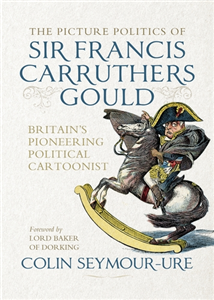
The picture politics of Sir Francis Carruthers Gould
Britain's pioneering political cartoonist
by Mark Bryant
This is the first major study of Britain's pioneering graphic satirist, Sir Francis Carruthers Gould (1844-1925), the first staff political cartoonist on a daily newspaper in Britain, and the first of his kind to be knighted. Written by the distinguished media historian, Colin Seymour-Ure, it is essential reading for anyone interested in cartoons, caricature and illustration and will also be welcomed by students of history, politics and the media. It examines Gould's career in Fleet Street until his retirement after the First World War. It also discusses his illustrations for magazines and books and there is an analysis of his use of symbolism and literary allusion to lampoon such eminent politicians as Gladstone and Joseph Chamberlain. As Lord Baker says in his Foreword, this book is 'a major contribution to our knowledge of British cartooning.'
-
Trusted Partner
 Humanities & Social SciencesOctober 1996
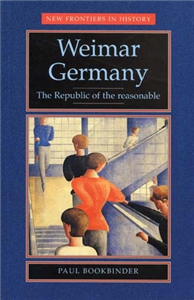
Weimar Germany
The republic of the reasonable
by Paul Bookbinder
The Weimar period, which extended from 1919 to 1933, was a time of political violence, economic crisis, generational and gender tension, and cultural experiment and change in Germany. Despite these major issues, the Republic is often treated only as a preface to the study of the rise of Fascism. This text seeks to restore the balance, exploring the Weimar period in its own right. Amongst the topics discussed are: Weimar as the avant-garde artistic centre of Europe in the 1920s when many cultural figures were politically engaged on both sides of the political spectrum; Weimar as a German state racked by conflict over questions of morality versus ideas of greater sexual freedom for women, homosexual rights, abortion and birth control; the struggle to win the hearts and minds of German youth, a struggle won decisively by the right-wing; and Weimar as the first German state in which women played a significant political role. ;
-
Trusted Partner
 Biography & True StoriesMarch 2026
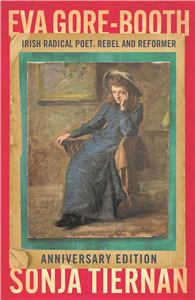
Eva Gore-Booth: Irish radical poet, rebel and reformer
Anniversary edition
by Sonja Tiernan
An acclaimed biography of poet, pacifist and political firebrand Eva Gore-Booth. The Irish poet and activist Eva Gore-Booth (1870-1926) led a life defiantly at odds with her aristocratic origins. Choosing to live and work among the poor of Manchester, she campaigned on behalf of barmaids, circus performers, flower sellers and pit-brow lasses, her partner, Esther Roper, at her side. Gore-Booth was tireless in her pursuit of justice. She was a militant pacifist during the First World War, a champion of Irish independence and a pioneering thinker on gender and sexuality. She was also a prolific author, publishing nineteen volumes of poetry and prose that reflect the full force of her radical convictions. Featuring a new preface that situates Gore-Booth's life and work in the context of our current political climate, this biography reclaims her place as a significant figure of Anglo-Irish letters and an unsung hero of LGBT+ history.
-
Trusted Partner

 April 2023
The Battle for Water
In the century of drought
by Jürgen Rahmig
— Water as a reason for war and a political instrument of power — Unique overview of global water conflicts — Foreword by Wolfgang Ischinger Every year, droughts in African countries cause hundreds of thousands of deaths and much suffering. Europe also experienced drought in 2022's summer of record temperatures. Without water, there can be no life. More and more people are suffering from water shortages. Climate change is fuelling the distribution battles for water; violent conflicts over this precious resource are the order of the day. Whether the protests in Iraq, the war in Syria, in the Himalayas, the Nile conflict and in many other places, water is already a reason for war and is being misused as a political instrument of power. The construction of huge dams, the targeted closure of locks, river diversions, water and land grabbing bring wars over the "blue gold" with them. In a unique overview, journalist Jürgen Rahmig describes the struggle for water in the 21st century. Where do dangers lurk today; where will they be tomorrow, and how can we prevent wars over precious water?
-
Trusted Partner

 January 1991
Die verlorene Ehre der Katharina Blum
Mit Materialien und einem Nachwort des Autors
by Böll, Heinrich
A young woman inadvertently becomes the centre of the sensationalism and political agitation of a boulevard newspaper. After falling in love with a young man who is wanted by police for “radicalism”, Katharina Blum’s life is made unbearable by journalists who scrutinize and make public every aspect of her private life. The consequence of this violation of her privacy by the media is the beginning of the story: Katharina Blum has shot a journalist and another photographer has been shot by an unknown woman. This is the shocking incident that cries for interpretation and clarification. The pattern of the street ballad of a woman’s lost honour is used here for its emancipatory and aggressive potential: The woman who has been humiliated in the public opinion fights back – if necessary with violence. Böll added in a preface: “Characters and storyline are a work of fiction. Should similarities to the journalistic methods of a certain boulevard newspaper be detected, these similarities are neither intended nor accidental but inevitable.” "Böll sustains a masterly and insidious tension to the end. He is detached, angry and totally in control" (The Times) "Such is the force of Böll’s conviction, the clarity of his vision and the icy economy of his unemotive prose that within this short space he has distilled a spirit that burns into the palate the unmistakeable and lasting tang of truth" (Sunday Times) "A marvel of compression and irony" (Sunday Telegraph)
-

 The ArtsMarch 1905
Concerning the Spiritual in Art
by Wassily Kandinsky
A pioneering work in the movement to free art from its traditional bonds to material reality, this book is one of the most important documents in the history of modern art. Written by the famous nonobjective painter Wassily Kandinsky (1866–1944), it explains Kandinsky's own theory of painting and crystallizes the ideas that were influencing many other modern artists of the period. Along with his own groundbreaking paintings, this book had a tremendous impact on the development of modern art. Kandinsky's ideas are presented in two parts. The first part, called "About General Aesthetic," issues a call for a spiritual revolution in painting that will let artists express their own inner lives in abstract, non-material terms. Just as musicians do not depend upon the material world for their music, so artists should not have to depend upon the material world for their art. In the second part, "About Painting," Kandinsky discusses the psychology of colors, the language of form and color, and the responsibilities of the artist. An Introduction by the translator, Michael T. H. Sadler, offers additional explanation of Kandinsky's art and theories, while a new Preface by Richard Stratton discusses Kandinsky's career as a whole and the impact of the book. Making the book even more valuable are nine woodcuts by Kandinsky himself that appear at the chapter headings. This English translation of Über das Geistige in der Kunst was a significant contribution to the understanding of nonobjectivism in art. It continues to be a stimulating and necessary reading experience for every artist, art student, and art patron concerned with the direction of 20th-century painting.
-
Trusted Partner
 Literature & Literary StudiesDecember 2018
Five Elizabethan progress entertainments
by Leah Scragg, Paul Edmondson
Designed to introduce the student or general reader to a largely unfamiliar area of Elizabethan theatrical activity, Five Elizabethan progress entertainments focuses on a group of entertainments mounted for the monarch in the closing years of her reign. Richly annotated, and prefaced by a substantial introduction, the texts enable an understanding of the motives underlying not only the progress itself, but the choice of locations the monarch elected to visit and the personal and political preoccupations of those with whom she determined to stay. Selected for their diversity, the entertainments exhibit the tensions underlying some royal visits, the lavish expenditure entailed for the monarch's hosts and the overlap in terms of both material and authorship between the progress entertainments and the more widely studied products of the sixteenth-century stage.
-
Trusted Partner
 Literature & Literary StudiesFebruary 2021
Five Elizabethan progress entertainments
by Leah Scragg
Designed to introduce the student or general reader to a largely unfamiliar area of Elizabethan theatrical activity, Five Elizabethan progress entertainments focuses on a group of entertainments mounted for the monarch in the closing years of her reign. Richly annotated, and prefaced by a substantial introduction, the texts enable an understanding of the motives underlying not only the progress itself, but the choice of locations the monarch elected to visit and the personal and political preoccupations of those with whom she determined to stay. Selected for their diversity, the entertainments exhibit the tensions underlying some royal visits, the lavish expenditure entailed for the monarch's hosts and the overlap in terms of both material and authorship between the progress entertainments and the more widely studied products of the sixteenth-century stage.



