
Parkstone International - EParkstone International Ltd.
Parkstone International is a cosmopolitan publishing house that specialises in fine art books.
View Rights Portal
Parkstone International is a cosmopolitan publishing house that specialises in fine art books.
View Rights Portal
Textbooks, research and professional titles in Agriculture and International Development
View Rights Portal

This volume offers new practical and theoretical perspectives on one of the most complex questions regarding the formation of international law, namely that actors other than states contribute to the making of customary international law. Notwithstanding the International Law Commission's valuable contribution, the making of customary international law remains riddled with acute practical and theoretical controversies that continue to be intensively debated. Making extensive reference to the case-law of international law courts and tribunals, as well as the most recent scholarly work on customary international law, this volume provides a comprehensive study of the contribution of international organisations and non-state actors to the formation of customary international law. With innovative tools and guidance for law students, legal scholars, and researchers in law, as well as legal practitioners, advisers, judges, arbitrators, and counsels, this collection is essential reading for those wishing to understand and address contemporary questions of international law-making.
 Trusted Partner
 Trusted Partner
 Trusted Partner
Was there international law in the Middle Ages? Using treaties as its main source, this book examines the extent to which such a system of rules was known and followed in the period 700 to 1200. It considers how consistently international legal rules were obeyed, whether there was a reliance on justification of action and whether the system had the capacity to resolve disputed questions of fact and law. The book further sheds light on issues such as compliance, enforcement, deterrence, authority and jurisdiction, challenging traditional ideas over their role and function in the history of international law. International law in Europe, 700-1200 will appeal to students and scholars of medieval Europe, international law and its history, as well as those with a more general interest in warfare, diplomacy and international relations.
Trusted Partner
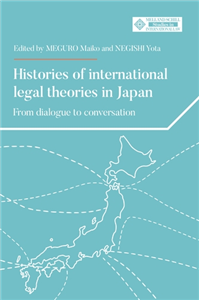
This volume presents the first systematic account of Japanese international legal theory; edited by Japanese scholars, the volume traces thirteen influential scholars and spans over a century. It examines how theorists positioned outside international law's Western centre developed sophisticated frameworks to address tensions between Western modernity and their own experiences. The book's central contribution proposes 'conversation'-continuous engagement that respects differences between legal traditions-as an alternative to 'dialogue', which often reproduces existing hierarchies by assuming all perspectives can be reconciled. Through detailed intellectual biographies across six historical periods, contributors reveal how Japanese scholars strategically employed legal positivism, articulated transcivilizational perspectives, and developed concepts of normative multilateralism. Addressed at scholars of international law, legal theory, and comparative legal traditions, this volume demonstrates that the discipline's future requires genuinely reciprocal exchange where diverse perspectives can coexist productively.
Trusted Partner
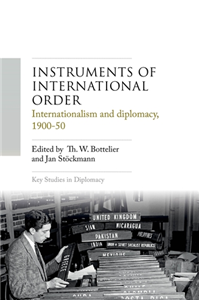
During the first half of the twentieth century, world politics was reshaped in pursuit of a new international order. The ideological foundations of the 'new diplomacy' (and its fate during the interwar period) are well known. This book instead examines the practices of internationalism and diplomacy from the First Hague Conference of 1899 to the aftermath of the Second World War. By focusing on these practices, such as disarmament regimes or public diplomacy, and their use as instruments to build international order(s), it emphasises the constructed, contested, and experimental character of what subsequently became a standard repertoire of international politics. Essays from a range of interdisciplinary scholars address well-established principles such as self-determination, and also less prominent practices such as small arms control or parliamentary inquiry. The book makes a major contribution to the growing historiography on twentieth-century internationalism.
Trusted Partner
During the first half of the twentieth century, world politics was reshaped in pursuit of a new international order. The ideological foundations of the 'new diplomacy' (and its fate during the interwar period) are well known. This book instead examines the practices of internationalism and diplomacy from the First Hague Conference of 1899 to the aftermath of the Second World War. By focusing on these practices, such as disarmament regimes or public diplomacy, and their use as instruments to build international order(s), it emphasises the constructed, contested, and experimental character of what subsequently became a standard repertoire of international politics. Essays from a range of interdisciplinary scholars address well-established principles such as self-determination, and also less prominent practices such as small arms control or parliamentary inquiry. The book makes a major contribution to the growing historiography on twentieth-century internationalism.
Trusted Partner
As artificial intelligence continues to transform modern warfare, the rapid development of AI-driven weaponry presents profound ethical, legal, and security challenges. Artificial Intelligence and International Security: Redefining Arms Races and Contemporary Warfare offers a critical examination of this emerging arms race, exploring issues of arms control, international law, diplomacy, and long-term security. Bringing together expert perspectives, this volume assesses the risks and implications of autonomous weapon systems while proposing solutions to ensure ethical AI deployment. Through a comprehensive analysis of this urgent issue, it seeks to contribute to global debates and inform policies that foster peace, stability, and the responsible use of AI in warfare.
Trusted Partner
Trusted Partner
Trusted Partner
Trusted Partner
Trusted Partner
 Trusted Partner
 Trusted Partner

This book provides a critical analysis of the definitions of war crimes and crimes against humanity as construed in the Rome Statute of the International Criminal Court. Each crime is discussed from its origins in treaty or customary international law, through developments as a result of the jurisprudence of modern ad hoc or internationalised tribunals, to modifications introduced by the Rome Statute and the Elements of Crimes. The influence of human rights law upon the definition of crimes is discussed, as is the possible impact of State reservations to the underlying treaties which form the basis for the conduct covered by the offences in the Rome Statute. Examples are also given from recent conflicts to aid a 'real life' discussion of the type of conduct over which the International Criminal Court may take jurisdiction. This will be relevant to postgraduates, academics and professionals with an interest in the International Criminal Court and the normative basis for the crimes over which the Court may take jurisdiction.
Trusted Partner
 Trusted Partner
 Trusted Partner
Trusted Partner
Trusted Partner
Latin America has been a complex laboratory for the development of international investment law. While some governments and non-state actors have remained true to the Latin American tradition of resistance towards the international investment law regime, other governments and actors have sought to accommodate said regime in the region. Consequently, a profusion of theories and doctrines, too often embedded in clashing narratives, has emerged. In Latin America, the practice of international investment law is the vivid amalgamation of the practice of governments sometimes resisting and sometimes welcoming mainstream approaches; the practice of lawyers assisting foreign investors from outside and within the region; and the practice of civil society, indigenous peoples and other actors in their struggle for human rights and sustainable development. Latin America and international investment law describes the complex roles that governments have played vis-à-vis foreign investors and investments; the refreshing but clashing forces that international organizations, corporations, civil society, and indigenous peoples have brought to the field; and the contribution that Latin America has made to the development of the theory and practice of international investment law, notably in fields in which the Latin American experience has been traumatic: human rights and sustainable development. Latin American scholars have been contributing to the theory of international investment law for over a century; resting on the shoulders of true giants, this volume aims at pushing this contribution a little further.



