Partners Publishing
Livres Canada Books
View Rights Portal


The Conservative Party and the Constitution examines the profound influence on Britain's constitutional framework over nearly two centuries. Through rigorous analysis, it traces how Tory leaders navigated parliamentary reform, devolution, and Brexit, balancing tradition with pragmatic adaptation. Drawing on exclusive interviews, archival records, and historical sources, the book reveals the Party's statecraft and offers fresh insights into the Conservatives' role in shaping modern governance. Essential for historians, political scientists, and those engaged with British politics, this study illuminates the dynamic interplay of power, ideology, and constitutional change, making it a vital contribution to understanding Britain's constitutional history.

The labour movement in Lebanon: Power on hold narrates the history of the Lebanese labour movement from the early twentieth century to today. Bou Khater demonstrates that trade unionism in the country has largely been a failure, for reasons including state interference, tactical co-optation, and the strategic use of sectarianism by an oligarchic elite, together with the structural weakness of a service-based laissez-faire economy. Drawing on a vast body of Arabic-language primary sources and difficult-to-access archives, the book's conclusions are significant not only for trade unionism, but also for new forms of workers' organisations and social movements in Lebanon and beyond. The Lebanese case study presented here holds significant implications for the wider Arab world and for comparative studies of labour. This authoritative history of the labour movement in Lebanon is vital reading for scholars of trade unionism, Lebanese politics, and political economy.
 Trusted Partner
 Trusted Partner
 Trusted Partner
 Trusted Partner
Trusted Partner
Trusted Partner
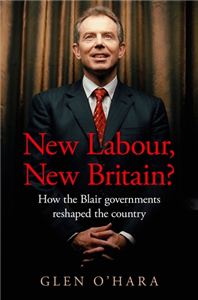
A bold and balanced re-appraisal of New Labour in power. Rewriting the story of New Labour, Glen O'Hara challenges the prevailing narrative to present a more balanced and positive assessment. New Labour, new Britain is the first book to examine both the intentions behind New Labour's domestic policies and their real-world effects, moving beyond the entrenched left-right debates that have dominated the party's legacy. The period from 1997 to 2007 marked a pivotal moment in modern British history, as New Labour sought to reshape Britain into a more cohesive and forward-thinking society. It saw the rise of socially liberal attitudes and flourishing public services under a government committed to rebuilding and investing in them. Yet New Labour's track record was far from flawless and its legacy remains complicated and contested. Through interviews with key players and rigorous archival research, O'Hara offers a new perspective on Tony Blair's years in power. Painting a fuller picture of New Labour's successes and challenges, he highlights its lasting impact on Britain and offers a thoughtful reassessment of its place in history.
Trusted Partner

This book, newly available in paperback, reveals the Conservative Party's relationship with the extreme right between 1945 and 1975. For the first time, this book shows how the Conservative Party, realising that its well known pre-Second World War connections with the extreme right were now embarrassing, used its bureaucracy to implement a policy of investigating extreme right groups and taking action to minimise their chances of success. The book focuses on the Conservative Party's investigation of right-wing groups, and shows how its perception of their nature determined the party bureaucracy's response. The book draws a comparison between the Conservative Party machine's negative attitude towards the extreme right and its support for progressive groups. It concludes that the Conservative Party acted as a persistent block to the external extreme right in a number of ways, and that the Party bureaucracy persistently denied the extreme right within the party assistance access to funds and representation within party organisations. It reaches a climax with the formulation of a 'plan' threatening its own candidate if he failed to remove the extreme right from the Conservative Monday Club.
Trusted Partner
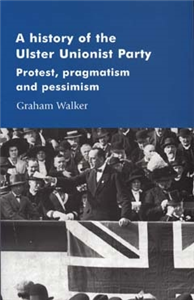
This is the first substantial history to trace the political development of the Ulster Unionist Party through the years of protest and opposition to Irish Home Rule to the half-century as a governing party within Northern Ireland, and beyond to the current attempts to bring peace to the Province. It demonstrates why the Party is so central to efforts to reach a political settlement, and explains why it has for so long been the main political voice of the pro-Union electorate in Northern Ireland. An important and scholarly work based on extensive primary source research, it brings to light forgotten historical episodes of contemporary political significance, and provides new angles on old controversies and debates. The book discusses the evolution of the Ulster Unionist Party with reference to competing ideological currents, class and social tensions within the Unionist movement, and the role of leadership figures and maverick personalities. This is a book that maps the party's historical journey from the dramatic days of Carson to the current predicaments of Trimble. ;
Trusted Partner


Witziger Comicroman für alle ab 9. Von der Bestsellerautorin von „Hugo“ und „Collins geheimer Channel“; mit urkomischen Bildern von Daniel Stieglitz. „Boah Leute, wie lame ist das denn: Unsere Lehrerin will nächste Woche eine Mathearbeit schreiben. Am Tag nach unserer Party! Als wäre es nicht schon schlimm genug, dass ich mit meinem Stiefbruder Jan zusammen feiern soll. Der ist zwar ganz nett, aber wie man eine fette Party auf die Beine stellt, davon hat er echt keine Ahnung. Alles, was der im Kopf hat, sind Muffins. Dabei gibt es doch noch so viel mehr zu organisieren: eine coole Location, Unterhaltungsprogramm mit einem Promi oder einer YouTuberin, die Deko und die Gästeliste. Natürlich habe ich unsere ganze Klassenstufe eingeladen! Wie sich die Dorfkids wohl mit meinen alten Kumpels aus der City verstehen?!“ Stadtkind Donnie hat einige äußerst turbulente Wochen Landleben mit seiner neuen Patchworkfamilie hinter sich. Doch inzwischen hat er sich einigermaßen auf dem Dorf eingelebt und versteht sich auch ganz gut mit seinem Stiefbruder Jan. Die beiden planen sogar eine gemeinsame Party. Doch da zeigt sich: Noch immer trennen die beiden Welten. Jan will in der Scheune feiern, Donnie auf einer Kartbahn. Jan möchte selbstgebackenen Kuchen, Donnie unbedingt ein Sushi-Buffett. Und wer darf über die Musik bestimmen? In nichts werden sie sich einig … Wenn das so weitergeht, wird die ganze Party ins Wasser fallen! Ob Donnie und Jan es schaffen, sich zusammenzuraufen? „Donnie & Jan. Ziemlich beste Brüder“ erzählt vom turbulenten Alltag einer Patchwork-Familie und zwei ziemlich ungleichen Stiefbrüdern. Voll witziger Ideen von der mehrfach ausgezeichneten Erfolgsautorin Sabine Zett und rasend komisch illustriert von Karikaturist Daniel Stieglitz. Für Kinder ab 9 und alle, die Spaß an lustigen Büchern haben. ** Die Arena-Fun-Bücher ** Altersübergreifende Geschichten Für alle von 8-11 Jahren Ansprechendes Text-Bild-Leseerlebnis Kurze Kapitel, überschaubare Textmenge Fördert die Lesebegeisterung und Lesekompetenz Beschert schnell Erfolgserlebnisse
Trusted Partner

Charting a collaborative art-based project using carpet-making skills and the industrial heritage of the region, the book investigates how a cleaved ex-industrial community used arts methodologies as a cohesion strategy. Drawing on images from the company's archives, the book mines the history of Firths Carpets Limited, a firm that carpeted interiors across the globe from the mid-1800s. Women's labour and tastes were business critical to the production and sale of Firths carpets. Drawing on the author's personal connection to the village, an ethnographic sensibility and novel research techniques, ex-worker responses to a village radically altered by ruination are explored. Ex-workers felt nostalgia for the dignity of work and a sense of homesickness in a village ghosted by industrial spectres of the past. Threads of Labour argues that left-behind deindustrialised places require acts of social re-making if their communities are to survive.
Trusted Partner


„Vermisst. Die 16-jährige Laura Anderson wurde zuletzt am 13.8. um 23 Uhr am Strand von Palokaski gesehen, wo sie mit Freunden eine Party feierte. Laura ist schlank, mittelgroß, hat blaue Augen und schwarz gefärbte Haare. Sie trug eine enge weiße Jeans und eine rosa Karobluse und Turnschuhe.“ „Mia ging auf das weiße f auf blauem Grund. Keine Fotos. Keine neuen Kommentare oder Likes. Aber eine Nachricht. Und im selben Moment wusste sie, dass sie keine Sekunde mehr schlafen würde. Die Nachricht kam von Johanna und war kurz: Laura ist tot.“ Mia Pohjavirta musste ihren Polizei-Job für Ermittlung in sozialen Netzwerken wegen ihrer Internet-Sucht an den Nagel hängen. Als Sonderpädagogin ist sie jetzt an ihre alte Schule und damit in ihre Heimatstadt zurückkehrt. Es soll endlich Ruhe in ihr Leben einkehren. Aber am ersten Schultag nach den Ferien macht es schnell die Runde: die 16jährige Schülerin Laura Anderson ist verschwunden. Ihre Eltern richten in ihrer Verzweiflung auf der Suche nach ihrer Tochter eine Facebook Seite ein und lösen damit einen wahren Shitstorm aus. Von Satanskult, Drogen und Sadomaso-Spielen ist die Rede, jemand will Laura in Amsterdam gesichtet haben. Jeder hat seine eigene Theorie, wo Laura steckt, aber am meisten scheint Mias Bruder Niklas zu wissen, der als Psychologe an der Schule arbeitet. Der Sommer, der für Mia so strahlend und hoffnungsvoll begann, wird zum düsteren Albtraum. Teil eins der Palokaski-Trilogie. Wenn »Gone Girl« und »Twin Peaks« aufeinandertreffen...
Trusted Partner

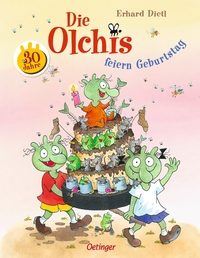
In "Die Olchis feiern Geburtstag" steht die Olchi-Familie vor einer besonderen Herausforderung: Der blaue Olchi möchte seinen Geburtstag auf dem heimischen Müllberg feiern, und das ausgerechnet mit einem Hang zur Ordnung, der den anderen Olchis eher fremd ist. Mit viel Witz und Einfallsreichtum macht sich die Familie daran, eine unvergessliche Party vorzubereiten, die selbst den peniblen blauen Olchi begeistern soll. Erhard Dietl gelingt es einmal mehr, die Leser in eine Welt voller Schmutz und Chaos zu entführen, in der jedoch Herzlichkeit und Familienzusammenhalt an erster Stelle stehen. Die humorvolle Geschichte wird von liebevollen Illustrationen begleitet, die den einzigartigen Charme der Olchis unterstreichen und Kinder wie Erwachsene gleichermaßen zum Lachen bringen. Neuestes Abenteuer der beliebten Olchis: Ein Muss für alle Olchi-Fans und solche, die es werden wollen. Lebendige und humorvolle Illustrationen: Erhard Dietls unverwechselbarer Zeichenstil macht das Buch zu einem visuellen Vergnügen. Werte wie Familienzusammenhalt und Toleranz: Die Geschichte vermittelt auf unterhaltsame Weise die Botschaft, dass Unterschiede bereichern und gemeinsame Anstrengungen belohnt werden. Perfektes Geschenk für Geburtstage: Ein Buch, das sich ideal als Geschenk eignet und bei Geburtstagskindern ab 4 Jahren für strahlende Augen sorgen wird. Einfach zu lesen und zu verstehen: Die klare und einfache Sprache macht das Buch zugänglich und fördert die Lesefreude bei jungen Lesern. Die Bilderbuch-Geschichte ist ebenfalls gut zum Vorlesen geeignet.
Trusted Partner
 Trusted Partner

This book considers the most electorally successful political party in Spain, the Spanish Socialist Workers' Party (PSOE), which was in government for two of the three decades since it won office under Felipe González in 1982. Providing rich historical background, the book's main focus is on the period since General Franco's death in 1975. It charts Spain's modernisation under the PSOE, with a particular focus on the role played by European integration in this process. Covering events including the 2011 general election, the book is one of the most up-to-date works available in English and will be of great interest to academics and undergraduate and postgraduate students in the field of Spanish and European studies. ;
Trusted Partner

The book is a comparative, empirically based study of party politics in contemporary Central and Eastern Europe that seeks to define the impact of European Union membership in this area. The question of Europeanisation has been intensively debated over recent years, but no firm conclusion has been reached. This collection of rigorously comparative contributions directs attention to a number of key areas in the attempt to isolate cases where Europe has made a difference. Successive chapters examine how new parties are managed by the state and the ways in which parties colonise the state itself, the role of transnational cooperation and the influence pan-European parties have on national organisations. The book goes on to consider patterns of party-oriented participation in the new democracies and dimensions of electoral turnout, dimensions of inter-party competition and identification of the specific features of post-communist party politics, examination of the key case of the extreme right and the conditions under which it tends to emerge, detailed analysis of the quality of political representation in the new democratic context, and discussion of how EU constraints are likely to undermine the prospects of stable party linkages. A conclusion seeks to establish how far Europe and EU policy has succeeded in influencing Central and East European developments. ;
Trusted Partner
Trusted Partner

This is a pathbreaking comparative and trans-national study of the neglected influences of nation, empire and race upon the development and electoral fortunes of the Labour Party in Britain and the Australian Labor Party from their formative years of the 1900s to the elections of 2010. Based upon extensive primary and secondary source-based research in Britain and Australia over several years, it makes a new and original contribution to the fields of labour, imperial and 'British world' history. The book offers the challenging conclusion that the forces of nation, empire and race exerted much greater influence upon Labour politics in both countries than suggested by 'traditionalists' and 'revisionists' alike. The book will appeal to undergraduates, postgraduates, scholars in history and politics and all those interested in and concerned with the past, present and future of Labour politics in Britain, Australia and more generally.
Trusted Partner
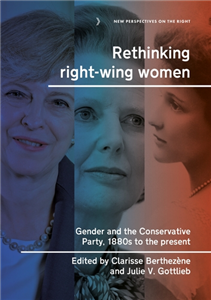
Rethinking Right-Wing Women explores the institutional structures for and the representations, mobilisation, and the political careers of women in the British Conservative Party since the late 19th century. From the Primrose League (est.1883) to Women2Win (est.2005), the party has exploited women's political commitment and their social power from the grass-roots to the heights of the establishment. Yet, although it is the party that extended the equal franchise, had the first woman MP to sit Parliament, and produced the first two women Prime Ministers, the UK Conservative Party has developed political roles for women that jar with feminist and progressive agendas. Conservative women have tended to be more concerned about the fulfilment of women's duties than the realisation of women's rights. This book tackles the ambivalences between women's politicisation and women's emancipation in the history of Britain's most electorally successful and hegemonic political party.
Trusted Partner

This new edited collection of essays focuses on the history of Labour's second period in office during the 1929-1931 global financial crisis. Contributions by leading historians and younger academics bring fresh perspectives to Labour's domestic problems, electoral and party matters, relations with the Soviet Union and ideological questions. An important range of new historical research provides a much-needed reappraisal of Ramsay MacDonald's second Labour government, which impressed few with its conventional policies for tackling mass unemployment. Oswald Mosley, John Maynard Keynes and Ernest Bevin's alternative economic strategies are critically studied in key essays. A more positive side of the government's policies is also adeptly revealed on consumerism and agriculture. Significant new light is adroitly shed on the 1929 general election, the first fought on a universal franchise. The intricate politics of the Parliamentary Labour Party and the disaffiliation of the Independent Labour Party are convincingly explored. The influence of the Soviet Union on Labour's thoughts and actions is analysed in valuable accounts of Labour's foreign policy and Labour's turn to socialism after 1931. An important fresh account of opposition politics breaks new ground on the reaction of Tory politicians, including Harold Macmillan, to MacDonald's government. The volume concludes with an absorbing analysis of the myths surrounding '1931' in Labour history. This timely volume makes accessible a major reassessment of existing knowledge and new scholarship that will appeal to students and teachers of British political and social history. It is essential reading for sixth form and university courses on twentieth-century history. ;