
Éditions de la Pastèque
Livres Canada Books
View Rights Portal

Pastrengo is a Milan-based literary agency founded on September 2016 by Francesco Sparacino and Michele Turazzi. Pastrengo represents Italian authors of fiction (commercial and literary, young adult) and non fiction.
View Rights Portal

 Trusted Partner
 Trusted Partner
Trusted Partner
Trusted Partner

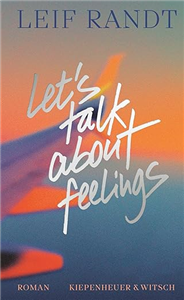
Ein optimistisches Buch über traurige Abschiede: Leif Randt erfindet das Coming-of-Middleage. Marian Flanders, 41, verkauft in seiner Westberliner Boutique die vielleicht schönste Kleidung der Welt, aber finanziell erfolgreich ist der Kenting-Beach-Store nur selten. Als seine Mutter Carolina — ein einst ikonisches Fotomodell — nach langer Krankheit verstirbt, richtet Marian eine alternative Trauerfeier für ausgewählte Gäste aus. Auf dem ehemaligen Partyboot seines Vaters hält er eine entwaffnende Rede, co-formuliert von seinem besten Freund, und streut die Asche seiner Mutter auf den Wannsee. Marian glaubt, dass mit diesem Ereignis die freudlosere Hälfte des Lebens beginnt. Doch es folgt ein Jahr der Verwandlung. Erfolgreiche Halbgeschwister und ambivalente Flirts führen Marian u.a. an den Plaza Konami, nach Sapporo, Neu-Delhi und Wolfsburg. Aus falscher Freundlichkeit wird warmherziger Trotz, aus unterkühlter Traurigkeit erwächst stille Euphorie — Let’s talk about feelings.
Trusted Partner


Reading Robin Hood explores and explains stories about the mythic outlaw, who from the Middle Ages to the present stands up for the values of natural law and true justice. This analysis of the whole sequence of Robin Hood adventures begins with the medieval tradition, from early poems into the long-surviving sung ballads, and goes on to look at two variant Robins: the Scottish version, here named Rabbie Hood, and gentrified Robin, the exiled Earl of Huntington, now partnered by Lady Marian. The nineteenth century re-imagined medieval Robin as modern, a lover of nature, Marian, England and the rights of the ordinary man. In novels and especially films he has developed into an international figure of freedom, while Marian's role has grown in a modern feminist context. Even to this day, the Robin Hood myth continues to reproduce itself, constantly discovering new forms and new meanings.
Trusted Partner
Trusted Partner

This fascinating and groundbreaking book explores the way in which the canonical image of the Virgin Mary developed out of the Italian Renaissance. Faced with the naturalistic effects of pictorial space and light, the Church had to ensure the distinction of Mary as being both the human mother of Christ and a doctrinal symbol in her own right. The intentions of patrons, artistic practice and operating circumstances all contributed to mark out this duality, and create the 'sacred distance' of Mary from the rest of humankind. Marian iconography has its own history, and the introduction discusses the visual tradition of the middle ages which shaped Marian iconography at the beginning of the 14th century. The book then deals with the doctrinal issues relating to the Virgin: Mary as Theotokos, Mary Annunciate, Mary as Queen of Heaven and Mary as the Immaculate Conception. A concluding chapter discusses the power of this image as a visual symbol. The book therefore discusses the various possible interpretations of Marian iconography in an attempt to understand an image, and the dangers of making assumptions about artistic intention and audience response. It should be of interest to anyone who is curious about the life of an image and its inherent power.
Trusted Partner
Trusted Partner
 Trusted Partner
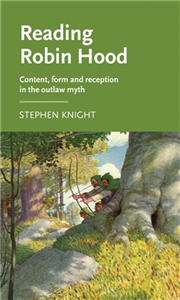
Reading Robin Hood explores and explains stories about the mythic outlaw, who from the middle ages to the present stands up for the values of natural law and true justice. This analysis of the whole sequence of the adventures of Robin Hood first explores the medieval tradition from early poems into the long-surviving sung ballads, and also two variant Robins: the Scottish version, here named Rabbie Hood, and gentrified Robin, the exiled Earl of Huntington, now partnered by Lady Marian. The nineteenth century re-imagined medieval Robin as modern - he loved nature, Marian, England, and the rights of the ordinary man - and in novels and especially films he has developed further, into an international figure of freedom, just as Marian's role has grown in a modern feminist context. The vigour of the Robin Hood myth still reproduces itself, constantly with new forms and new meanings. ;
Trusted Partner
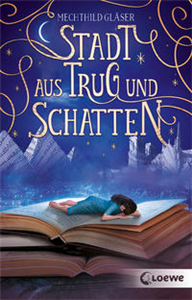
City of Betrayals and Shadows (Eisenheim Dilogy, Vol. 1)Flora is devastated when she learns that her soul has been living a double life at night time for quite a while, in a secret town called Eisenheim. From now on, she will never be able to sleep again without her mind wandering in this drab shadow world. As if that were not enough, her soul has apparently stolen the white lion, a powerful alchemical stone, which the rulers of the shadow world are not alone in coveting. In the real world, Flora is now no longer secure from the peril in Eisenheim, and one thing is clear: she can’t trust anyone, not even Marian, who suddenly starts appearing in both worlds, and whose kisses seem to have rather more familiar taste than she likes. As a princess in this shadowy world, Flora is deeply concerned. Is she responsible for the destruction of the city? Eisenheim’s stone of destiny lies hidden deep within the ground and it is calling to her; Flora soon realises that her fate and that of the stone are linked; it is only when she has solved the mystery of their common origin that she will be able to save Eisenheim and rejoin Marian, the boy she loves.Sparkling with originality, excitement and tempo - with a series of astonishing twists and a brilliant eye for detail, Mechthild Gläser tells her tale about Flora and Marian wonderfully entertaining, a complex dilogy that is filled with unforgettable figures. An entrancing love story that takes readers into an original fantasy world, inviting them to dream.• SERAPH Fantasy Award: Best Debut• Refreshing genre mix of urban fantasy, Steampunk elements and romantic comedy• Published in 14 languages: Internationally successful author
Trusted Partner


»So ist also die Frage beantwortet, ob man das aktuelle Chaos in der arabischen Welt in einem einzigen journalistischen Stück erfassen kann. Man kann. Scott Anderson kann es sogar grandios.« Die Zeit »Die hellsichtigste, kraftvollste und menschlichste Erklärung dessen, was in der Region passiert ist, die Sie jemals lesen werden.« The New York Times Magazine »Manchmal fließt die Geschichte der Menschheit bedächtig vor sich hin, manchmal bewegt sie sich sehr schnell.« Diesen Satz formulierte Muammar al-Gaddafi 2002 gegenüber Scott Anderson. Tatsächlich hat sich die Geschichte im Nahen Osten überschlagen, seit die USA 2003 im Irak einmarschiert sind: 2011 weckte der Arabische Frühling Hoffnungen, doch bald versanken Länder wie Syrien und der Irak im Chaos, von dem wiederum der Islamische Staat profitierte. Millionen Menschen flohen aus Syrien in Nachbarstaaten und nach Europa. Anhand der Erlebnisse von sechs Menschen schildert Anderson die Geschichte einer zerbrechenden Region. Er begleitet den jungen Iraker Wakaz, der sich vorübergehend dem IS anschließt, Laila, die Witwe eines prominenten ägyptischen Menschenrechtsanwalts, deren Sohn innerhalb kurzer Zeit von drei Regimes inhaftiert wird, und Majd, den seine Flucht von Homs über das Mittelmeer bis nach Dresden führt. Illustriert wird Andersons Großreportage mit Aufnahmen des renommierten Fotografen Paolo Pellegrin. Ein einmaliges zeitgeschichtliches Dokument.
Trusted Partner
Trusted Partner
Trusted Partner
Trusted Partner
 Trusted Partner
Trusted Partner
Trusted Partner
Während der Sommerferien auf dem Landgut der Eltern seines Schulfreundes wird der dreizehnjährige Leo zum Überbringer heimlicher Liebesbotschaften zwischen Ted, dem Pächter und Marian, der schönen Tochter des Schloßherrn, deren Verlobung mit Lord Trimingham kurz bevorsteht. Doch gegen seinen Willen zieht es Leo immer tiefer in den Strudel des gefährlichen Spiels von Verlangen und Verrat, von versprochener und verbotener Liebe und schließlich steht er vor der ersten großen Gewissensentscheidung seines jungen Lebens. The Go-Between ist ein raffiniert konstruierter Roman über die Strapazen des Erwachsenwerdens und die Gefühlsverwirrungen der Jugend, eine fein beobachtete Gesellschaftsanalyse und eine wunderbare Liebesgeschichte.
Trusted Partner

Der freie Markt war einmal ein progressives Projekt, das zur Befreiung der Lohnabhängigen führen sollte – von obrigkeitsstaatlichen Strukturen und von der Gängelung durch die Arbeitgeber. Elizabeth Anderson zeigt, was aus dieser schönen Idee geworden ist: reine Ideologie in den Händen mächtiger ökonomischer Akteure, die sich wenig um die Freiheit und die Rechte von Arbeitnehmern scheren. Sie arbeitet heraus, wie sich der positive Zusammenhang zwischen freiem Markt und freiem Arbeiter aufgelöst hat, und bestimmt die gegenwärtige Beziehung zwischen Arbeitgebern und Arbeitnehmern neu: als eine von quasi autokratisch herrschenden, privaten Regierungen und den von ihnen Regierten, die in vielerlei Hinsicht das Nachsehen haben. Eine beeindruckende Dekonstruktion eines Mythos des Marktdenkens.



