
Peter Lang Group
Peter Lang Group specializes in the Humanities and Social Sciences, covering the complete publication spectrum from monographs to student coursebooks.
View Rights Portal
Peter Lang Group specializes in the Humanities and Social Sciences, covering the complete publication spectrum from monographs to student coursebooks.
View Rights Portal
We are an independent, illustrated publisher creating beautifully produced books in the areas of interior design, food & drink, craft, mindfulness and spirituality, health, humour and pop culture. We also produce delightful gifts and stationery, as well as fantastic ranges of books for kids.
View Rights Portal
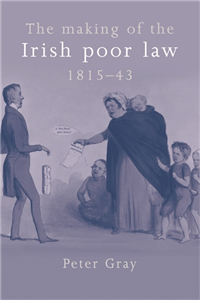
The making of the Irish poor law, 1815-43 examines the debates preceding and surrounding the 1838 act on the nature of Irish poverty and the responsibilities of society towards it. It traces the various campaigns for a poor law from the later eighteenth century. The nature and internal frictions of the great Irish poor inquiry of 1833-36 are analysed, along with the policy recommendations made by its chair, Archbishop Whately. It considers the aims and limitations of the government's measure and the public reaction to it in Ireland and Britain. Finally, it describes the implementation of the Poor Law between 1838 and 1843 under the controversial direction of George Nicholls. It will be of particular importance to those with a serious interest in the history of social welfare, of Irish social thought and politics, and of British governance in Ireland in the early nineteenth century. ;
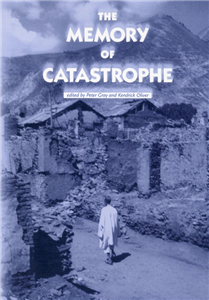
Investigates the dynamic relationship between experiences of profound social and cultural disruption, and human memory. Critical comparisons are made across a wide variety of catastrophic experiences and memories; not just of war, but also of massacre, genocide, rebellion, famine, partition, shipwreck and fire. The book is an accessible showcase for a wide range of methodological approaches to the study of memory, including literary studies, cultural studies, participant-observation and historical studies, and uses a variety of oral, visual and written sources. Offers a diverse chronological and geographical range of catastrophic cases, from seventeenth-century England to the recent conflicts in the former Yugoslavia, from Ireland to the Indian sub-continent, from Mexico to wartime Leningrad. Well-written and accessible - a fascinating read. ;
 Trusted Partner


Wenn der erste Schnee fällt und der Duft nach Zimt und Tannengrün in der Luft liegt, beginnt für den Weihnachtsmann die schönste Zeit des Jahres. Gemeinsam mit seinen Rentieren und den fleißigen Wichteln wirbelt er auf seinem Schneemobil durch die weiße Winterwelt, um alles für den großen Flug am Heiligabend vorzubereiten. Ein besonderes Highlight: Das kunstvoll gestaltete Cover des Buches ist wie ein Adventskalender aufgebaut – mit kleinen, nummerierten Türchen, die zeigen, auf welcher Seite die nächste Episode der Geschichte beginnt. So entsteht Tag für Tag neue Vorfreude.
Trusted Partner
 Trusted Partner
Richard Brome was the leading comic playwright of 1630s London. Starting his career as a manservant to Ben Jonson, he wrote a string of highly successful comedies which were influential in British theatre long after Brome's own playwriting career was cut short by the closure of the theatres in 1642. This book offers the first full-length chronological account of Brome's life and works, drawing on a wide range of recently rediscovered manuscript sources. It traces the early hostility to Brome from those who wrote him off as a mere servant; his continuing struggles with plague closures, contract disputes and theatrical takeover bids; and his literary relationships with Jonson, Shakespeare and others. Each of the surviving plays is discussed in relation to its social and political context, and its sense of place. A final chapter reviews Brome's enduring stageworthiness into the eighteenth and nineteenth centuries, and the most recent Brome revivals. ;
Trusted Partner
Kyd is arguably Shakespeare's most important tragic predecessor. Brilliantly fusing the drama of the academic and popular traditions, Thomas Kyd's plays are of central importance for understanding how the drama of Shakespeare and his contemporaries came about. Called 'an extraordinary dramatic . genius' by T.S. Eliot, Thomas Kyd invented the revenge tragedy genre that culminated in Shakespeare's Hamlet some twelve years later. In this study, The Spanish Tragedy - the most popular of all plays on the English Renaissance stage - receives the extensive scholarly and critical treatment it deserves, including a full reception and modern stage history. Yet as Erne shows, Thomas Kyd is much more than the author of a single masterpiece. Don Horatio (partly extant in The First Part of Hieronimo), the lost early Hamlet, Soliman and Perseda, and Cornelia all belong to what emerges in this work as a coherent dramatic oeuvre. This groundbreaking study is now in paperback. ;
Trusted Partner
Trusted Partner
Trusted Partner

 Trusted Partner
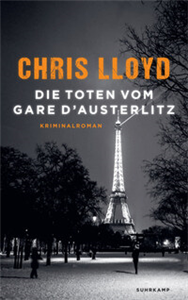
Freitag, 14. Juni 1940: An dem Tag, als die Nazis in Paris einmarschieren, werden an der Gare d'Austerlitz vier Polen ermordet aufgefunden, und ein weiterer begeht kurz darauf Selbstmord. Inspecteur Éduard Giral beginnt gegen alle Widerstände zu recherchieren. Sehr bald mischen sich in seine Ermittlungen Wehrmacht, Gestapo und Geheime Feldpolizei ein, während im Hintergrund der enigmatische, skrupellose Major Hochstetter von der Abwehr die Strippen zieht und ihm mal als Gegenspieler, mal als Verbündeter begegnet. Als unvermittelt Girals verlorener Sohn Jean-Luc auftaucht, der seinen Vater für einen Opportunisten und Feigling hält, muss er multidimensionales Überlebensschach spielen, mal mit der einen, mal mit der anderen der beteiligten Gruppen (schein)paktieren, um seinen Sohn irgendwie aus der Schusslinie zu schaffen und letztendlich seinen Job als Polizist zu machen und die Morde aufzuklären
Trusted Partner
Trusted Partner
Trusted Partner

John Lyly's Euphues: The Anatomy of Wit and Euphues and his England, created a literary sensation in their own age, and had a profound influence on Elizabethan prose. This modern-spelling edition of the two works, the first for nearly a century, is designed to allow the twenty-first century reader access to this culturally significant text and to explore the fascination that it exerted. Attuned to the needs of both students and specialists, the text is edited from the earliest complete witnesses, is richly annotated, and facilitates an understanding of Lyly's narrative technique by distinguishing typographically between narrative levels. The introduction explores the relationship between the dramatic and non-dramatic work, locating Lyly's highly influential plays in a wider context and Euphues' Latin poem in praise of Elizabeth I, translated for the first time, is discussed in an Appendix. A work of primary importance for students of Renaissance prose, this edition complements the on-going publication of Lyly's dramatic works in The Revels Plays. ;
Trusted Partner
Trusted Partner

When is the use of force for humanitarian purposes legitimate? The book examines this question through one of the most controversial examples of humanitarian intervention in the post Cold War period: the 1999 NATO intervention in Kosovo. Justifying Violence applies a critical theoretical approach to an interrogation of the communicative practices which underpin claims to legitimacy for the use of force by actors in international politics. Drawing on the theory of communicative ethics, the book develops an innovative conceptual framework which contributes a critical communicative dimension to the question of legitimacy that extends beyond the moral and legal approaches so often applied to the intervention in Kosovo. The empirical application of communicative ethics offers a provocative and nuanced account which contests conventional interpretations of the legitimacy of NATO's intervention. ;
Trusted Partner
 Trusted Partner
 Trusted Partner
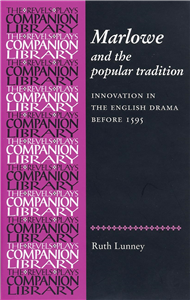
Lunney explores Marlowe's engagement with the traditions of the popular stage in the 1580s and early 1590s and offers a new approach to his major plays in terms of staging and audience response, as well as providing a new account of English drama in these important but largely neglected years. ;
Trusted Partner
 Trusted Partner



