Your Search Results

      • Guangdong Petrel Electronic & Audio-Visual Publishing House

        Founded in 1996 as an affiliate of Southern Publishing & Media Co.Ltd.(SPM),Guangdong Petrel Electronic & Audio-Visual Publishing House (PEPH) has now become an all-media publisher specializing in online publishing, as well as creating, publishing and distributing audio-visual products, electronic reading materials, and books,etc.                                                                               PEPH has designed and produced lots of electronic &audio-visual publications and hundreds of books related to social,science,education,language,science and technology, culture,art,among which several series of books were oriented toward international copyright exchanges.                                                                                                             Till now, PEPH has already established cooperative relationships with publishers from South-East Asia and North America, totally exporting more than 200 titles.

        View Rights Portal
      • Jieli Publishing House Co., Ltd.

        Founded in 1990, JIELI Publishing House is a publishing organization specializing in children and adolescence literature. Up till now, JIELI has set up three branch offices including Preschool, Middle Grade and Young Adult branches, with an average of nearly 500 varieties of books published annually. In 2019, the total shipments of JIELI amounted to RMB 883 million, with a year-on-year growth of 9.83%.

        View Rights Portal
      • Trusted Partner
      • Trusted Partner
      • Trusted Partner
        September 2016

        House-of-Night - Die Storys

        Alle 4 Storys in einem Band

        by Cast, P.C.; Cast, Kristin

      • Trusted Partner
      • Trusted Partner
      • Trusted Partner
      • Trusted Partner
        Humanities & Social Sciences
        April 2021

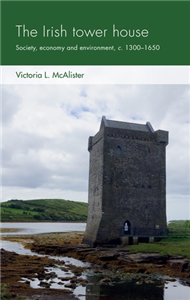
        The Irish tower house

        Society, economy and environment, c. 1300–1650

        by Victoria L. McAlister

        The Irish tower house examines the social role of castles in late-medieval and early modern Ireland. It uses a multidisciplinary methodology to uncover the lived experience of this historic culture, demonstrating the interconnectedness of society, economics and the environment. Of particular interest is the revelation of how concerned pre-modern people were with participation in the economy and the exploitation of the natural environment for economic gain. Material culture can shed light on how individuals shaped spaces around themselves, and tower houses, thanks to their pervasiveness in medieval and modern landscapes, represent a unique resource. Castles are the definitive building of the European Middle Ages, meaning that this book will be of great interest to scholars of both history and archaeology.

      • Trusted Partner
      • Trusted Partner
        Humanities & Social Sciences
        May 2009

        Consumerism and the Co-operative movement in modern British history

        Taking stock

        by Lawrence Black, Nicole Robertson

        Despite the abundance and quality of recent historical writing on consumerism, it cannot be said that the modern Co-operative movement (Co-op) has been well served. It has also been by-passed in studies that locate Britons' identity in their consumption. The reasons for this can be found in the widely perceived decline of the Co-op since the 1950s, but also in various historiographical agendas that have resulted in its relative invisibility in modern British history. This book, by demonstrating the variety of broader issues that can be addressed through the Co-op and the vibrancy of new historical research into consumption, seeks to remedy this. Taking stock, both of the Co-op in a broader context and of new approaches to the history of consumption, combines the work of leading authorities on the Co-op with recent scholarly research. It explores the Co-op's distinctive interface between everyday issues and grander idealistic concerns. The chapters intersect to examine a broad range of themes, notably: the politics of consumerism including consumer protection, ethical and fair trading and alternatives to corporate commerce; design and advertising; the Co-op's relations with other components of the labour movement; and its ideology, image and memory. The collection looks at the Co-operative movement locally (through specific case studies), nationally and also in comparison to the European movement. This collection will appeal to academics, researchers, teachers and students of the economic, cultural and political history of twentieth-century Britain. It will also be of interest to academics and students of business studies, and co-operative members themselves. ;

      • Trusted Partner
        April 2015

        Dark House

        Roman

        by Kastura, Thomas

      • Trusted Partner
      • Trusted Partner
        Biography & True Stories
        May 2025

        Mrs Dalloway

        Biography of a novel

        by Mark Hussey

        A compelling biography of one of the most celebrated novels in the English language. The fourth and best-known of Virginia Woolf's novels, Mrs Dalloway is a modernist masterpiece that has remained popular since its publication in 1925. Its dual narratives follow a day in the life of wealthy housewife Clarissa Dalloway and shell-shocked war veteran Septimus Warren Smith, capturing their inner worlds with a vividness that has rarely been equalled. Mrs Dalloway: Biography of a novel offers new readers a lively introduction to this enduring classic, while providing Woolf lovers with a wealth of information about the novel's writing, publication and reception. It follows Woolf's process from the first stirrings in her diary through her struggles to create what was quickly recognised as a major advance in prose fiction. It then traces the novel's remarkable legacy to the present day. Woolf wrote in her diary that she wanted her novel 'to give life & death, sanity & insanity. to criticise the social system, & to show it at work, at its most intense.' Mrs Dalloway: Biography of a novel reveals how she achieved this ambition, creating a book that will be read by generations to come.

      • Trusted Partner
        The Arts
        September 2024

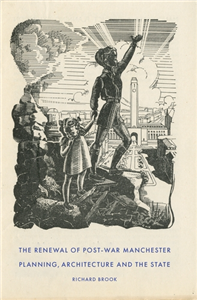
        The renewal of post-war Manchester

        Planning, architecture and the state

        by Richard Brook

        A compelling account of the project to transform post-war Manchester, revealing the clash between utopian vision and compromised reality. Urban renewal in Britain was thrilling in its vision, yet partial and incomplete in its implementation. For the first time, this deep study of a renewal city reveals the complex networks of actors behind physical change and stagnation in post-war Britain. Using the nested scales of region, city and case-study sites, the book explores the relationships between Whitehall legislation, its interpretation by local government planning officers and the on-the-ground impact through urban architectural projects. Each chapter highlights the connections between policy goals, global narratives and the design and construction of cities. The Cold War, decolonialisation, rising consumerism and the oil crisis all feature in a richly illustrated account of architecture and planning in post-war Manchester.

      • Trusted Partner
        Humanities & Social Sciences
        January 2018

        Noble society

        Five lives from twelfth-century Germany

        by Jonathan R. Lyon

        This book provides scholars and students alike with a set of texts that can deepen their understanding of the culture and society of the twelfth-century German kingdom. The sources translated here bring to life the activities of five noblemen and noblewomen from Rome to the Baltic coast and from the Rhine River to the Alpine valleys of Austria. To read these five sources together is to appreciate how interconnected political, military, economic, religious and spiritual interests could be for some of the leading members of medieval German society-and for the authors who wrote about them. Whether fighting for the emperor in Italy, bringing Christianity to pagans in what is today northern Poland, or founding, reforming and governing monastic communities in the heartland of the German kingdom, the subjects of these texts call attention to some of the many ways that noble life shaped the world of central medieval Europe.

      • Trusted Partner
        Humanities & Social Sciences
        March 2026

        Negotiating identity conflicts in a fragmenting world order

        by Paul Willem Meerts, Mark Anstey

        At every level of human interaction new levels of identity-based tension are in evidence. Contributors to this book explore facets of fragmentation processes within systems of state and interstate organisation, how they influence the use of negotiation, and how negotiation might be used to effect renewed coherence. Following Anstey's (Ch1) introductory chapter framing the nature and shape of fragmentation dynamics, Zartman (Ch 2) argues that the use of negotiation as a process of conflict resolution is deeply shaped by identity groups whose internal coherence is dependent on sustaining a negative identity of others. International relations are no longer solely the realm of experienced diplomats but are shaped as Meerts (Ch3) points out by politicians seeking to be responsive to voting publics rather than wider concerns. Anstey digs into problems of fragmentation (Ch. 4) and Troitskiy (Ch 5) points out how a reluctant acceptance of the power of 'the other' can lead to a form of strategic stability in relations. Anstey and Meerts (Ch 6) point out in their analysis of the Israeli-Palestinian case as an identity conflict turned very bad. Guggenbuhl (Ch 7 ) reveals how structures and processes have been designed within the EU to prevent, contain and regulate conflicts to limit risks of confrontation and fragmentation. Schuessler (Ch 8) to advocates a shift away from a template or roadmap approach to EU membership to a cohesion based on non-dominance. There is still a strong desire on the part of some states, like Northern Macedonia, to become EU members, as reflected in Manton's (Ch 9). Paula Garzon and Frans Schram explain the success of the Colombia Peace Negotiations (Ch 10), while Odigie and da Rocha (Ch 11) analyse the struggle faced by ECOWAS to influence coup leaders in Mali to return to constitutional government and changes of government by constitutional means. Liang (Ch12) discusses how the internet as the modern vehicle of inter-state, inter-group and interpersonal communication has become weaponised. In Ch 13 Anstey draws some lessons from contributions to the compilation.

      • Trusted Partner
      • Trusted Partner
        The Arts
        September 2020

        Science in performance

        Theatre and the politics of engagement

        by Simon Parry

        This electronic version has been made available under a Creative Commons (BY-NC-ND) open access license. This book is about science in theatre and performance. It explores how theatre and performance engage with emerging scientific themes from artificial intelligence to genetics and climate change. The book covers a wide range of performance forms from Broadway musicals to educational theatre, from Somali drama to grime videos. It features work by pioneering companies including Gob Squad, Headlong Theatre and Theatre of Debate as well as offering fresh analysis of global blockbusters such as Wicked and Urinetown. The book offers detailed description and analysis of theatre and performance practices as well as broader commentary on the politics of theatre as public engagement with science. Science in performance is essential reading for researchers, students and practitioners working between science and the arts within fields such as theatre and performance studies, science communication, interdisciplinary arts and health humanities.

      • Trusted Partner
        Political oppression & persecution
        July 2014

        Co-memory and melancholia

        Israelis memorialising the Palestinian Nakba

        by Ronit Lentin

        The 1948 war that led to the creation of the State of Israel also resulted in the destruction of Palestinian society when some 80 per cent of the Palestinians who lived in the major part of Palestine upon which Israel was established became refugees. Israelis call the 1948 war their 'War of Independence' and the Palestinians their 'Nakba', or catastrophe. After many years of Nakba denial, land appropriation, political discrimination against the Palestinians within Israel and the denial of rights to Palestinian refugees, in recent years the Nakba is beginning to penetrate Israeli public discourse. This book, available at last in paperback, explores the construction of collective memory in Israeli society, where the memory of the trauma of the Holocaust and of Israel's war dead competes with the memory claims of the dispossessed Palestinians. Against a background of the Israeli resistance movement, Lentin's central argument is that co-memorating the Nakba by Israeli Jews is motivated by an unresolved melancholia about the disappearance of Palestine and the dispossession of the Palestinians, a melancholia that shifts mourning from the lost object to the grieving subject. Lentin theorises Nakba co-memory as a politics of resistance, counterpoising co-memorative practices by internally displaced Israeli Palestinians with Israeli Jewish discourses of the Palestinian right of return, and questions whether return narratives by Israeli Jews, courageous as they may seem, are ultimately about Israeli Jewish self-healing rather than justice for Palestine.

      Subscribe to our

      newsletter