
November 2012
Your Search Results
-
Promoted Content


-
Promoted Content
 October 2015
Weihnachtsgeschichten am Kamin 30
Gesammelt von Barbara Mürmann
by Herausgegeben von Mürmann, Barbara; Beiträge von Kirschke, Birgit; Beiträge von Tischlinger, Martina; Beiträge von Paulussen, Ingo; Beiträge von Zickmann, Christine; Beiträge von Benedict, Lieselotte; Beiträge von Mösch, Elisabeth; Beiträge von Kehl-Kochanek, Christel; Beiträge von Kleinke-Bialy, Inka; Beiträge von Franke, Birgit; Beiträge von Wollrath, Anni; Beiträge von Kernchen, Franziska; Beiträge von Hennecke, Andrea; Beiträge von Klappstein, Thomas; Beiträge von Kocksch, Karina; Beiträge von Sander, Ina; Beiträge von Schikorsky, Isa; Beiträge von Kammer, Wolfgang; Beiträge von Pronnet, Barbara; Beiträge von Kügler, Christa; Beiträge von Glandt, Andy; Beiträge von Bayer, Ingrid; Beiträge von Winkler, Hannah; Beiträge von Lux, Hille; Beiträge von Volkermann, Maria; Beiträge von Aidenberger, Alina; Beiträge von Schneiderhan, Peter; Beiträge von Pohl, Uwe; Beiträge von Frank, Joachim; Beiträge von Begiebing, Margit; Beiträge von Bonk, Karl-Heinz; Beiträge von Kurowski, Gabriele; Beiträge von Mucks, Ilse; Beiträge von Echelmeyer, Liz; Beiträge von Longo, Annette; Beiträge von Herbrik, Marina; Beiträge von Schuster, Frauke; Beiträge von Pilot, Christine; Beiträge von Heil, Alexandra; Beiträge von Piater, Petra; Beiträge von Adolph, Birgitt; Beiträge von Reichelt, Heiderose; Beiträge von Puhane, Anja; Beiträge von Reiche, Brigitte; Beiträge von Harkou, Brigitte; Beiträge von Sossenheimer, Hildegard; Beiträge von Daniels, Petra; Beiträge von Meier-Behrendt, Annemarie
-
 Trusted Partner

 August 2003
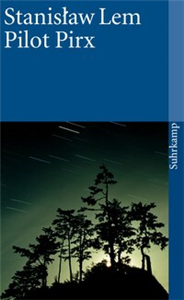
Pilot Pirx
Erzählungen
by Stanisław Lem, Roswitha Buschmann, Kurt Kelm, Caesar Rymarowicz, Barbara Sparing
Zu den liebenswürdigsten Gestalten, die der weltberühmte polnische Science-fiction-Autor Stanislaw Lem geschaffen hat, gehört Pilot Pirx. Seine Geschichten sind im Grunde Variationen über ein Thema: »nämlich das Modell des Menschen in der kosmischen Ära«, wie der Kritiker Jerzy Jarzebski es formulierte.
-
Trusted Partner

 January 2026
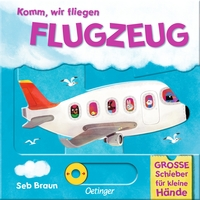
Komm, wir fliegen Flugzeug
by Sebastien Braun, Sebastien Braun, Cornelia Boese
Eingestiegen, lasst uns fliegen! Wir wollen in den Urlaub starten. Der Flughafen ist so aufregend! Dieses stabile Pappbilderbuch mit Schiebern und Drehrädern macht das Lieblingsthema Fahrzeuge interaktiv. Schon kleinste Kinderhände können mithelfen, abzuheben und im Cockpit das Flugzeug zu lenken. Mit liebevollen Reimen und farbenfrohen Illustrationen.
-
Trusted Partner
-
Trusted Partner

 The ArtsJanuary 2019
Negotiating the auteur
Dominique Cabrera, Noémie Lvovsky, Laetitia Masson and Marion Vernoux
by Julia Dobson
This book provides the first detailed analysis of the work of four important contemporary directors whose work falls between the reductive labels of 'auteur cinema' and 'popular cinema'. Their work is contextualised within this timely investigation into the shifting relationship between the privileged status of the auteur and questions of genre, gender and cinematic production in France today. This important contribution to understanding the shifting landscapes of contemporary French film identifies an essential intermediacy in the films of these directors, which works to undo a series of dominant oppositions, generic template and contestation, public collectivity and personal intimacy, to offer a new perspective on the location of the political in contemporary French cinema. The four chapters provide detailed critical analysis of films by Dominique Cabrera, Laetitia Masson, Noémie Lvovsky and Marion Vernoux, and present common thread including the possible construction of social intimacy, the political demystification of romance narratives and the role of nostalgia, to argue that their work uses popular genres in order to challenge dominant cultural representation that resonates beyond the immediate parameters of contemporary French cinema. This book will be of interest to researchers working in French and European cinema, to students of Film Studies and French and Francophone Studies, and to film enthusiasts.
-
Trusted Partner
 The ArtsJanuary 2019
Cinema - Italy
by Stefania Parigi, Des O'Rawe
A journey to the Italian cinema that overturns established views and opens up new perspectives and interpretations. Its itinerary is organized in four stages. The first is an analysis of the theories of Cesare Zavattini on neorealism which overturns widely accepted positions both on Zavattini and on neorealism. The second confronts a key film of the post-war Italian cinema, Roberto Rossellini's Paisà, by examining the nature of its realism. The third is dedicated to Luchino Visconti: to questions of the use of language exemplified in his La terra trema, the use of settings, costume and light as agents of meaning in his Il Gattopardo and Vaghe stelle dell'Orsa. The final voyage of the film is to the physical and symbolic construction of heaven and earth in the work of Pasolini. Particular attention is given to the representation of the body in his last four films: the grotesque and mythical bodies in popular tradition in his Trilogia di vita and the tortured bodies destroyed by the mass media in Salò.
-
Trusted Partner
 The ArtsJanuary 2019
European Film Noir
by Andrew Spicer
European Film Noir is the first book to bring together specialist discussions of film noir in specific European national cinemas. Written by leading scholars, this groundbreaking study provides an authoritative understanding of an important aspect of European cinema and of film noir itself, for too long considered as a solely American form. The Introduction reviews the problems of defining film noir, its key characteristics and discusses its significance to the development of European film, the relationship of specific national films noirs to each other, to American noir and to historical and social change. Eight chapters then discuss film noir in France, Germany, Britain and Spain, analysing both earlier developments and the evolution of neo-noir through to the present. A further chapter explores film noir in Italian cinema where its presence is not so well defined. Each piece provides a critical overview of the most significant films in relation to their industrial and social contexts. European Film Noir is an important contribution to the study of European cinema that will have a broad appeal to undergraduates, cinéastes, film teachers and researchers.
-
Trusted Partner
 The ArtsJune 2021
Lukácsian film theory and cinema
A study of Georg Lukács' writing on film 1913–1971
by Ian Aitken
Lukácsian film theory and cinema explores Georg Lukács' writings on film. The Hungarian Marxist critic Georg Lukács is primarily known as a literary theorist, but he also wrote extensively on the cinema. These writings have remained little known in the English-speaking world because the great majority of them have never actually been translated into English - until now. Aitken has gathered together the most important essays and the translations appear here, often for the first time. This book thus makes a decisive contribution to understandings of Lukács within the field of film studies, and, in doing so, also challenges many existing preconceptions concerning his theoretical position. For example, whilst Lukács' literary theory is well known for its repudiation of naturalism, in his writings on film Lukács appears to advance a theory and practice of film that can best be described as naturalist. Lukácsian film theory and cinema is divided into two parts. In part one, Lukács' writings on film are explored, and placed within relevant historical and intellectual contexts, whilst part two consists of the essays themselves. This book will be of considerable interest to scholars and students working within the fields of film studies, literary studies, intellectual history, media and cultural studies. It is also intended to be the final volume in a trilogy of works on cinematic realism, which includes the author's earlier European film theory and cinema (2001), and Realist film theory and cinema (2006).
-
Trusted Partner
 The ArtsJanuary 2019
Realist film theory and cinema
The nineteenth-century Lukácsian and intuitionist realist traditions
by Ian Aitken
'Realist film theory and cinema' embraces studies of cinematic realism and 19th century tradition, the realist film theories of Lukács, Grierson, Bazin and Kracauer, and the relationship of realist film theory to the general field of film theory and philosophy. This is the first book to attempt a rigorous and systematic application of realist film theory to the analysis of particular films. The book suggests new ways forward for a new series of studies in cinematic realism, and for a new form of film theory based on realism. It stresses the importance of the question of realism both in film studies and in contemporary life. Aitken's work will be of interest to scholars and advanced students of film studies, literary studies, media studies, cultural studies and philosophy.
-
Trusted Partner

 Child & developmental psychology
The Captain Nemo Stories
by Ulrike Petermann
Even at a primary school age, children can suffer from anxiety and stress with symptoms ranging from feeling tense to problems concentrating or sleeping. The stories of Captain Nemo help children relax and learn to let go of their anxiety and restlessness. The relaxation stories, written for children ages 5-12, can be either read aloud to the child or by the children themselves. The main character, Captain Nemo, invites the children to come along for his adventures on his submarine the Nautilus. The stories take the children to visit a coral forest, ride a giant tortoise, or explore the lost city of Atlantis. Through the stories, the children learn strategies to calm themselves and relax which they can then re-use in difficult situations in their daily lives. This widely successful book can be used at home, by teachers, social workers, school psychologists, child and adolescentpsychotherapists, and psychiatrists. For:• child and adolescent psycho-therapistsand psychiatrists,social workers, school psychologists,teachers, parents
-
Trusted Partner
-
Trusted Partner
-
Trusted Partner
 April 2006
Komposition für den Film
by Theodor W. Adorno, Hanns Eisler, Johannes C. Gall, Johannes C. Gall
Adornos und Eislers Buch, das erstmals 1947 in englischer Sprache erschien, gehört zu den Klassikern der Musik-, aber auch der Filmtheorie. Es entstand als Gemeinschaftsarbeit im amerikanischen Exil, in der Folge zweier von der Rockefeller Foundation geförderter Forschungsprojekte: Im Rahmen des von Paul Lazarsfeld geleiteten »Radio Research Project« betrieb Adorno Studien zur Musik im Rundfunk, die in das zu Lebzeiten Fragment gebliebene Buch Current of Music eingegangen sind; Eisler lotete im »Film Music Project« die Funktionen, Möglichkeiten und Grenzen der Filmmusik aus. Dabei galt Eislers Arbeit zunächst weniger abstrakten Analysen und Erwägungen als der Komposition exemplarischer Filmpartituren und der anschließenden Produktion und Evaluation von Demonstrationsfilmen. Zu den künstlerischen Ergebnissen des Projekts zählen das berühmte Quintett Vierzehn Arten den Regen zu beschreiben als neue und neuartige Filmmusik zu Joris Ivens' »cinépoème« Regen ebenso wie die Tonspuren zu White Flood und zu A Child Went Forth, einem frühen Film von Joseph Losey. Auch komponierte Eisler zu einem Ausschnitt aus dem Klassiker The Grapes of Wrath von John Ford zwei experimentelle Filmpartituren als Alternative zu Alfred Newmans Musik in der Verleihfassung. Die DVD, die dem Band beiliegt, dokumentiert diese Filme und Filmmusikexperimente teils in originaler und restaurierter, teils in rekonstruierter Form. Cineasten und Philosophen, Musik- und Kulturwissenschaftler werden gleichermaßen begeistert sein. Erstmals liegt das großangelegte »Film Music Project« in der Form vor, die ihm gebührt.Mit in ihrem originalen deutschen Wortlaut erstmals publizierten Textpassagen, einem Entwurf zum Filmmusikbuch von Theodor W. Adorno und einer zweisprachig (deutsch/englisch) angelegten DVD: »Hanns Eislers Rockefeller-Filmmusik-Projekt 1940–1942«
-
Trusted Partner
 The ArtsJanuary 2019
The British working class in postwar film
by Philip Gillett
An incidental pleasure of watching a film is what it tells us about the society in which it is made. Using a sociological model, The British working class in postwar film looks at how working-class people were portrayed in British feature films in the decade after the Second World War. Though some of the films examined are well known, others have been forgotten and deserve reassessment. Original statistical data is used to assess the popularity of the films with audiences. With its interdisciplinary approach and the avoidance of jargon, this book seeks to broaden the approach to film studies. Students of media and cultural studies are introduced to the skills of other disciplines, while sociologists and historians are encouraged to consider the value of film evidence in their own fields. This work should appeal to all readers interested in social history and in how cinema and society works.
-
Trusted Partner
 The ArtsDecember 2025
The films of Bigas Luna
by Santiago Fouz-Hernández
The films of Bigas Luna is the first comprehensive English-language study of the complete filmography of Spanish filmmaker Bigas Luna, spanning from Tatuaje (1976) to DiDi Hollywood (2010). Engaging with theoretical frameworks such as haptic cinema, erotic cinema, auteur theory, and studies of gender, sexuality, and national identity, the book situates close readings of Bigas Luna's films within broader discussions of production and marketing. Fouz Hernández draws on extensive archival research-including original screenplays, press materials, and interviews with industry professionals-while engaging with previous scholarship in multiple languages. Structured into five thematic chapters, the book explores key concerns in Bigas Luna's work, including genre, gender representation, Iberian and Mediterranean identities, and meta-cinematic narratives. It can be read as a cohesive study of his oeuvre or as a reference for specific films.
-
Trusted Partner
 The ArtsJanuary 2019
Contemporary French cinema
An introduction (revised edition)
by Guy Austin
Contemporary French cinema is an essential introduction to popular French film of the last 35 years. It charts recent developments in all genres of French cinema with analyses of over 120 movies, from Les Valseuses to Caché. Reflecting the diversity of French film production since the New Wave, this clear and perceptive study includes chapters on the heritage film, the thriller and the war movie, alongside the 'cinéma du look', representations of sexuality, comedies, the work of women film makers and le jeune cinéma. Each chapter introduces the public reception and critical debates surrounding a given genre, interwoven with detailed accounts of relevant films. Confirmed as a major contribution to both Film Studies and French Studies, this book is a fascinating volume for students and fans of French film alike.
-
Trusted Partner
 The ArtsJune 2021
Contemporary French cinema
An introduction (revised edition)
by Guy Austin
Contemporary French cinema is an essential introduction to popular French film of the last 35 years. It charts recent developments in all genres of French cinema with analyses of over 120 movies, from Les Valseuses to Caché. Reflecting the diversity of French film production since the New Wave, this clear and perceptive study includes chapters on the heritage film, the thriller and the war movie, alongside the 'cinéma du look', representations of sexuality, comedies, the work of women film makers and le jeune cinéma. Each chapter introduces the public reception and critical debates surrounding a given genre, interwoven with detailed accounts of relevant films. Confirmed as a major contribution to both Film Studies and French Studies, this book is a fascinating volume for students and fans of French film alike.
-
Trusted Partner
 The ArtsJune 2017
Contemporary Australian cinema
An introduction
by Jonathan Rayner
Provides an introduction to the products and context of the new Australian film industry which arose toward the end of the 1960s. Traces the development of Australian film, in terms of prominent directors and stars, consistent themes, styles and evolving genres. The evolution of the film genres peculiar to Australia, and the adaptation of conventional Hollywood forms (such as the musical and the road movie) are examined in detail through textual readings of landmark films. Films and trends discussed include: the period film and Picnic at Hanging Rock; the Gothic film and the Mad Max trilogy; camp and kitsch comedy and the Adventures of Pricilla, Queen of the Desert. The key issue of the revival (the definition, representation and propagation of a national image) is woven through analysis of the new Australian cinema.
-
Trusted Partner
 The ArtsJune 2021
Medieval film
by Anke Bernau, Bettina Bildhauer
Medieval film explores theoretical questions about the ideological, artistic, emotional and financial investments inhering in cinematic renditions of the medieval period. What does it mean to create and watch a 'medieval film'? What is a medieval film and why are they successful? This is the first work that attempts to answer these questions, drawing, for instance, on film theory, postcolonial theory, cultural studies and the growing body of work on medievalism. Contributors investigate British, German, Italian, Australian, French, Swedish and American film, exploring topics such translation, temporality, film noir, framing and period film - and find the medieval lurking in inexpected corners. In addition it provides in-depth studies of individual films from different countries including The Birth of a Nation to Nosferatu, and Robin Hood: Prince of Thieves. Medieval Film will be of interest to medievalists working in disciplines including literature, history, to scholars working on film and in cultural studies. It will also be of interest to undergraduates, postgraduates and to an informed enthusiast in film or/and medieval culture.




