Your Search Results

      • Piper Verlag GmbH

        Piper Verlag was founded by Reinhard Piper in 1904. Piper published many leading contemporary authors, a tradition followed by his son and his grandson. After 1945 the program expanded to include philosophy and non-fiction. Piper Verlag is well known for its lists in German and international fiction and non-fiction. Authors published by Piper include Ingeborg Bachmann, Hannah Arendt, Sten Nadolny, François Lelord, Arne Dahl, Judith Lennox, Sándor Márai, Paul Watzlawick, Markus Heitz and Rolf Dobelli. Since 1995 Piper Verlag is part of the Swedish Bonnier Group. The imprints Malik Verlag (literary travel writing, adventure, mountaineering), Pendo (commercial fiction), Piper Fantasy (high quality fantasy and science fiction novels), the YA imprint ivi and Berlin Verlag (literary fiction and non-fiction) are part of Piper Verlag GmbH. Today, Piper Verlag publishes about 300 titles per year and is known for a wide range of German language and international fiction and non-fiction authors, about half of them in translation.

        View Rights Portal
      • Murray Books

        Murray Books has been responsible for many creative book concepts and ideas since 1983. We have crafted books and gifts for over 30 countries and in 22 languages. We specialise in creating products for the retail customer or publisher and every one of our creations is exclusive.

        View Rights Portal
      • Trusted Partner
        Humanities & Social Sciences
        May 2016

        Northern Ireland and the European Union

        by Mary C. Murphy

      • Trusted Partner
        Social & cultural anthropology

        Integration in Ireland

        by Fiona Murphy, Mark Maguire

      • Trusted Partner
      • Trusted Partner
      • Trusted Partner
      • Trusted Partner
        Humanities & Social Sciences
        September 2012

        Integration in Ireland

        by Fiona Murphy, Mark Maguire, Alexander Smith

      • Trusted Partner
        The Arts
        September 2024

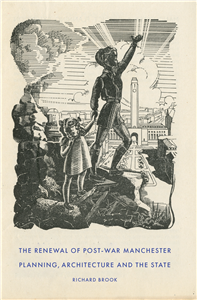
        The renewal of post-war Manchester

        Planning, architecture and the state

        by Richard Brook

        A compelling account of the project to transform post-war Manchester, revealing the clash between utopian vision and compromised reality. Urban renewal in Britain was thrilling in its vision, yet partial and incomplete in its implementation. For the first time, this deep study of a renewal city reveals the complex networks of actors behind physical change and stagnation in post-war Britain. Using the nested scales of region, city and case-study sites, the book explores the relationships between Whitehall legislation, its interpretation by local government planning officers and the on-the-ground impact through urban architectural projects. Each chapter highlights the connections between policy goals, global narratives and the design and construction of cities. The Cold War, decolonialisation, rising consumerism and the oil crisis all feature in a richly illustrated account of architecture and planning in post-war Manchester.

      • Trusted Partner
        Humanities & Social Sciences
        September 2016

        Electoral competition in Ireland since 1987

        by Gary Murphy

      • Trusted Partner
        July 1998

        Zwei Fälle für Mrs. Murphy

        Schade, dass du nicht tot bist /Ruhe in Fetzen

        by Brown, Rita M; Brown, Sneaky P

      • Trusted Partner
        October 1973

        See-Stücke

        by Fritz Rudolf Fries

        Fritz Rudolf Fries, geboren 1935 in Bilbao (Spanien) und verstorben 2014 in Petershagen/Eggersdorf bei Berlin, studierte Anglistik, Romanistik und Hispanistik in Leipzig. Anschließend war er als Übersetzer aus dem Englischen, Französischen und Spanischen sowie als Schriftsteller, Dolmetscher und Herausgeber tätig.

      • Trusted Partner
        Biography & True Stories
        March 2026

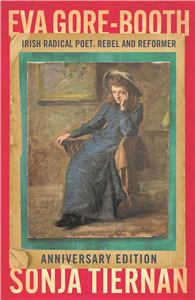
        Eva Gore-Booth: Irish radical poet, rebel and reformer

        Anniversary edition

        by Sonja Tiernan

        An acclaimed biography of poet, pacifist and political firebrand Eva Gore-Booth. The Irish poet and activist Eva Gore-Booth (1870-1926) led a life defiantly at odds with her aristocratic origins. Choosing to live and work among the poor of Manchester, she campaigned on behalf of barmaids, circus performers, flower sellers and pit-brow lasses, her partner, Esther Roper, at her side. Gore-Booth was tireless in her pursuit of justice. She was a militant pacifist during the First World War, a champion of Irish independence and a pioneering thinker on gender and sexuality. She was also a prolific author, publishing nineteen volumes of poetry and prose that reflect the full force of her radical convictions. Featuring a new preface that situates Gore-Booth's life and work in the context of our current political climate, this biography reclaims her place as a significant figure of Anglo-Irish letters and an unsung hero of LGBT+ history.

      • Trusted Partner
      • Trusted Partner
        Literature & Literary Studies
        March 2013

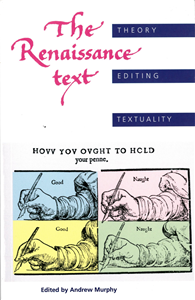
        The Renaissance text

        Theory, editing, textuality

        by Andrew Murphy

        This collection of essays focuses attention on the broad issue of Renaissance textuality. It explores such topics as the position of the reader relative to the text; the impact of editorial strategies and modes of presentation on our understanding of the text; the complexities of extended textual histories; and the relevance of gender to the process of textual retrieval and preservation. The essays, whilst informed by contemporary theory, are not dominated by a single programmatic viewpoint. Reflecting the multiplicitous nature of Renaissance textuality, the collection provides space for a variety of different positions and lines of analysis and enquiry. The Renaissance text will be of interest to those with specialist concerns in editing, textuality and bibliography, and will also be of interest to those more generally concerned with Renaissance literature or with textual or literary history. ;

      • Trusted Partner
        Humanities & Social Sciences
        September 2024

        Ireland, slavery and the Caribbean

        Interdisciplinary perspectives

        by Finola O'Kane, Ciarán O'Neill

        Ireland, slavery and the Caribbean is a complex and ground-breaking collection of essays. Grounded in history, it integrates perspectives from art historians, architectural and landscape historians, and literary scholars to produce a genuinely interdisciplinary collection that spans from 1620-1830: the high point of European colonialism. By exploring imperial, national and familial relationships from their building blocks of plantation, migration, property and trade, it finds new ways to re-create and question how slavery made the Atlantic world.

      • Trusted Partner
        The Arts
        January 2019

        Postcolonial African cinema

        Ten directors

        by David Murphy, Patrick Williams

        This is the first introduction of its kind to an important cross-section of postcolonial African filmmakers from the 1950s to the present. Building on previous critical work in the field, this volume will bring together ideas from a range of disciplines - film studies, African cultural studies, and, in particular, postcolonial studies - in order to combine the in-depth analysis of individual films and bodies of work by individual directors with a sustained interrogation of these films in relation to important theoretical concepts. Structurally, the book is straightforward, though the aim is to incorporate diversity and complexity of approach within the overall simplicity of format. Chapters provide both an overview of the director's output to date, and the necessary background - personal or national, cultural or political - to enable readers to achieve a better understanding of the director's choice of subject matter, aesthetic or formal strategies, or ideological stance. They also offer a particular reading of one or more films, in which the authors aim to situate African cinema in relation to important critical and theoretical debates. This book thus constitutes a new departure in African film studies, recognising the maturity of the field, and the need for complex yet accessible approaches to it, which move beyond the purely descriptive while refusing to get bogged down in theoretical jargon. Consequently, the volume should be of interest not only to specialists but also to the general reader.

      • Trusted Partner
        July 1975

        Der Weg nach Oobliadooh

        Roman

        by Fritz Rudolf Fries

        Fritz Rudolf Fries, geboren 1935 in Bilbao (Spanien) und verstorben 2014 in Petershagen/Eggersdorf bei Berlin, studierte Anglistik, Romanistik und Hispanistik in Leipzig. Anschließend war er als Übersetzer aus dem Englischen, Französischen und Spanischen sowie als Schriftsteller, Dolmetscher und Herausgeber tätig.

      • Trusted Partner
        February 1970

        Der Fernsehkrieg und andere Erzählungen

        by Fritz Rudolf Fries

        Fritz Rudolf Fries, geboren 1935 in Bilbao (Spanien) und verstorben 2014 in Petershagen/Eggersdorf bei Berlin, studierte Anglistik, Romanistik und Hispanistik in Leipzig. Anschließend war er als Übersetzer aus dem Englischen, Französischen und Spanischen sowie als Schriftsteller, Dolmetscher und Herausgeber tätig.

      • Trusted Partner
        The Arts
        April 2026

        The art of decolonisation

        Dakar-Paris, 1950-70

        by Maureen Murphy

        The art of decolonisation examines how artists challenged colonial legacies and reconfigured power through transnational networks of art and diplomacy. Adopting a global and transhistorical perspective, it explores artistic, political, and institutional relations between France and Senegal during decolonisation and the Cold War. From the emergence of a national modern art in Senegal to contested cultural policies and high-profile exhibitions-such as those featuring Picasso and Soulages in Dakar, or contemporary Senegalese art in Paris-this book traces the circulation of artworks, ideas, and influence across borders. It reveals how visual artists and filmmakers shaped a new artistic geopolitics between 1950 and 1970. Reconsidering the accepted chronology of the 'global turn', The art of decolonisation shows that the roots of global art discourse run deeper than the 1990s, and were already forming during the era of independence struggles.

      Subscribe to our

      newsletter