La Pollera Ediciones
La Pollera's catalog includes narrative, essay, and chronicle of contemporary and classic authors.
View Rights Portal
La Pollera's catalog includes narrative, essay, and chronicle of contemporary and classic authors.
View Rights Portal
Polperro Heritage Press is an independent British publisher, established in 1995. Recent titles from Polperro Press have included biographies, guides and a growing list of Cornish local history titles.
View Rights Portal
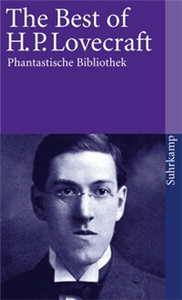
Mit seinem Cthulu-Mythos wollte H. P. Lovecraft eine Atmosphäre kosmischen Grauens schaffen, die Archaisches mit den modernen Erkenntnissen der Wissenschaft verbindet und unserer Zeit angemessen ist. Die Angst hielt er für das älteste und stärkste Gefühl, mit dem er in seinen Erzählungen gerne spielte. Die besten Erzählungen von H. P. Lovecraft sind in diesem Rand zusammengefaßt.
 Trusted Partner

 Trusted Partner
Trusted Partner
Trusted Partner
Trusted Partner
Trusted Partner
Trusted Partner
Trusted Partner


What makes human beings human? Is it a life in society that makes us what we are? We often hear stories of persons who have survived in the wild without social contact or who were supposedly raised by wild animals. Kaspar Hauser is probably the most well-known example, but certainly not the only one. P. J. Blumenthal has taken up the hunt for the “wild man” Homo ferus on the boundary between man and animal.
Trusted Partner
Trusted Partner
Trusted Partner
Trusted Partner
Trusted Partner
Trusted Partner

 Trusted Partner
Trusted Partner
Trusted Partner
Trusted Partner
Trusted Partner
Trusted Partner
Trusted Partner
Trusted Partner
Trusted Partner

 Trusted Partner
Trusted Partner
Trusted Partner

In 1994 the Arts Council of Great Britain brought together a number of theatre directors as part of the City of Drama celebrations. This is a collection of interviews and discussions with directors who have helped shape the development of theatre in the last 20 years. They include Peter Brook, Peter Stein, Augusto Boal, Jorge Lavelli, Lluis Pasqual, Lev Dodin, Maria Irene Fornes, Jonathan Miller, Jatinder Verma, Peter Sellars, Declan Donnellan, Ariane Mnouchkine, Ion Caramitru, Yukio Ninagawa and Robert Wilson. In addition to the art and craft of directing, there are discussions on multiculturalism; the "classical" repertoire; theatre companies and institutions; working in a foreign language; opera; Shakespeare; new technologies; the art of acting; design; international festivals; politics and aesthetics; the audience; and theatre and society. Finally, there is an epilogue by Peter Brook, Jonathan Miller and Oliver Sacks. ;