Your Search Results

      • Christine Heimannsberg

        Gelobtes Land, die dystopische Climate Fiction Trilogie: Mit CO2 verbindet man den Klimawandel, schmelzende Gletscher und Überflutungen. Mittlerweile ist der Klimawandel auch in der Literatur angekommen. „Climate Fiction“ oder „Cli-fi“ lautet das Stichwort, das zuletzt verstärkt in den Feuilletons auftauchte. Die deutsche Autorin Christine Heimannsberg präsentiert mit ihrer Debüt-Trilogie „Gelobtes Land“ eine ungewöhnliche, spannende Dystopie, die ökologische wie humanistische Themen geschickt im neuen Genre zusammenführt.

        View Rights Portal
      • Trusted Partner
        Humanities & Social Sciences
        July 2025

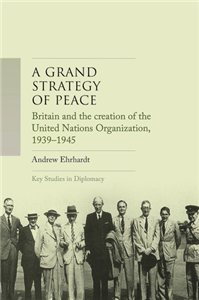
        A grand strategy of peace

        Britain and the creation of the United Nations Organization, 1939-1945

        by Andrew Ehrhardt

        A grand strategy of peace is the first detailed account of Britain's role in the creation of the United Nations Organization during the Second World War. As a work of traditional diplomatic history that brings in elements of intellectual history, the book describes how British officials, diplomats, politicians, and writers - previously seen to be secondary actors to the United States in this period - thought about, planned for, and helped to establish a future international order. While in the present day, many scholars and analysts have returned to the origins of the post- 1945 international system, this book offers an exhaustive account of how the statesmen and more importantly, the officials working below the statesmen, actually conceived of and worked to establish a post-war world order.

      • Trusted Partner
      • Trusted Partner
      • Trusted Partner
        August 2021

        Glück lernen

        Kinderleicht happy sein für Groß und Klein

        by Christin Prizelius, Andrea Wong

        "Glück lernen" von Christin Prizelius ist ein innovatives Activity Book, das Kindern und auch Erwachsenen zeigt, wie sie Schritt für Schritt ihr persönliches Glück entdecken und fördern können. Es basiert auf der grundlegenden Frage: Was ist Glück und wie kann man es erlernen? Mit über 35 interaktiven Glücksübungen und Aktivitäten – von Achtsamkeitsübungen über Dankbarkeitslisten bis hin zu kreativen Bastelprojekten – bietet dieses Buch eine Fülle an Möglichkeiten, sich auf eine Reise zur Selbstreflexion und zum persönlichen Wohlbefinden zu begeben. Die Übungen sind so gestaltet, dass sie allein oder gemeinsam mit anderen durchgeführt werden können, und sind mit kurzen Einleitungen und Erklärungen versehen, um Kindern die Bedeutung von Glück und die Wege dorthin auf einfache und verständliche Weise näherzubringen. "Glück lernen" ist mehr als nur ein Buch; es ist ein umfassender Guide, der Leser jeden Alters auf eine transformative Reise mitnimmt, auf der sie lernen, ihr Glück bewusst wahrzunehmen und zu mehren. Fördert das persönliche Glück: Schrittweise Anleitung, um das eigene Glück zu erkennen und zu kultivieren. Interaktive Übungen: Über 35 kreative und besinnliche Aktivitäten zur Förderung von Glück und Wohlbefinden. Selbstreflexion und gemeinsames Erleben: Übungen zur Selbstreflexion, die alleine oder in der Gruppe durchgeführt werden können, stärken soziale Bindungen und Selbstbewusstsein. Einfache und verständliche Anleitungen: Jede Aktivität ist mit einer kurzen Einführung und Erklärung versehen, um Kindern komplexe Themen zugänglich zu machen. Vielfältige Themenbereiche: Von Achtsamkeit über Dankbarkeit bis hin zu körperlicher Betätigung und Entspannung. Fokussierung auf positive Psychologie: Legt den Schwerpunkt auf positive Emotionen, Stärken und das Teilen von Glück. Universelle Anwendbarkeit: Geeignet für Kinder, Jugendliche und Erwachsene, die ihr Verständnis von Glück erweitern möchten.

      • Trusted Partner
        Humanities & Social Sciences
        April 2025

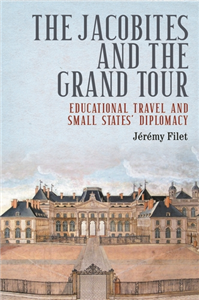
        The Jacobites and the Grand Tour

        Educational travel and small-states' diplomacy

        by Jérémy Filet

        In the first monograph to fully examine the intersecting networks of Jacobites and travellers to the continent, Filet considers how small states used official diplomacy and deployed soft power - embodied by educational academies - to achieve foreign policy goals. This work uses little-known archival materials to explain how and why certain small states secretly supported the Jacobite cause during the crucial years surrounding the 1715 rising, while others stayed out of Jacobite affairs.At the same time, the book demonstrates how early modern small states sought to cultivate good relations with Britain by attracting travellers as part of a wider trend of ensuring connections with future diplomats or politicians in case a Stuart restoration never came.This publication therefore brings together a study of Britain, small states, Jacobitism, and educational travel, in its nexus at continental academies.

      • Trusted Partner
        The Arts
        September 2025

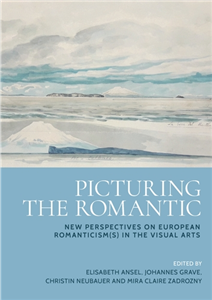
        Picturing the Romantic

        New perspectives on European Romanticism(s) in the visual arts

        by Elisabeth Ansel, Johannes Grave, Christin Neubauer, Mira Claire Zadrozny

        European Romanticism in the visual arts has always been defined by transnational transfer processes. It is surprising that international aspects of Romantic movements have been, in contrast to literary studies, a gap in art historical research. Picturing the Romantic addresses this issue and reveals new perspectives on European Romanticism(s) in the visual arts by reconsidering the phenomenon's traditional canon, geographical dimensions and terminology and analysing various examples of the complex and heterogeneous works of Romantic painting. In sixteen original essays, renowned and early career researchers examine the question of whether to speak of several independently considered Romanticisms or one European Romanticism. They adopt a transnational perspective on Romantic art in and beyond Europe, focusing on the interconnections between the countries.

      • Trusted Partner
        Humanities & Social Sciences
        February 2017

        Scottishness and Irishness in New Zealand since 1840

        by Angela McCarthy, Andrew Thompson, John M. MacKenzie

        This book examines the distinctive aspects that insiders and outsiders perceived as characteristic of Irish and Scottish ethnic identities in New Zealand. When, how, and why did Irish and Scots identify themselves and others in ethnic terms? What characteristics did the Irish and the Scots attribute to themselves and what traits did others assign to them? Did these traits change over time and if so how? Contemporary interest surrounding issues of ethnic identities is vibrant. In countries such as New Zealand, descendants of European settlers are seeking their ethnic origins, spurred on in part by factors such as an ongoing interest in indigenous genealogies, the burgeoning appeal of family history societies, and the booming financial benefits of marketing ethnicities abroad. This fascinating book will appeal to scholars and students of the history of empire and the construction of identity in settler communities, as well as those interested in the history of New Zealand.

      • Trusted Partner
      • Trusted Partner
        July 2023

        M

        by Schels, Ignaz A.

      • Trusted Partner
        October 2013

        M

        Ein Tabor Süden Roman

        by Ani, Friedrich

      • Trusted Partner
        January 1990

        Das hoffnungslose Leben der Anna M.

        Bericht über eine Schizophrenie. (Persönliche Erfahrungen mit Krisen)

        by Schulz, Bernd J

      • Trusted Partner
        The Arts
        December 2007

        J. M. W. Turner

        The making of a modern artist

        by Sam Smiles, Alan Rutter

        Alone of his contemporaries, J.M.W. Turner is commonly held to have prefigured modern painting, as signalled in the existence of The Turner Prize for contemporary art. Our celebration of his achievement is very different to what Victorian critics made of his art. This book shows how Turner was reinvented to become the artist we recognise today. On Turner's death in 1851 he was already known as an adventurous, even baffling, painter. But when the Court of Chancery decreed that the contents of his studio should be given to the nation, another side of his art was revealed that effected a wholescale change in his reputation. This book acts as a guide to the reactions of art writers and curators from the 1850s to the 1960s as they attempted to come to terms with his work. It documents how Turner was interpreted and how his work was displayed in Britain, in Europe and in North America, concentrating on the ways in which his artistic identity was manipulated by art writers, by curators at the Tate and by designers of exhibitions for the British Council and other bodies. ;

      • Trusted Partner
        May 1998

        Christine

        Roman

        by Elizabeth Arnim, Angelika Beck

        Berlin, Sommer 1914: Die begabte junge Engländerin Christine ist für ein Jahr zur Ausbildung bei einem berühmten Geigenvirtuosen. Nach den Schüssen von Sarajevo verwandelt sich die Hauptstadt über Nacht in einen Hexenkessel hemmungsloser Kriegsbegeisterung. Für Christine wird der Aufenthalt in Berlin zum Alptraum.

      • Trusted Partner
      • Trusted Partner
        Humanities & Social Sciences
        January 2026

        Rodrigo Ximenez de Rada’s Minor Histories

        by Aymenn Al-Tamimi

        This work provides the first complete English translation of works by Toledan archbishop Rodrigo Ximénez de Rada (1170-1247 CE), whose 'Minor Histories' are sequels to his larger 'Gothic History' and thus round off his grand history of Spain project that he began at the request of King Ferdinand III. The 'Minor Histories' include Rodrigo's 'History of the Arabs' that can be considered the first surviving Western monograph focused on Arab and Islamic history and thus occupies a unique position in the medieval Latin corpus of writings. In addition to the translation, this book provides a thorough and accessible introduction to the life and works of Rodrigo, making sense of the context in which he wrote and his historical method. The translations are thoroughly annotated including cross-references to other Latin and Arabic sources for comparison.

      • Trusted Partner
      • Trusted Partner
      • Trusted Partner
        April 1997

        Treibender Kopf

        Gedichte

        by Dieter M. Gräf

        Dieter M. Gräf, geboren 1960 in Ludwigshafen/Rhein, lebt seit 1991 als Schriftsteller in Köln, und an Orten seiner Projekte. Intermediale Kooperationen, zuletzt Tussirecherche (2000), Rauminstallation + Katalog (zusammen mit Margret Eicher). Seit 1996 Mitglied im P.E.N.-Zentrum Deutschland.

      Subscribe to our

      newsletter