
Daniel Goleman - Foreign Audio
Please contact anaban@gmail.com for information
View Rights Portal

Kontexte, Blickwinkel, Sichtachsen und Perspektivwechsel Was wir machen Das Internet sollte Zugang zu Wissen organisieren und ist ein Werkzeug zum Austausch von Ideen, Visionen und Lösungen. – Suug Productions kreiert Projekte mit Sinn – und dem Anspruch, die Welt durch neue und ungewöhnliche Kontexte, Blickwinkel, Sichtachsen und Perspektivwechsel zu einem etwas reizvolleren Ort zu machen.
View Rights Portal
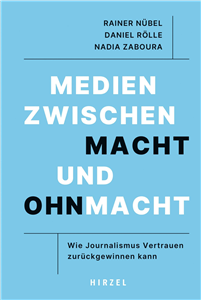
The media leave no one indifferent. Many people are upset that once again wrong things are written in the newspaper. Others think journalists are far too powerful. And some people philosophize polemically that the mass media are damaging democracy, while elsewhere “lying press” is chanted. This book combines media analysis and criticism with media education and journalistic transparency, reflection and advice. In doing so reflect the main tasks of journalism today: providing well-founded information, stimulating and perspective-rich opinion-forming – and sophisticated entertainment.

In the middle of our lives, the cards are reshuffled: marriages are divorced, careers are questioned, friendships are ended, questions of meaning are asked, bodies change - and not just hormonally. At the same time, children leave home and parents become carers. From the age of 45, the majority of our population is at the centre of a second upheaval that affects all facets of our lives and leaves us at a loss in many ways. Not only in our daily lives, but also when it comes to planning for our own old age. This guide is designed to help us find our way. It presents the most important information from all areas relevant to a good life after 45. Leading experts from the fields of medicine, nutrition, philosophy, theology, psychology, care, law and finance give recommendations on what to look out for and what tools are needed to get through these challenging years unscathed. Useful checklists round off the articles. The book shows us the unique opportunity to see these challenges not as a crisis but as a source of strength. Not only can we come through this period of our lives healthy and happy, but we can also shape it so that the next age threshold is no longer frightening. During the second phase of adolescence, we lay the foundations for whether and how we will grow older. Be it in terms of health or living together with family and friends. With contributions from: Prof. Dr. Martin Gessmann (philosophy), Dipl. Psych. Claudia Kühner (psychology), Dr Suso Lederle (medicine), Dr Petra Forster (nutrition), Christian Hald, Anja Heine (law), Prof Dr Philipp Schreiber (finance), Prof Dr Thomas Klie (nursing care insurance), Georg Eberhardt (religion).
 Trusted Partner


Pearls of wisdom is Mutschler's most personal book, presenting thought-provoking texts about pharmacy and medicine, contemplative sayings and poems, reflections on friendship and family, on time and existence, and speeches at ceremonies and festive events – flanked and accompanied by beautiful photographs and illustrations. A very special book – not only for those who know Professor Mutschler as a university lecturer, doctoral supervisor or colleague.
Trusted Partner

In contrast to vitamins and minerals, for a long time, science paid only scant attention to amino acids, but this all changed when scientists Robert F. Furchgott, Louis J. Ignarro and Ferid Murad received the Nobel Prize for Medicine in 1998 for their work on amino acids. Pharmacist Uwe Gröber, Head of the Academy for Micronutrient Medicine in Essen and Prof. Klaus Kisters, MD, Head of the Department of Medicine at St Anna Hospital in Herne – both experts in micronutrient medicine – have reviewed the subject and explain clearly and in practical terms: ■ The importance of individual amino acids for our health ■ How they are optimally used in combination with vitamins, minerals and trace elements ■ Which diseases can be positively influenced in this way. ■ Effects on colds and influenza, cold sores, diabetes, cardiovascular diseases, ADHD as well as stress and burnout are examined in more detail. A further chapter is devoted to amino acids and their use in sportsmen and -women.
Trusted Partner


When children are ill, there is often a lack of suitable proprietary medicines. With experience and expertise, pharmacies close this gap. In the process, they are often confronted with complex questions before preparing a medicine: Is the dosage right? Which dosage form will be accepted by the child? How do I process the active ingredient in a child-friendly way? Which excipients are suitable? Formularium paediatricum provides answers to these and numerous other questions: ■ 70 monographs on tested standard formulations describe the preparation process step-by-step and explain paediatric specifics in terms of formulation. ■ an annotated list of common paediatric excipients as well as comprehensive explanations for evaluating children‘s formulations help to assess unknown, non-standardised formulations. Whenever it is a case of extemporaneous medicines for children: the Formularium paediatricum assists in the preparation in the pharmacy to succeed safely and confidently.
Trusted Partner


Immer mehr Menschen leiden weltweit unter Gelenkerkrankungen. Knie-, Hüft-, Finger- und Schulterarthrose sind Volksleiden geworden und auch die rheumatischen Entzündungen sind auf dem Vormarsch. Die Schulmedizin hat in der Behandlung der Gelenkerkrankungen zahlreiche Fortschritte erzielt, aber meist nur auf dem Gebiet der Operationen, die häufg nicht notwendig wären, und der Medikamente, die oft mit Nebenwirkungen behaftet sind. Viel zu wenig beachtet und genutzt werden die vielfältigen Verfahren der Naturheilkunde bei Arthrose, Rheuma und Gelenkschmerzen, die oft als Folge unseres modernen Lebensstils auftreten: Bewegungsmangel, Ernährung, Stress, Übergewicht. Das Spektrum der naturheilkundlichen Behandlungsmethoden ist überraschend breit: von Heilfasten, Yoga, speziellen Gelenkübungstechniken, Heilpflanzentherapie, Kneipp-Therapie bis zu Akupunktur, Ayurveda, Blutegeln und Schröpfen. Andreas Michalsen, Chefarzt für Naturheilkunde am Immanuel Krankenhaus Berlin und Professor der Charité Berlin, beschreibt die Vor- und Nachteile schulmedizinischer und naturheilkundlicher Behandlung und empfiehlt in detaillierten Übersichten die besten Therapien der Naturheilkunde bei Gelenkerkrankungen.
Trusted Partner
Trusted Partner

Conventional oncological treatment regimens predominantly target the pathogenesis of the disease and are thereby often deficient – a multidimensional view of the whole person and the therapeutic relationship opens up new, complementary treatment options. Scientific data and sound experience of a meaningful holistic concept are now available. 39 experts in their specialist disciplines present the principles of integrative oncology: - Carcinogenesis, what it means to be human, deficiencies of conventional therapy - Integrative therapy systems, scientific confirmation - Specialised drugs, evaluation of specific disease situations - Common malignancies, treatment - Oncological guidelines Conventional and complementary medicine can draw inspiration from each other – we broaden the view.
Trusted Partner

 Trusted Partner

The risks in connection with the unborn child and infant when prescribing and dispensing medicinal products are adequately known. However, a sound knowledge of safety issues and precise recommendations – rather than the blanket forgoing of medicinal treatment – is crucial for providing expert, professional advice. To meet this special responsibility, a reliable source of information is essential. The now ninth edition of this standard reference work provides the necessary professional knowledge not only for all physicians and pharmacists who wish to support their pregnant and breast-feeding patients through competent advice, but also for midwives: - Information about embryonal development and developmental disorders - Well over 1000 drug substances with all important medicinal products, assessed individually - Classification according to FDA and ADEC - Differentiated risk assessment, based on current literature - Personal recommendations of the experienced and well-known team of authors from the realms of gynaecology, paediatric medicine and clinical pharmacology. The new edition contains many new assessments from current studies.
Trusted Partner

Cannabis has been used as a drug since antiquity – but only recently has it progressed to become one of the most exciting medical-pharmaceutical topics of our times. In scarcely any other area of pharmacotherapy has the state of knowledge recently developed at comparable speed. Experts from a variety of fields are constantly working to generate new scientific evidence for the therapeutic use of cannabis and/or cannabinoids and to provide patients with quality-assured medicinal cannabis. This book is the first to give representatives of all relevant areas of expertise the chance to speak. Alongside medical-therapeutic aspects, they address such questions as cultivation, quality assurance, patient care practices and patient counselling. The result of this accumulated knowledge and skill is a unique overall picture that, for the first time, combines and consolidates the current legal and scientific framework of medicinal cannabis provision! All facts have been painstakingly researched and checked. The result is a scientifically valid work, which sets the standard. This excellent compendium is indispensable for everyone who comes into contact with cannabis for professional or personal reasons.
Trusted Partner

Tablets, capsules and suppositories – ointments, creams and gels – solutions, emulsions and suspensions – extracts, tinctures and distillates – inhalants and aerosols – the variety of solid, semisolid, liquid and gaseous medications is enormous, and ingenious new solutions for the optimisation of drug delivery are developed every day. For over 50 years, Voigt has set standards in pharmaceutical technology, both in the classroom and at the workplace. For the new edition, all contents have been thoroughly updated, the illustrations modernised and supplemented with many graphics and photos from industrial practice. Devices, methods and pharmacopoeia boxes are thus up to date. Take advantage of the authors’ compiled expertise on both fundamentals and the latest developments in the field.
Trusted Partner

The consistent and evidence-based development of Korean medicine in many clinical application areas has significantly improved its international status in recent years. The basis for this development is one of the most important medical books in Korea, the „Donguibogam“, a clinical lexicon of applications compiled about 400 years ago; at that time the traditional work also enjoyed the highest recognition in China. In 2009 it was included in the „Memory of the World“ register of UNESCO. Even now after 400 years, it still serves as a manual for writing prescriptions for many physicians in Korea, and testifies that the understanding of nature and human disease patterns is still current and clinically applicable even in the modern industrialised world. This work provides ■ understanding for Korean medicine, ■ many selected medicinal formulations and their fields of application, ■ the description and evaluation of important traditional single remedies, ■ the corresponding drug monographs with information on analytical testing
Trusted Partner

Many of us have to take drugs on a regular basis. But birth control pills, antibiotics, blood pressure medication, statins, diabetes medication, diuretics, anti-cancer drugs, gastrointestinal remedies or preparations against osteoporosis can all rob the body of essential vitamins and minerals. Often, drug-related micronutrient deficiency is the unrecognized cause of drug side effects. Symptoms such as exhaustion, depression, lack of concentration, irritability, sleep disorders or even dementia can result. Such problems can be prevented. Informed patients can take preventive measures, avoid unwanted side effects and make their drug therapy more effective. This guide explains what to watch out for and how to improve quality of life.
Trusted Partner

Intoxicating? Intoxicating drugs are as old as mankind itself. Whether herbal or produced synthetically in a laboratory, their variety is almost limitless. And every year, more substances are added to the list. Niels Eckstein, who is a Professor of Drug Regulatory Affairs and Pharmacology and a long-standing expert in the narcotics scene, explores the abysses of the darknet and dealer hell, provides insider information, conducts interviews with dealers and producers, and offers profound insights into the bizarre, parallel world of intoxicating substances. At the same time, the author takes a thorough look at the chemistry of the different substance classes and the neurobiological basis of addiction. He also covers production and assesses the danger and addiction potential of designer drugs, BTM, NPS, medicinal drugs and doping substances. This book outlines the political and sociopolitical dimensions of the use of psychoactive substances, classifies them legally, describes risks, approaches, and help strategies, highlights routes out of drug problems and alternatives to drug prohibition, and comments on the opioid crisis in the United States and the „war on drugs.“ “I don‘t care how it‘s regulated: if he wants it and can pay for it, he gets it. If I get caught, I‘ll go to jail for a few years, whether it‘s for a kilo of coke, meph or testo, it doesn‘t matter.“ – In an interview with a dealer
Trusted Partner


Daniel Calparsoro, a director who has made a crucial contribution to contemporary Spanish and Basque cinema, has provoked strong reactions from the critics. Reductively dismissed as a works of crude violence by those lamenting a 'lost golden age' of Spanish filmmaking, Calparsoro's films in fact reveal a more complex interaction with trends and traditions in both Spanish and Hollywood cinema. This book is the first full-length study of the director's work, from his early social-realist films set in the Basque Country to his later forays into the genres of the war and horror. It offers an in-depth film-by-film analysis while simultaneously exploring the director's position in the contemporary Spanish context, the tension between directors and critics and the question of national cinema in an area - the Basque Country - of heightened national and regional sensitivities.
Trusted Partner

Daniel Calparsoro, a director who has provided a crucial contribution to the contemporary scene in Spanish and Basque cinema, has provoked strong reactions from the critics. Reductively dismissed as a purveyor of crude violence by those critics lamenting a 'lost golden age' of Spanish filmmaking, Calparsoro's films reveal in fact a more complex interaction with trends and traditions in both Spanish and Hollywood cinema. This book is the first full-length study of the director's work, from his early social realist films set in the Basque Country to his later forays into the genres of the war and horror film. It offers an in-depth film-by-film analysis, while simultaneously exploring the function of the director in the contemporary Spanish context, the tension between directors and critics, and the question of national cinema in an area - the Basque Country - of heightened national and regional sensitivities. ;
Trusted Partner


Roberto Calasso, geboren 1941 in Florenz, war Essayist, Kulturphilosoph und Verleger des Mailänder Verlages Adelphi Edizioni. Zuletzt erschien von ihm Der Himmlische Jäger – als neunter Teil eines »work in progress«, das 1983 mit dem Untergang von Kasch begann. Es folgten Die Hochzeit von Kadmos und Harmonia, Ka, K., Das Rosa Tiepolos, Der Traum Baudelaires, Die Glut und Das unnennbare Heute. Calasso starb im Juli 2021 in Mailand.
Trusted Partner
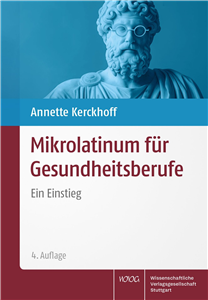
In daily healthcare work, communication needs to be quick and clear – and that requires a solid grasp of the right medical terms. This compact book presents the essential foundations of Latin grammar and medical terminology – in a clear, concise and memorable way. The author provides extensive insight into prefixes, suffixes and word roots related to the body and its diseases. • What is post-operative hyperparathyroidism? • What is hyperhidrosis? • What do prophylaxis, provisional and prolapse have in common? Bonus: ‘The Top 40’ exercise section and a ‘Short Overview of the Names of Medicinal Plants’. Who said Latin had to be boring? Target group: Students of pharmacy, medicine, biology, pharmacists, physicians, nursing and healthcare professions
Trusted Partner
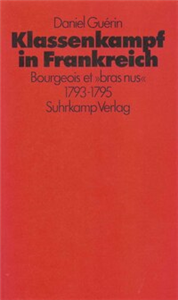
Daniel Guérins Untersuchung - bei dem hier angezeigten Band handelt es sich um der Kampf der Bourgeoisie auf dem Wege zur Macht gegen die »bras nus« - gegen die »bras nus«, auf die die Bourgeoisie zur Installierung ihrer Macht gleichzeitig angewiesen war. In seiner Darstellung der Ereignisse kritisiert Guérin unter anderem die verbreitete Vorstellung, Robespierre habe als entschiedener Verteidiger der bras nus gewirkt. Ferner setzt sich Guérin ausführlich mit der Frage des Klassenkampfes auf dem Lande und der revolutionären Rolle der armen Bauern auseinander.



