Your Search Results

      • Ediciones Universidad Católica de Salta (EUCASA)

        EUCASA es la Editorial de la Universidad Católica de Salta. En su carácter de editorial universitaria, es un departamento especial en el organigrama institucional, y su misión es contribuir al cumplimiento del fin primordial de la Universidad: generar y divulgar conocimiento. En su caso por medio de las publicaciones que constituyen su catálogo, en donde se refleja necesariamente su naturaleza académica.

        View Rights Portal
      • Books from Ukraine

        The Ukrainian Book Institute is a government entity, part of the Ministry of Culture and Information Policy of Ukraine.

        View Rights Portal
      • Trusted Partner
        Humanities & Social Sciences
        June 2020

        Reform of the House of Lords

        by Philip Norton

        This book is the only one of its kind, providing a clear and exhaustive analysis of the different approaches to the future of Britain's second chamber. The House of Lords has long been the subject of proposals for reform - some successful, others not - and calls for the existing membership to be replaced by elected members have been a staple of political debate. The debate has been characterised by heat rather than light, proponents and opponents of change often talking past one another. This work gives shape to the debate, drawing out the role of the House of Lords, previous attempts at reform, and the different approaches to the future of the House. It develops the argument for each and analyses the current state of the debate about the future of the upper house in Britain's political system.

      • Trusted Partner
        The Arts
        September 2024

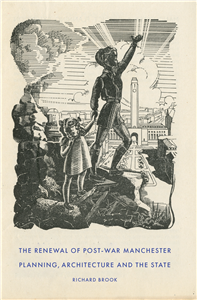
        The renewal of post-war Manchester

        Planning, architecture and the state

        by Richard Brook

        A compelling account of the project to transform post-war Manchester, revealing the clash between utopian vision and compromised reality. Urban renewal in Britain was thrilling in its vision, yet partial and incomplete in its implementation. For the first time, this deep study of a renewal city reveals the complex networks of actors behind physical change and stagnation in post-war Britain. Using the nested scales of region, city and case-study sites, the book explores the relationships between Whitehall legislation, its interpretation by local government planning officers and the on-the-ground impact through urban architectural projects. Each chapter highlights the connections between policy goals, global narratives and the design and construction of cities. The Cold War, decolonialisation, rising consumerism and the oil crisis all feature in a richly illustrated account of architecture and planning in post-war Manchester.

      • Trusted Partner
      • Trusted Partner
        Humanities & Social Sciences
        December 2013

        The House of Lords

        by Donald Shell

        The House of Lords has undergone significant change in recent years. The exclusion of the great majority of the hereditary peers in 1999 was intended as the first step in a two-stage reform process. But further reform has proved difficult to achieve and remains a matter of considerable controversy. Meanwhile, the present House has become more assertive, and is now widely recognised as making a substantial contribution to the overall work of parliament. This book, available in paperback for the first time, examines the role of the contemporary House. Who are the peers, and who among the total of over 700 are the active peers? How does the House work, and how effective is it in revising legislation and in scrutinising the work of government? Why has fundamental reform of the House been so long delayed, and what are the main arguments about reform today? These are among the questions discussed in this timely volume, which seeks to locate discussion about the House of Lords in the wider context of a clear understanding of the developing British constitution. This book will be of great value to students and academics in British politics, as well as to serious journalists and researchers. ;

      • Trusted Partner
        March 2026

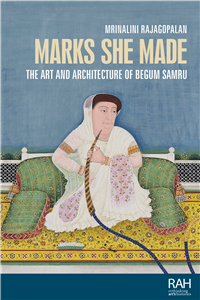
        Marks she made

        The art and architecture of Begum Samru

        by Mrinalini Rajagopalan

        Begum Samru (b. circa 1750-d. 1836) was a north Indian woman ruler who used art and architecture to facilitate her social, political, and financial station in early modern India. Rising from the ranks of courtesans in Mughal Delhi to become the commander of her own mercenary army, she later became the ruler of an independent territory of Sardhana (60 km northwest of Delhi). The begum (Urdu/ Hindustani title for noblewoman) was a trusted ally to the Mughal emperor and the English East India Company, two of the dominant political powers in north India at the time. As a sovereign ruler, she corresponded with two popes and King Louis Philippe of France, exchanging portraits, architectural drawings, and letters with these powerful men in addition to her Mughal counterparts in India. Art and architecture played a key role in establishing Begum Samru as a powerful but non-threatening ruler; as an upholder and patron of the Catholic faith in India; as a political ally to several European and Indian factions that were vying for power; and as ruling matriarch of a cosmopolitan household, court, and army. In narrating the story of a single woman in nineteenth-century India, this book offers a path to think of the creative ways in which women participated in public and political spheres. It also illustrates how women without pedigree, women who did not bear biological children or produce male heirs, and women who lived in contravention of gendered norms found alternative methods of recognition, dignity, power, and sometimes, as in the case of Begum Samru, global visibility.

      • Trusted Partner
        Humanities & Social Sciences
        August 1998

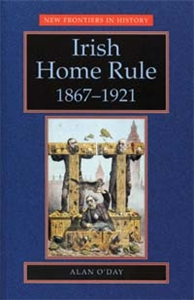
        Irish Home Rule

        by Alan O'Day, Mark Greengrass

        Irish Home Rule considers the pre-eminent issue in British politics during the late nineteenth and early twentieth-centuries. It is the first account to explain the various self-government plans, to place these in context and examine the motives for putting the schemes forward. The book distinguishes between moral and material home rulers, making the point that the first appealed especially to outsiders, some Protestants and the intelligentsia, who saw in self-government a means to reconcile Ireland's antagonistic traditions. In contrast, material home rulers viewed a Dublin Parliament as a forum of Catholic interests. This account appraises the home rule movement from a fresh angle, distinguishing it from the usual division drawn between physical force and constitutional nationalists It maintains that an ideological continuity runs from Young Ireland, the Fenians, the early home rulers including Isaac Butt and Charles Stewart Parnell, to the Gaelic Revivalists to the Men of 1916. These nationalists are distinguishable from material home rulers not on the basis of methods or strategy but by a fundamental ideological cleavage. ;

      • Trusted Partner
      • Trusted Partner
        Humanities & Social Sciences
        January 2013

        Christian Dualist Heresies in the Byzantine World, c. 650-c. 1450

        by Janet Hamilton, Bernard Hamilton

        Christian dualism originated in the reign of Constans II (641-68). It was a popular religion, which shared with orthodoxy an acceptance of scriptual authority and apostolic tradition and held a sacramental doctrine of salvation, but understood all these in a radically different way to the Orthodox Church. One of the differences was the strong part demonology played in the belief system. This text traces, through original sources, the origins of dualist Christianity throughout the Byzantine Empire, focusing on the Paulician movement in Armenia and Bogomilism in Bulgaria. It presents not only the theological texts, but puts the movements into their social and political context.

      • Trusted Partner
        Humanities & Social Sciences
        April 2026

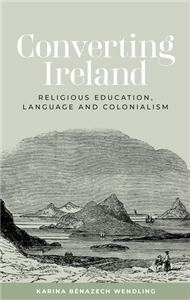
        Converting Ireland

        Religious education, language and colonialism

        by Karina Bénazech Wendling

        Karina Bénazech Wendling offers a re-assessment of 'souperism'-the long-debated claim that food was used to convert Irish Catholics to Protestantism during the Great Famine. Focusing on the Irish Society for Promoting the Education of the Native Irish through their Own Language, the first group labeled 'soupers' in 1841, she uncovers a more complex picture. Rather than a mere tool of British cultural imperialism, the Society had a deep engagement with the Irish language and Bible translation, while also encouraging religious conversions in the West. The book explores the Society's role in Ireland's religious and political landscape, the rise of Catholic counter-missions, and nationalist resistance. Offering fresh insights into Ireland's religious history and global missionary movements, this book is essential for scholars of Irish studies, interdenominational relations, and education in Ireland.

      • Trusted Partner
        Literature & Literary Studies
        March 2026

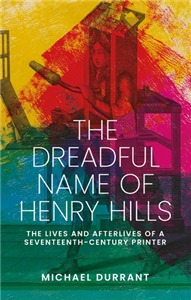
        The dreadful name of Henry Hills

        The lives and afterlives of a seventeenth-century printer

        by Michael Durrant

        1. Introducing the Career of Henry Hills, Printer - What is a printer? - Print output - Insignia - Roles - Partnerships - Cultural configurations of the early modern printer 2. 'Once upon a time': Biographical Encounters with Henry Hills - Henry Hills' Lives: From DNB to ODNB - Cultural biographies of printers - Hugh Dalton's Cave: Reading Henry Hills Part 2: Transformations 3. '[N]othing but the plain truth': The Prodigal Repackaged (1650-51, 1688, 1825) - Henry Hills: Particular Baptist printer / author - The Prodigal as shame management - Henry Hills and the tailor's wife: 'Pressing' at a biographical anecdote - The Prodigal Returned to his Father's House, by Henry Hills (1825): Reprinting a reprint 4. 'Licking himself whole again': Writing and Rewriting Henry Hills' Catholic Conversion (1685, 1686, 1733, 1826) - Henry Hills: Catholic Printer - A View (1685): From runaway apprentice to anti-Catholic book burner - Entering Book (1686): Roger Morrice and the Hills household - Revolution Politicks (1733): Print mediation and and public talk - Hills, last seen at Watten, near Sainte-Omer, 13 February 1689 Part 3: Afterlives 5. Henry Hills, Eikon Basilike, and his Posthumous Role in the Pamela Prayer Conspiracy - Taking the Pamela Prayer interpolation seriously: Eikon Basilike, authorship, and the work of conspiracy - '[T]he Roundhead printer!': Almack, Madan, and Hills' role in the publication of the Eikon - The 'leading witness': Writing and rewriting Hills in Milton scholarship - Finding Henry Hills in Dr Bernard's library 6. Pirates, Parents, and Print: Rewriting Henry Hills' Last Will and Testament - 'Suite Trouble': Contesting Hills' legacy - '[A]n expedient lineage': Henry Hills junior goes to Bombay - Working with what remains

      • Trusted Partner
        Humanities & Social Sciences
        March 2026

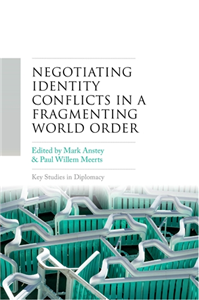
        Negotiating identity conflicts in a fragmenting world order

        by Paul Willem Meerts, Mark Anstey

        At every level of human interaction new levels of identity-based tension are in evidence. Contributors to this book explore facets of fragmentation processes within systems of state and interstate organisation, how they influence the use of negotiation, and how negotiation might be used to effect renewed coherence. Following Anstey's (Ch1) introductory chapter framing the nature and shape of fragmentation dynamics, Zartman (Ch 2) argues that the use of negotiation as a process of conflict resolution is deeply shaped by identity groups whose internal coherence is dependent on sustaining a negative identity of others. International relations are no longer solely the realm of experienced diplomats but are shaped as Meerts (Ch3) points out by politicians seeking to be responsive to voting publics rather than wider concerns. Anstey digs into problems of fragmentation (Ch. 4) and Troitskiy (Ch 5) points out how a reluctant acceptance of the power of 'the other' can lead to a form of strategic stability in relations. Anstey and Meerts (Ch 6) point out in their analysis of the Israeli-Palestinian case as an identity conflict turned very bad. Guggenbuhl (Ch 7 ) reveals how structures and processes have been designed within the EU to prevent, contain and regulate conflicts to limit risks of confrontation and fragmentation. Schuessler (Ch 8) to advocates a shift away from a template or roadmap approach to EU membership to a cohesion based on non-dominance. There is still a strong desire on the part of some states, like Northern Macedonia, to become EU members, as reflected in Manton's (Ch 9). Paula Garzon and Frans Schram explain the success of the Colombia Peace Negotiations (Ch 10), while Odigie and da Rocha (Ch 11) analyse the struggle faced by ECOWAS to influence coup leaders in Mali to return to constitutional government and changes of government by constitutional means. Liang (Ch12) discusses how the internet as the modern vehicle of inter-state, inter-group and interpersonal communication has become weaponised. In Ch 13 Anstey draws some lessons from contributions to the compilation.

      • Trusted Partner
        Humanities & Social Sciences
        October 2021

        Higher education in a globalising world

        Community engagement and lifelong learning

        by Peter Mayo

        This book focuses on current policy discourse in Higher Education, with special reference to Europe. It discusses globalisation, Lifelong Learning, the EU's Higher Education discourse, this discourse's regional ramifications and alternative practices in Higher Education from both the minority and majority worlds with their different learning traditions and epistemologies. It argues that these alternative practices could well provide the germs for the shape of a public good oriented Higher Education for the future. It theoretically expounds on important elements to consider when engaging Higher Education and communities, discussing the nature of the term 'community' itself. Special reference is accorded to the difference that lies at the core of these ever-changing communities. It then provides an analysis of an 'on the ground project' in University community engagement, before suggesting signposts for further action at the level of policy and provision. This book is relevant to United Nations Sustainable Development Goal 4, Quality education

      • Trusted Partner
        Humanities & Social Sciences
        February 2013

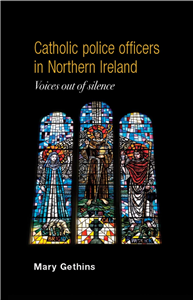
        Catholic police officers in Northern Ireland

        Voices out of silence

        by Mary Gethins

        This exciting book, newly available in paperback, aims to establish the historical and cultural reasons why there was only a participation rate of 7-8% by the Catholic population in policing Northern Ireland when the Police Service of Northern Ireland (PSNI) came into being in 2001, even though Catholics constituted 46% of the total population. It also aims to ascertain whether or not implementation of the Patten Commission's recommendation to recruit to the PSNI on a 50: 50 basis between Catholics and non-Catholics has resulted in greater representation and what the political and cultural obstacles might be in transforming policing from meeting colonial model criteria to those of the liberal model advocated by Patten. In doing this, author Mary Gethins uses a wealth of historical data to show that there has for a long time been a problematic relationship between the native Irish Catholic population and the police, and the reasons for Catholic under-representation in the police force can be largely put down to this legacy. A survey of Catholic police officers focusing on family history, reasons for joining the police and sacrifices perceived to have been made in joining a largely Protestant organisation provide a strong empirical evidence base from which Gethins draws illuminating lessons. The work is informed by sociological theory to show that Catholic police officers are atypical of the Catholic population at large in Northern Ireland, and best explained by the concept of fragmented identity. ;

      • Trusted Partner
        Humanities & Social Sciences
        October 2021

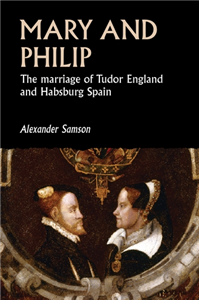
        Mary and Philip

        The marriage of Tudor England and Habsburg Spain

        by Alexander Samson

        Mary I, eldest daughter of Henry VIII, was Queen of England from 1553 until her death in 1558. For much of this time she ruled alongside her husband, King Philip II of Spain, forming a co-monarchy that put England at the heart of early modern Europe. In this book, Alexander Samson presents a bold reassessment of Mary and Philip's reign, rescuing them from the neglect they have suffered at the hands of generations of historians. The co-monarchy of Mary I and Philip II put England at the heart of early modern Europe. This positive reassessment of their joint reign counters a series of parochial, misogynist and anti-Catholic assumptions, correcting the many myths that have grown up around the marriage and explaining the reasons for its persistent marginalisation in the historiography of sixteenth-century England. Using new archival discoveries and original sources, the book argues for Mary as a great Catholic queen, while fleshing out Philip's important contributions as king of England.

      • Trusted Partner
        Humanities & Social Sciences
        April 2021

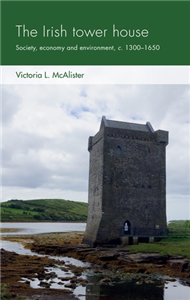
        The Irish tower house

        Society, economy and environment, c. 1300–1650

        by Victoria L. McAlister

        The Irish tower house examines the social role of castles in late-medieval and early modern Ireland. It uses a multidisciplinary methodology to uncover the lived experience of this historic culture, demonstrating the interconnectedness of society, economics and the environment. Of particular interest is the revelation of how concerned pre-modern people were with participation in the economy and the exploitation of the natural environment for economic gain. Material culture can shed light on how individuals shaped spaces around themselves, and tower houses, thanks to their pervasiveness in medieval and modern landscapes, represent a unique resource. Castles are the definitive building of the European Middle Ages, meaning that this book will be of great interest to scholars of both history and archaeology.

      • Trusted Partner
        Political ideologies
        May 2017

        Neoliberal power and public management reforms

        by Professor Peter Triantafillou. Series edited by Mark Haugaard

        This book examines the links between major contemporary public sector reforms and neoliberal thinking. The key contribution of the book is to enhance our understanding of contemporary neoliberalism as it plays out in the public administration and to provide a critical analysis of generally overlooked aspects of administrative power. The book examines the quest for accountability, credibility and evidence in the public sector. It asks whether this quest may be understood in terms of neoliberal thinking and, if so, how? The book makes the argument that while current administrative reforms are informed by several distinct political rationalities, they evolve above all around a particular form of neoliberalism: constructivist neoliberalism. The book analyses the dangers of the kinds of administrative power seeking to invoke the self-steering capacities of society and administration itself.

      • Trusted Partner
        Literature & Literary Studies
        March 2025

        The Catholicism of literature in the age of the Book of Common Prayer

        Poetry, plays, works, 1558-1689

        by Thomas Rist

        Offering a complete reading of English Literature throughout 1558-1689, this book demonstrates the continuity of Roman Catholicism in English Literature from the accession of Elizabeth I to the deposing of James II. Rist shows that poetry and plays promoted Roman Catholic ideas in a Biblicist age which established the Church of England through the Book of Common Prayer. From the very idea of literary works to chapters on the Eucharist, Purgatory, Christian worship and the Virgin Mary, Rist joins together major and minor authors of the era to present English Literature afresh. Important literary figures include William Shakespeare, Ben Jonson, Thomas Middleton, Queen Henrietta Maria, John Donne, John Dryden, Robert Herrick, Margaret Cavendish and Aphra Behn.

      • Trusted Partner
        Humanities & Social Sciences
        January 2026

        Migration and social policy in a changing world

        Histories, challenges and dilemmas

        by Bryan Fanning

        Migration and social policy in a changing world bridges the generally separate fields of social policy and migration studies. This book traces social policy responses to migration from the Industrial Revolution to today's era of globalisation and large-scale migration. Through case studies from across the globe, the book explores key themes including rural-urban migration, social citizenship, welfare internationalism and diasporic care systems. It examines how migrants are included in or excluded from social citizenship in host societies, and how they become providers of welfare services such as health and social care. Moving beyond a methodological nationalist focus, the book investigates migrant incorporation into welfare states through family networks, faith communities, and other informal welfare structures. It combines migrants' experiences with host societies' immigration politics, institutional perspectives and policies to present a comprehensive analysis of the migration-welfare relationship. This volume fills a gap in academic literature and offers policymakers, practitioners and scholars a framework for understanding the interplay between migration and social policy in our changing world.

      Subscribe to our

      newsletter