Your Search Results

      • Trusted Partner
        The Arts
        January 2019

        Jean-Jacques Beineix

        by Philip Powrie

        This volume is the first to examine, in either French or English, the films of Jean-Jacques Beineix, often seen as the best example of the 1980s cinéma du look, with cult films, such as Diva and Betty Blue (37º 2 le matin) .. After an introduction which places Beineix in the context of the 1980s and the arguments centering on a postmodern cinema, the volume devotes a chapter to each of Beineix's feature films, including the film which marked his return to feature film making after a break of a decade, Mortel Transfert (2001). Prefaced by an excellent foreword by the director himself, which includes a broad condemnation of French critics. Includes many illustrations direct from the director's own collection, complementing the interviews Powrie made with him and his collaborators.

      • Trusted Partner
        The Arts
        January 2019

        Jean Renoir

        by Martin O'Shaughnessy

        Accessible and original analysis of all Jean Renoir's sound films, including those he made in Hollywood - this is the first major study to appear for a number of years and brings new light on some of the director's most celebrated films.. Illuminating account of critical debates concerning Renoir, and focusing on hitherto neglected areas such as gender, nation and ethnicity the book asks us to rethink our understanding of Renoir's political commitment.. Traces his output from the silent period to the age of television, tying his work into a fast-shifting, socio-historical context.. Detailed analyses of his sound films map his evolving style while individual chapters cover Renoir's career and writings, critical debates, the silent and early sound films, the Popular Front period, Renoir amèricain and the later films.

      • Trusted Partner
        Genocide & ethnic cleansing
        May 2017

        Destruction and human remains

        Disposal and concealment in genocide and mass violence

        by Series edited by Jean-Marc Dreyfus, Élisabeth Anstett. Edited by Élisabeth Anstett, Jean-Marc Dreyfus

        Destruction and human remains investigates a crucial question frequently neglected in academic debate in the fields of mass violence and genocide studies: what is done to the bodies of the victims after they are killed? In the context of mass violence, death does not constitute the end of the executors' work. Their victims' remains are often treated and manipulated in very specific ways, amounting in some cases to true social engineering, often with remarkable ingenuity. To address these seldom-documented phenomena, this volume includes chapters based on extensive primary and archival research to explore why, how and by whom these acts have been committed through recent history. Interdisciplinary in scope, Destruction and human remains will appeal to readers interested in the history and implications of genocide and mass violence, including researchers in anthropology, sociology, history, politics and modern warfare.

      • Trusted Partner
        Literature: history & criticism
        May 2017

        Three sixteenth-century dietaries

        by Joan Fitzpatrick. Series edited by Susan Cerasano

        Early modern dietaries are prose texts recommending the best way to maintain physical and psychological well-being. Three sixteenth-century dietaries contains Thomas Elyot's Castle of Health, Andrew Boorde's Compendious Regiment and William Bullein's Government of Health, all popular and influential works that were typical of a genre advising the reader on how best to maintain physical and psychological health. They are here introduced, contextualized and edited for the first time in a modern spelling edition. Introductory material explores the dietary genre, its relationship to humanism, humoral theory, and the wide range of authorities with which the dietary authors engaged. The volume includes an examination of the bibliographical and publication history of each work, comprehensive explanatory notes and appendices that provide prefaces to earlier editions, a glossary, and a list of authorities and works cited or alluded to in the dietaries.

      • Trusted Partner
        Sociology: death & dying
        May 2017

        Human remains and identification

        Mass violence, genocide, and the ‘forensic turn’

        by Series edited by Jean-Marc Dreyfus, Élisabeth Anstett. Edited by Élisabeth Anstett, Jean-Marc Dreyfus

        Human remains and identification presents a pioneering investigation into the practices and methodologies used in the search for and exhumation of dead bodies resulting from mass violence. Previously absent from forensic debate, social scientists and historians here confront historical and contemporary exhumations with the application of social context to create an innovative and interdisciplinary dialogue, enlightening the political, social and legal aspects of mass crime and its aftermaths. Through a ground-breaking selection of international case studies, Human remains and identification argues that the emergence of new technologies to facilitate the identification of dead bodies has led to a "forensic turn", normalising exhumations as a method of dealing with human remains en masse. However, are these exhumations always made for legitimate reasons? Multidisciplinary in scope, this book will appeal to readers interested in understanding this crucial phase of mass violence's aftermath, including researchers in history, anthropology, sociology, forensic science, law, politics and modern warfare. The research program leading to this publication has received funding from the European Research Council under the European Union's Seventh Framework Programme (FP/2007-2013) / ERC Grant Agreement n° 283-617.

      • Trusted Partner
        August 2004

        Die Verfolgung und Ermordung Jean Paul Marats dargestellt durch die Schauspielgruppe des Hospizes zu Charenton unter Anleitung des Herrn de Sade

        Drama in zwei Akten

        by Peter Weiss, Arnd Beise

        Text und Kommentar in einem Band. In der Suhrkamp BasisBibliothek erscheinen literarische Hauptwerke aller Epochen und Gattungen als Arbeitstexte für Schule und Studium. Der vollständige Text wird ergänzt durch anschaulich geschriebene Kommentare.

      • Trusted Partner
        Literature: history & criticism
        February 2017

        The Gothic and death

        by Series edited by Elisabeth Bronfen. Edited by Carol Davison

        The Gothic and death offers the first ever published study devoted to the subject of the Gothic and death across the centuries. It investigates how the multifarious strands of the Gothic and the concepts of death, dying, mourning and memorialisation ('the Death Question') - have intersected and been configured cross-culturally to diverse ends from the mid-eighteenth century to the present day. Drawing on recent scholarship in such fields as Gothic Studies, film theory, Women's and Gender Studies and Thanatology Studies, this interdisciplinary collection of fifteen essays by international scholars combines an attention to socio-historical and cultural contexts with a rigorous close reading of works, both classic and lesser known. This area of enquiry is considered by way of such popular and uncanny figures as corpses, ghosts, zombies and vampires, and across various cultural and literary forms such as Graveyard Poetry, Romantic poetry, Victorian literature, nineteenth-century Italian and Russian literature, Anglo-American film and television, contemporary Young Adult fiction and Bollywood film noir.

      • Trusted Partner
        Plays, playscripts
        November 2016

        The Tragedy of Antigone, The Theban Princesse

        by Thomas May

        by Edited by Matteo Pangallo. Series edited by Paul Dean

        Thomas May's The Tragedy of Antigone (1631), edited by Matteo Pangallo, is the first English treatment of the story made famous by Sophocles. This edition contains a facsimile of the copy held at the Beinecke Library of Yale University, making the play commercially available for the first time since its original publication. The extensive introduction discusses, among other things, the ownership history of existing copies and their marginal annotations, and of the play's topical political implications in the light of May's wavering between royalist and republican sympathies. Writing during the contentious early years of Charles I's reign, May used Sophocles' Antigone to explore the problems of just rule and justified rebellion. He also went beyond the scope of the original, adding content from a wide range of other classical and contemporary plays, poems and other sources, including Shakespeare's Romeo and Juliet and Macbeth. This volume will be essential reading for advanced students, researchers and teachers of early English drama and seventeenth-century political history.

      • Trusted Partner
        Gardens (descriptions, history etc)
        February 2017

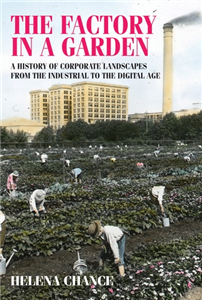
        The factory in a garden

        A history of corporate landscapes from the industrial to the digital age

        by Helena Chance. Series edited by Christopher Breward

        When we think about Victorian factories, 'Dark Satanic Mills' might spring to mind - images of blackened buildings and exhausted, exploited workers struggling in unhealthy and ungodly conditions. But for some employees this image was far from the truth, and this is the subject of 'The Factory in a Garden' which traces the history of a factory gardens movement from its late-eighteenth century beginnings in Britain to its twenty-first century equivalent in Google's vegetable gardens at their headquarters in California. The book is the first study of its kind examining the development of parks, gardens, and outdoor leisure facilities for factories in Britain and America as a model for the reshaping of the corporate environment in the twenty-first century. This is also the first book to give a comprehensive account of the contribution of gardens, gardening and recreation to the history of responsible capitalism and ethical working practices.

      • Trusted Partner
        Philosophy: epistemology & theory of knowledge
        June 2017

        Critical theory and epistemology

        The politics of modern thought and science

        by Anastasia Marinopoulou. Series edited by Darrow Schecter

        This volume in the Critical Theory and Contemporary Society series explores the arguments between critical theory and epistemology in the twentieth and twenty-first centuries. Focusing on the first and second generations of critical theorists and Luhmann's systems theory, the book examines how each approaches epistemology. It opens by looking at twentieth-century epistemology, particularly the concept of lifeworld (Lebenswelt). It then moves on to discuss structuralism, poststructuralism, critical realism, the epistemological problematics of Foucault's writings and the dialectics of systems theory. This unique work takes a comparative look at structuralism and post-structuralism's epistemological theory with special reference to scientific reason. It also investigates Luhmann's works in epistemology. The aim is to explore whether the focal point for epistemology and the sciences remain that social and political interests actually form a concrete point of concern for the sciences as well.

      • Trusted Partner
        Sociology
        January 2017

        Sport in the Black Atlantic

        Cricket, Canada and the Caribbean diaspora

        by Janelle Joseph. Series edited by John Horne

        This book outlines the ways sport helps to create transnational social fields that interconnect migrants dispersed across a region known as the Black Atlantic: England, North America and the Caribbean. Many Caribbean men's stories about their experiences migrating to Canada, settling in Toronto, finding jobs and travelling involved some contact with a cricket and social club. This book offers a unique contribution to black diaspora studies through showing sport as a means of allaying the pain of ageing in the diaspora, creating transnational social networks and marking ethnic boundaries on a local scale. The book also brings black diaspora analysis to sport research, and through a close look at what goes on before, during and after cricket matches provides insights into the dis-unities, contradictions and complexities of Afro-diasporic identity in multicultural Canada. It will be of interest to students and scholars in sociology, sport studies and black diaspora studies.

      • Trusted Partner
        20th century history: c 1900 to c 2000
        December 2016

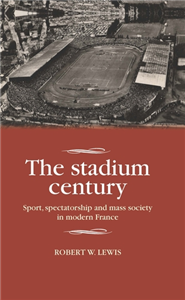
        The stadium century

        Sport, spectatorship and mass society in modern France

        by Robert W. Lewis. Series edited by Maire Cross, David Hopkin

        The stadium century traces the history of stadia and mass spectatorship in modern France from the vélodromes of the late nineteenth century to the construction of the Stade de France before the 1998 soccer World Cup. As the book demonstrates, the stadium was at the centre of debates over public health and urban development and proved to be a key space for mobilising the urban crowd for political rallies and spectator sporting events alike. After 1945, the transformed French stadium constituted part of the process of postwar modernisation but also was increasingly connected to global transformations to the spaces and practices of sport. Drawing from a wide range of sources, the stadium century links the histories of French urbanism, mass politics and sport through the stadium in an innovative work that will appeal to historians, students of French history and the history of sport, and general readers alike.

      • Trusted Partner
        2020

        Vitamin D

        The healing power of the sunshine vitamin

        by Uwe Gröber and Prof. Dr. Michael F. Holick

        Vitamin D deficiency is a global health problem that puts the quality of life and life expectancy of more than a billion children and adults at risk worldwide. Many lifestyle diseases may be associated with vitamin D deficiency: myocardial infarction, infections, cancer, neurological diseases, stroke, type 2 diabetes, to name just a few. This 4th updated edition incorporates numerous new insights into the therapeutic effect of vitamin D, including its importance for a healthy pregnancy, prenatal imprinting, optimum sporting performance, diabetes mellitus and autoimmune diseases such as Hashimoto’s thyroiditis or multiple sclerosis. Since the metabolism and the effect of vitamin D are supported by a complex network of micronutrients – for example, magnesium, vitamin A or vitamin K – a specific chapter is devoted to this network. Here, the reader can discover how vitamin D successfully protects against diseases, improves the quality of life and optimises medication and treatment!

      • Trusted Partner
        Modern history to 20th century: c 1700 to c 1900
        May 2017

        Inventing the cave man

        From Darwin to the Flintstones

        by Andrew Horrall. Series edited by Jeffrey Richards

        Fred Flintstone lived in a sunny Stone Age American suburb, but his ancestors were respectable, middle-class Victorians. They were very amused to think that prehistory was an archaic version of their own world because it suggested that British ideals were eternal. In the 1850s, our prehistoric ancestors were portrayed in satirical cartoons, songs, sketches and plays as ape-like, reflecting the threat posed by evolutionary ideas. By the end of the century, recognisably human cave men inhabited a Stone Age version of late-imperial Britain, sending-up its ideals and institutions. Cave men appeared constantly in parades, civic pageants and costume parties. In the early 1900s American cartoonists and early Hollywood stars like Charlie Chaplin and Buster Keaton adopted and reimagined this very British character, cementing it in global popular culture. Cave men are an appealing way to explore and understand Victorian and Edwardian Britain.

      • Trusted Partner
        History of Art / Art & Design Styles
        October 2016

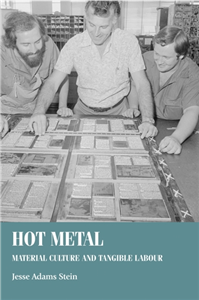
        Hot metal

        Material culture and tangible labour

        by Jesse Stein. Series edited by Bill Sherman, Christopher Breward

        The world of work is tightly entwined with the world of things. Hot metal illuminates connections between design, material culture and labour between the 1960s and the 1980s, when the traditional crafts of hot-metal typesetting and letterpress were finally made obsolete with the introduction of computerised technologies. This multidisciplinary history provides an evocative rendering of design culture by exploring an intriguing case: a doggedly traditional Government Printing Office in Australia. It explores the struggles experienced by printers as they engaged in technological retraining, shortly before facing factory closure. Topics explored include spatial memory within oral history, gender-labour tensions, the rise of neoliberalism and the secret making of objects 'on the side'. This book will appeal to researchers in design and social history, labour history, material culture and gender studies. It is an accessible, richly argued text that will benefit students seeking to learn about the nature and erosion of blue-collar work and the history of printing as a craft.

      • Trusted Partner
        Literature: history & criticism
        November 2016

        The Burley manuscript

        by Edited by Peter Redford. Series edited by J. B. Lethbridge

        England and the 1966 World Cup presents a cultural analysis of what is considered a key 'moment of modernity' in the nation's post-war history. Regarded as having an importance beyond its primary sporting purpose, the World Cup in England is examined within the complexity of the cultural, social and political changes that characterised the mid-1960s. Yet, although addressing the importance of non-sport related connections, the book maintains a focus on football, discussing it as a 'cultural form' and presenting an original perspective on the aesthetic accomplishment in football tactics by England's manager, Alf Ramsey. The study considers the World Cup in relation to the cup tradition, England as the World Cup host nation, the England squad and masculinity, the modernism of England's manager Alf Ramsey, design and commercial aspects of the World Cup, a critical engagement within existing academic accounts, and an examination of how England's victory has been remembered and commemorated.

      • Trusted Partner
        Political ideologies
        May 2017

        Neoliberal power and public management reforms

        by Professor Peter Triantafillou. Series edited by Mark Haugaard

        This book examines the links between major contemporary public sector reforms and neoliberal thinking. The key contribution of the book is to enhance our understanding of contemporary neoliberalism as it plays out in the public administration and to provide a critical analysis of generally overlooked aspects of administrative power. The book examines the quest for accountability, credibility and evidence in the public sector. It asks whether this quest may be understood in terms of neoliberal thinking and, if so, how? The book makes the argument that while current administrative reforms are informed by several distinct political rationalities, they evolve above all around a particular form of neoliberalism: constructivist neoliberalism. The book analyses the dangers of the kinds of administrative power seeking to invoke the self-steering capacities of society and administration itself.

      • Trusted Partner
        Literature: history & criticism
        September 2016

        Spenserian allegory and Elizabethan biblical exegesis

        A context for The Faerie Queene

        by Series edited by J. B. Lethbridge, Margaret Christian

        Edmund Spenser famously conceded to his friend Walter Raleigh that his method in The Faerie Queene 'will seeme displeasaunt' to those who would 'rather have good discipline delivered plainly in way of precepts, or sermoned at large'. Spenser's allegory and Elizabethan biblical exegesis is the first book-length study to clarify Spenser's comparison by introducing readers to the biblical typologies of contemporary sermons and liturgies. The result demonstrates that 'precepts ... sermoned at large' from lecterns and pulpits were themselves often 'clowdily enwrapped in allegoricall devises'. In effect, routine churchgoing prepared Spenser's first readers to enjoy and interpret The Faerie Queene. A wealth of relevant quotations invites readers to adopt an Elizabethan mindset and encounter the poem afresh. The 'chronicle history' cantos, Florimell's adventures, the Souldan episode, Mercilla's judgment on Duessa and even the two stanzas that close the Mutabilitie fragment, all come into sharper focus when juxtaposed with contemporary religious rhetoric.

      Subscribe to our

      newsletter