Your Search Results

      • Reading Luxembourg

        Reading Luxembourg is Luxembourg's export programme. Beyond the annual national stand at Frankfurt Book Fair, Reading Luxembourg is in charge of various missions, such as the presence at other fairs, festivals and literary events, a training offer for professionals of the book and publishing sector and strategic support to foreign rights sales. Reading Luxembourg is linking up publishers and authors from Luxembourg with stakeholders on an international level and providing information on available translation and publication grants.

        View Rights Portal
      • Trusted Partner
      • Trusted Partner
      • Trusted Partner
        August 1990

        Wahrheit und Interpretation

        by Donald Davidson, Dieter Henrich, Niklas Luhmann, Joachim Schulte, Friedhelm Herborth

        Die Kernfrage der heutigen analytischen Philosophie, die Frage, die sie von allen früheren und allen konkurrierenden philosophischen Ansätzen abhebt, ist die Frage nach dem Wesen der Bedeutung sprachlicher Ausdrücke. Davidson zeigt, daß eine Theorie der von ihm ins Auge gefaßten Art empirischen Charakter hat, ihre Axiome und Lehrsätze also gesetzesartig sein müssen. Wie die Theorie für sprachphilosophische Einzelprobleme fruchtbar gemacht werden kann, demonstriert Davidson in Aufsätzen über das Problem der Übersetzung, die Möglichkeiten und Schwierigkeiten des Zitierens, das Verhältnis von Glauben und Bedeutung, Sprache und Wirklichkeit sowie in seinen Auseinandersetzungen mit Quine und Dummett, Carnap und Church, Chomsky und Frege.

      • Trusted Partner
        October 1999

        Sprache, Zeichen, Interpretation

        by Günter Abel

        In diesem Buch geht es darum, die interpretationsbestimmten Grundlagen der Verständigung, des Weltbezugs und des Handelns in Lebenswelt, Wissenschaft, Ethik und Kunst herauszuarbeiten. Da sich alle Wissenschaften, Künste und Handlungen in sprachlichen und nichtsprachlichen Zeichen vollziehen und daher immer schon auf Interpretationsprozesse bezogen sind, läßt sich der Ansatz in diesen Bereichen zur Analyse der Grundlagen und der interdisziplinären Zusammenhänge heranziehen.

      • Trusted Partner
        Literature & Literary Studies
        May 2016

        Flesh and Spirit

        by Rachel Adcock, Sara Read, Anna Ziomek

      • Trusted Partner
        Humanities & Social Sciences
        June 2005

        Reading Walter Benjamin

        Writing through the catastrophe

        by Richard Lane

        'Reading Walter Benjamin' explores the persistence of absolute in Benjamin's work by sketching-out the relationship between philosphy and theology apparent in his diverse writings, from the early youth-movement essays to the later books, essays and fragments. The book examines Benjamin from two main perspectives: a history-of-ideas approach situating Benjamin in relation to the new German-Jewish thinking at the turn of the twentieth-century, as well as the German youth movements, Surrealism and the 'Georgekreis'; and a conceptual approach examining more critical issues in relation to Benjamin and Kant, modern aesthetics and narrative order. Chapters cover: 'Kulturpessimismus' and the new thinking; metaphysics of youth: Wyneken and 'Rausch'; history: surreal Messianism; Goethe and the 'Georgekreis'; Kant's experience; casting the work of art; disrupting textual order; and exile and the time of crisis. The book uses new translations of Benjamin's essays, fragments and his 'Arcades Project', and makes substantial reference to previously untranslated material. Lane's text allows the non-specialist entry into complex areas of critical theory, simultaneously offering original readings of Benjamin and twentieth-century arts and literature. ;

      • Trusted Partner
        Literature & Literary Studies
        September 2017

        Reading Robin Hood

        Content, form and reception in the outlaw myth

        by Anke Bernau, Stephen Knight

        Reading Robin Hood explores and explains stories about the mythic outlaw, who from the Middle Ages to the present stands up for the values of natural law and true justice. This analysis of the whole sequence of Robin Hood adventures begins with the medieval tradition, from early poems into the long-surviving sung ballads, and goes on to look at two variant Robins: the Scottish version, here named Rabbie Hood, and gentrified Robin, the exiled Earl of Huntington, now partnered by Lady Marian. The nineteenth century re-imagined medieval Robin as modern, a lover of nature, Marian, England and the rights of the ordinary man. In novels and especially films he has developed into an international figure of freedom, while Marian's role has grown in a modern feminist context. Even to this day, the Robin Hood myth continues to reproduce itself, constantly discovering new forms and new meanings.

      • Trusted Partner
        Literature & Literary Studies
        July 2015

        Reading Robin Hood

        Content, form and reception in the outlaw myth

        by Stephen Knight, Anke Bernau

        Reading Robin Hood explores and explains stories about the mythic outlaw, who from the middle ages to the present stands up for the values of natural law and true justice. This analysis of the whole sequence of the adventures of Robin Hood first explores the medieval tradition from early poems into the long-surviving sung ballads, and also two variant Robins: the Scottish version, here named Rabbie Hood, and gentrified Robin, the exiled Earl of Huntington, now partnered by Lady Marian. The nineteenth century re-imagined medieval Robin as modern - he loved nature, Marian, England, and the rights of the ordinary man - and in novels and especially films he has developed further, into an international figure of freedom, just as Marian's role has grown in a modern feminist context. The vigour of the Robin Hood myth still reproduces itself, constantly with new forms and new meanings. ;

      • Trusted Partner
        Literature & Literary Studies
        August 2013

        Women reading Shakespeare 1660–1900

        An anthology of criticism

        by Ann Thompson, Sasha Roberts

        Women reading Shakespeare, 1660-1900 comprehensively rediscovers a lost tradition of women's writing on Shakespeare. Since Margaret Cavendish published the first critical essay on Shakespeare in 1664, women have written as scholars, critics, editors, performers and popularisers of Shakespeare. Many found in Shakespeare criticism the opportunity to raise a wide variety of issues, ranging from the use of women in society, family life, social relations and ethnic difference. In their different ways, women appropriated Shakespeare to their own ends - not always in step with their male contemporaries. Virtually none of this work is available today; it is unread and unknown. This fascinating anthology draws upon extensive new research to collect for the first time in one volume the Shakespeare criticism of some fifty British and American women writing before 1900. It includes the work of both familiar and unknown names and represents the diversity of literary genres used by women: the scholarly article, the periodical essay, book-length studies, personal memoirs, books for children, school editions. The volume also includes previously unknown Shakespeare illustrations by women, and a general introduction to the development of women's criticism of Shakespeare before 1900. ;

      • Trusted Partner
        Literature & Literary Studies
        March 2007

        Robert Louis Stevenson and theories of reading

        The reader as vagabond

        by Glenda Norquay

        Robert Louis Stevenson and theories of reading is both an exceptionally well researched study of the novelist, and well as an intriguing exploration of 'literary consumption'. Glenda Norquay presents fresh interpretations of Stevenson's literary essays, of major works including The Master of Ballantrae, and some of his more neglected fiction such as St Ives and The Wrecker, as well as illuminating our understanding of his role within debates over popular fiction, romance and reading pleasure. She offers an unusual combination of literary history and reception theory and argues that Stevenson both exemplified tensions within the literary market of his time and anticipated later developments in reading theory. By combining the study of nineteenth-century cultural politics with detailed analysis of his Scottish Calvinism, Stevenson is reassessed as both a Victorian and Scottish writer. The book is aimed at scholars, postgraduates and undergraduates with an interest in the nineteenth-century literary marketplace, in Scottish culture, and in reading /reception theory as well as Stevenson enthusiasts. ;

      • Trusted Partner
        2024

        Reading Clinical Studies Critically

        Clinical trials, reviews, guidelines

        by Dr. Iris Hinneburg

        Make or break? Advertisements repeatedly praise „plant-based“ products or promise new mobility through ointments and dietary supplements. The tools of evidence-based pharmacy help to answer the question „Does this really help?“ This practical guide offers tips and explanations on how to be confident of finding the relevant scientific literature, critically evaluate clinical studies, and interpret therapeutic results. The book provides guidance on how to classify the quality of reviews and meta-analyses and assess the reliability of guidelines in everyday healthcare practice. Practical examples help to avoid pitfalls in evaluation and to understand the statistical details. An extensive appendix with technical terms, checklists, important institutions of evidence-based medicine and further sources completes the book.

      • Trusted Partner
        Literature: history & criticism
        March 2010

        Reading, writing and the influence of Harold Bloom

        by Alan Rawes and Jonathon Shears

        Reading, writing and the influence of Harold Bloom takes the work of the world's best-known living literary critic and discovers what it is like to read 'with', 'against' and 'beyond' his ideas. The editors, Alan Rawes and Jonathon Shears, introduce the collection by assessing the impact of Bloom's brand of agonistic criticism on literary critics and its ongoing relevance to a discipline attempting to redefine and settle on its collective goals. Firmly grounded in, though not confined to, Bloom's first specialism of Romantic Studies, the volume contains essays that examine Bloom's debts to high Romanticism, his quarrels with feminism, his resistance to historicism, the tensions with the 'Yale School' and his recent work on Shakespeare and genius. Crucially, chapters are also devoted to putting Bloom's anxiety-themed ratios into practice on the poetry of Wordsworth, Shelley, Keats and D. H. Lawrence, amongst others. The Harold Bloom that emerges from this collection is by turns divisive and unifying, marginalised and central, radical and conservative.

      • Trusted Partner
        Humanities & Social Sciences
        September 2025

        Writing power

        Intellectuals, legitimacy, and the making of knowledge

        by Sarah Victoria Alexandra Burton

        Writing power radically rethinks the place of the canon and canonicity as objects and concepts in contemporary academia and the everyday intellectual practices of academics. It is distinctive in its demonstration of how academics' engagements with canons shape their writing practices but also how scholars' writing practices, spaces, proclivities, and desires shape the canon and changing ideas of value in canonicity. The book thinks through frequently discussed problems of legitimacy and knowledge production from fresh perspectives of lived experience and the everyday to offer new insights into the politics of knowledge in contemporary social sciences.

      • Trusted Partner
        Teaching, Language & Reference
        May 2025

        Writing creatively for work or study

        by Helen Kara

      • Trusted Partner
        September 2011

        Rom

        Eine Ekstase

        by Hanns-Josef Ortheil

        »Dichter und sinnlicher kann man Rom nicht präsentieren.« Die Zeit. In diesem Reiseführer führt uns Hanns-Josef Ortheil zu römischen »Oasen der Sinne«; er zeigt uns weite Gärten und kleinen Kreuzgänge, Palazzi und geheime Aussichtsterrassen. Und immer wieder begegnen uns berühmte Rom-Reisende vergangener Zeiten wie Goethe, Stendhal oder Thomas Mann. Auch das leibliche Wohl kommt nicht zu kurz: Ortheil nimmt uns mit in seine Lieblingsrestaurants, in Bars und Osterien und stellt die besten Rezepten der römischen Küche vor. »Man kann ebenso gut Ortheils Reiseführer zu Hause genießen und sich dabei fühlen, als wäre man selbst in Rom.« Frankfurter Allgemeine Zeitung

      • Trusted Partner
        October 2008

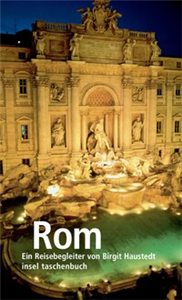
        Rom

        Ein Reisebegleiter

        by Birgit Haustedt

        Wo fuhr Ingeborg Bachmann gern Fahrrad, was inspirierte Alberto Moravia zu seinem ersten Roman? Fünfzehn Spaziergänge auf den Spuren von Schriftstellern führen durch die Ewige Stadt. Der Leser sieht antike Skulpturen, berühmte Plätze und Gemälde, aber auch versteckte Brunnen und Paläste mit den Augen der Literaten und Dichter. Geschichte wird lebendig in Geschichten von Päpsten, Partys und der Bar am Pantheon. Ebenfalls mit dem Buch zu entdecken: Tatort Rom und Cinecittà. Von Birgit Haustedt liegt im insel taschenbuch der Reisebegleiter Mit Rilke durch Venedig vor, der 2006 vom Italienischen Fremdenverkehrsverband ausgezeichnet wurde.

      • Trusted Partner
        March 2004

        Goethe und Tischbein in Rom

        Bilder und Texte

        by Johann Wolfgang Goethe, Johann Heinrich Wilhelm Tischbein, Petra Maisak

        Goethe hatte ihm ein Stipendium verschafft. Damit konnte der Maler Johann Heinrich Wilhelm Tischbein (1751–1829) einen Aufenthalt in Rom finanzieren, wo er seine künstlerische Ausbildung vervollkommnen wollte. Als Goethe zu seiner ersten Italienreise aufbrach und am 29. Oktober 1786 in Rom ankam, nahm er sofort zu Tischbein Kontakt auf, und bereits am nächsten Tag zog er in Tischbeins Wohnung ein. In den folgenden Wochen und Monaten durchwanderten die Freunde gemeinsam das neue und das alte Rom, und Tischbein unterrichtete Goethe im Zeichnen.Der vorliegende Band dokumentiert diese Künstlerfreundschaft anhand der Gemälde und Zeichnungen Tischbeins, die während ihres gemeinsamen Romaufenthalts entstanden, und durch ausgewählte Passagen aus Briefen und der Italienischen Reise. Ein Essay von Petra Maisak, der diese außergewöhnliche Künstlerfreundschaft kenntnisreich und anschaulich beschreibt, leitet den Band ein.

      • Trusted Partner
        December 1988

        Paris-Rom oder Die Modifikation

        Roman

        by Michel Butor, Helmut Scheffel

        Auf der Reise von Paris nach Rom ändert der Erzähler, ein Geschäftsreisender, seinen Entschluß, sich von seiner Pariser Frau scheiden zu lassen und seine italienische Freundin zu heiraten, weil er sich bewußt wird, daß er durch diese zweite Heirat seine erste Ehe nur wiederholen würde. Was die Reflexion auslöst, ist das Lösgelöstsein der Reisesituation, die durch die Unverbindlichkeit der Dinge und die Fremdheit der anderen Personen gekennzeichnet ist. Der Roman ist durchweg ein innerer Monolog in der zweiten Person, der vom Besteigen des Zuges in Paris bis zur Ankunft in Rom reicht. Dieser Monolog wird stimuliert und unterbrochen durch Verschiebungen von Raum und Zeit, den Wechsel von Reflexion und Traum, den Kontrast zwischen der fremden Umwelt und der inneren Entscheidung, durch die Erkenntnis, daß die Dinge, d. h. unser Verhältnis zu ihnen, sowohl eine mythenschaffende wie eine mythenzerstörende Qualität haben. »Paris – Rom oder Die Modifikation« ist eines der wichtigsten Werke des »nouveau roman«, der, die Experimente von Proust, Joyce und Faulkner weiterentwickelnd, in einer kritischen Auseinandersetzung mit dem traditionellen Roman ein adäquates Ausdrucksmittel sucht.

      Subscribe to our

      newsletter