
Your Search Results
-

-

Aelurus Publishing / Impress Books
An independent publishing house with a small but passionate team, newly focused on the voices of the marginalised.
View Rights Portal
-
Promoted Content
-
Promoted Content

 March 2026
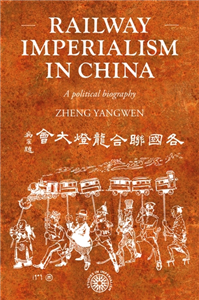
Railway imperialism in China
A political biography
by Yangwen Zheng
Railway Imperialism in China: a Political Biography is the first and most comprehensive book on history and politics of all major railways in China from the late Qing to the post-Mao era. It investigates the transformation of railways from a bête noire within discussions about reform to the emblematic "engines for empire" as foreign powers used it to carve outspheres of control and exploit the late Qing, and as an instrument of nation making for Chinese regimes. The book introduces new archival sources and a wide range of secondary materials. Boldly conceived, it situates the making of modern China in the context of British, Russian, German, Japanese, American expansion. It traces China's transformation from a victim of railway imperialism in the Age of Empireto a railway expansionist in the twenty-first century.
-
 Trusted Partner
 Humanities & Social SciencesMarch 2017
Gender and imperialism
by Clare Midgley
This book marks an important new intervention into a vibrant area of scholarship, creating a dialogue between the histories of imperialism and of women and gender. By engaging critically with both traditional British imperial history and colonial discourse analysis, the essays demonstrate how feminist historians can play a central role in creating new histories of British imperialism. Chronologically, the focus is on the late eighteenth to early twentieth centuries, while geographically the essays range from the Caribbean to Australia and span India, Africa, Ireland and Britain itself. Topics explored include the question of female agency in imperial contexts, the relationships between feminism and nationalism, and questions of sexuality, masculinity and imperial power.
-
Trusted Partner
 Humanities & Social SciencesFebruary 2017
Welsh missionaries and British imperialism
The Empire of Clouds in north-east India
by Andrew May
In 1841, the Welsh sent their first missionary, Thomas Jones, to evangelise the tribal peoples of the Khasi Hills of north-east India. This book follows Jones from rural Wales to Cherrapunji, the wettest place on earth and now one of the most Christianised parts of India. As colonised colonisers, the Welsh were to have a profound impact on the culture and beliefs of the Khasis. The book also foregrounds broader political, scientific, racial and military ideologies that mobilised the Khasi Hills into an interconnected network of imperial control. Its themes are universal: crises of authority, the loneliness of geographical isolation, sexual scandal, greed and exploitation, personal and institutional dogma, individual and group morality. Written by a direct descendant of Thomas Jones, it makes a significant contribution in orienting the scholarship of imperialism to a much-neglected corner of India, and will appeal to students of the British imperial experience more broadly.
-
Trusted Partner
 Humanities & Social SciencesMarch 2017
Imperial cities
Landscape, display and identity
by Felix Driver, David Gilbert
Imperial cities explores the influence of imperialism in the landscapes of modern European cities including London, Paris, Rome, Vienna, Marseilles, Glasgow and Seville. Examines large-scale architectural schemes and monuments, including the Queen Victoria Memorial in London and the Vittoriano in Rome. Focuses on imperial display throughout the city, from spectacular exhibitions and ceremonies, to more private displays of empire in suburban gardens. Cconsiders the changing cultural and political identities in the imperial city, looking particularly at nationalism, masculinity and anti-imperialism.
-
Trusted Partner
Humanities & Social SciencesMarch 2017
Imperialism and the natural world
by John M. MacKenzie
Imperial power, both formal and informal, and research in the natural sciences were closely dependent in the nineteenth century. This book examines a portion of the mass-produced juvenile literature, focusing on the cluster of ideas connected with Britain's role in the maintenance of order and the spread of civilization. It discusses the political economy of Western ecological systems, and the consequences of their extension to the colonial periphery, particularly in forms of forest conservation. Progress and consumerism were major constituents of the consensus that helped stabilise the late Victorian society, but consumerism only works if it can deliver the goods. From 1842 onwards, almost all major episodes of coordinated popular resistance to colonial rule in India were preceded by phases of vigorous resistance to colonial forest control. By the late 1840s, a limited number of professional positions were available for geologists in British imperial service, but imperial geology had a longer pedigree. Modern imperialism or 'municipal imperialism' offers a broader framework for understanding the origins, long duration and persistent support for overseas expansion which transcended the rise and fall of cabinets or international realignments in the 1800s. Although medical scientists began to discern and control the microbiological causes of tropical ills after the mid-nineteenth century, the claims for climatic causation did not undergo a corresponding decline. Arthur Pearson's Pearson's Magazine was patriotic, militaristic and devoted to royalty. The book explores how science emerged as an important feature of the development policies of the Colonial Office (CO) of the colonial empire.
-
Trusted Partner
 Humanities & Social SciencesMarch 2017
Air empire
British imperial civil aviation, 1919–39
by Gordon Pirie, Andrew Thompson, John M. MacKenzie
Air empire is a fresh study of civil aviation as a tool of late British imperialism. The first pioneering flights across the British empire in 1919-20 were flag-waving adventures that recreated an era of plucky British maritime exploration and conquest. Britain's development of international air routes and services was approved, organised and celebrated largely in London; there was some resistance in and beyond the subordinate colonies and dominions. Negotiating the financing and geopolitics of regular commercial air service delayed its inception until the 1930s. Technological, managerial and logistical problems also meant that Britain was slow into the air and slow in the air. Propaganda concealed underperformance and criticism. The study uses archival sources, biographies, industry magazines and newspapers to chronicle the disputed progress toward air empire. The rhetoric behind imperial air service offers a glimpse of late imperial hopes, fears, attitudes and style. Empire air service had emotional appeal and symbolic value, but disappointed in practice.
-
Trusted Partner
Humanities & Social SciencesMarch 2017
Popular imperialism and the military, 1850-1950
by John M. MacKenzie
Colonial war played a vital part in transforming the reputation of the military and placing it on a standing equal to that of the navy. The book is concerned with the interactive culture of colonial warfare, with the representation of the military in popular media at home, and how these images affected attitudes towards war itself and wider intellectual and institutional forces. It sets out to relate the changing image of the military to these fundamental facts. For the dominant people they were an atavistic form of war, shorn of guilt by Social Darwinian and racial ideas, and rendered less dangerous by the increasing technological gap between Europe and the world. Attempts to justify and understand war were naturally important to dominant people, for the extension of imperial power was seldom a peaceful process. The entertainment value of war in the British imperial experience does seem to have taken new and more intensive forms from roughly the middle of the nineteenth century. Themes such as the delusive seduction of martial music, the sketch of the music hall song, powerful mythic texts of popular imperialism, and heroic myths of empire are discussed extensively. The first important British war correspondent was William Howard Russell (1820-1907) of The Times, in the Crimea. The 1870s saw a dramatic change in the representation of the officer in British battle painting. Up to that point it was the officer's courage, tactical wisdom and social prestige that were put on display.
-
Trusted Partner
Literature & Literary StudiesMarch 2017
Imperialism and juvenile literature
by Jeffrey Richards
Popular culture is invariably a vehicle for the dominant ideas of its age. Never was this truer than in the late-nineteenth and early twentieth centuries, when it reflected the nationalist and imperialist ideologies current throughout Europe. It both reflects popular attitudes, ideas and preconceptions and it generates support for selected views and opinions. This book examines the various media through which nationalist ideas were conveyed in late-Victorian and Edwardian times: in the theatre, "ethnic" shows, juvenile literature, education and the iconography of popular art. It seeks to examine in detail the articulation and diffusion of imperialism in the field of juvenile literature by stressing its pervasiveness across boundaries of class, nation and gender. It analyses the production, distribution and marketing of imperially-charged juvenile fiction, stressing the significance of the Victorians' discovery of adolescence, technological advance and educational reforms as the context of the great expansion of such literature. An overview of the phenomenon of Robinson Crusoe follows, tracing the process of its transformation into a classic text of imperialism and imperial masculinity for boys. The imperial commitment took to the air in the form of the heroic airmen of inter-war fiction. The book highlights that athleticism, imperialism and militarism become enmeshed at the public schools. It also explores the promotion of imperialism and imperialist role models in fiction for girls, particularly Girl Guide stories.
-
Trusted Partner
 Humanities & Social SciencesJanuary 1998
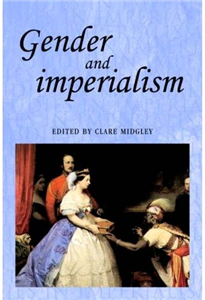
Gender and imperialism
by Clare Midgley, Andrew Thompson, John Mackenzie
This book marks an important new intervention into a vibrant area of scholarship, creating a dialogue between the histories of imperialism and of women and gender. By engaging critically with both traditional British imperial history and colonial discourse analysis, the essays demonstrate how feminist historians can play a central role in creating new histories of British imperialism. Chronologically, the focus is on the late eighteenth to early twentieth centuries, while geographically the essays range from the Caribbean to Australia and span India, Africa, Ireland and Britain itself. Topics explored include the question of female agency in imperial contexts, the relationships between feminism and nationalism, and questions of sexuality, masculinity and imperial power. ;
-
Trusted Partner
Humanities & Social SciencesMarch 2017
Air power and colonial control
by David Omissi
Air policing was used in many colonial possessions, but its most effective incidence occurred in the crescent of territory from north-eastern Africa, through South-West Arabia, to North West Frontier of India. This book talks about air policing and its role in offering a cheaper means of 'pacification' in the inter-war years. It illuminates the potentialities and limitations of the new aerial technology, and makes important contributions to the history of colonial resistance and its suppression. Air policing was employed in the campaign against Mohammed bin Abdulla Hassan and his Dervish following in Somaliland in early 1920. The book discusses the relationships between air control and the survival of Royal Air Force in Iraq and between air power and indirect imperialism in the Hashemite kingdoms. It discusses Hugh Trenchard's plans to substitute air for naval or coastal forces, and assesses the extent to which barriers of climate and geography continued to limit the exercise of air power. Indigenous responses include being terrified at the mere sight of aircraft to the successful adaptation to air power, which was hardly foreseen by either the opponents or the supporters of air policing. The book examines the ethical debates which were a continuous undercurrent to the stream of argument about repressive air power methods from a political and operational perspective. It compares air policing as practised by other European powers by highlighting the Rif war in Morocco, the Druze revolt in Syria, and Italy's war of reconquest in Libya.
-
Trusted Partner
 Humanities & Social SciencesFebruary 2017
Cultures and caricatures of British imperial aviation
Passengers, pilots, publicity
by Gordon Pirie, Andrew Thompson, John M. MacKenzie
The new activity of trans-continental civil flying in the 1930s is a useful vantage point for viewing the extension of British imperial attitudes and practices. Cultures and caricatures of British imperial aviation examines the experiences of those (mostly men) who flew solo or with a companion (racing or for leisure), who were airline passengers (doing colonial administration, business or research), or who flew as civilian air and ground crews. For airborne elites, flying was a modern and often enviable way of managing, using and experiencing empire. On the ground, aviation was a device for asserting old empire: adventure and modernity were accompanied by supremacism. At the time, however, British civil imperial flying was presented romantically in books, magazines and exhibitions. Eighty years on, imperial flying is still remembered, reproduced and re-enacted in caricature.
-
Trusted Partner
 Humanities & Social SciencesMarch 2017
British imperialism in Cyprus, 1878–1915
by Andrekos Varnava
-
Trusted Partner
 Humanities & Social SciencesFebruary 2017
Wales and the British overseas empire
Interactions and influences, 1650–1830
by H.V. Bowen
This unique collection of essays is the first book to explore the many relationships that developed between Wales and the British overseas empire between 1650 and 1830. Written by leading specialists in the field, the essays explore economic, social, cultural, political, and religious interactions between Wales and the empire. The geographical coverage is very broad, with examinations of the contributions made by Wales to expansion in the Atlantic world, Caribbean, and South Asia. The book explores Welsh influences on the emergence of 'British' imperialism, as well as the impact that the empire had upon the development of Wales itself. The book will be of interest to academic historians, postgraduate students, and undergraduates. It will be indispensable to those interested in the history of Wales, Britain, and the empire, as well as those who wish to compare Welsh imperial experiences with those of the English, Irish, and Scots.
-
Trusted Partner
 Humanities & Social SciencesMarch 2017
Britain in China
by Robert Bickers
This is a study of Britain's presence in China both at its peak, and during its inter-war dissolution in the face of assertive Chinese nationalism and declining British diplomatic support. Using archival materials from China and records in Britain and the United States, the author paints a portrait of the traders, missionaries, businessmen, diplomats and settlers who constituted "Britain-in-China", challenging our understanding of British imperialism there. Bickers argues that the British presence in China was dominated by urban settlers whose primary allegiance lay not with any grand imperial design, but with their own communities and precarious livelihoods. This brought them into conflict not only with the Chinese population, but with the British imperial government. The book also analyzes the formation and maintenance of settler identities, and then investigates how the British state and its allies brought an end to the reign of freelance, settler imperialism on the China coast. At the same time, other British sectors, missionary and business, renegotiated their own relationship with their Chinese markets and the Chinese state and distanced themselves from the settler British.
-
Trusted Partner
 Humanities & Social SciencesFebruary 2017
Oceania under steam
Sea transport and the cultures of colonialism, c. 1870–1914
by Frances Steel
The age of steam was the age of Britain's global maritime dominance, the age of enormous ocean liners and human mastery over the seas. The world seemed to shrink as timetabled shipping mapped out faster, more efficient and more reliable transoceanic networks. But what did this transport revolution look like at the other end of the line, at the edge of empire in the South Pacific? Through the historical example of the largest and most important regional maritime enterprise - the Union Steam Ship Company of New Zealand - Frances Steel eloquently charts the diverse and often conflicting interests, itineraries and experiences of commercial and political elites, common seamen and stewardesses, and Islander dock workers and passengers. Drawing on a variety of sources, including shipping company archives, imperial conference proceedings, diaries, newspapers and photographs, this book will appeal to cultural historians and geographers of British imperialism, scholars of transport and mobility studies, and historians of New Zealand and the Pacific.
-
Trusted Partner
 Humanities & Social SciencesJuly 2023
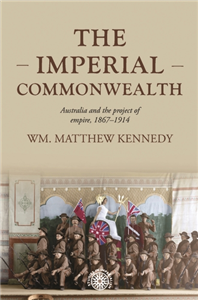
The imperial Commonwealth
Australia and the project of empire, 1867-1914
by Wm. Matthew Kennedy
From the late 1800s to the early 1900s, Australian settler colonists mobilised their unique settler experiences to develop their own vision of what 'empire' was and could be. Reinterpreting their histories and attempting to divine their futures with a much heavier concentration on racialized visions of humanity, white Australian settlers came to believe that their whiteness as well as their Britishness qualified them for an equal voice in the running of Britain's imperial project. Through asserting their case, many soon claimed that, as newly minted citizens of a progressive and exemplary Australian Commonwealth, white settlers such as themselves were actually better suited to the modern task of empire. Such a settler political cosmology with empire at its center ultimately led Australians to claim an empire of their own in the Pacific Islands, complete with its own, unique imperial governmentality.
-
Trusted Partner
 Colonialism & imperialismJuly 2003
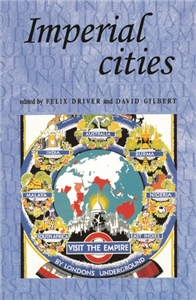
Imperial cities
Landscape, display and identity
by Edited by Felix Driver and David Gilbert
Imperial cities explores the influence of imperialism in the landscapes of modern European cities including London, Paris, Rome, Vienna, Marseilles, Glasgow and Seville. Examines large-scale architectural schemes and monuments, including the Queen Victoria Memorial in London and the Vittoriano in Rome. Focuses on imperial display throughout the city, from spectacular exhibitions and ceremonies, to more private displays of empire in suburban gardens. Cconsiders the changing cultural and political identities in the imperial city, looking particularly at nationalism, masculinity and anti-imperialism.
-
Trusted Partner
 Humanities & Social SciencesMarch 2017
The harem, slavery and British imperial culture
Anglo-Muslim relations in the late nineteenth century
by Diane Robinson-Dunn
This book focuses on British efforts to suppress the traffic in female slaves destined for Egyptian harems during the late-nineteenth century. It considers this campaign in relation to gender debates in England, and examines the ways in which the assumptions and dominant imperialist discourses of these abolitionists were challenged by the newly-established Muslim communities in England, as well as by English people who converted to or were sympathetic with Islam. While previous scholars have treated antislavery activity in Egypt first and foremost as an extension of earlier efforts to abolish plantation slavery in the New World, this book considers it in terms of encounters with Islam during a period which it argues marked a new departure in Anglo-Muslim relations. This approach illuminates the role of Islam in the creation of English national identities within the global cultural system of the British Empire. This book would appeal to those with an interest in British imperial history; Islam; gender, feminism, and women's studies; slavery and race; the formation of national identities; global processes; Orientalism; and Middle Eastern studies.
-
Trusted Partner
 Humanities & Social SciencesJanuary 2022
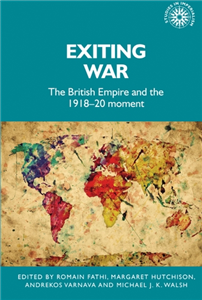
Exiting war
The British Empire and the 1918–20 moment
by Romain Fathi, Margaret Hutchison, Andrekos Varnava, Michael Walsh, Alan Lester
Exiting war explores a particular 1918-20 'moment' in the British Empire's history, between the First World War's armistices of 1918, and the peace treaties of 1919 and 1920. That moment, we argue, was a challenging and transformative time for the Empire. While British authorities successfully answered some of the post-war tests they faced, such as demobilisation, repatriation, and fighting the widespread effects of the Spanish flu, the racial, social, political and economic hallmarks of their imperialism set the scene for a wide range of expressions of loyalties and disloyalties, and anticolonial movements. The book documents and conceptualises this 1918-20 'moment' and its characteristics as a crucial three-year period of transformation for and within the Empire, examining these years for the significant shifts in the imperial relationship that occurred and as laying the foundation for later change in the imperial system.



