
RANOK Corporation
Ukrainian Publishing House “RANOK” founded in 1997 is prominent for its endless love for books and reading.
View Rights Portal
Ukrainian Publishing House “RANOK” founded in 1997 is prominent for its endless love for books and reading.
View Rights Portal
At Penguin Random House UK, we champion the world's most brilliant voices, bringing them to life in compelling and dynamic ways for audiences everywhere. Our books shape the broader cultural life of our society and accompany people of all ages on their journey of discovery of the greatest stories, the smartest thinking and the best ideas. Penguin Random House UK Group Rights represents Foreign and Domestic Rights across the company’s seven divisions. One team represents Ebury, Cornerstone, Penguin General and Penguin Press, another represents Transworld, Michael Joseph and Vintage, and the third represents illustrated titles across the seven divisions. For more information and our catalogue, please visit our webpage.
View Rights Portal
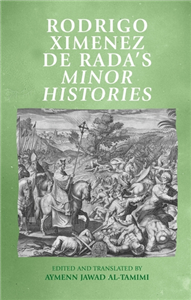
This work provides the first complete English translation of works by Toledan archbishop Rodrigo Ximénez de Rada (1170-1247 CE), whose 'Minor Histories' are sequels to his larger 'Gothic History' and thus round off his grand history of Spain project that he began at the request of King Ferdinand III. The 'Minor Histories' include Rodrigo's 'History of the Arabs' that can be considered the first surviving Western monograph focused on Arab and Islamic history and thus occupies a unique position in the medieval Latin corpus of writings. In addition to the translation, this book provides a thorough and accessible introduction to the life and works of Rodrigo, making sense of the context in which he wrote and his historical method. The translations are thoroughly annotated including cross-references to other Latin and Arabic sources for comparison.


Das Grauen begann im Jahr 1947: Die Engländer waren gerade abgezogen, Indien und Pakistan wurden geteilt und Menschen ihrer Religionszugehörigkeit entsprechend umgesiedelt – mit verheerenden Folgen. Es kam zu einer der größten Vertreibungen der Geschichte, zehn Millionen Menschen waren auf der Flucht. Familien wurden getrennt, Frauen vergewaltigt, Hunderttausende getötet. Von diesem Trauma Indiens erzählt Khushwant Singh in seinem Roman. Noch ist die Idylle in dem Dorf Mano Majra nahe der Grenze vollkommen. Muslime, Hindus und Sikhs leben hier friedlich miteinander, die Bewohner haben ihren Alltag auf die vorbeifahrenden Züge abgestimmt. Für Aufregung sorgt nur hin und wieder Jaggat, der Dorfganove. Die Männer haben Respekt vor ihm, schon wegen seiner Statur, über die sie ehrfürchtig sprechen. Jaggat kommt immer wieder ins Gefängnis, sein Vater und sein Großvater wurden als Kriminelle sogar gehängt. Obwohl er selbst der Sikhreligion angehört, hat er eine heimliche Liebschaft mit einem muslimischen Mädchen. Eines Tages hält zu einer ungewöhnlichen Zeit ein Zug in Mano Majra. Etwas Unheilvolles, etwas Gespenstisches geht von ihm aus: Der Zug ist voll mit Leichen ermordeter Sikhs. Das Grauen hat auch Mano Majra erreicht, jetzt zählt auch hier nur noch, wer welcher Religion angehört. Der Roman erschien erstmals 1956, heute ist er in Indien ein Klassiker. Khushwant Singh erzählt anhand von zahlreichen Einzelschicksalen in erschütternder Weise von der größten politischen,, sozialen, menschlichen Katastrophe Indiens, vom abrupten Wandel einer friedlichen Welt in die Hölle des Krieges, der noch heute grausame Nachwirkungen zeigt: im Kaschmirkonflikt, in blutigen Ausschreitungen zwischen den Religionsgruppen, in der Zerstörung von Moscheen und Tempeln.
 Trusted Partner
This book offers a nuanced snapshot of the complex geopolitical dynamics in the Persian Gulf, underlining the interaction between Iran, Saudi Arabia, and the US. Examining their interwoven relations since the 1970s, Luíza Cerioli's framework reveals how changes in US-Saudi ties have ripple effects on Iran-US and Iran-Saudi relations and vice versa. Using a historical lens, she explores how enduring US-Saudi connections hinge on order expectations, delves into the cognitive factors shaping US-Iran enmity and traces the source of oscillation in the Saudi-Iran ties. Employing Neoclassical Realism, the book investigates status-seeking, national identities and leadership preferences, offering a deeper understanding of the region's multipolar system. By combining International Relations and Middle East Studies, Cerioli's work contributes to both fields, unravelling the intricate interplay between international structures, regional nuances and agency in shaping Persian Gulf geopolitics.
Trusted Partner
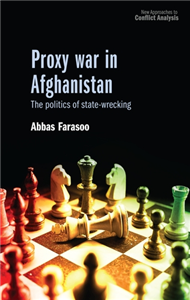
This book provides a compelling analysis of proxy warfare and its far-reaching implications for statehood, focusing on the conflict in Afghanistan. Introducing the innovative concept of "state-wrecking," it bridges theory and practice to unravel how external support for insurgent actors fuels violence, undermines territorial control and sovereignty, intensifies violence, and dismantles political legitimacy. The work shifts the discourse on proxy wars from the strategies of global powers to the procedural and structural impacts within target states. Grounded in rigorous empirical research, including interviews, archival data, and conflict analysis, the book critically examines the Pakistan-Taliban nexus and the limitations of US-led interventions. By blending a robust theoretical framework with in-depth case studies, it reveals how proxy dynamics shape conflicts, disrupt governance, and challenge international security. This is an essential resource for those seeking to understand the entanglements of modern warfare and the fragility of states under external influence.
Trusted Partner


Wen soll der Westen unterstützen: gemäßigte Islamisten wie Tariq Ramadan oder islamische Dissidenten wie Ayaan Hirsi Ali? Der französische Philosoph Pascal Bruckner sorgte Anfang 2007 für Aufsehen, als er in einer polemischen Streitschrift den vermeintlichen liberalen Konsens im Umgang mit dem Islam attackierte. Beweglicher und schneller, als das in den traditionellen Medien möglich gewesen wäre, entwickelte sich auf den Seiten der Internetplattformen perlentaucher.de und signandsight.com eine kontroverse Debatte, die den aktuellen Stand der Diskussion um Multikulturalismus in Europa markiert – und darüber hinausweist.
Trusted Partner
Trusted Partner
Trusted Partner

 Trusted Partner
Trusted Partner
Trusted Partner


The decision for cancer treatment has been taken and now a difficult time begins for the cancer patient: complex treatment regimens, side effects, fear. As a trusted confidant and competent point of contact in primary care, the pharmacist is called upon to play a key role. This collection of up-to-date articles provides support in the management of side effects from nausea to cardiotoxicity, gives assistance in interpreting warning signs of complications and highlights particular groups of patients such as pregnant women, geriatric, cachectic or palliative patients.
Trusted Partner


— An extraordinary story of migration — Contemporary history of the 70s and backgrounds to India, Afghanistan, Iran, Turkey, Bulgaria, the former Yugoslavia, the GDR and the Federal Republic of Germany He was the son of the Sikh priest, a successful 400-meter runner and, eventually, a migrant. In 1979, Bagicha Singh turned his back on his homeland and set off with a head full of dreams on the long, turbulent overland journey from India to Germany. It was the year the Soviet Union invaded Afghanistan and the Islamic Revolution raged in Iran. A year whose aftermath continues to shape the world to this day. More than 40 years later, his daughter tells the story of Bagicha's adventurous journey. The result is a touching document on origin, contemporary history, and the meaning of migration.
Trusted Partner
Juan Goytisolo ist ein Reisender zwischen den Welten. Der Umstand, daß der gebürtige Spanier abwechselnd in Paris und in Marrakesch lebt, prädestiniert ihn zum Mittler zwischen Orient und Okzident. Seine ebenso sachkundigen wie einfühlsamen Essays und Reportagen tragen dazu bei, die Stereotypen und Klischees zu korrigieren, die bis heute das Bild des Islam im Westen prägen, und beleuchten eine Wirklichkeit jenseits der Legenden, die seit Jahrhunderten den Blick des Abendlands auf das Morgenland verstellen. Goytisolo, der die Welt des Islams zwischen Tanger, Timbuktu und Samarkand bereist hat, fordert uns auf, eine faszinierend vielseitige und lebendige Kultur zu entdecken, deren reiches Erbe vielerorts Gefahr läuft, von der wirtschaftlichen und kulturellen Globalisierung überrollt zu werden. Seine Themen reichen von der Geschichte der Muslime in der sich auflösenden Sowjetunion über türkische Busbahnhöfe, die jemenitische Architektur und den Islam in Schwarzafrika bis hin zum Treiben der Gaukler auf dem Djemaa el-Fna in Marrakesch. Dabei versäumt es Goytisolo nicht, auf eine gefährliche Alternative hinzuweisen, die heute für viele muslimische Länder zu einem Teufelskreis zu werden droht: die Alternative, sich zwischen einer die Identität verbürgenden Tradition und Notwendigkeit des Wandels entscheiden zu müssen.
Trusted Partner
Trusted Partner
Trusted Partner
Trusted Partner

Alles, was Sie über den Islam wissen sollten Die Debatte um den Islam ist immer eine polemische: Salafismus, Scharia, Frauenrechte, Boko Haram, IS – zu allem haben wir eine Meinung. Aber wissen wir denn wirklich, was sich hinter diesen Phänomenen verbirgt? Alexander Flores kann Abhilfe schaffen, denn er widmet sich den Fakten. Flores beschreibt einen Modernismus, der Anfang des 20. Jahrhunderts dem Islam eine weltanschauliche Öffnung ermöglichen sollte; eine Scharia, die über lange Zeit hinweg nicht drakonisches »Gottesrecht« war, sondern Orientierung für eine islamische Lebensführung. Und er erklärt, wie der Koran mit seinen verschiedenen Lesarten instrumentalisiert werden konnte und damit Radikalisierungen ermöglichte, die wir heute mehr denn je zu spüren bekommen.
Trusted Partner
Trusted Partner
 Trusted Partner
Katharina Mommsen hat sich intensiv mit dem Einfluß des Islam auf Goethes Leben und Werk auseinandergesetzt und ist dabei zu Ergebnissen gelangt, die dem Leser neue Perspektiven eröffnen.
Trusted Partner
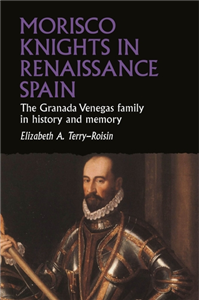
How does a Morisco enter the Spanish nobility? This book reveals the cultural strategies through which a family of converts from Islam to Christianity overcame limpieza de sangre laws, rose in social status, avoided King Philip III's Morisco expulsions of 1609-14, and achieved a noble title. Drawing on archival sources from both Spain and Italy to re-create the original family archive, this book follows the Granada Venegas family from Granada, to Madrid, to the dusty Andalucían town of Campotéjar, of which they became Marquises, and finally to Italy. Their descendants would serve as Doges of Genoa in the eighteenth century.



