
Roar Publishing Inc.
Welcome to Roar, sharing stories of the human spirit for 25 years. We believe storytelling connects generations, cultures, and hearts, reminding us of our shared humanity
View Rights Portal
Welcome to Roar, sharing stories of the human spirit for 25 years. We believe storytelling connects generations, cultures, and hearts, reminding us of our shared humanity
View Rights Portal
USNAproduces a dynamic adventure story about a future amalgamation of the United States and Canada and the rebel forces operating within this new union.
View Rights Portal
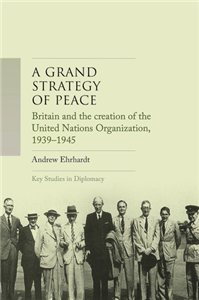
A grand strategy of peace is the first detailed account of Britain's role in the creation of the United Nations Organization during the Second World War. As a work of traditional diplomatic history that brings in elements of intellectual history, the book describes how British officials, diplomats, politicians, and writers - previously seen to be secondary actors to the United States in this period - thought about, planned for, and helped to establish a future international order. While in the present day, many scholars and analysts have returned to the origins of the post- 1945 international system, this book offers an exhaustive account of how the statesmen and more importantly, the officials working below the statesmen, actually conceived of and worked to establish a post-war world order.
 Trusted Partner
Trusted Partner
Trusted Partner
Trusted Partner
Trusted Partner
Trusted Partner
Trusted Partner

Iraqi women in Denmark is an ethnographic study of ritual performance and place-making among Shi'a Muslim Iraqi women in Copenhagen. The book explores how Iraqi women construct a sense of belonging to Danish society through ritual performances, and investigates how this process is interrelated with their experiences of inclusion and exclusion in Denmark. The findings refute the all too simplistic assumptions of general debates on Islam and immigration in Europe that tend to frame religious practice as an obstacle to integration in the host society. In sharp contrast to the fact that the Iraqi women's religious activities in many ways contribute to categorising them as outsiders to Danish society, their participation in religious events also localises them in the city. Written in an accessible, narrative style, this book addresses both an academic audience and the general reader interested in Islam in Europe and immigration to Scandinavia. ;
Trusted Partner

Why are constitutionalist ideals so prominent in science fiction? Does Independence Day depict self-defence as a legal concept with absolute limits? Is international law lost in space? This innovative interdisciplinary volume represents the first exploration of the relationship between international law and cinema. From Star Wars to Werner Herzog, The Godfather to The West Wing, this book uncovers a diverse range of representations of international law and its norms in film and television. Examining the wider links between international law, cinema, and ideology, the contributions not only examine visual representations of international law, but they offer an essential insight into the functions fulfilled by these cinematic representations. Providing an extraordinary introduction to a variety of perspectives on core international legal questions, Cinematic perspectives on international law extends a valuable methodology by which international lawyers can critique the depiction of international law in film.
Trusted Partner

Simulating the marvellous presents important new research on Surrealism and the culture from which it arose. Offering fresh interpretations of Surrealist art and literature based around the theme of simulation, the book shows, in the late nineteenth and early twentieth centuries, that the notion of simulation arose in a number of discrete contexts, in relation to hysteria and war neuroses; more broadly it shadows the emergence of our concept of 'the unconscious'. Acknowledging simulation's relevance to Surrealism, this book argues, radically alters our understanding of the Surrealists' project and the terms in which one gauges its success or failure. It leads one to question the naïve assumption that automatic writing or drawing represent an authentic outpouring of the unconscious and gives renewed significance to a figure such as Salvador Dalí who embraced simulation and made it the basis of his art and aesthetic. Resonances are also explored with postmodern theory and art practice, around the themes of simulation and the simulacrum.It also points to one of the ways in which Surrealism chimes with a core preoccupation of contemporary art and theory. Written accessibly, and ranging across many of the core ideas of Surrealism, David Lomas balances coverage of both Surrealist art and literature, looking at such figures as Dalì, Eluard, Masson, Desnos, Brouillet, Picasso, Tanning and Janet, as well as Glenn Brown, Douglas Gordon and Sarah Lucas. The book will interest not only art historians and theorists, but also students and those with a general interest in Surrealism. ;
Trusted Partner

Child, nation, race and empire is an innovative, inter-disciplinary, cross cultural study that contributes to understandings of both contemporary child welfare practices and the complex dynamics of empire. It analyses the construction and transmission of nineteenth-century British child rescue ideology. Locating the origins of contemporary practice in the publications of the prominent English Child rescuers, Dr Barnardo, Thomas Bowman Stephenson, Benjamin Waugh, Edward de Montjoie Rudolf and their colonial disciples and literature written for children, it shows how the vulnerable body of the child at risk came to be reconstituted as central to the survival of nation, race and empire. Yet, as the shocking testimony before the many official enquiries into the past treatment of children in out-of-home 'care' held in Britain, Ireland, Australia and Canada make clear, there was no guarantee that the rescued child would be protected from further harm.
Trusted Partner
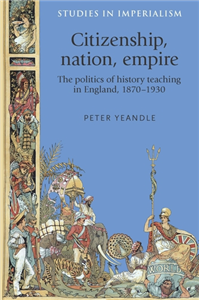
Citizenship, nation, empire investigates the extent to which popular imperialism influenced the teaching of history between 1870 and 1930. It is the first book-length study to trace the substantial impact of educational psychology on the teaching of history, probing its impact on textbooks, literacy primers and teacher-training manuals. Educationists identified 'enlightened patriotism' to be the core objective of historical education. This was neither tub-thumping jingoism, nor state-prescribed national-identity teaching, but rather a carefully crafted curriculum for all children which fused civic as well as imperial ambitions. The book will be of interest to those studying or researching aspects of English domestic imperial culture, especially those concerned with questions of childhood and schooling, citizenship, educational publishing and anglo-British relations. Given that vitriolic debates about the politics of history teaching have endured into the twenty-first century, Citizenship, nation, empire is a timely study of the formative influences that shaped the history curriculum in English schools
Trusted Partner
In the late eighteenth-century, elite British women had an unprecedented opportunity to travel. Taking travel home uncovers the souvenir culture these women developed around the texts and objects they brought back with them to realise their ambitions in the arenas of connoisseurship, friendship and science. Key characters include forty-three-year-old Hester Piozzi (Thrale), who honeymooned in Italy; thirty-one-year-old Anna Miller, who accompanied her husband on a Grand Tour; Dorothy Richardson, who undertook various tours of England from the ages of twelve to fifty-two; and the sisters Katherine and Martha Wilmot, who travelled to Russia in their late twenties. The supreme tourist of the book, the political salon hostess Lady Elizabeth Holland, travelled to many countries with her husband, including Paris, where she met Napoleon, and Spain during the Peninsular War. Using a methodology informed by literary and design theory, art history, material culture studies and tourism studies, the book examines a wide range of objects, from painted fans "of the ruins of Rome for a sequin apiece" and the Pope's "bless'd beads", to lava from Vesuvius and pieces of Stonehenge. It argues that the rise of the souvenir is representative of female agency, as women used their souvenirs to form spaces in which they could create and control their own travel narratives.
Trusted Partner
Since the mid-2000s, the harsh reality of call centre employment for a generation of young workers in Portugal has been impossible to ignore. With its endless rows of small cubicles, where human agents endure repetitive telephone conversations with abusive clients under invasive modes of technological surveillance, discipline and control, call centre work remains a striking symbol of labour precarity, a condition particularly associated with the neoliberal generational disenchantment that 'each generation does better than its predecessor'. This book describes the emergence of a regime of disciplined agency in the Portuguese call centre sector. Examining the ascendancy of call centres as icons of precarity in contemporary Portugal, this book argues that call centre labour constitutes a new form of commodification of the labouring subject. De Matos argues that call centres represent an advanced system of non-manual labour power exploitation, due to the underestimation of human creativity that lies at the centre of the regimented structures of call centre labour. Call centres can only guarantee profit maintenance, de Matos argues, through the commodification of the human agency arising from the operators' moral, relational and social embedded agentive linguistic interventions of creative improvisation, decision-making, problem-solving and ethical evaluation.
Trusted Partner
As human and machine agency become increasingly intermingled and digital media is overlaid onto the urban landscape, The machinic city argues that performance art can help us to understand contemporary urban living. Dias analyses interventions from performance artists such as Blast Theory, Rafael Lozano-Hemmer and Rimini Protokoll, which draw from a rich history of avant-garde art movements to create spaces for deliberation and reflection on urban life, and speculation on its future. While cities are increasingly controlled by autonomous processes mediated by technical machines, Dias analyses the performative potential of the aesthetic machine, as it assembles with media, capitalist, human and urban machines. The aesthetic machine of performance art in urban space is examined through its different components - design, city and technology actants. This unveils the unpredictable nature and emerging potential of performance art as it unfolds in the machinic city.
Trusted Partner
Windows for the world explores the display and reception of nineteenth-century British stained glass in a secular exhibition context. International in scope, the book focuses on the global development of stained glass in this period as showcased at, and influenced by, these exhibitions. It recognises those who made and exhibited stained glass and demonstrates the long-lasting impact of the classification and modes of display at these events. A number of exhibits are illustrated in colour and are analysed in relation to stylistic developments, techniques and material innovations, as well as the broader iconographies of nation and empire in the nineteenth century.
Trusted Partner
Emigration of scale challenges states at the European periphery at their core. The book documents these struggles along their effects for politics and policy within their economic and welfare dimensions. The politics of emigration describe changing voter attitudes and behaviour pointing towards more support for nationalist and right-wing parties. The policies of emigration show state and local level efforts for the return of emigrant citizens. The welfare and economic dimensions explore the context for emigration and its effects for growth models and systems of health and care within the European single market. The book observes two types of state transformations: the re-emergent nation-state that re-discovers its core resource, the citizenry, as well as states that functionally and socially adapt to population loss.
Trusted Partner

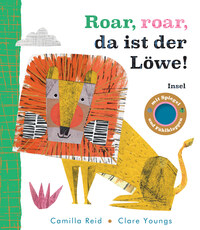
Eine kunterbunte neue Bilderbuchreihe, die zum Entdecken mit allen Sinnen einlädt. Jeder Band stellt vier Tiere und ihre charakteristischen Geräusche vor. Das Schaf macht mäh, der Frosch sagt quak und welche Laute wohl das Zebra oder das Eichhörnchen von sich geben? Zusätzlich begeistern die vielen Extras: Liebevoll gestaltete Collagen mit glitzernden Highlights und lustige Suchspiele – denn hinter jeder Fühlklappe hat sich ein kleines Lebewesen versteckt. Und am Ende gibt es als große Überraschung einen Spiegel: Welches Geräusch machst du?
Trusted Partner
Trusted Partner
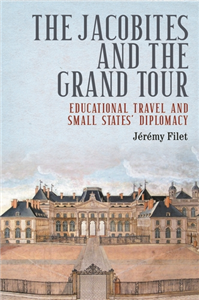
In the first monograph to fully examine the intersecting networks of Jacobites and travellers to the continent, Filet considers how small states used official diplomacy and deployed soft power - embodied by educational academies - to achieve foreign policy goals. This work uses little-known archival materials to explain how and why certain small states secretly supported the Jacobite cause during the crucial years surrounding the 1715 rising, while others stayed out of Jacobite affairs.At the same time, the book demonstrates how early modern small states sought to cultivate good relations with Britain by attracting travellers as part of a wider trend of ensuring connections with future diplomats or politicians in case a Stuart restoration never came.This publication therefore brings together a study of Britain, small states, Jacobitism, and educational travel, in its nexus at continental academies.
Trusted Partner
Trusted Partner



