
Rabea Blue - Fantasyautorin
Rabea Blue is an author, writing fantasy, science-fiction and romance. She alreasy published short stories & novels.
View Rights Portal
Rabea Blue is an author, writing fantasy, science-fiction and romance. She alreasy published short stories & novels.
View Rights Portal

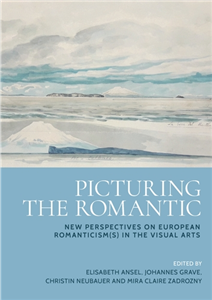
European Romanticism in the visual arts has always been defined by transnational transfer processes. It is surprising that international aspects of Romantic movements have been, in contrast to literary studies, a gap in art historical research. Picturing the Romantic addresses this issue and reveals new perspectives on European Romanticism(s) in the visual arts by reconsidering the phenomenon's traditional canon, geographical dimensions and terminology and analysing various examples of the complex and heterogeneous works of Romantic painting. In sixteen original essays, renowned and early career researchers examine the question of whether to speak of several independently considered Romanticisms or one European Romanticism. They adopt a transnational perspective on Romantic art in and beyond Europe, focusing on the interconnections between the countries.

 Trusted Partner
Trusted Partner
Trusted Partner

The secret life of romantic comedy offers a new approach to one of the most popular and resilient genres in the history of Hollywood. Steering away from the rigidity and ideological determinism of traditional accounts of the genre, this book advocates a more flexible theory, which allows the student to explore the presence of the genre in unexpected places, extending the concept to encompass films that are not usually considered romantic comedies. Combining theory with detailed analyses of a selection of films, including To Be or Not to Be (1942), Rear Window (1954), Kiss Me Stupid (1964), Crimes and Misdemeanors (1989) and Before Sunset (2004), the book aims to provide a practical framework for the exploration of a key area of contemporary experience - intimate matters - through one of its most powerful filmic representations: the genre of romantic comedy. Original and entertaining, The secret life of romantic comedy is perfect for students and academics of film and film genre.
Trusted Partner
 Trusted Partner

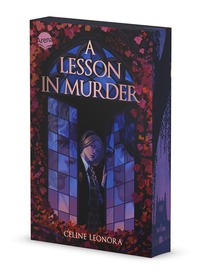
Das fesselnde Romantic Suspense-Debüt von BookTokerin Celine Leonora alias afterhourbookclub! Lügen, Intrigen und Mord stehen an dieser Schule plötzlich auf der Tagesordnung. Astoria Blairwood liebt das Verbrechen – was leider nicht auf Gegenseitigkeit beruht. Und das, obwohl sie an der Eliteschule St. Moriarty ein kriminologisches Superhirn ist! Denn als eine Mitschülerin tot aufgefunden wird, steht schnell die Tatverdächtige fest: Astoria. Schlimmer könnte das Abschlussjahr wohl kaum laufen. Des Mordes angeklagt, versucht sie mit allen Mitteln herauszufinden, wer die Schülerin tatsächlich ermordet hat. Dafür greift sie sogar auf ihre akademischen Rivalen zurück, die ihr bei den Ermittlungen helfen sollen: Isaac, der unausstehliche Sohn des Premierministers, und Theodore, der mysteriöse Einzelgänger der Schule. Die Hilfe der beiden braucht sie dringend, denn der Mörder scheint Astoria unbedingt hinter Gitter sehen zu wollen. Obwohl sie sich auf andere Dinge konzentrieren sollte, fühlt sie sich immer mehr zu Isaac und Theodore hingezogen. Doch kann sie den beiden voll und ganz vertrauen oder haben sie ihre Finger in diesem perfiden Spiel? Und kann Astoria rechtzeitig den richtigen Mörder finden, bevor es zu spät ist? Tropes: rivals to lovers, love triangle, dark academia, forced proximity Mit Farbschnitt und Charakterkarte in der 1. Auflage!
Trusted Partner
Any reader who has ever visited Asia knows that the great bulk of Western-language fiction about Asian cultures turns on stereotypes. This book, a collection of essays, explores the problem of entering Asian societies through Western fiction, since this is the major port of entry for most school children, university students and most adults. In the thirteenth century, serious attempts were made to understand Asian literature for its own sake. Hau Kioou Choaan, a typical Chinese novel, was quite different from the wild and magical pseudo-Oriental tales. European perceptions of the Muslim world are centuries old, originating in medieval Christendom's encounter with Islam in the age of the Crusades. There is explicit and sustained criticism of medieval mores and values in Scott's novels set in the Middle Ages, and this is to be true of much English-language historical fiction of the nineteenth and early twentieth centuries. Even mediocre novels take on momentary importance because of the pervasive power of India. The awesome, remote and inaccessible Himalayas inevitably became for Western writers an idealised setting for novels of magic, romance and high adventure, and for travellers' tales that read like fiction. Chinese fictions flourish in many guises. Most contemporary Hong Kong fiction reinforced corrupt mandarins, barbaric punishments and heathens. Of the novels about Japan published after 1945, two may serve to frame a discussion of Japanese behaviour as it could be observed (or imagined) by prisoners of war: Black Fountains and Three Bamboos.
Trusted Partner
Innovatively extending counterfactual thought experiments from history and the social sciences to literary historiography, criticism and theory, Counterfactual Romanticism reveals the ways in which the shapes of Romanticism are conditioned by that which did not come to pass. Exploring various modalities of counterfactual speculation and inquiry across a range of Romantic-period authors, genres and concerns, this collection offers a radical new purchase on literary history, on the relationship between history and fiction, and on our historicist methods to date - and thus on the Romanticisms we (think we) have inherited. Counterfactual Romanticism provides a ground-breaking method of re-reading literary pasts and our own reading presents; in the process, literary production, texts and reading practices are unfossilised and defamiliarised.
Trusted Partner
 Trusted Partner
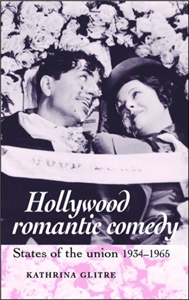
This book explores the changing representation of the couple, focusing on themes of marriage, equality and desire. Kathrina Glitre moves beyond the usual screwball territory to consider cycles of production from 1934-65. The central concern with the representation of the couple is distinctive and includes discussion of three star couples: Myrna Loy and William Powell, Katharine Hepburn and Spencer Tracy, and Doris Day and Rock Hudson. Glitre offers explanations of genre, as well as detailed analysis of screwball comedy, career woman comedy and sex comedy. Each cycle is placed into context to analyse cultural discourses around heterosexuality, gender, romance and love. This structure also enables a more sophisticated understanding of such conventions as masquerade, gender inversion and the happy ending. The book will appeal to university students and academics working on genre, gender, culture and representation, and anyone with a keen interest in Hollywood romantic comedy. ;
Trusted Partner

The secret life of romantic comedy offers a new approach to one of the most popular and resilient genres in the history of Hollywood. Steering away from the rigidity and ideological determinism of traditional accounts of the genre, this book advocates a more flexible theory, which allows the student to explore the presence of the genre in unexpected places, extending the concept to encompass films that are not usually considered romantic comedies. Combining theory with detailed analyses of a selection of films, including To Be or Not to Be (1942), Rear Window (1954), Kiss Me Stupid (1964), Crimes and Misdemeanors (1989) and Before Sunset (2004), the book aims to provide a practical framework for the exploration of a key area of contemporary experience - intimate matters - through one of its most powerful filmic representations: the genre of romantic comedy. Original and entertaining, The secret life of romantic comedy is perfect for students and academics of film and film genre. ;
Trusted Partner

In How to be multiple, Helena de Bres - a twin herself - argues that twinhood is a unique lens for examining our place in the world and how we relate to other people. The way we think about twins offers remarkable insights into some of the deepest questions of our existence, from what is a person? to how should we treat one another? Deftly weaving together literary and cultural history, philosophical enquiry and personal experience, de Bres examines such thorny issues as binary thinking, objectification, romantic love and friendship, revealing the limits of our individualistic perspectives. In this illuminating, entertaining book, wittily illustrated by her twin sister, de Bres ultimately suggests that to consider twinhood is to imagine the possibility of a more interconnected, capacious human future.
Trusted Partner
Trusted Partner


She’s had enough of men, but he can’t get enough of her... Away. Just get out of here. That's all Aubree thinks about when she gets kicked out of college after a party. She buys an incredibly old car, throws the few things she owns into the trunk and flees to her best friend Ivy in New Hampshire. There, all she wants is to pull the blanket over her head and think of nothing else. Not about that night. Not about the party. And most of all, not that picture that's been circulating on the Internet ever since. But it doesn't work. Because instead of her friend, she meets Noah, Ivy's stepbrother. With his impulsive but surprisingly sensitive nature, Noah evokes feelings in her that she doesn't need right now. And which, nevertheless, sweep her away like a storm... Second volume of a romantic and exciting dilogy with 20 lavishly illustrated hand-lettered pages by Carolin Magunia. Including a playlist that can be found on Spotify and contains songs which match perfectly with the story! It was always you (Vol. 1) entered the Spiegel bestseller list immediately after its publication. Both titles can be read separately. For all fans of Mona Kasten, Laura Kneidl and Kelly Moran! 175,000 copies of vol. 1 + 2 were sold since June 2020!
Trusted Partner
Conducting a Lacanian-inspired psychoanalysis of some of the most candid interview materials ever gathered from former IRA members and loyalists, the author demonstrates through a careful examination of their slips of the tongue, jokes, rationalisations and contradictions, that it is the unconscious dynamics of socio-ideological fantasy, i.e. the unconscious pleasure people find in suffering, domination, submission, ignorance, failure and rivalry over jouissance, that lead to the reproduction of antagonism between the Catholic and Protestant communities in Northern Ireland. In the light of this, he concludes that traditional approaches to conflict resolution which overlook the unconscious are doomed to failure and that a Lacanian psychoanalytic understanding of socio-ideological fantasy has great potential for informing the way we understand and study all inter-religious and ethnic conflicts. Whether you find yourself agreeing with the arguments in this book or not, you are sure to find it a welcome change from both the existing, mainly conservative, analyses of the Northern Ireland conflict and traditional approaches to conflict resolution.
Trusted Partner
This volume analyses major French plays of the 1830s, focusing on their theatricality, and on the ways in which they expose the workings of the theatre rather than conceal them. Through an examination of performance within these plays, the study posits that the stage is a privileged site of demonstration, a literal 'proving ground' that lends a physical reality to abstract values announced in the text and shared or questioned by the audience. Negotiating between the literary study of drama and performance theory, this work breaks new ground in nineteenth-century theatre scholarship while proposing a fresh direction in the study of text and performance. The limits of performance 'challenges conventional wisdom', offering 'a novel take on the mal du siècle, that thematic hardy perennial of French Romanticism and the nineteenth century in general', combined with 'eminently readable and, therefore, compelling' analysis of plays - 'a thought-provoking addition to work in the field' (Glyn Hambrook, Modern and Contemporary France, November 2008). ;
Trusted Partner

Terry Gilliam presents a sustained examination of one of cinema's most challenging and lauded auteurs, proposing fresh ways of seeing Gilliam that go beyond reductive readings of him as a gifted but manic fantasist. Analysing Gilliam's work over nearly four decades, from the brilliant anarchy of his Monty Python animations through the nightmarish masterpiece Brazil to the provocative Gothic horror of Tideland, it critically examines the variety and richness of Gilliam's sometimes troubled but always provocative output. The book situates Gilliam within the competing cultural contexts of the British, European and American film industries, examining his regular struggles against aesthetic and commercial pressures. He emerges as a passionate, immensely creative director, whose work encompasses a dizzying array of material: anarchic satire, childhood and adult fantasy, dystopia, romantic comedy, surrealism, road movie, fairy tale and the Gothic. The book charts how Gilliam interweaves these genres and forms to create magical interfaces between reality and the illuminating, frightening but liberating worlds of the imagination. Scrutinising the neglected importance of literature and adaptation in Gilliam's career, this study also observes him through the lenses of auteurism, genre, performance, design and national culture, explaining how someone born in Minnesota and raised in California came to be one of British television and film's most compelling figures.
Trusted Partner

The most magical adventure since the discovery of chocolate! Do you believe in magic and miracles? Everyone in the little town of Belony takes magic and miracles for granted – everyone except Elina, who thinks it’s all a load of nonsense. That is, until her nervous neighbour Charlie happens to get hold of a bar of chocolate that has a very strange effect on her. Suddenly Elina is convinced that Charlie has fallen under a spell. Of all people, it’s shy Robin who comes to the girl’s rescue. He is a member of a Candy Guild family – people who have the ability to create magic sweets that will help others. This is how he knows that only the mysterious Candy Guild can lift the curse on Charlie. With a suitcase full of magic sweets, the three of them set out on a dangerous quest. Because not everyone keeps to the pact that magic sweets should only be used to do good… The Candy Guild. The Magic Pact is the first in a new series of magic-fantasy books for children of 9+ - as enchanting as chocolate and as wild as a Christmas cracker!


Little Women "has been read as a romance or as a quest, or both. It has been read as a family drama that validates virtue over wealth", but also "as a means of escaping that life by women who knew its gender constraints only too well".[6]:34 According to Sarah Elbert, Alcott created a new form of literature, one that took elements from Romantic children's fiction and combined it with others from sentimental novels, resulting in a totally new format. Elbert argued that within Little Women can be found the first vision of the "All-American girl" and that her multiple aspects are embodied in the differing March sisters.
Trusted Partner



