
Clockwork Books
Clockwork Books publishes for an African audience first, but we believe that our stories resonate with readers further afield. We would especially like to find new global audiences for our titles.
View Rights Portal
Clockwork Books publishes for an African audience first, but we believe that our stories resonate with readers further afield. We would especially like to find new global audiences for our titles.
View Rights Portal

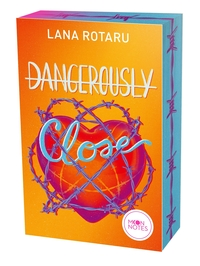
Mit schönem Farbschnitt in der Erstauflage – Lieferung je nach Verfügbarkeit Hochspannung garantiert! Im Kampf für die Wahrheit kommt Liv der Liebe gefährlich nah. Seit seiner Verurteilung hat er beharrlich geschwiegen, doch jetzt erzählt er ihr seine Geschichte: Die ambitionierte Studentin der Journalistik Liv beschließt, ihre Abschlussarbeit über einen der aufsehenerregendsten Kriminalfälle der jüngeren Zeit zu schreiben: den Mord an der beliebten und erfolgreichen Influencerin Sarah Mills. Der Fall scheint glasklar, der Mörder hat gestanden und sitzt seine Strafe bereits ab. Nach dem Prozess hat er sich nicht mehr zu dem Fall geäußert. Bis heute. Überraschenderweise lässt er sich auf Interviews mit Liv ein. Je öfter sie mit ihm spricht, desto mehr zweifelt Liv an der offiziellen Version der Geschichte. Und sie beginnt sich zu fragen, ob es nur noch Angst ist, die ihr Herz höherschlagen lässt, sobald sie das Gefängnis betritt. Romance hinter Gittern: „Dangerously Close“ erzählt von jenem unwiderstehlichen Prickeln, das nicht sein darf. Die starke, ambitionierte Protagonistin Liv agiert fernab von Rollenklischees und begeistert mit ihrer Entschlossenheit und ihrem Mut Leser*innen ab 16 Jahren, die Crime-Romance-Geschichten lieben. Du zählst zu den New Adults? Du magst Tropes wie „Forbidden Love“ und „Morally Grey Characters“? Dann ist dieser aufregende Mix aus Romance und Thrill perfekt für dich. Spannender Twist: Wenn du spürst, dass die offizielle Version der Geschichte nicht die wahre ist, gerät die Grenze zwischen Gut und Böse ins Wanken. Autorin Lana Rotaru schreibt seit Jahren romantische Bücher für junge Erwachsene – dies ist ihr erster Gefängnisthriller. Genial ausgestattet in der Erstauflage: Softcover mit Klappen, trendig illustriertem Buchschnitt und coolem Lesezeichen zum Abtrennen.
 Trusted Partner

 Trusted Partner

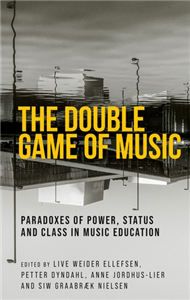
The double game of music imagines music education as a series of games - each with its own rules, play currency and players - to challenge readers to rethink the significance of music and musical upbringing in shaping social structures. Drawing on their own empirical research and a wide range of international contributions, the authors unravel the intertwining of social positioning and power hierarchies with players beliefs in the pure values and virtues of their games, whether these relate to parenting, children's play, schooling, academic pursuits, musical leisure activities or the television and music industries. In a world where music is often celebrated as an important tool for inclusion and democratisation, this groundbreaking book offers a timely critique, revealing complexities and contradictions that tend to be overlooked by teachers, researchers, politicians and others interested in the powers of music education.
Trusted Partner

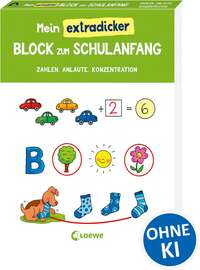
Mein extradicker Block zum Schulanfang = extraviel Spaß + extraviel Wissen! Abwechslungsreiche Übungen zu Zahlen, Anlauten und zur Förderung der Konzentration Trainiert und fördert Kombinationsgeschick, logisches Denken und visuelle Wahrnehmung Mit farbenfrohen und animierenden Bildern Inklusive Lösungen zur Eigenkontrolle So macht Lernen extraviel Spaß! Dieser Block beinhaltet wichtige Grundlagen für den Schulanfang : erste Buchstaben , Zahlen und Konzentrationsaufgaben . Die bunten, liebevoll gestalteten Illustrationen und die spielerische, kindgerechte Wissensvermittlung garantieren Lernspaß . Durch sein handliches Format ist der Lernblock ideal für unterwegs. Dank der Lösungen kann zudem eigenständig geprüft werden, ob alles richtig bearbeitet wurde. So eignen sich die Kinder im Handumdrehen Wissen an und die Vorfreude auf den Schulanfang wird geweckt!
Trusted Partner


We moderns were the inhabitants of an age of impetuous forward movement and voracious discontent. Our main virtue was to increase our reach. Increasing our having and accelerating our being were the signposts towards the future. We just could not get enough. Using the blinkers of ignorance and self-anaesthesia, however, we managed to forget the tremendous costs incurred by this intoxication. Now disillusionment has set in. We look to the future with anxiety. We know that we have long since crossed a line and that a revision of our lifestyle is imminent. We have a bad feeling, and doubts about progress often give way to anger and rebellion. Which stocks of the modern narrative should we defend; which would we do better to let go? How will we even "be able to stop"? The path to a different society needs an attractive goal, because without the prospect of a different, better life, we will not move forward. We should start practising immediately. There is no time to lose.
Trusted Partner

 Trusted Partner
Trusted Partner
Trusted Partner
Trusted Partner
Trusted Partner
Trusted Partner
Trusted Partner
Trusted Partner
Trusted Partner
Trusted Partner
Trusted Partner
Trusted Partner
Trusted Partner
Trusted Partner
Trusted Partner

 Trusted Partner
Trusted Partner
Trusted Partner

This novel is one of Anthony Burgess's most accessible and entertaining works. By turns bawdy, raucous, tender and bittersweet, and full of music and songs, this is a warm and affectionate portrait of the working-class Lancashire of the 1920s and 1930s that he knew from his own early life. The Pianoplayers is a funny, moving, autobiographical novel that brings to life the world of silent cinemas and music-halls of 1920s Manchester and Blackpool. Fully annotated and with a new introduction, this is an authoritative text for a new generation of readers. Part of the forthcoming Irwell Edition of the Works of Anthony Burgess, this book offers an opportunity to reappraise an unjustly neglected novel important to our understanding of Burgess's wider oeuvre. The 2017 Burgess centenary makes this a key moment for reflection on the life and work of a major figure in twentieth century letters.
Trusted Partner


Jun Hatta hat durch Zufall erfahren, dass sie eine indianische Großmutter hat. In den Ferien fliegt sie nach Kanada und begibt sich auf die Suche nach der Vergangenheit ihrer Familie, die einst aus Kanada nach Japan ausgewandert ist. In Kanada lernt sie Ronnie Weinberg kennen, einen jungen Musiker, der sie auf ihrer Reise zu ihrer Großmutter begleitet. Dort erfährt Jun die Wahrheit über ihren Großvater und kommt endlich dem geheimnisvollen Falken aus ihren Träumen auf die Spur.
Trusted Partner
Trusted Partner



