
Rosaria Carpinelli Consulenze Editoriali SrL
Rosaria Carpinelli Consulenze Editoriali is a literary and editorial agency, representing domestic and international rights of Italian authors.
View Rights Portal
Rosaria Carpinelli Consulenze Editoriali is a literary and editorial agency, representing domestic and international rights of Italian authors.
View Rights Portal


This volume proposes new insights into the uses of classical mythology by Shakespeare and his contemporaries, focusing on interweaving processes in early modern appropriations of myth. Its 11 essays show how early modern writing intertwines diverse myths and plays with variant versions of individual myths that derive from multiple classical sources, as well as medieval, Tudor and early modern retellings and translations. Works discussed include poems and plays by William Shakespeare, Christopher Marlowe and others. Essays concentrate on specific plays including The Merchant of Venice and Dido Queen of Carthage, tracing interactions between myths, chronicles, the Bible and contemporary genres. Mythological figures are considered to demonstrate how the weaving together of sources deconstructs gendered representations. New meanings emerge from these readings, which open up methodological perspectives on multi-textuality, artistic appropriation and cultural hybridity.

 Trusted Partner


Bertrand Russell, geboren 1872 in Wales, studierte Mathematik in Cambridge. In seinen schriftstellerischen Tätigkeiten widmete er sich zunächst der Mathematik, später wandte er sich vermehrt philosophischen Themen zu. 1950 erhielt er den Nobelpreis für Literatur. Bertrand Russell verstarb 1970 in Wales.
Trusted Partner
Bertrand Russell, geboren 1872 in Wales, studierte Mathematik in Cambridge. In seinen schriftstellerischen Tätigkeiten widmete er sich zunächst der Mathematik, später wandte er sich vermehrt philosophischen Themen zu. 1950 erhielt er den Nobelpreis für Literatur. Bertrand Russell verstarb 1970 in Wales.
Trusted Partner

Stars are central to the cinema experience, and this collection offers a variety of fresh and informed perspectives on this important but sometimes neglected area of film studies.This book takes as its focus film stars from the past and present, from Hollywood, its margins and beyond and analyses them through a close consideration of their films and the variety of contexts in which they worked. The book spreads the net wide, looking at past stars from Rosalind Russell and Charlton Heston to present day stars including Sandra Bullock, Jackie Chan and Jim Carrey, as well as those figures who have earnt themselves a certain film star cachet such as Prince, and the martial artist Cynthia Rothrock. The collection will be essential reading for students and lecturers of film studies, as well as to those with a general interest in the cinema. ;
Trusted Partner
"In diesem Buch, einer der frühen Schriften des englischen Philosophen, wird der Versuch unternommen, die unmittelbare Erfahrung mit dem Weltbild der Physik zu vereinen. Für Russell sind Substanz, Materie und die Gegenstände keine Realitäten, sondern logische Konstruktionen. Dieser Gesichtspunkt bestimmt seine Erkenntnistheorie wie seine Kritik an den traditionellen philosophischen Fragestellungen. Wichtig geworden sind die in den Probleme der Philosophie vorgetragenen Gedanken für die Entwicklung des logischen Positivismus; der Autor fragt nach den Möglichkeiten des Philosophierens in einem Zeitalter, das die Metaphysik verabschiedet hat und dessen Wissensstand entscheidend von der Naturforschung geprägt ist."
Trusted Partner
Anknüpfend an die Cantorsche Mengenlehre und aufbauend auf Freges überlegungen zur Beweistheorie sowie Peanos Symbolismus, gelang es in den Principia Mathematica erstmals, weite Bereiche der Mathematik aus einigen wenigen logischen Grundbegriffen und Axiomen herzuleiten. Zur Auflösung der Widersprüche und Paradoxien in Logik und Mengenlehre, deren Entdeckung eine Grundlagenkrise der Mathematik zur Folge hatte, entwickelten Whitehead und Russell die sogenannte Typentheorie. In den im vorliegenden Band enthaltenen Einleitungen zu ihrem monumentalen Werk stellen sie die Paradoxien in Logik und Mengenlehre und die von ihnen entwickelte Typentheorie, die auch in den Humanwissenschaften - etwa bei Gregory Bateson - Anstöße zu neuen Denkmodellen und Methoden gegeben haben, in einer auch für mathematisch nicht gebildete Leser zugänglichen Form dar.
Trusted Partner
Trusted Partner

Postmodern, postcolonial and post-truth are broadly used terms. But where do they come from? When and why did the habit of interpreting the world in post-terms emerge? And who exactly were the 'post boys' responsible for this? Post-everything examines why post-Christian, post-industrial and post-bourgeois were terms that resonated, not only among academics, but also in the popular press. It delves into the historical roots of postmodern and poststructuralist, while also subjecting more recent post-constructions (posthumanist, postfeminist) to critical scrutiny. This study is the first to offer a comprehensive history of post-concepts. In tracing how these concepts found their way into a broad range of genres and disciplines, Post-everything contributes to a rapprochement between the history of the humanities and the history of the social sciences.
Trusted Partner
 Trusted Partner
 Trusted Partner
Trusted Partner
Trusted Partner
Trusted Partner
Trusted Partner

 Trusted Partner

 Trusted Partner
The project researches the difference between a revision vs. a rewriting. The book explores the English poems and plays of the Early New English period, from the sixteenth to the beginning of seventeenth century, with over 50 entries examined. The main material is the poem A Lover's Complaint; the play Double Falsehood by Lewis Theobald; the revised and rewritten post-Restoration plays such as Richard II (revised by Lewis Theobald), and The Fatal Secret (rewritten Webster's The Duchess of Malfi) by Lewis Theobald. An example of authorial revision is Sonnets 2 and 138.
Trusted Partner
 Trusted Partner

Charles Dickens called his sister-in-law Georgina Hogarth his 'best and truest friend'. Georgina saw Dickens as much more than a friend. They lived together for twenty-eight years, during which time their relationship constantly changed. The sister of his wife Catherine, the sharp and witty Georgina moved into the Dickens home aged fifteen. What began as a father-daughter relationship blossomed into a genuine rapport, but their easy relations were fractured when Dickens had a mid-life crisis and determined to rid himself of Catherine. Georgina's refusal to leave Dickens and his desire for her to remain in his household led to rumours of an affair and even illegitimate children. He left her the equivalent of almost £1 million and all his personal papers in his will. Georgina's commitment to Dickens was unwavering but it is far from clear what he did to deserve such loyalty. There were several occasions when he misused her in order to protect his public reputation. Why did Georgina betray her once much-loved sister? Why did she fall out with her family and risk her reputation in order to stay with Dickens? And why did the Dickenses' daughter Katey say it was 'the greatest mistake ever' to invite a sister-in-law to live with a family?
Trusted Partner

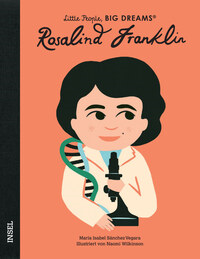
Schon als kleines Mädchen will Rosalind alles über die Natur wissen. Mit siebzehn besteht sie die Aufnahmeprüfung für das Studium von Chemie und Physik an der Universität von Cambridge. Sie experimentiert mit Röntgenstrahlen. Die braucht man, um Fotos von den kleinsten chemischen Verbindungen herzustellen, den Molekülen. Schließlich liefert ihr berühmtes »Foto 51« die Voraussetzung für die Entschlüsselung der DNA-Moleküle, in denen alle Informationen über unsere Körper stecken. Eine bahnbrechende Entdeckung, für die später zwei Männer mit dem Nobelpreis gewürdigt wurden, den eigentlich sie verdient hätte. Little People, Big Dreams erzählt von den beeindruckenden Lebensgeschichten großer Menschen: Jede dieser Persönlichkeiten, ob Philosophin, Forscherin oder Sportler, hat Unvorstellbares erreicht. Dabei begann alles, als sie noch klein waren: mit großen Träumen.
Trusted Partner

This study examines the profound changes that twentieth-century performance has wrought on Shakespeare's complex drama of war and politics. What was accepted at the turn of the century as a patriotic celebration of a national hero has emerged in the modern theatre as a dark and troubling analysis of the causes and costs of war. The book details the theatrical innovations and political insights that have turned one of Shakespeare's most traditional-bound plays into one of his most popular and provocative. Henry V gives details analyses of several important modern productions. Beginning with a consideration of the play's political significance in Elizabethan London, the book goes on the reveal its subsequent reinvention, both as patriotic pageant and anti-war manifesto. Individual chapters consider important productions by the Royal Shakespeare Company, and other British and North American companies, as well as the landmark film versions. A compelling account of the theatrical revolution that has transformed one of Shakespeare's most challenging plays. ;



